Ask anyone who bought a car on loan around 2022 what rate they were paying. You will hear 13 percent. Maybe 14. People signed those papers because they wanted the car badly enough to swallow the number.
Now Nepal Bank and Rastriya Banijya Bank are both offering auto loans at 4.90 percent.
Read that again, because it is not a teaser rate or a headline that collapses in the fine print. Bank base rates have fallen to the lowest point on record, liquidity is sitting idle, and lenders have started undercutting each other on auto loans to get it moving. Meanwhile every distributor in the country is running a festive discount.
Two things that rarely happen together are happening at the same time. Here is what the numbers actually look like.
Why rates have fallen this far
The short version is that banks have more money than places to lend it.
Nepal Rastra Bank data shows nearly Rs 63 billion in additional credit flowed out during Bhadau of the current fiscal year 2083/84. Total lending from 20 commercial banks reached Rs 5,350.65 billion by the end of Bhadau, up from Rs 5,287 billion at the end of Shrawan.
More importantly, the average base rate across banks has fallen to 4.75 percent, the lowest point on record.
Base rate is what decides everything else. Banks add a premium on top of it to set your actual loan rate, and right now they are adding as little as 0.5 to 1 percent on auto loans. That is how you end up with offers below 5 percent.
The timing is not accidental either. Buyers who booked vehicles at the NADA Auto Show and the NAIMA Mobility Expo are taking delivery through the festive season, and banks want to lock in loans running up to seven years. Cheap rates now secure long-term income later.
What the leading banks are offering
Nepal Bank, 4.90 percent with a free credit card
The state-owned lender is offering auto loans at 4.90 percent under its festive scheme. Its base rate currently sits at 4.41 percent, so the bank is adding just 0.49 percent on top.
Loan tenure runs to five years with an administrative fee of 0.5 percent. Borrowers also get a credit card with a limit up to Rs 300,000, free for life with no charges.
Rastriya Banijya Bank, 4.90 percent up to Rs 1 crore
RBB has the lowest base rate of the lot at 4.01 percent averaged over the last three months, and it is matching Nepal Bank's 4.90 percent.
The difference is scale. The loan ceiling goes up to Rs 1 crore, tenure extends to seven years, and the fee is 0.5 percent of the approved amount.
Nabil Bank, 5.17 percent
Among private banks, Nabil has gone out at 5.17 percent with a tenure of up to seven years and a 0.50 percent service charge.
The catch is the financing limit. Nabil will lend up to 60 percent of the vehicle's total value, so you need a larger down payment than the government banks require.
Auto loan rates at a glance
Bank | Interest Rate | Key Terms |
Rastriya Banijya Bank | 4.90% | Up to Rs 1 crore, 7-year tenure, 0.5% fee |
Nepal Bank | 4.90% | 5-year tenure, 0.5% fee, free lifetime credit card up to Rs 300,000 |
Nabil Bank | 5.17% | 60% financing, 7-year tenure, 0.50% service charge |
The rest of the market
Most other banks are lending in the 5 to 6 percent range, which is still historically cheap.
Around 5.5 percent you will find Everest Bank, Nepal Investment Mega Bank, Global IME, Agricultural Development Bank, Sanima, Machhapuchchhre, Siddhartha, Prime, Prabhu and Laxmi Sunrise. All of these have base rates below 5 percent.
Citizens Bank, Nepal SBI and Himalayan Bank have base rates under 5.25 percent, which translates to auto loans around 6 percent.
At the top end, NIC Asia has the highest base rate among commercial banks at 5.69 percent.
The fixed-rate option
Floating rates are cheap right now, but they are floating for a reason. If base rates climb, so does your EMI.
Banks are also offering fixed-rate auto loans between 6.5 and 9 percent for terms up to seven years. You pay more upfront, but the rate stays locked regardless of what happens in the market.
Whether that trade is worth it depends on how long your loan runs and how much uncertainty you are comfortable carrying. In a seven-year term, a lot can change.
Why this matters more than the discounts
Here is the part worth sitting with.
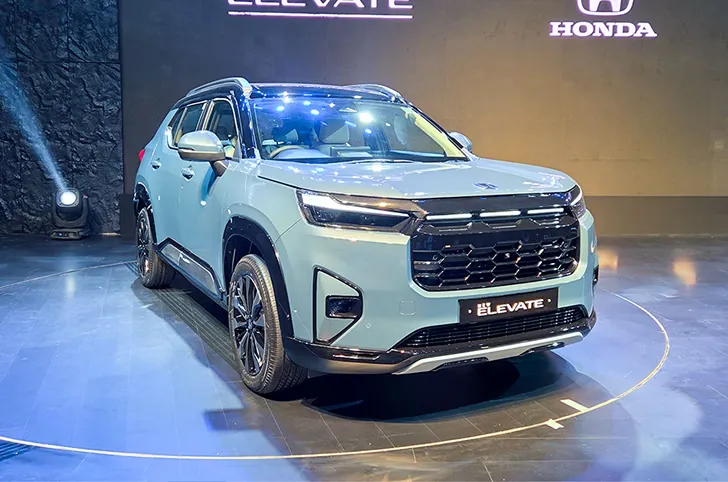
Every distributor in the market is running a festive campaign right now. Honda is offering up to Rs 1 million off plus five years of free servicing. Hyundai is bundling free insurance and road tax with discounts up to Rs 500,000. GWM is throwing in a home charger. MG is covering tax and insurance across its EV range.
Those are one-time savings. The interest rate is what you pay every month for the next five to seven years.
On a Rs 40 lakh loan over seven years, the difference between 5 percent and 13 percent is enormous, far larger than any showroom discount on offer. If you were ever going to finance a vehicle, the cost of borrowing has not been this low in recent memory.
Before you sign
A few things worth checking rather than assuming.
Base rate moves. Most of these loans are floating, which means your rate is tied to a number that can rise. Ask what the premium over base rate is, because that premium is what the bank has actually committed to, not the headline figure.
Financing percentage varies. Nabil's 60 percent cap means a significantly larger down payment than a bank lending 70 or 80 percent. Compare the total cash required, not just on the interest rate.
Fees add up. Half a percent of Rs 50 lakh is Rs 25,000 before you have driven anywhere.
And run the full number. A longer tenure lowers your monthly EMI but increases what you pay overall. Seven years at 4.90 percent still costs more in total interest than five years at the same rate.
Conclusion
Two things are happening at once, and they rarely happen together. Distributors are discounting heavily because the festive season is when Nepal buys cars, and banks are lending cheaply because they have liquidity they need to deploy.
For anyone who had a vehicle purchase in mind and the income to service a loan, this combination is genuinely favourable. Sub-5 percent financing against 13 to 14 percent a few years ago is not a marginal improvement, it changes what is affordable.
The usual caution applies. A cheap loan is still a loan, and a seven-year commitment on a depreciating asset deserves the same scrutiny it would at any rate. But if the plan was already in motion, the numbers have rarely lined up better than they do right now.
For more on vehicle financing, festive offers and prices in Nepal, Autoncell covers them as they land.