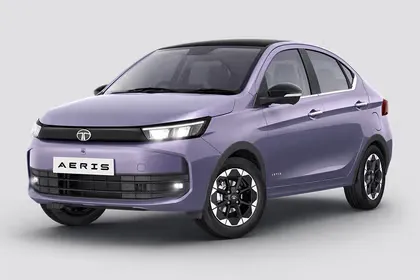
Tata has walked into the compact sedan segment and priced itself below everybody. Not by a token amount either.
The Aeris starts at INR 5.29 lakh ex-showroom for the petrol manual, which puts it , INR 1.02 lakh under the Maruti Dzire, , INR 71,000 under the Hyundai Aura and INR 2.45 lakh under the Honda Amaze. Bookings opened on September 25, with deliveries beginning in the first week of Navratri. Five trims are on offer: Smart, Pure, Pure+, Creative and Accomplished.
Design
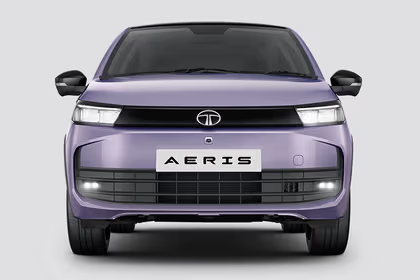
The front end is built around a slim gloss black grille flanked by sleek headlamp units, with a wide lower air intake and a sculpted bumper underneath. Contrasting cladding runs along the wheel arches into the side profile.
Higher variants pick up LED headlamps and DRLs, connected LED tail lamps and a dual-tone roof. Nothing here is trying to shout, which suits a car aimed at family buyers rather than enthusiasts.
Interior
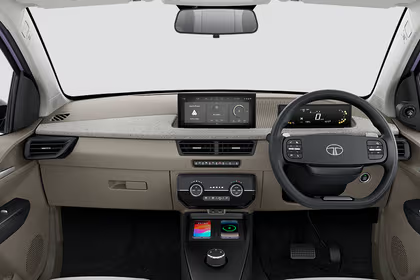
Inside is a dual-tone cabin with a floating touchscreen, a digital instrument display and a front centre armrest on the variants that get it.
The number worth noting is boot space. At 419 litres, the Aeris has the largest boot in the segment, and Tata has used side-mounted struts so the hinges do not eat into the usable space. That is a small engineering decision that shows up every time you load luggage.
Engine and Performance
Power comes from a 1.2-litre Revotron petrol engine, paired with either a five-speed manual or an AMT.
The iCNG lineup gets the same transmission choice and uses twin-cylinder technology, which improves packaging and is the main reason the boot has not been sacrificed to a single large tank. Automatic versions are available from the Pure trim upwards and carry a ,INR 55,000 premium over the equivalent manual.
Variants and Equipment
The trim ladder is where the Aeris gets interesting, because the entry car is better equipped than the price suggests.
Smart starts with six airbags as standard, which is the headline. Alongside that comes a 5-inch digital cluster, manual AC, tilt steering, rear parking sensors, ISOFIX mounts, ABS with EBD, corner stability control, three-point seat belts with reminders on all seats, and connected tail lamps.
Pure adds Bluetooth audio, steering-mounted controls, two speakers, all four power windows, a height-adjustable driver's seat, electrically adjustable mirrors with indicators, rear defogger, central locking and follow-me-home headlamps.
Pure+ brings the 8-inch touchscreen with wireless Android Auto and Apple CarPlay, four speakers, an HD reverse camera, rear AC vents, cruise control, a 65W front USB-C charger, and front and rear armrests. Electronic stability control with traction control, hill hold and tyre pressure monitoring start here.
Creative steps up to a 10.25-inch HD touchscreen and a 360-degree camera with multiple 2D and 3D views, plus segment-first features in the Blind View Monitor and MultiView Digital Video Recorder. Automatic climate control, LED headlamps and DRLs, rain-sensing wipers, automatic headlamps, keyless entry and push-button start are included, with 15-inch Diamond Aero alloys on petrol versions.
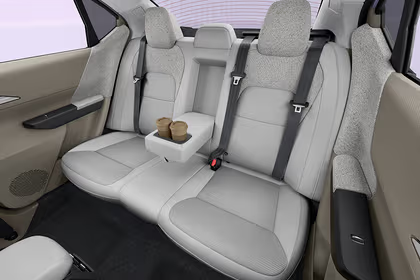
Accomplished tops the range with ventilated front seats, leatherette upholstery, wireless charging, a dashcam recorder, iRA connectivity with over 35 connected features, LED fog lamps, a rear 65W USB-C charger, adjustable front headrests and a soft-touch front armrest.
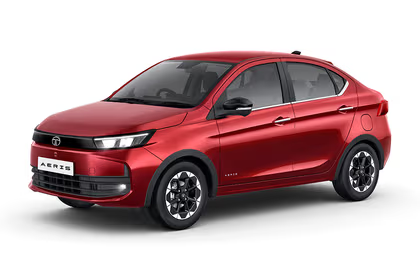
Tata Aeris Features
Six airbags standard across all variants
1.2-litre Revotron petrol with manual or AMT
iCNG with twin-cylinder technology
419 litres of boot space, highest in the segment
10.25-inch HD touchscreen on Creative and above
360-degree camera with 2D and 3D views
Blind View Monitor and MultiView Digital Video Recorder
Ventilated front seats and leatherette upholstery on Accomplished
iRA connectivity with over 35 connected features
ESC with traction control, hill hold and TPMS from Pure+
No Fleet Version
Tata has been unusually direct about who this car is for. The Aeris will not be sold into the taxi or fleet segment at all.
Shailesh Chandra confirmed that the sedan is exclusive to personal buyers, with the existing Xpres-T, based on the Tigor, continuing to serve fleet customers under its own identity.
The reasoning is sound. Tata says private buyers make up roughly 65 percent of the compact sedan market, and keeping the Aeris clear of taxi fleets protects its image among exactly those buyers. Anyone who has watched a sedan's resale value sag because the same model fills every airport rank will understand the logic.
Specifications at a Glance
Specification | Detail |
Engine | 1.2-litre Revotron petrol |
Fuel Options | Petrol, iCNG with twin-cylinder tech |
Transmission | 5-speed manual or AMT |
AMT Availability | Pure trim onwards, , INR 55,000 premium |
Trims | Smart, Pure, Pure+, Creative, Accomplished |
Boot Space | 419 litres |
Airbags | Six, standard on all variants |
Touchscreen | 8-inch (Pure+), 10.25-inch HD (Creative onwards) |
Camera | HD reverse camera (Pure+), 360-degree (Creative onwards) |
Wheels | 15-inch Diamond Aero alloys on higher petrol variants |
Connectivity | Wireless Android Auto and Apple CarPlay, iRA with 35+ features |
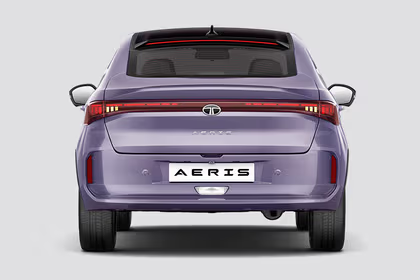
Price
Introductory ex-showroom pricing in India:
Variant | Price Range (Ex-showroom) |
Petrol Manual | INR 5.29 lakh to INR 8.19 lakh |
Petrol AMT | From INR 6.69 lakh |
iCNG Manual | INR 6.29 lakh to INR 9.19 lakh |
iCNG AMT | From INR 7.69 lakh |
The iCNG carries a flat , INR 1 lakh premium over the equivalent petrol variant across the range.
Against rivals, the Aeris undercuts the Hyundai Aura by INR 71,000, the Maruti Dzire by, INR 1.02 lakh and the Honda Amaze by, INR 2.45 lakh at their respective entry points.
The Tata Aeris has not arrived in Nepal, and no official local pricing has been announced. We are not estimating a Nepal figure here. Once it lands through authorised channels, the final price will depend on taxes and market factors, and we will update it then.
Conclusion
Tata has done the obvious thing well. Six airbags as standard on a car starting at, INR 5.29 lakh sets a bar that rivals will have to answer, and the 419-litre boot removes the usual excuse for buying a hatchback instead.
The pricing is described as introductory, which is worth remembering. Aggressive launch figures have a way of firming up once the order books fill, so the current gap to the Dzire may not hold indefinitely.
What Tata has bought with it is attention, and in a segment where the Dzire has set the terms for years, that is the harder part.
For more on new launches, prices and the auto market in Nepal, Autoncell covers them as they land.