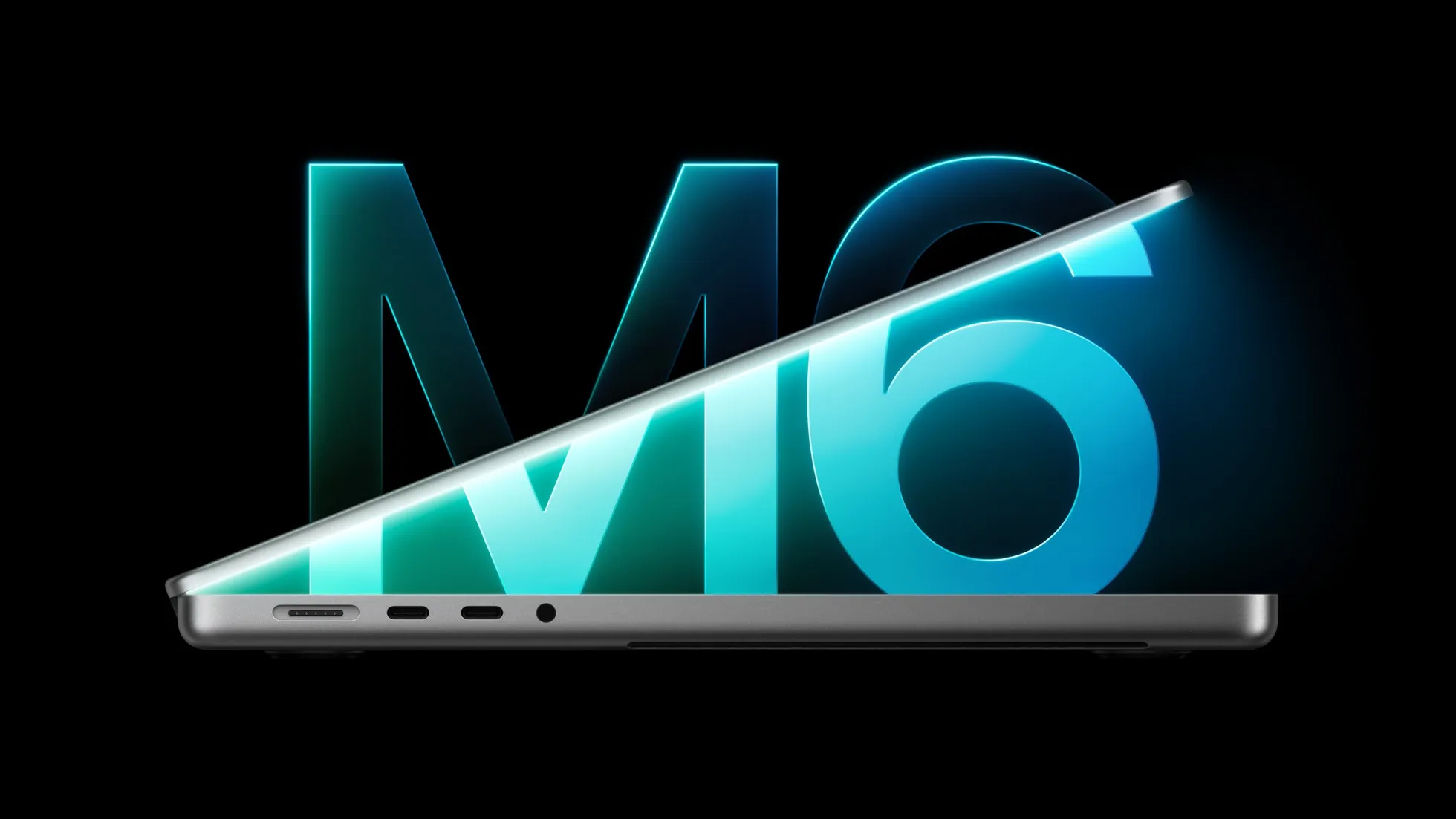
Twenty-four hours of battery life. That is the longest Apple has ever claimed for a Mac, and it is the number that will matter most to anyone actually buying this thing.
Apple has announced the 14-inch MacBook Pro with M6, starting at $1,999, with pre-orders opening on 28 October and availability from 6 November. The M6 brings two extra CPU cores, two extra GPU cores and a Dual 16-core Neural Engine, with Apple leaning heavily on what the machine can do with AI locally.
For anyone still on an M1 or an Intel Mac, this is the upgrade Apple is aiming squarely at.
The M6 chip
The M6 runs a 12-core CPU and a 12-core GPU, both gaining two cores over the M5, alongside a Dual 16-core Neural Engine and faster unified memory.
Apple claims the CPU includes the world's fastest CPU core, with the GPU delivering up to 30 percent faster graphics and up to 25 percent faster AI workloads against M5. The Neural Engine is rated at up to 1.9 times faster than M5.
Graphics get a third-generation ray-tracing engine and Dynamic Caching to optimise on-chip memory, with Neural Accelerators now built into each GPU core.
Memory starts at 16GB and configures up to 32GB, with bandwidth reaching 170GB/s.
Performance in real applications
Apple's own comparison figures, which are worth reading alongside the usual caution about manufacturer benchmarks.
Against a 13-inch MacBook Pro with M1, the M6 machine delivers up to 13x faster time to first token for LLM prompt processing, up to 11.7x faster ray-traced rendering in Blender, up to 3.3x faster image processing in Affinity and up to 2.5x faster project builds in Xcode.
Against the M5 version, the gains are more modest: up to 1.3x on LLM prompt processing, Blender rendering and Xcode builds, and up to 1.2x on Affinity.
That split tells you everything about who this is for. Coming from M1 or Intel, the difference is transformative. Coming from M5, it is incremental.
Battery and charging
Up to 24 hours, the longest Apple has managed in a Mac.
Apple frames the gain by upgrade path. Intel users gain up to 14 additional hours, M1 users up to four. The company also stresses that performance stays identical whether plugged in or running on battery, which has long been one of Apple silicon's genuine advantages over x86 laptops.
Fast charging reaches 50 percent in about 30 minutes with a compatible higher-wattage adapter such as the 96W unit.
Display
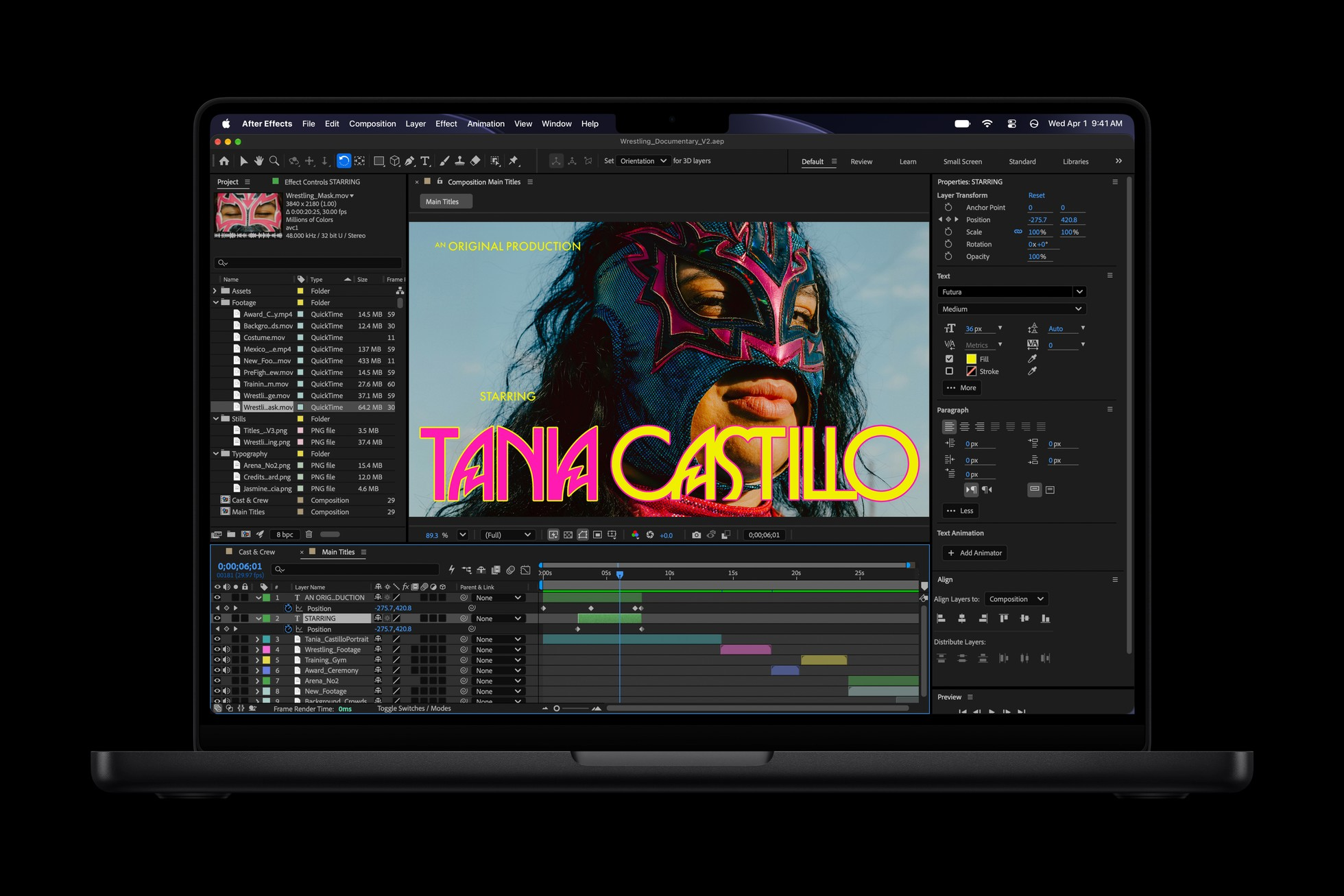
The Liquid Retina XDR panel carries over, delivering up to 1,600 nits of peak HDR brightness and a 1,000,000:1 contrast ratio.
The nano-texture option remains available for anyone working in bright conditions, cutting reflections and glare substantially.
Connectivity and ports
Wi-Fi 7 and Bluetooth 6 are new this generation, with support for up to two external displays.
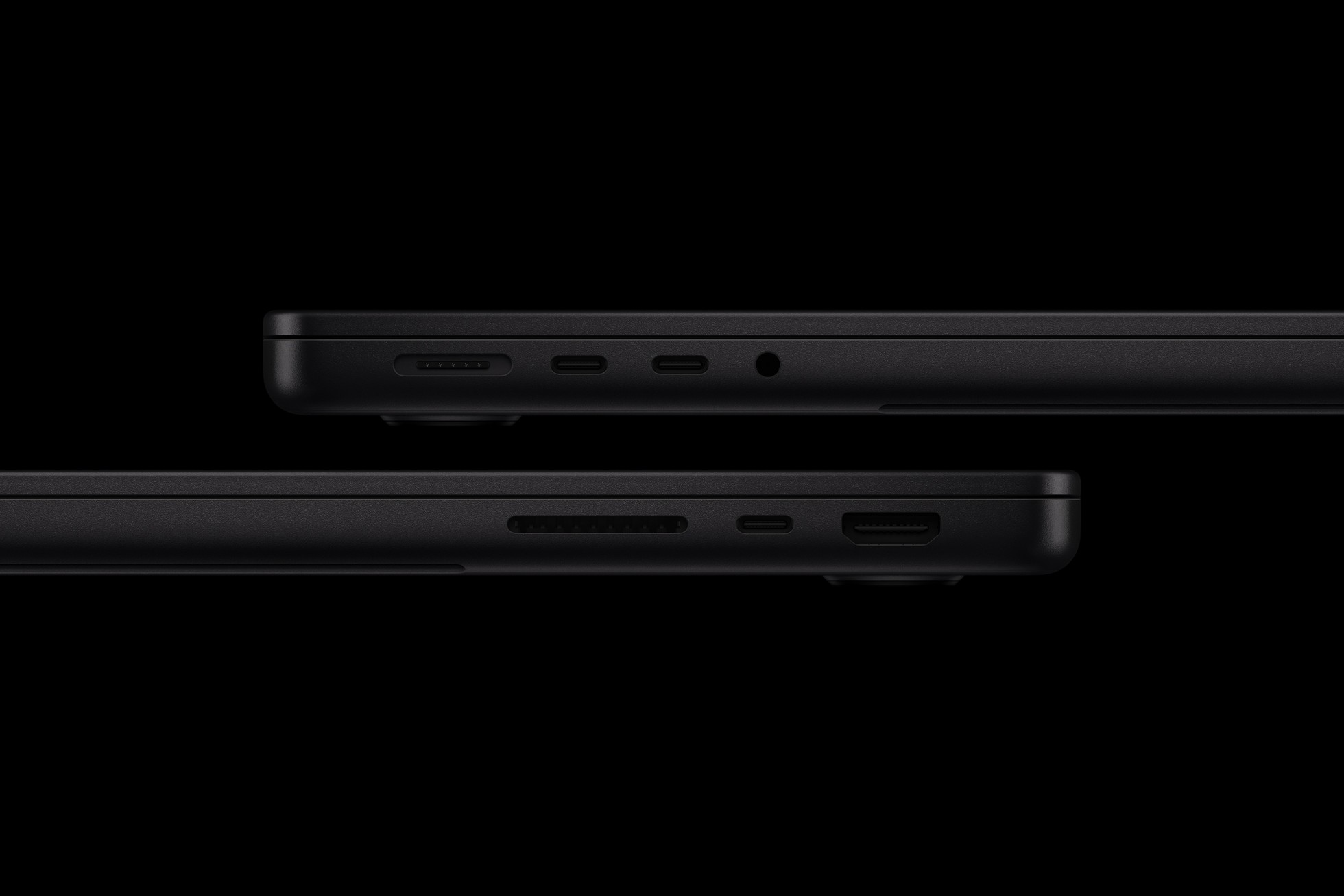
The port selection is unchanged and still generous by current standards: HDMI, MagSafe 3, three Thunderbolt 4 ports, an SDXC card slot and a headphone jack.
Anyone moving from Intel or M1 also picks up an additional Thunderbolt port and 16GB of starting memory rather than 8GB.
14-inch MacBook Pro with M6 features
M6 chip with 12-core CPU and 12-core GPU
Dual 16-core Neural Engine with Neural Accelerators in each GPU core
16GB unified memory standard, up to 32GB
Memory bandwidth up to 170GB/s
Up to 24 hours of battery life
Liquid Retina XDR display with 1,600 nits peak HDR brightness
Nano-texture display option
Wi-Fi 7 and Bluetooth 6
HDMI, MagSafe 3, three Thunderbolt 4 ports, SDXC slot, headphone jack
12MP Center Stage camera with Desk View
Six-speaker sound system with Spatial Audio
Three-mic array
50 percent charge in 30 minutes
100 percent recycled aluminium enclosure
macOS 27 with Siri AI
Specifications
Specification | Detail |
Chip | Apple M6 |
CPU | 12-core |
GPU | 12-core with Neural Accelerators per core |
Neural Engine | Dual 16-core |
Memory | 16GB standard, up to 32GB unified |
Memory Bandwidth | Up to 170GB/s |
Display | 14-inch Liquid Retina XDR, 1,600 nits peak HDR, 1,000,000:1 contrast |
Battery Life | Up to 24 hours |
Fast Charging | 50 percent in 30 minutes with 96W adapter |
Wireless | Wi-Fi 7, Bluetooth 6 |
Ports | HDMI, MagSafe 3, 3x Thunderbolt 4, SDXC, headphone jack |
External Displays | Up to two |
Camera | 12MP Center Stage with Desk View |
Audio | Six-speaker system with Spatial Audio, three-mic array |
Enclosure | 100 percent recycled aluminium |
Operating System | macOS 27 |
Colours | Space Black, Silver |
macOS 27
The machine ships with macOS 27, built around Siri AI.
Siri can now draw on personal context across messages, emails and photos, answer questions on general topics and carry out tasks across apps. It is integrated into Spotlight and systemwide context menus, with Visual Intelligence letting users ask about what is on screen via a keyboard shortcut.
Apple Intelligence extends into everyday apps. Safari gains automatic tab organisation by topic, website change notifications for things like restocks and price drops, and the ability to create custom extensions from a description. Shortcuts can build automations from a plain description, and Photos picks up intelligent editing tools.
Liquid Glass also gets a new Settings slider letting users adjust the effect anywhere from ultraclear to fully tinted.
Price and availability
Model | Price (US) |
14-inch MacBook Pro with M6 | $1,999 |
With education pricing | $1,899 |
Pre-orders open 28 October across 35 countries and regions, with deliveries and retail availability from Friday, 6 November. Colours are Space Black and Silver.
In the US, Apple Upgrade leasing starts from $38.99 per month over 36 months, excluding taxes and trade-in credit.
Nepal availability
Apple has no official retail presence in Nepal, and the country is not among the 35 markets in the initial launch.
Machines typically arrive here through grey-market importers and unauthorised resellers, usually several weeks after the US release and at a considerable markup over the dollar price once duties and margins are applied. We are not estimating a Nepali figure.
Two things worth knowing if you buy that way. Warranty service is the main risk, since AppleCare and Apple's repair network do not operate here, meaning any hardware fault likely means a trip to India or Dubai. And the component shortage currently squeezing the PC industry, with memory prices up sharply, means prices across the laptop market are rising rather than falling.
Conclusion
The M6 MacBook Pro is a straightforward upgrade in the places that count: two more CPU cores, two more GPU cores, considerably stronger AI performance and the longest battery life Apple has ever shipped in a Mac.
Who should actually buy it is clearer than usual. Anyone on an Intel Mac or an M1 gets a genuinely transformative machine, with the added benefits of 16GB base memory, an extra Thunderbolt port and up to 14 more hours of battery. Anyone on an M5 is looking at gains of 20 to 30 percent, which is not nothing but rarely justifies replacing a one-year-old laptop.
The more interesting shift is what Apple is now selling. The emphasis has moved from video editing and rendering toward running LLMs locally and processing AI workloads on-device, with privacy as the core argument. That is the same bet Microsoft made with its Nvidia-powered Surface, and it is becoming the battleground premium laptops will be judged on.
For more on new launches, prices and the tech market in Nepal, Autoncell covers them as they land.