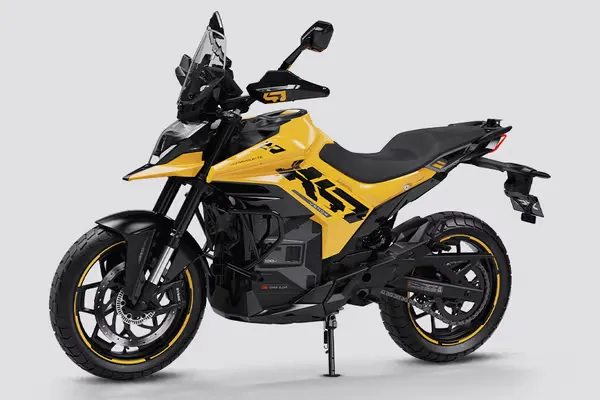
Ultraviolette did not just update a motorcycle. It built a new electrical architecture and put a motorcycle on top of it.
The VX-100 is a 100-volt platform that will underpin everything the Bengaluru company makes from here, and the X-47 Venom is the first bike to use it. Higher voltage brings faster charging, lighter components and less waste heat, and almost every improvement on this bike traces back to that single decision.
Launched from INR 2.65 lakh, it claims 343 km of range and 155 km/h.
Design
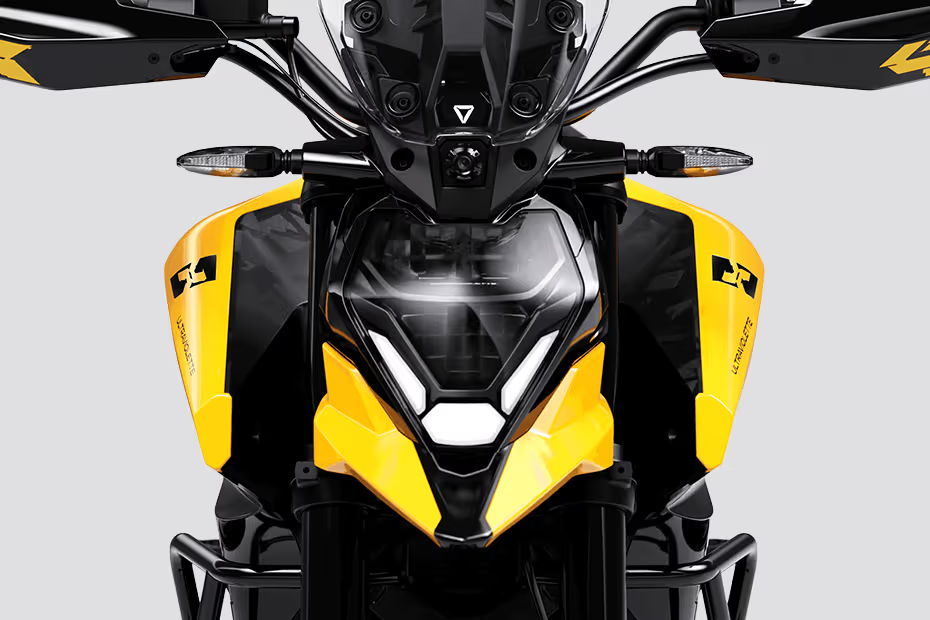
Styling carries over largely unchanged, and the crossover silhouette that defined the original X-47 stays intact.
What has changed is weight. The Venom is up to 20 kg lighter than its predecessor, with the 7.5 kWh variants at 180 kg and the 11 kWh versions at 195 kg. On a motorcycle that is a substantial saving, and it will show in how the bike turns and stops rather than on any spec sheet.
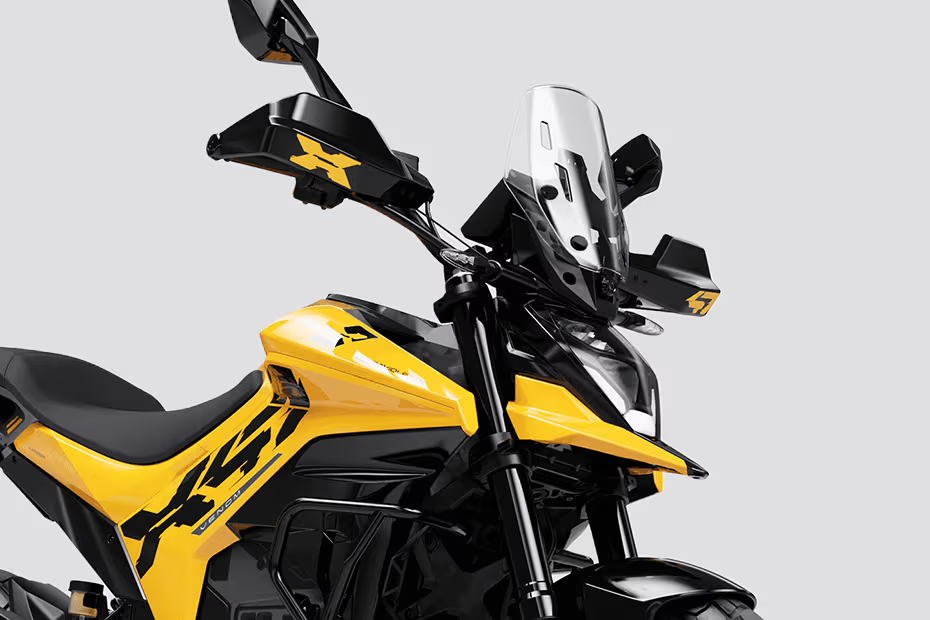
Visually there are new colour options, revised graphics and fresh shades for the 17-inch alloy wheels. Afterburner Yellow is the launch colour Ultraviolette has been showing.
Performance
The headline is a new 30 kW motor Ultraviolette calls Light Fury, derived from aviation engineering, producing what the company quotes as 550 Nm of torque at the wheel.
That figure needs context, because 550 Nm sounds absurd for a motorcycle. It is wheel torque, measured after gear reduction, not motor output. Manufacturers increasingly publish it this way because the number looks dramatic. Not wrong, just not comparable to the torque figures petrol bikes quote.
What matters is what it does. Ultraviolette claims 0 to 60 km/h in 2.7 seconds, 0 to 100 km/h in 5.9 seconds, and a top speed of 155 km/h. For comparison, the TVS Apache RTR 200 4V at Rs 459,900 is the most electronics-heavy petrol bike available in Nepal right now, with traction control and switchable riding modes, and it does not come close on acceleration.
The motor control unit is half the size of the previous one while delivering three times the power density, which is another dividend of moving to 100 volts.
Battery and range
Two battery sizes across the lineup.
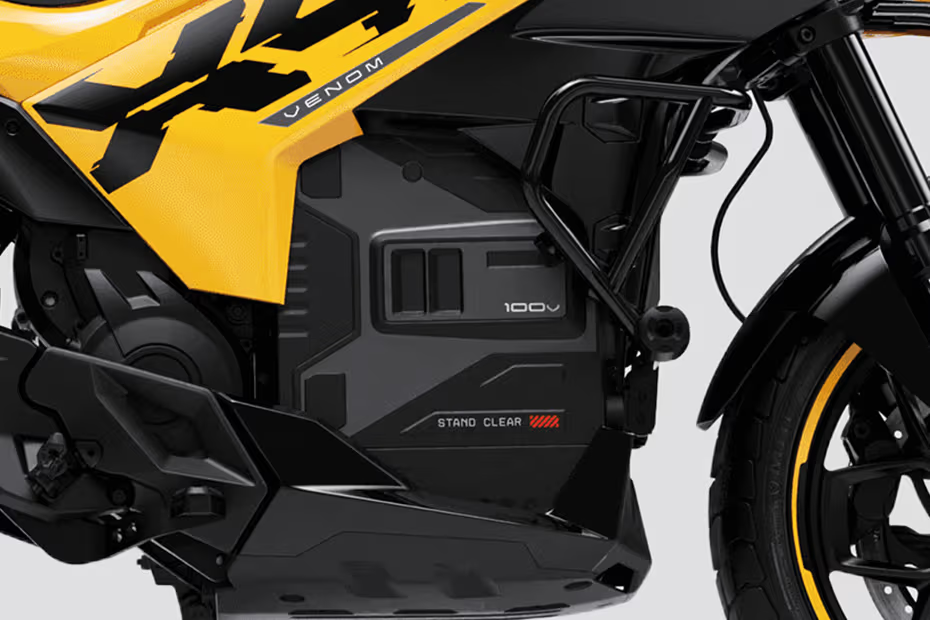
The 11 kWh SRB-11 pack claims 343 km on the Indian Driving Cycle, up from 323 km. Ultraviolette says it carries 20 percent higher energy density and twice the cooling performance of the outgoing unit. The 7.5 kWh pack, up from 7.1 kWh, claims 227 km.
IDC figures are optimistic by design, as every Indian EV buyer eventually learns. Treat 343 km as a best case and expect noticeably less in real riding, particularly at highway speed.
Charging reaches 12 kW on fast charging, with the Venom+ and Recon+ variants adding a 1.6 kW onboard charger.
Features
This is where the X-47 has always stood apart, and the Venom keeps all of it.
There is an integrated rear radar alongside front and rear dash cameras, together supporting blind-spot monitoring, lane-change assist, overtake alerts and rear-collision warnings. Radar-based rider aids at this price do not exist anywhere else in India, and on a bike capable of 155 km/h, knowing what sits in your blind spot is more than a novelty.
A 7-inch TFT display handles the interface, with cruise control included.
On safety, a pyro-fuse can physically disconnect the electrical circuit within microseconds if a critical fault is detected. High-voltage systems carry real risk in a crash, and a hardware cutout faster than any software routine is sensible engineering.
Ultraviolette X-47 Venom features
VX-100 100-volt electrical architecture
SRB-11 battery with 20 percent higher energy density
Twice the cooling performance of the previous pack
UV Light Fury aviation-derived motor
30 kW output with 550 Nm at the wheel
12 kW fast charging
1.6 kW onboard charger on Venom+ and Recon+
Pyro-fuse circuit disconnect
Integrated rear radar with front and rear dash cameras
Blind-spot monitoring and lane-change assist
Overtake alerts and rear-collision warnings
7-inch TFT display with cruise control
17-inch alloy wheels
Specifications
Specification | Detail |
Architecture | VX-100, 100-volt |
Battery Options | 7.5 kWh or 11 kWh (SRB-11) |
Claimed Range (IDC) | 227 km (7.5 kWh), 343 km (11 kWh) |
Motor | 30 kW UV Light Fury |
Torque | 550 Nm at the wheel |
Top Speed | 155 km/h |
0 to 60 km/h | 2.7 seconds |
0 to 100 km/h | 5.9 seconds |
Kerb Weight | 180 kg (7.5 kWh), 195 kg (11 kWh) |
Fast Charging | 12 kW |
Onboard Charger | 1.6 kW on Venom+ and Recon+ |
Display | 7-inch TFT |
Rider Aids | Rear radar, blind-spot monitoring, lane-change assist, collision warnings |
Wheels | 17-inch alloys |
Price in India
Variant | Battery | Claimed Range | Price (Ex-showroom) |
X-47 Venom | 7.5 kWh | 227 km | INR 2.65 lakh to 2.78 lakh |
X-47 Venom+ | 7.5 kWh | 227 km | INR 3.15 lakh to 3.28 lakh |
X-47 Venom Recon | 11 kWh | 343 km | INR 3.75 lakh to 3.88 lakh |
X-47 Venom Recon+ | 11 kWh | 343 km | INR 4 lakh to 4.12 lakh |
There is a catch. That introductory pricing applies only to the first 5,000 customers. Once the allocation runs out, every variant rises by INR 35,000.
So the entry Venom effectively becomes a INR 3 lakh motorcycle, and the Recon+ moves past INR 4.35 lakh. Anyone budgeting around the headline figure should plan for that.
Bookings opened on 22 October through Ultraviolette’s website, with deliveries starting in November 2026.
For Nepali context on where a bike like this would land once imported, the QJ Motor SRV 250S at Rs 979,000 shows how steeply prices climb here once duties and distribution are applied.
Will it come to Nepal?
Ultraviolette has made no announcement about Nepal and does not currently sell here. We are not estimating a local price.
The same uncertainty applies as with Honda’s CB500, which launched in India with no Nepal date confirmed, except Ultraviolette has no distribution here at all to build on.
The practical barriers are real too. Fast charging at 12 kW needs infrastructure that remains patchy outside the Kathmandu valley. A motorcycle carrying radar, dash cameras and a high-voltage architecture needs a service network capable of supporting it, which is a far bigger undertaking than for a conventional bike. And parts for a startup’s products are harder to source than for a Bajaj or a TVS.
None of that is insurmountable, and Nepal’s EV adoption has moved quickly. But a machine this technically complex needs proper backing, and that is the question any distributor would have to answer first.
Conclusion
The X-47 Venom is a genuinely impressive piece of engineering, and the specification is not padded out.
Radar-based rider aids, a pyro-fuse safety cutout, an aviation-derived motor, 12 kW charging and 2.7 seconds to sixty is a package nobody else in India offers at this money. Ultraviolette has been building credibility since the F77, and this is the most complete thing it has made. Taking it to EICMA in Milan on 3 November, with European deliveries in 2027, says the company believes it can compete outside India too.
The caveats are the familiar electric ones. IDC range will not survive contact with real riding. The weight, though improved, is still high. And at INR 3.75 lakh for the Recon variant that actually delivers the headline range, it is expensive against petrol bikes offering far more capacity.
That comparison misses the point though. Nothing with a petrol engine does 0 to 60 in 2.7 seconds at this price, and nothing in this segment at any price tells you what is sitting in your blind spot.
For more on EV launches, prices and the auto market in Nepal, Autoncell covers them as they land.