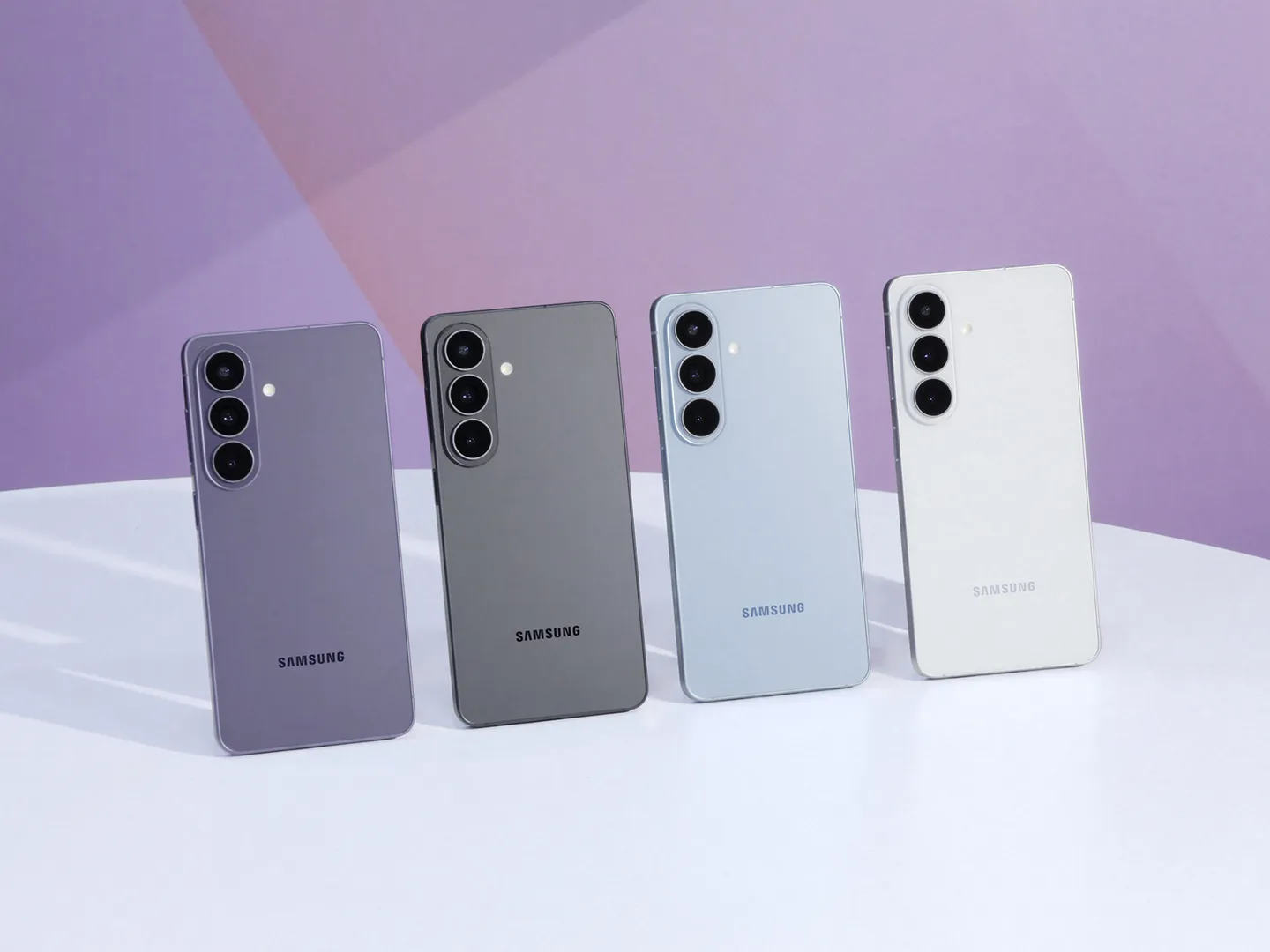
Buy the same phone today and you pay more than you would have last month. Nothing about the Galaxy S26 Ultra has changed. The price has.
Samsung has pushed the 12/256GB variant to NPR 224,999, up NPR 12,000 from NPR 212,999. The 12/512GB has climbed NPR 17,000 to NPR 259,999. Only the 16GB/1TB model escaped, holding at NPR 293,999. It is the latest in a series of adjustments this flagship has seen in Nepal, and it lands on a phone that is otherwise the most complete Ultra Samsung has built.
Design
This is the thinnest and lightest Ultra to date, at 7.9mm and 214 grams. Against last year that is 0.3mm and roughly 4 grams saved, which sounds negligible written down and registers immediately in the hand.
Softer corners, sides that curve more gently into the frame, and a silhouette that finally matches the S26 and S26 Plus. For years the Ultra sat beside its own family looking like a different product. That has been fixed.
One change is harder to defend. Titanium is gone, replaced by Armor Aluminum, the same move Apple made. After marketing titanium as the premium differentiator for two generations, dropping it without ceremony is an awkward reversal. Aluminium probably helps thermals in a thinner body, which is the charitable reading. Gorilla Glass Victus 2 covers the back, Gorilla Armor 2 the front, and IP68 is present. Colours are Cobalt Violet, Sky Blue, Black and White.
Display
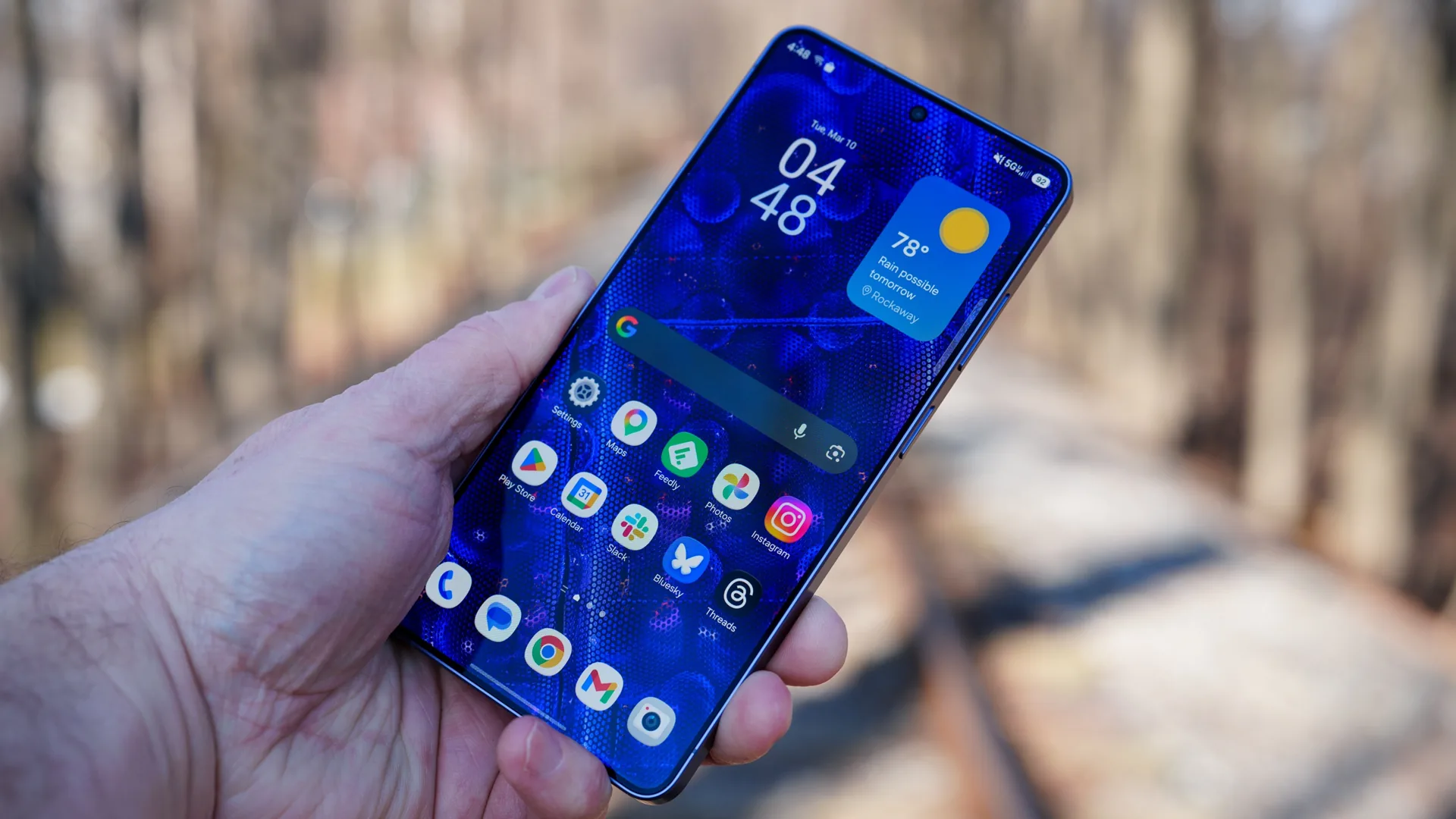
The panel is a 6.9-inch QHD+ Dynamic AMOLED 2X, 1 to 120Hz adaptive, peaking at 2,600 nits. It moved to 10-bit colour this year, up from 8-bit, with Samsung's ProScaler handling upscaling in the background.
The genuine novelty is the Privacy Display, built into the hardware rather than layered on as a filter. The panel carries two pixel types, wide-firing for normal viewing and narrow-firing that beam light almost straight ahead. Turn Privacy Display on and the wide pixels shut down, leaving only the narrow set lit. Off-axis, the screen effectively goes dark.
The granularity is what makes it useful. You can set it per app, limit it to PIN entry on the lock screen, or confine it to notification pop-ups while everything else stays visible. It works both ways round.
The trade-offs are real though. Halving the active pixels costs brightness and sharpness whenever it is running full-screen. Acceptable on a crowded bus, less so all day.
More notable is what happens with the feature off entirely. Viewing angles are worse than the S25 Ultra, with a blue cast creeping in as you tilt the phone and brightness dropping away faster. That is the likely cost of permanently dedicating some pixels to a narrow beam. Straight on, this is the better screen. From the side, it is not.
Performance
The Snapdragon 8 Elite Gen 5 for Galaxy runs the Ultra worldwide. Samsung's tuning claims roughly 19 percent more CPU performance, 24 percent more GPU with ray tracing, and 39 percent more NPU throughput for AI work. The vapor chamber was redesigned for the slimmer chassis, with a claimed 21 percent improvement in thermal dissipation.
RAM is 12GB on the 256GB and 512GB versions and 16GB on the 1TB. Storage now starts at 256GB across the whole S26 line, with the 128GB base option finally retired.
Camera
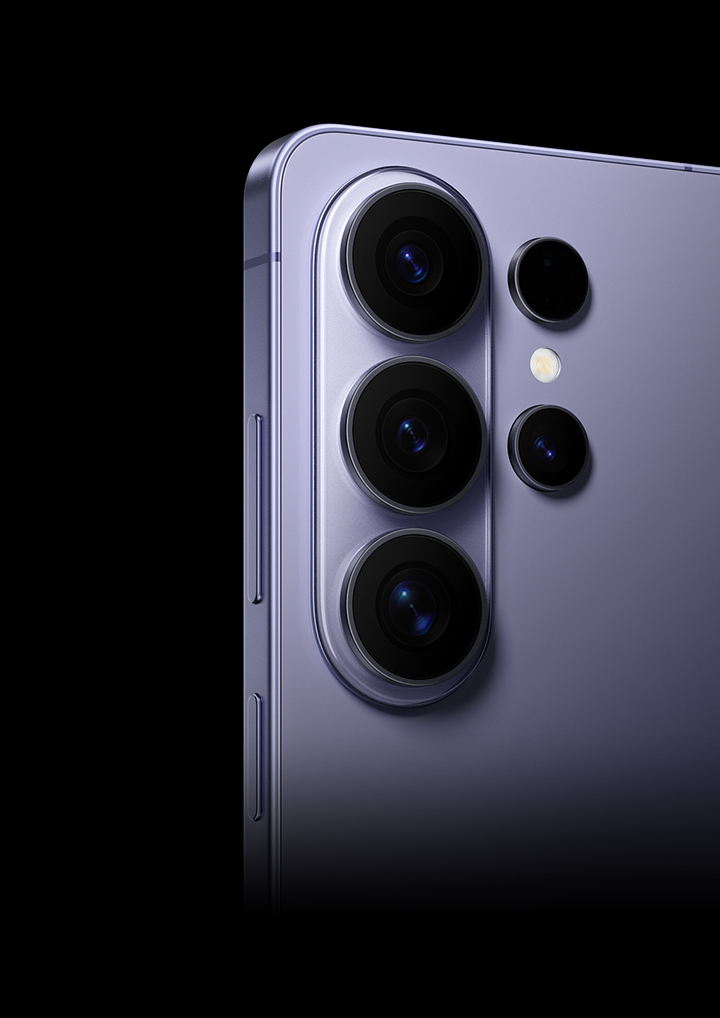
The spec sheet looks like a repeat. Same count, same resolutions. The change is in the glass.
The 200MP main opens to f/1.4 instead of f/1.7, which Samsung puts at roughly 47 percent more light. The 50MP 5x periscope moves from f/3.4 to f/2.9, around 37 percent brighter. The 50MP ultrawide and 10MP 3x telephoto carry over, and the 12MP selfie camera gets a new AI ISP.
Low light is where you notice it. Night video shows meaningfully less noise, and face processing has moved past the over-smoothed look that dogged older Galaxy output. A new anti-flare coating across the array cuts the starburst artefacts previous generations produced around bright points.
Super Steady mode adds Horizontal Lock, pulling live gyroscope and accelerometer data to correct up to 360 degrees of rotation. Push it deliberately in every direction and the footage still comes back watchable. Samsung has also added APV codec support, designed to hold quality through repeated edits.
Is this the best camera phone now? Probably not outright. Google's computational pipeline still edges it shot for shot in casual use. But the hardware gap has narrowed, and four genuine focal lengths with a bright 5x periscope is versatility nobody else offers.
Galaxy S26 Ultra Features
6.9-inch QHD+ LTPO AMOLED, 1 to 120Hz, 2,600 nits, 10-bit colour
Hardware-level Privacy Display with per-app control
Snapdragon 8 Elite Gen 5 for Galaxy
200MP main at f/1.4, 50MP 5x periscope at f/2.9
50MP ultrawide, 10MP 3x telephoto, 12MP front
Super Steady with Horizontal Lock and APV codec
5,000mAh with 60W wired and 25W wireless charging
Built-in S Pen
One UI 8.5 on Android 16 with seven years of updates
Armor Aluminum frame, Gorilla Armor 2, IP68
Software and AI
One UI 8.5 sits on Android 16, backed by seven years of OS and security updates.
Now Nudge is the most practically useful addition. It reads what is on screen and surfaces what you are about to need. Someone asks for photos from your last trip and the relevant Gallery images are already there. Someone asks about Saturday and your Calendar appears. It runs across Samsung Messages, Google Messages and WhatsApp. Whether it stays consistent in daily use is the open question.
Photo Assist now takes natural language edits directly in Gallery with noticeably fewer artefacts than earlier attempts. Creative Studio builds stickers, cards and wallpapers from photos or rough sketches. Audio Eraser now works inside third-party apps including YouTube and Netflix. Call Screening arrives on Galaxy for the first time.
Bixby has been rebuilt as an LLM-based conversational agent with Gemini and Perplexity integration, and Gemini can now run multi-step tasks in the background, such as booking a ride while you carry on using the phone.
S Pen
Still built in, and still the Ultra's sharpest differentiator. No iPhone has a stylus and no Pixel ever did.
The tip has been recurved slightly to suit the rounder display corners. Bluetooth support remains absent for a second year, so the remote shutter and presentation-clicker tricks are still gone.
Battery and Charging
The battery holds at 5,000mAh, the same as the S25 Ultra and the S24 Ultra before that. That figure is beginning to look stuck while rivals and foldables ship silicon-carbon cells with more capacity in thinner bodies. Samsung's counter is efficiency, claiming up to 31 hours of video playback, around five hours better than last year.
Charging is where the actual progress sits. Wired charging hits 60W, the fastest on any Galaxy Ultra, taking it to 75 percent from empty in about 30 minutes. Wireless rises to 25W from 15W, with reverse wireless at 4.5W.
There are still no built-in magnets for Qi2. Samsung cites slimness, which is a fair engineering answer. At this price it is also fair for buyers to have expected otherwise.
Connectivity and Security
5G, Wi-Fi 7, Bluetooth 6.0, NFC and USB-C, with GPS, GLONASS, Galileo, BDS and QZSS. Stereo speakers tuned with Dolby.
An ultrasonic in-display fingerprint sensor handles biometrics alongside face unlock. The ultrasonic reader remains one of the better in-display implementations on any phone. Face unlock is convenient but less secure for payments, as on most Android devices. Samsung Knox Vault manages sensitive data storage and on-device AI processing.
Specifications at a Glance
Specification | Detail |
Display | 6.9-inch LTPO AMOLED, QHD+, 1 to 120Hz, 2,600 nits, Gorilla Armor 2 |
Chipset | Snapdragon 8 Elite Gen 5 for Galaxy (3nm) |
RAM / Storage | 12GB or 16GB / 256GB, 512GB, 1TB, non-expandable |
Rear Camera | 200MP main (f/1.4), 50MP 5x periscope (f/2.9), 10MP 3x telephoto, 50MP ultrawide |
Front Camera | 12MP hole-punch |
Battery | 5,000mAh, 60W wired, 25W wireless, 4.5W reverse |
Security | Ultrasonic in-display fingerprint, face unlock, Knox Vault |
Connectivity | Dual-SIM, 5G, Wi-Fi 7, Bluetooth 6.0, NFC, USB-C |
Build | 163.6 x 78.1 x 7.9mm, 214g, Armor Aluminum, IP68 |
Software | One UI 8.5 on Android 16, seven years of updates |
Colours | Cobalt Violet, Sky Blue, Black, White |
Price in Nepal
Revised pricing, available now through Samsung-authorised stores:
Variant | Old Price | New Price |
12/256GB | NPR 212,999 | NPR 224,999 |
12/512GB | NPR 242,999 | NPR 259,999 |
16GB/1TB | NPR 293,999 | NPR 293,999 |
One year of breakage insurance is still included with every purchase.
Conclusion
As a phone, the S26 Ultra holds up. Coming from an S23 Ultra or older, it is a clear upgrade on cameras, speed, charging and build, with the Privacy Display as something genuinely new rather than a marketing line. Sitting on an S25 Ultra that still works well, the argument is much weaker unless faster charging or the privacy feature specifically appeals.
The pricing is the uncomfortable part. Twelve thousand rupees more on the base variant and seventeen thousand on the 512GB, for hardware that has not moved. Buyers who waited are being charged for the delay.
None of that changes the fundamentals. For power users, content creators and anyone who actually uses the S Pen, there is still no other Android phone at this price doing everything the S26 Ultra does. It just asks more of your wallet to prove it.
For more on new phone launches and prices in Nepal, Autoncell covers them as they land.