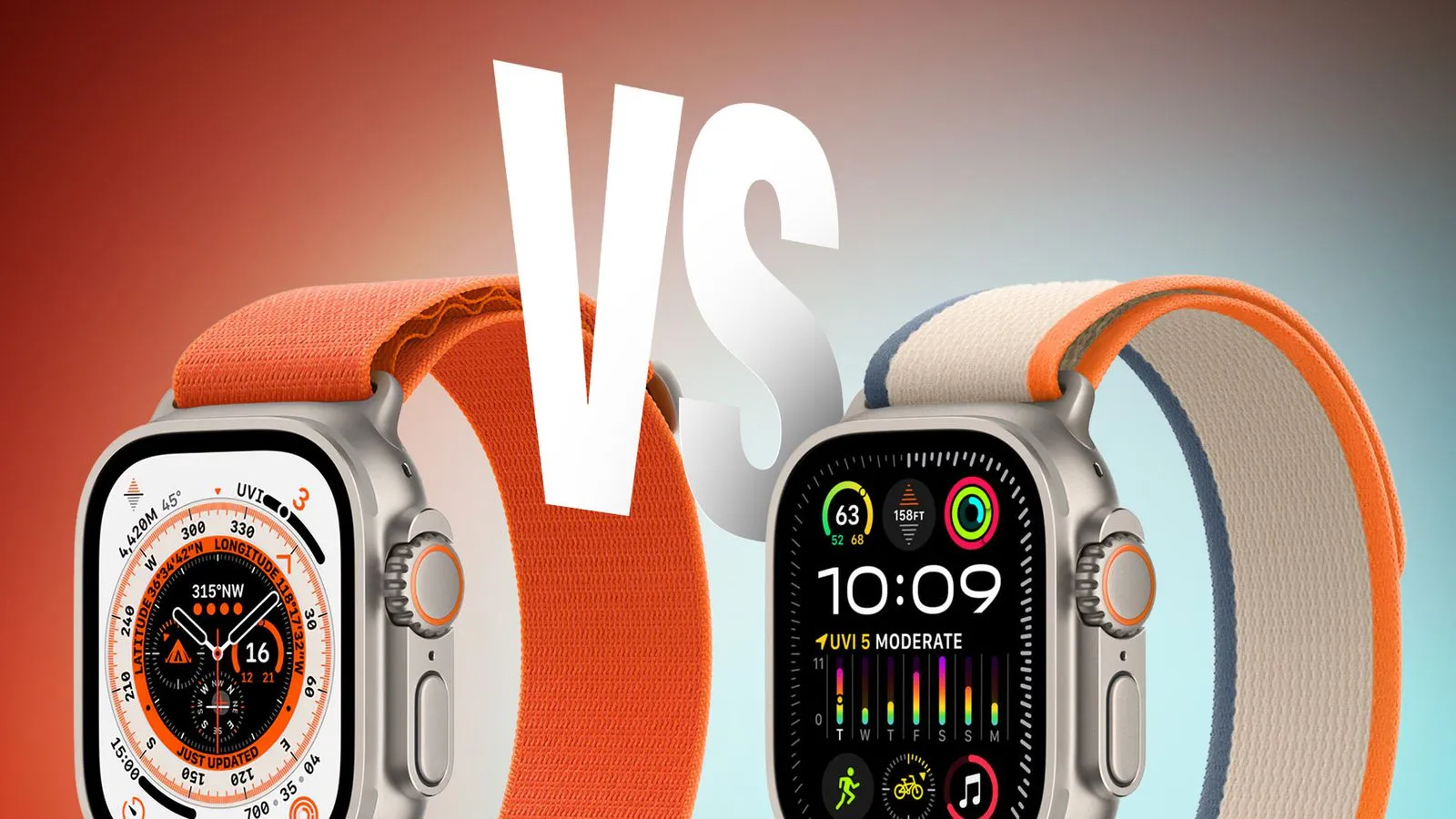
Three years separate these two watches, and Apple has used them to add satellite connectivity, a new sensor array, a bigger screen and a meaningful jump in battery life. Whether any of that justifies replacing an Ultra 2 is a different question.
The Ultra 4 starts at USD 799. The Ultra 2 has been discontinued, though Apple's refurbished store currently lists it from USD 589. Here is what actually separates them, and who should care.
What stayed the same
Quite a lot, which is the starting point for this whole comparison.
Both watches keep the 49mm titanium case, the Action button, the siren, a 3,000-nit display and dual-frequency GPS. Both are rated for recreational diving to 40 metres. Pick either off a table and you would struggle to tell them apart.
The Ultra 2 also runs watchOS 27 with Siri AI, and continues receiving new features through software updates. This is not a watch that has been left behind.
Display
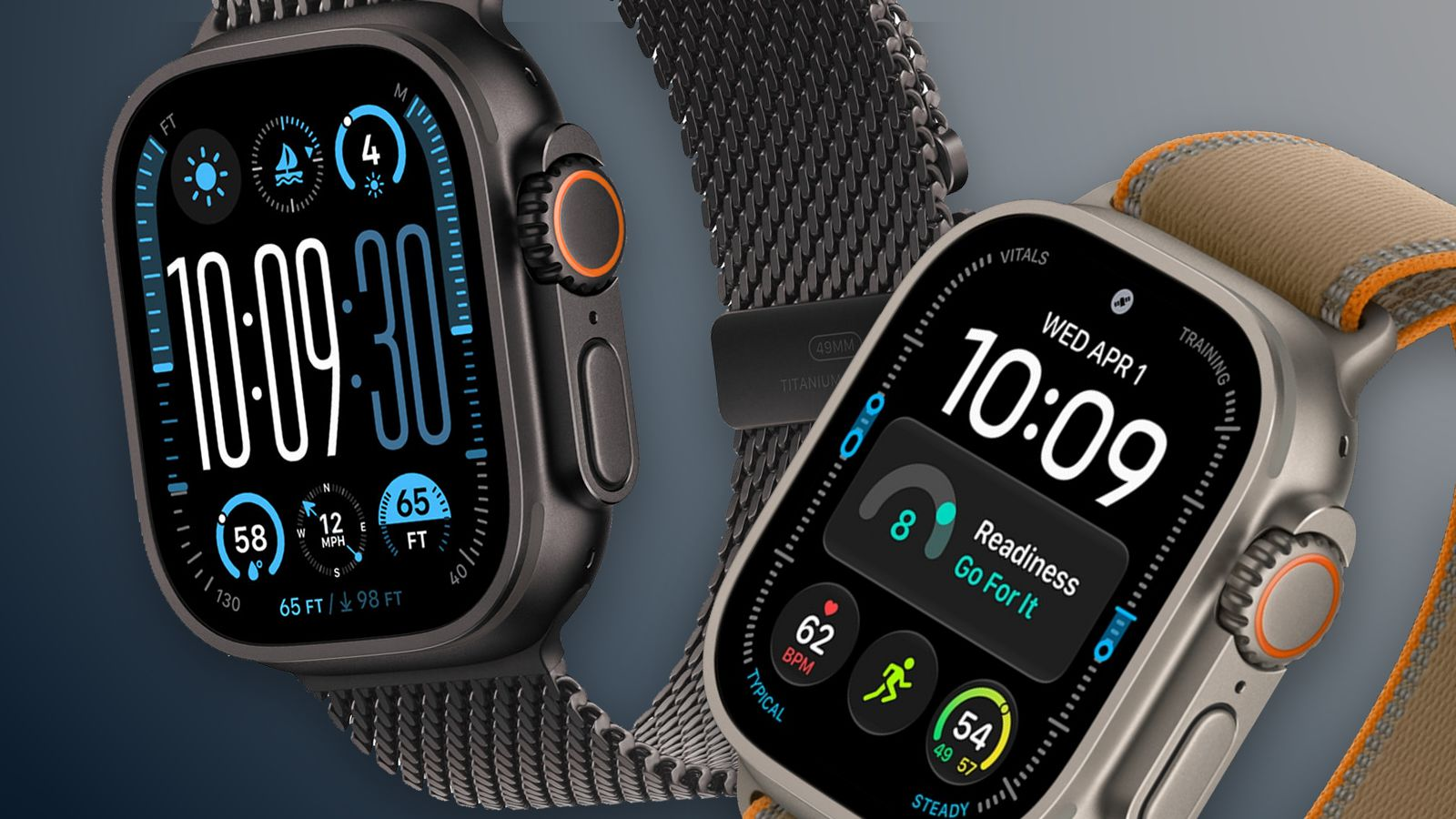
The Ultra 4 moves to a wide-angle LTPO3 OLED with a 1Hz always-on refresh, up from the Ultra 2's LTPO2 panel.
Resolution goes from 410 by 502 to 422 by 514 pixels, with display area rising from 1,185 to 1,245 square millimetres. That works out to roughly 5 percent more screen. Noticeable if you put them side by side. Not a reason to spend USD 799.
Performance
The S11 chip replaces the S9, and RAM doubles from 2GB to 4GB.
What that memory jump actually buys is more interesting than the raw specs. The S11 enables more accurate all-day step counting with a dedicated Steps complication, plus Audio Intelligence, which covers Sound Recognition, automatic music identification, Live Rewind and Siri Recap. Sound Recognition can alert you on the wrist to important surrounding sounds, while music recognition identifies songs without you asking. Live Rewind and Siri Recap arrive later in 2026.
Health sensors
This is the strongest argument for the Ultra 4, and it is not close.
The Ultra 2 carries an electrical heart sensor and a third-generation optical heart sensor. The Ultra 4 replaces both with what Apple calls the Health Sensing System, pairing a new electrical sensor with an always-on optical one.
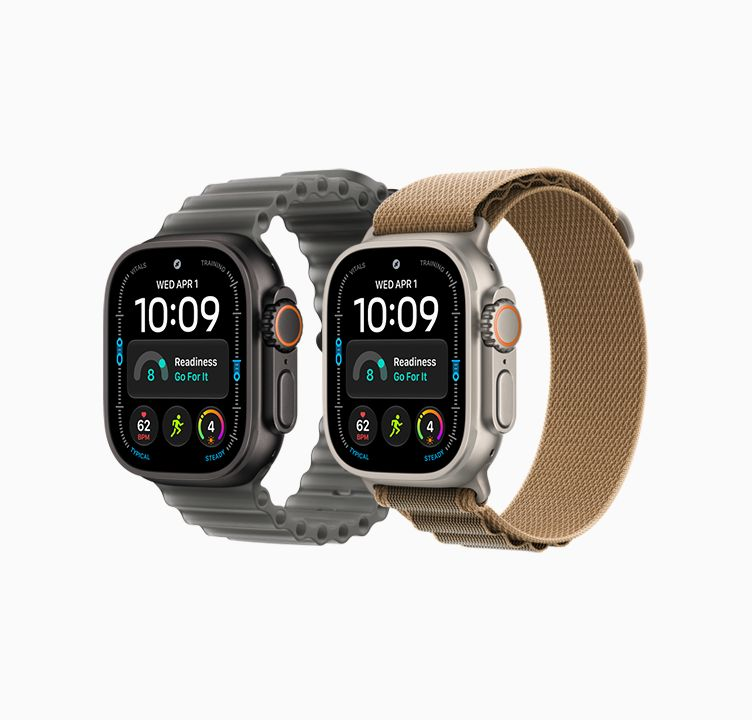
The practical difference is frequency. The Ultra 4 takes background heart-rate readings every five seconds and collects HRV data far more often, which is what makes Recovery HRV, daytime Vitals and the Readiness app possible. The Ultra 2 offers overnight Vitals only and no Readiness app at all.
If you train seriously and would actually act on recovery data, this is the upgrade. If you glance at your heart rate occasionally, it changes nothing.
Connectivity
The Ultra 4 adds 5G alongside LTE, where the Ultra 2 runs LTE and UMTS.
More significant is satellite support. The Ultra 4 handles Emergency SOS, Messages and Find My via satellite, which the Ultra 2 cannot do at all. For anyone spending time outside cellular coverage, that is a genuine safety feature rather than a convenience.
One small regression worth flagging: the Ultra 2 supports GLONASS in its dual-frequency GPS and the Ultra 4 does not.
Battery
The gains here are substantial across the board.
Normal use goes from 36 to 50 hours, and Low Power Mode from 72 to 84. Standard outdoor workout tracking rises from 12 to 18 hours. The Ultra 2 managed 17 hours of outdoor workout tracking in Low Power Mode with full GPS and heart rate, while the Ultra 4 stretches that to 25 hours in Extended Workout mode. At the far end, the Ultra 2's 35 hours with reduced GPS becomes 45 hours in Max Extended Workout mode, and the Ultra 4 still takes GPS readings every second while doing it.
Charging improves too, reaching 80 percent in about 45 minutes versus roughly an hour.
The Ultra 4 is slightly heavier as a result, at 63.0 grams in natural titanium against 61.4 grams.
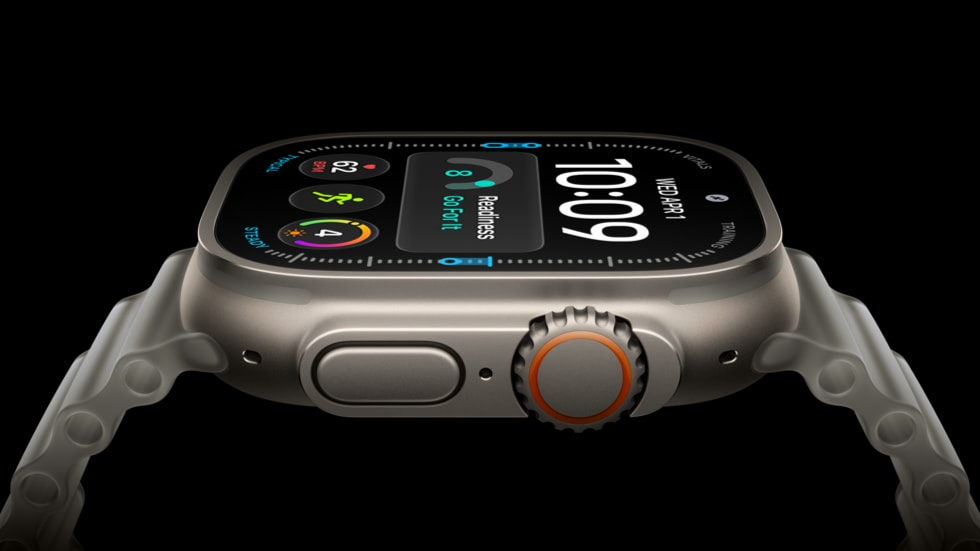 Specifications Compared
Specification | Apple Watch Ultra 2 | Apple Watch Ultra 4 |
Display | LTPO2 OLED, always-on | Wide-angle LTPO3 OLED, 1Hz always-on |
Resolution | 410 x 502, 1,185 sq mm | 422 x 514, 1,245 sq mm |
Chip | S9 | S11 |
RAM | 2GB | 4GB |
Heart Sensors | Electrical plus third-gen optical | Health Sensing System, always-on optical |
Heart-Rate Tracking | Background measurements | Every five seconds |
HRV | Standard measurements | More frequent, plus Recovery HRV |
Vitals | Overnight only | Overnight and daytime |
Readiness App | No | Yes |
Cellular | LTE and UMTS | LTE and 5G |
Satellite | No | Emergency SOS, Messages, Find My |
Audio Intelligence | No | Yes |
Battery (normal use) | Up to 36 hours | Up to 50 hours |
Battery (Low Power) | Up to 72 hours | Up to 84 hours |
Outdoor Workout | Up to 12 hours | Up to 18 hours |
Extended Workout | Up to 17 hours, reduced readings | Up to 25 hours, full readings |
Max Extended Workout | Up to 35 hours, fewer readings | Up to 45 hours, GPS every second |
Charging | 0 to 80% in about 1 hour | 0 to 80% in about 45 minutes |
Weight (natural titanium) | 61.4g | 63.0g |
GPS | Dual-frequency, includes GLONASS | Dual-frequency, no GLONASS |
Price
Model | Price (US) |
Apple Watch Ultra 4 | From USD 799 |
Apple Watch Ultra 2 (refurbished) | From USD 589 |
The Ultra 2 has been discontinued as a new product, so the refurbished listing is the realistic route to one.
Neither model has an official Nepal price announced by Apple. We are not estimating a local figure here. Anything available through grey channels will vary, and we will update once authorised pricing exists.
Should you upgrade from an Ultra 2?
For most people, no.
If your Ultra 2's battery still gets you through your usual days and workouts, keep it. It runs watchOS 27 with Siri AI and will continue picking up new software features. The design is identical, the core capabilities are intact, and you are not missing much day to day.
The case flips if you fall into one of two groups. Serious athletes who would genuinely use Recovery HRV, daytime Vitals and the Readiness app to adjust training will find the Health Sensing System a real step forward. So will anyone who spends time beyond cellular coverage, where satellite messaging is a safety feature rather than a spec line.
Long-workout users also benefit. Going from 12 to 18 hours of standard outdoor tracking, or 35 to 45 hours at the extreme end with better GPS sampling, changes what the watch can cover.
Buying one now?
If you are coming to the Ultra fresh, the Ultra 4 is the safer purchase, and the reason is future-proofing rather than any single feature.
The S11 chip, 4GB of RAM and the Health Sensing System are what enable Readiness, detailed recovery metrics and Audio Intelligence, with Live Rewind and Siri Recap still to arrive later in 2026. Hardware determines what software updates can reach you, and buying the older chip means being cut off from features sooner.
That said, the Ultra 2 at USD 589 is not a bad watch. It is USD 210 cheaper, shares the same design and covers the same core ground. If you want a rugged Apple Watch and do not need the new sensors, satellite connectivity or the extra battery, the discount is real and the compromise is known.
For more on new launches, comparisons and prices, Autoncell covers them as they land.