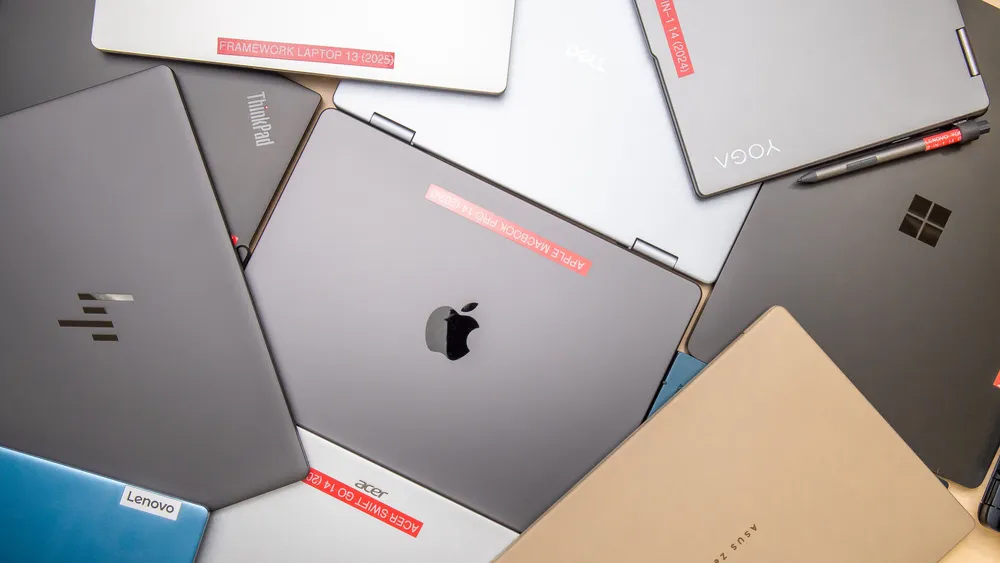
Think about how many laptops you see in a day. In a college corridor, a co-working space, an office floor. Now consider that three companies made more than half of them.
That is what the latest global ranking of laptop brands comes down to. Lenovo ships 48.5 million units a year, HP 39 million, Dell 28.5 million. Keep scrolling down the same list and you reach VAIO at 200,000. Sony's old premium badge, still going, still selling fewer laptops in a year than Lenovo sells in about a day and a half.
The full list is below. But the ranking itself is only half the story, because the market it describes has just started going backwards for the first time in over two years.
The full rankings
Rank | Brand | Country | Annual Units Sold |
1 | Lenovo | China | 48.5 million |
2 | HP | USA | 39 million |
3 | Dell | USA | 28.5 million |
4 | Apple | USA | 23.5 million |
5 | ASUS | Taiwan | 15.5 million |
6 | Acer | Taiwan | 14 million |
7 | MSI | Taiwan | 3 million |
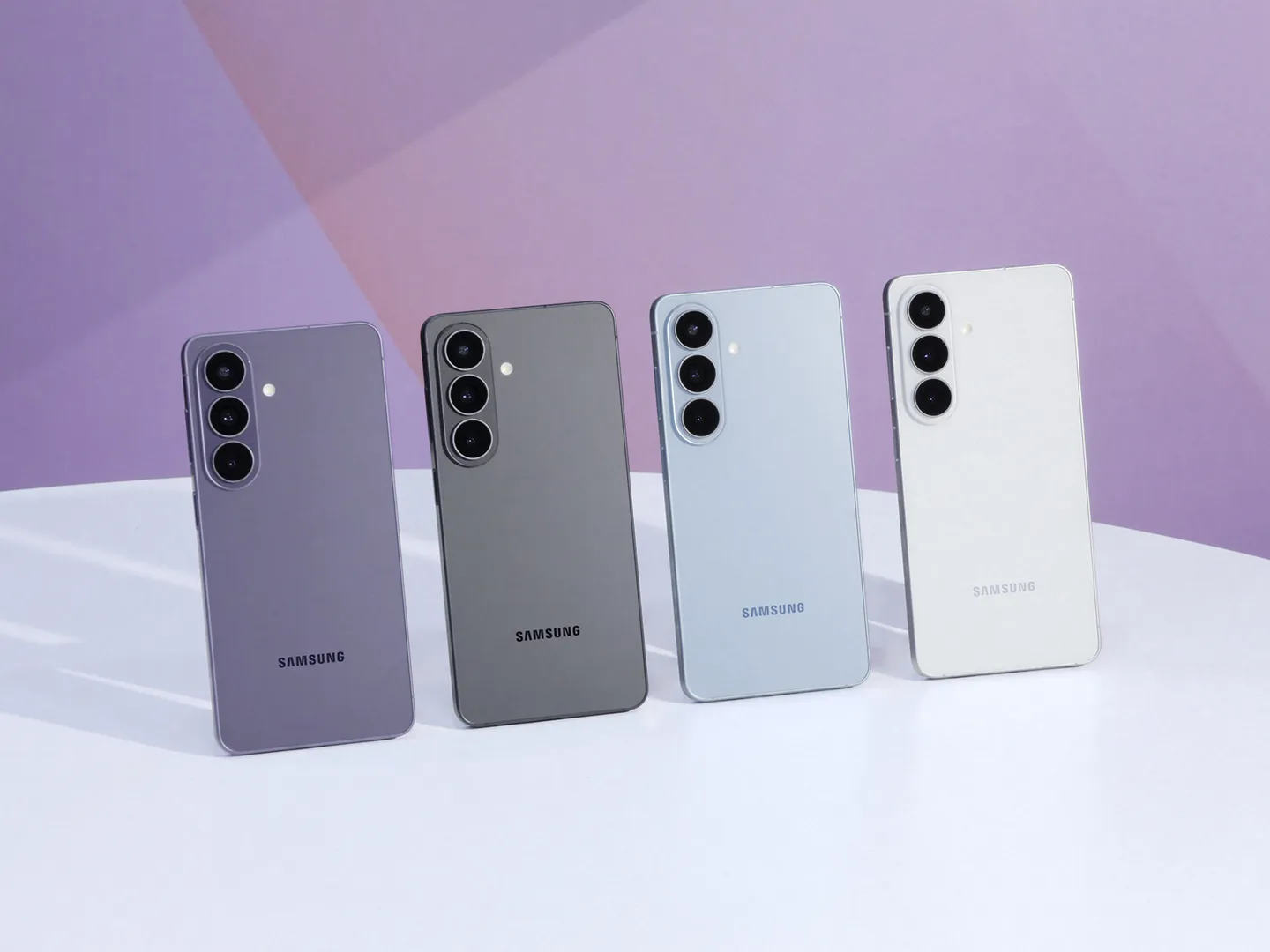
8 | Samsung | South Korea | 2.5 million |
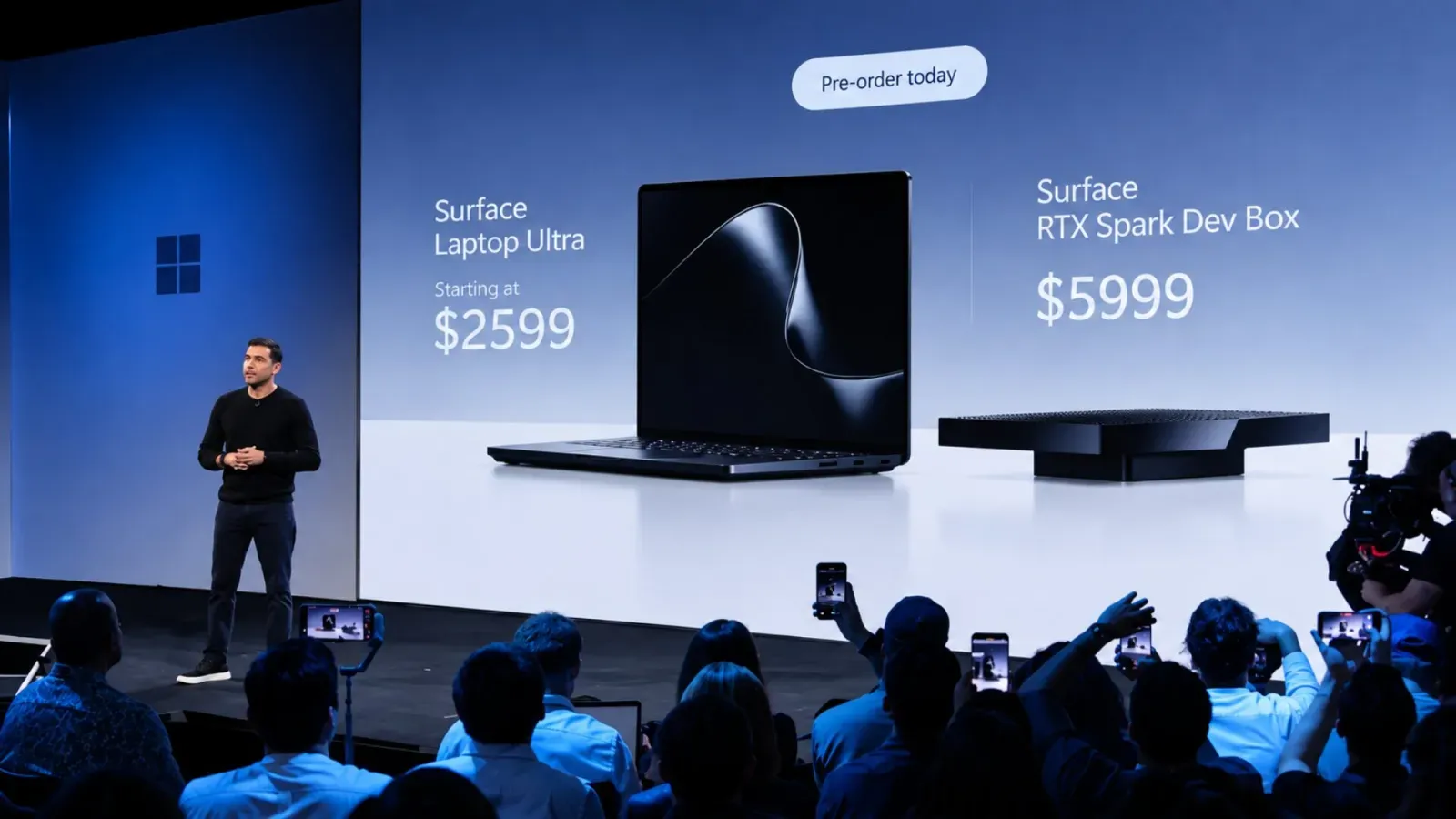
9 | Microsoft | USA | 2.5 million |
10 | Huawei | China | 2 million |
11 | Positivo | Brazil | 1.5 million |
12 | LG | South Korea | 1.2 million |
13 | Honor | China | 1 million |
14 | Xiaomi | China | 800,000 |
15 | Razer | USA | 600,000 |
16 | Fujitsu | Japan | 500,000 |
17 | Dynabook | Japan | 500,000 |
18 | Gigabyte | Taiwan | 400,000 |
19 | Panasonic | Japan | 300,000 |
20 | VAIO | Japan | 200,000 |
Three brands, over half the market
Lenovo, HP and Dell move roughly 116 million of the 184 million units on this list between them. Sixty-three percent of the global laptop market, three companies.
Bring in Apple, ASUS and Acer and the top six covers about 169 million units, or 92 percent. Everyone from MSI downward is scrapping over the remaining eight.
The detail that jumps out is what happens after Acer. Acer sits at 14 million. MSI, the very next name, manages 3 million. That is not a gentle taper, it is a cliff, and it splits the list into two completely different kinds of business. Above the line you have companies selling to governments, schools and corporate IT departments. Below it you have specialists.
What each tier actually represents
The volume leaders.
Lenovo and HP did not get here by making laptops people fall in love with. They got here through enterprise contracts and education tenders, where one purchase order moves tens of thousands of machines. Neither company needs any single product to succeed.
Dell.
At 28.5 million, Dell plays the same game as the two above it, weighted heavily toward corporate and institutional buyers.
Apple.
Here is where unit counts mislead. Apple ships roughly half what Lenovo does, but sells almost none of it cheap. On revenue, the gap looks nothing like it does on this chart. Apple is also the only major vendor still growing while everyone else contracts.
The mid-pack.
ASUS at 15.5 million and Acer at 14 million sit between enterprise scale and consumer appeal, with Acer leaning harder into budget and education, particularly Chromebooks.
The specialists.
MSI, Razer and Gigabyte build gaming machines and not much else. Between them they move 4 million units, less than a tenth of Lenovo's volume, on margins a general-purpose brand could only envy.
The regional players.
Positivo is invisible globally and a serious name in Brazil. Dynabook and Fujitsu carry what survived of Toshiba's and Fujitsu's PC divisions, mostly serving Japanese enterprise buyers. And VAIO, once the badge Sony put on its most desirable machines, now moves 200,000 units a year as an independent company.
The phone brands.
Samsung, Huawei, Honor and Xiaomi have all tried laptops as an ecosystem play rather than a real business. Their combined 6.3 million units is a fair measure of how hard this market is to break into from outside.
What the numbers show
The top three brands hold roughly 63 percent of global laptop sales
The top six hold about 92 percent
Lenovo sells more than twice as much as Apple and over 240 times VAIO
Gaming specialists MSI, Razer and Gigabyte together move 4 million units
Phone-first brands Samsung, Huawei, Honor and Xiaomi total 6.3 million
Fourteen of the twenty brands sell under 3 million units a year
Taiwan, Japan, China and the USA each place four brands on the list
How this compares to total PC shipments
A quick note on what these figures cover, because laptop-only numbers look very different from the PC data most people quote.
IDC counts traditional PCs as desktops, notebooks and workstations together, and on that basis global shipments hit 248.7 million units in 2025, up 8.1 percent. Gartner's count came in above 270 million, with growth at 9.1 percent.
By vendor, IDC's 2025 totals were around 70.8 million for Lenovo, 57.5 million for HP, 41.1 million for Dell, 25.6 million for Apple and 20.5 million for ASUS.
Put the two side by side and the ratios hold up. Lenovo's 48.5 million laptops are about 68 percent of its total PC shipments. HP lands on the same figure, Dell on 69 percent. Apple's 23.5 million against 25.6 million works out to 92 percent, which is precisely what you would expect from a company that sells far more MacBooks than desktops.
The market behind the chart has already turned
A ranking like this reads like a photograph of a stable industry. It is not.
Global PC shipments fell 4.9 percent year over year in the second quarter of 2026, down to 68.2 million units from 71.7 million. That broke nine straight quarters of growth and marked the first annual decline since early 2024.
The reason is not that people stopped wanting computers. It is what is inside them. DRAM and NAND prices have surged 130 percent, a run Gartner has taken to calling memflation, and IDC now expects global PC shipments to fall about 11.3 percent across full-year 2026, the worst annual drop in over a decade.
That cost lands straight on the machine. Memory was roughly 16 percent of a PC's component cost in 2025 and around 23 percent in 2026, and HP told investors memory had reached 35 percent of its bill of materials. Average selling prices are climbing about 17 percent as a result.
And it is not clearing up soon. IDC does not expect the shortage to ease until early 2028, with manufacturers bracing for further increases in 2027.
Why the bottom of the list should worry you
Here is what a memory shortage does to a ranking like this.
IDC has flagged the risk of further consolidation, as the big players use their scale across phones and servers to lock in memory supply and squeeze out smaller rivals.
Now look at the bottom half of the chart again. Razer at 600,000 units, Gigabyte at 400,000, Panasonic at 300,000, VAIO at 200,000. All of them buying memory in a market where one Lenovo order dwarfs their entire year's requirement. When supply gets tight, allocation follows volume. It always has.
The pressure is already visible at the top. Lenovo held the lead in Q2 2026 with 16.6 million units and 24.4 percent share, but shipments still slipped 2.1 percent. HP fell hardest among the leaders at 9 percent, Dell dropped 5 percent. Apple was the lone exception, growing 10.1 percent to take 9.9 percent share.
If a company Lenovo's size is shrinking, ask yourself what the brands at the bottom of this list are dealing with.
What it means if you are buying in Nepal
Laptop prices are going up everywhere, and this time it has nothing to do with local taxes or a distributor's margin. If a machine you had your eye on has jumped in price, that is the memory market, not the showroom.
Waiting it out is not much of a plan right now. With the shortage running into 2028 and more increases expected in 2027, whatever a laptop costs today may turn out to be the cheapest it gets for a while.
RAM and storage are where this bites hardest. When memory is nearly a quarter of what a laptop costs to build, the jump from 16GB to 32GB, or 512GB to 1TB, gets expensive out of all proportion. Buy the configuration you actually need now rather than telling yourself you will upgrade later.
There is also a case for sticking with the bigger names at the moment. Not because their laptops are better, but because supply, warranty support and spare parts all get harder for a company without scale in a market this tight.
Conclusion
What this list really shows is concentration. Six brands, 92 percent of every laptop sold, and everyone else working the edges of a market they cannot influence.
What it cannot show is that the ground has already shifted. Nine quarters of growth ended this year, memory costs have more than doubled, and the industry is walking into its worst contraction in more than ten years.
A ranking tells you who won the last round. The question worth asking is who is built to survive the next one, and on that measure the distance between the top of this list and the bottom is a lot wider than any unit count makes it look.
For more on new launches, prices and the tech market in Nepal, Autoncell covers them as they land.