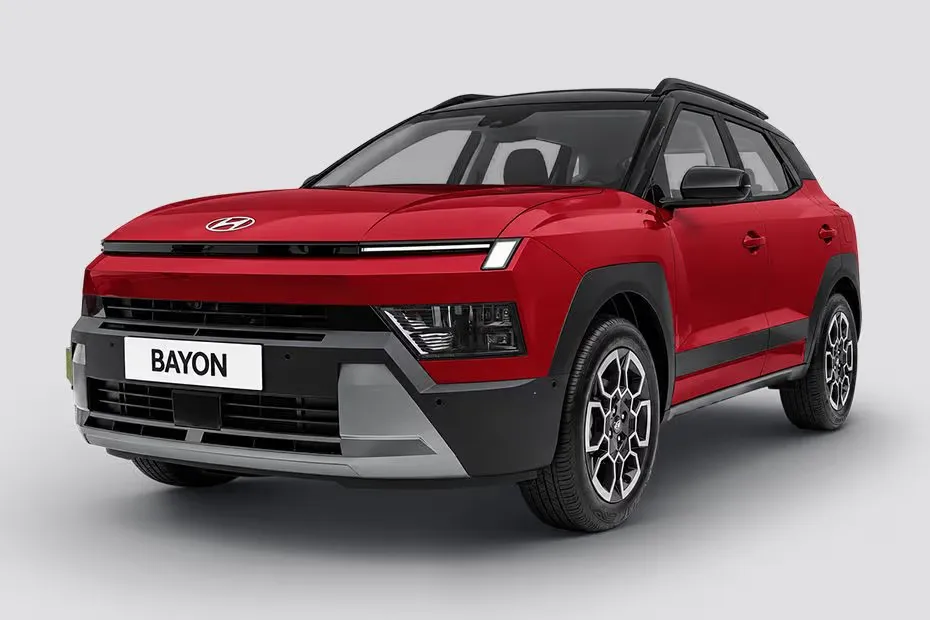
Hyundai has built a sub-Creta SUV with Level 2 ADAS running 23 functions, twin 12.3-inch screens and 205mm of ground clearance, and priced it from INR 9.99 lakh.
That specification list belonged two segments higher a couple of years ago. It is now the entry point to Hyundai's SUV range in India, which tells you how quickly this market has moved.
The Bayon is expected in Nepal in the first quarter of 2027, though Hyundai has not confirmed a date or local pricing.
Design
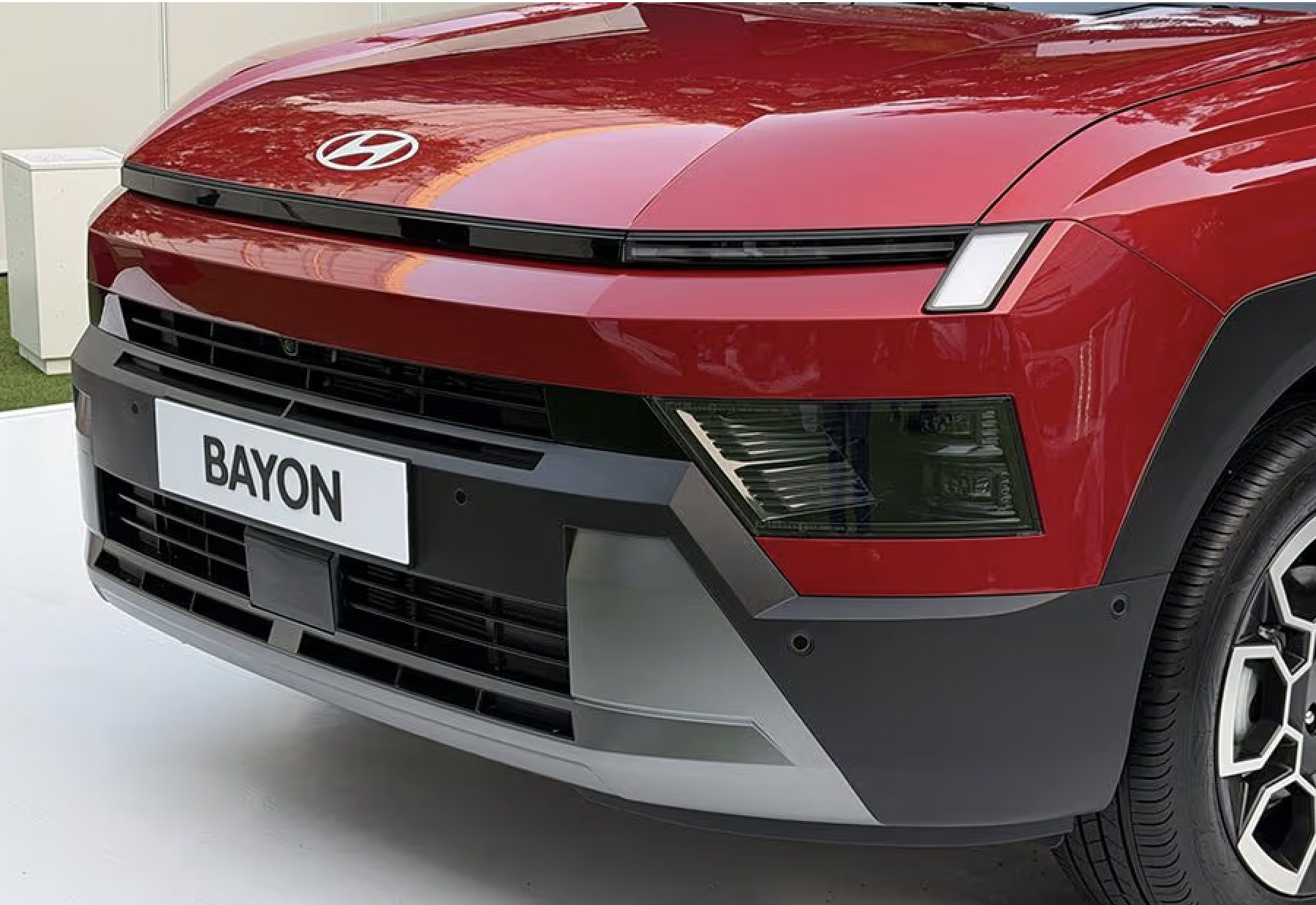
The Bayon adopts Hyundai's latest Art of Steel design language, built around angular surfaces and a distinctive lighting signature.
Up front there are LED projector headlamps paired with L-shaped LED daytime running lights that double as turn indicators. The bumper carries contrasting black and silver cladding for a more rugged look.
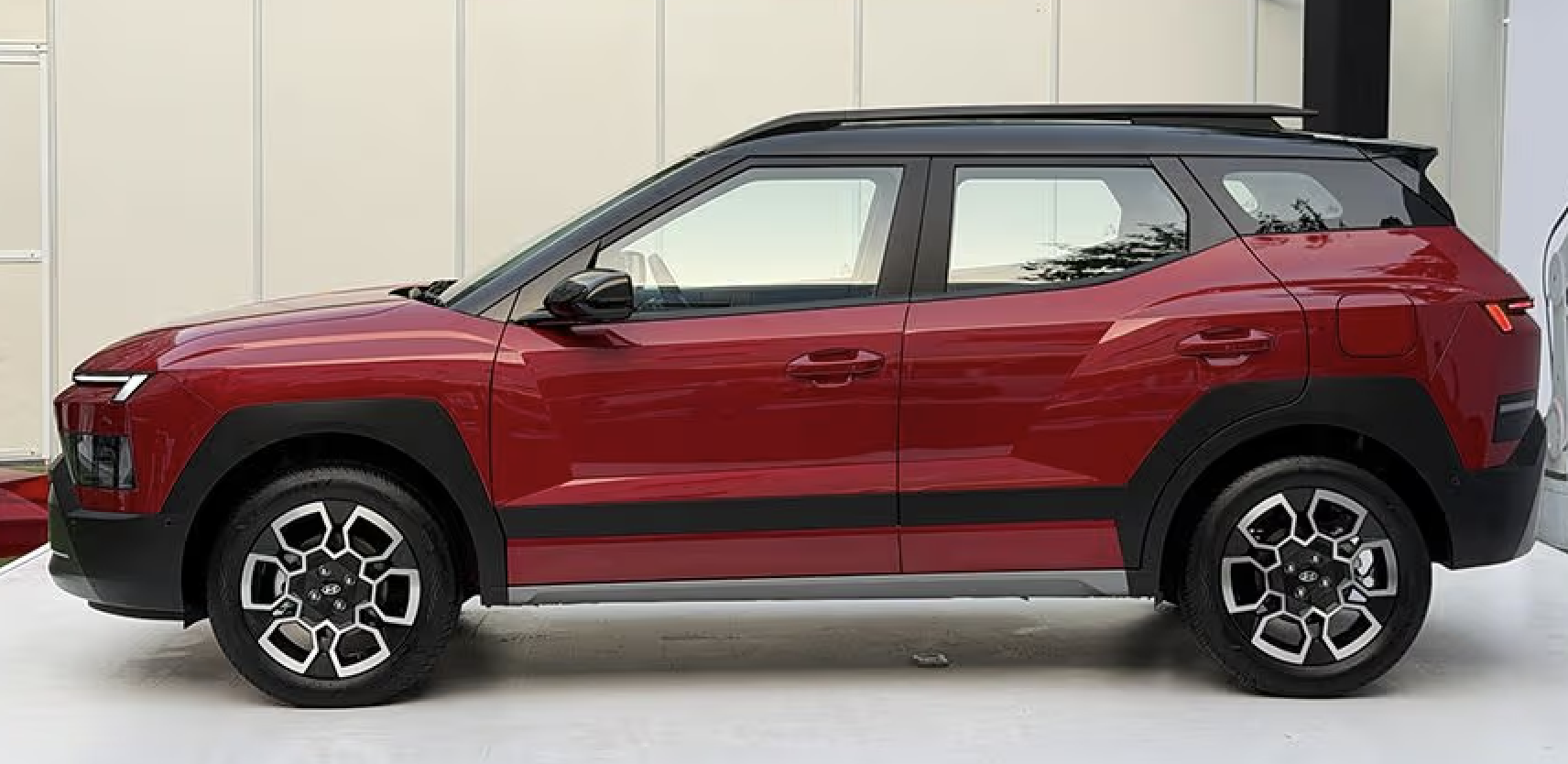
Down the side are flared wheel arches, sharp character lines, black cladding and 17-inch diamond-cut alloys in a petal design. The rear gets slim LED tail lamps set against a black trim section, BAYON lettering across the tailgate and a roof spoiler with an integrated stop lamp.
It measures 4,245mm long on a 2,600mm wheelbase, placing it below the Creta.
The two numbers that matter most for Nepal are 205mm of ground clearance and 505 litres of boot space. Both are genuinely useful here, and 205mm clears most of what you will encounter outside the valley.
Interior
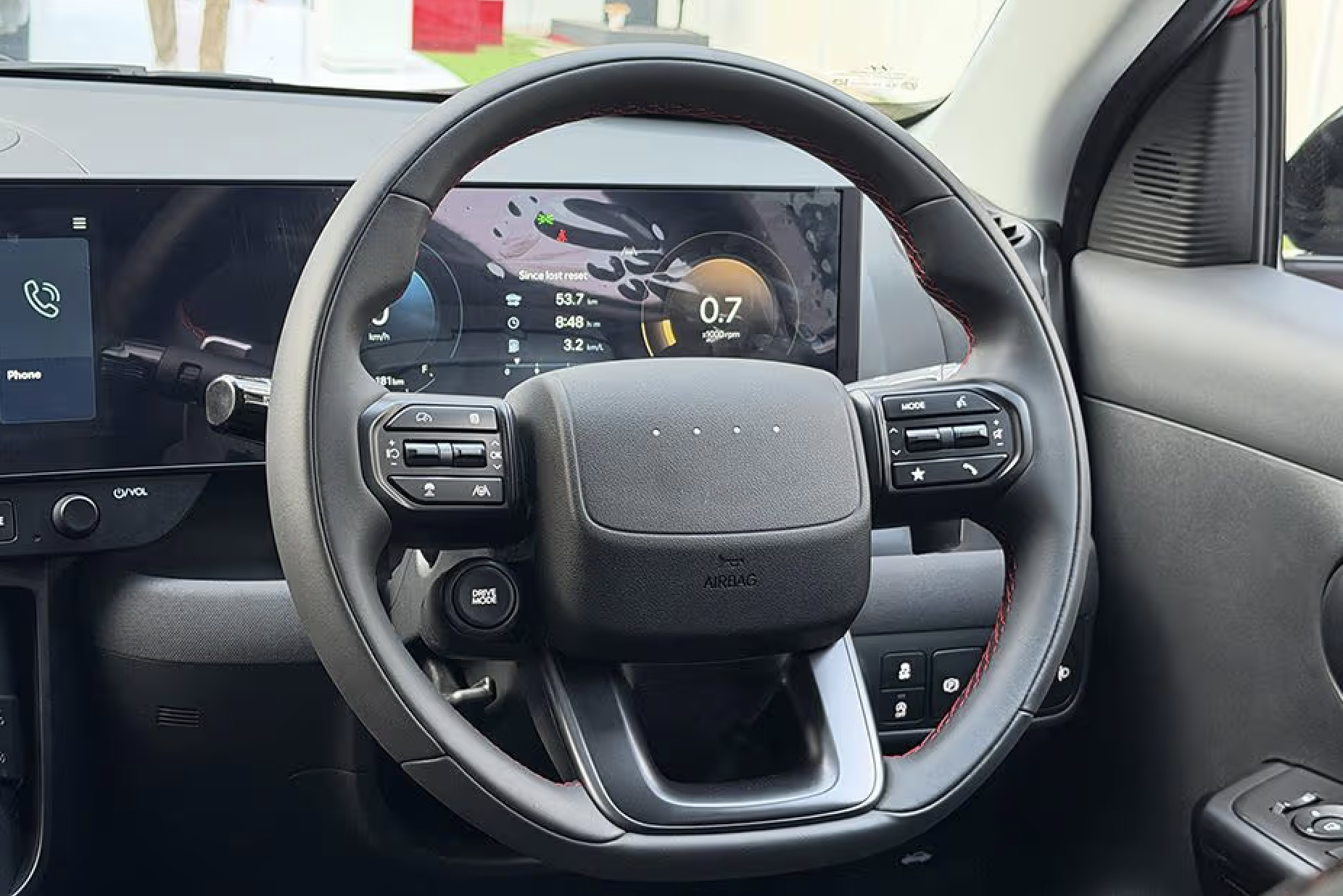
The cabin is where the Bayon makes its strongest case.
There are two 12.3-inch displays in a curved layout, one serving as the digital instrument cluster and the other handling infotainment. The dashboard uses a vertically arranged climate panel with shortcut buttons and haptic controls on the centre console, alongside a dual-tone D-cut steering wheel and a drive mode selector offering Eco, Normal and Sport.
Depending on variant, the list runs to a panoramic sunroof, ventilated front seats, a powered driver's seat, ambient lighting, a Bose sound system, wireless charging, Type-C ports and rear AC vents. There is also a rear armrest with cup holders and two-step reclining rear seats.
Technology
The infotainment runs on Hyundai's Connected Car Navigation Cockpit platform, supported by Nvidia technology.
Bluelink connected car services cover more than 70 functions, including remote vehicle controls, vehicle information, smartphone and smartwatch connectivity and navigation.
The more unusual addition is Hyundai Motor India's generative AI voice assistant, which pairs Perplexity's intelligence with SoundHound AI's voice technology. Both the infotainment and instrument cluster support 10 regional languages alongside two international ones.
Engine
Power comes from a 1.5-litre four-cylinder naturally aspirated MPi petrol producing 115 PS and 144 Nm, driving through a six-speed manual or an Intelligent Variable Transmission automatic.
Hyundai quotes an ARAI-certified 18.6 kmpl for the petrol iVT. The automatic also gets Dash Boost Mode and paddle shifters.
No turbo, no hybrid, and no diesel. For a car in this bracket that is a straightforward powertrain, adequate rather than exciting, and it is the one area where the Bayon's specification is conventional.
Safety
This is the headline, and it is substantial.
Six airbags are standard alongside Hyundai SmartSense Level 2 Pro ADAS, comprising 23 functions. That covers collision warning and avoidance assistance, lane-keeping assistance, blind-spot assistance and highway driving assistance.
Beyond ADAS there is a 360-degree Surround View Monitor, a Blind-spot View Monitor, disc brakes on all four wheels, hill-start assist, electronic stability control, tyre pressure monitoring, parking sensors and an electronic parking brake with auto hold.
The Bayon sits on Hyundai's Global K Enhanced Platform, engineered around occupant protection, with advanced high-strength steel used through the body structure. Bharat NCAP results are expected by the end of 2026.
Discs at all four corners deserve a mention. Plenty of SUVs at this price still run rear drums.
Hyundai Bayon features
Twin 12.3-inch curved displays
Level 2 Pro ADAS with 23 functions
Six airbags as standard
360-degree Surround View Monitor and Blind-spot View Monitor
Disc brakes on all four wheels
Panoramic sunroof and ventilated front seats
Powered driver's seat and ambient lighting
Bose sound system and wireless charging
Rear AC vents and two-step reclining rear seats
Bluelink with over 70 connected functions
Generative AI voice assistant using Perplexity and SoundHound
Drive modes: Eco, Normal and Sport
Specifications
Specification | Detail |
Engine | 1.5-litre, four-cylinder, naturally aspirated MPi petrol |
Max Power | 115 PS |
Peak Torque | 144 Nm |
Transmission | 6-speed manual or iVT automatic |
Claimed Efficiency | 18.6 kmpl (petrol iVT, ARAI) |
Length | 4,245 mm |
Wheelbase | 2,600 mm |
Ground Clearance | 205 mm |
Boot Space | 505 litres |
Wheels | 17-inch diamond-cut alloys |
Platform | Global K Enhanced |
Airbags | Six |
ADAS | SmartSense Level 2 Pro, 23 functions |
Brakes | Disc on all four wheels, electronic parking brake with auto hold |
Displays | Two 12.3-inch screens |
Variants | HX2, HX3, HX3+, HX5, HX6, HX8, HX10 |
Price in India
Model | Starting Price (Ex-showroom) |
Hyundai Bayon | INR 9.99 lakh |
Seven variants | HX2, HX3, HX3+, HX5, HX6, HX8 and HX10. |
When will it reach Nepal?
The Bayon is expected in Nepal during the first quarter of 2027, though Hyundai has not confirmed an official launch date or Nepal-specific pricing. We are not estimating a local figure here.
Two things make the timeline credible. Hyundai builds the Bayon at its Chennai facility in both right-hand-drive and left-hand-drive configurations, and plans to export it to more than 50 countries across the Middle East, Africa, Central and South America and the Asia-Pacific region.
A model engineered from the outset for export, built in India, with a distributor already established here in Laxmi Intercontinental, has a far shorter path to Nepal than most.
Anyone shopping now should note that Hyundai's festive campaign is running with cash discounts, free insurance and road tax on the current range. If the Bayon is a year out, those offers are the near-term consideration.
Conclusion
The Bayon's case rests almost entirely on equipment.
Level 2 ADAS with 23 functions, six airbags, four-wheel discs, twin 12.3-inch screens and 205mm of ground clearance at INR 9.99 lakh is a serious package, and the safety content in particular is well ahead of what this price usually buys.
The engine is the compromise. A naturally aspirated 1.5 making 115 PS will move the car perfectly well without ever making the case for itself, and in a market drifting toward turbos and hybrids, that is the specification most likely to look dated first.
For Nepal, the practical draw is simpler. A compact SUV with 205mm of clearance, a 505-litre boot and that much safety equipment suits local conditions well. Whether it arrives at a price that preserves the value argument is the question nobody can answer yet.
For more on new launches, prices and the auto market in Nepal, Autoncell covers them as they land.