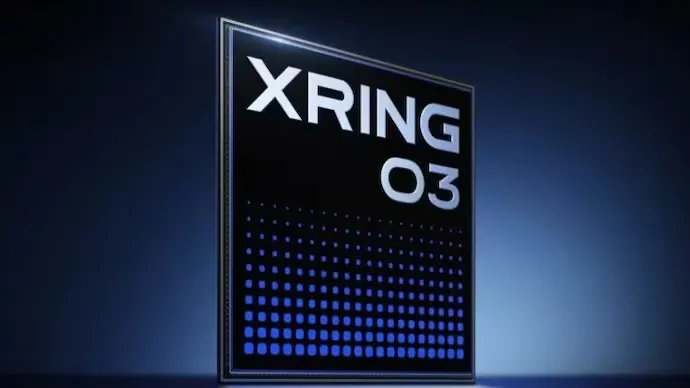
Xiaomi has spent years being the company that put other people's chips in its phones. That era is ending. The brand has pulled the wraps off three home-grown processors, and the flagship of the trio, the Xring O3, is already doing something no mobile chip has managed before: scoring past five million points on AnTuTu.
It debuts in September inside the Xiaomi 18 Fold and the Pad 9 Pro Max, and while a benchmark record is not the same as a great phone, this is a genuine statement of intent. Xiaomi is no longer content to buy its silicon. It wants to build it.
The Headline Number
Let's start with the figure everyone is quoting. The Xring O3 reportedly scored 5,228,014 points on AnTuTu V11, making it the first mobile chip to break the five-million barrier. On Geekbench 6.5 it managed 3,945 single-core and 15,221 multi-core, numbers that put it at the front of the current pack. Interestingly, Apple's A19 Pro still edges it on single-core, but in multi-core the Xring O3 has almost nobody to beat.
A word of caution, though. An AnTuTu score is a lab number, not a promise. It tells you nothing about how the chip behaves after twenty minutes of gaming or a hot afternoon. Still, crossing a milestone like this is a real achievement for a chip business barely out of its infancy.
What's Inside
The O3 is built on TSMC's 3nm process and packs a dense 24 billion transistors. The CPU is a 10-core design with a tiered layout: two C1-Ultra cores running up to 4.35GHz, four C1-Premium cores at 3.68GHz, and four C1-Pro cores at 3.15GHz. Xiaomi claims that adds up to roughly 60 percent more multi-core muscle than its previous chip.
But the graphics are where Xiaomi is shouting loudest. The new 16-core G2-Ultra NX GPU reportedly delivers up to 85 percent higher graphics performance while cutting power draw by 64 percent. That efficiency claim matters more than the raw speed, because a foldable phone with a big screen and heavy multitasking lives or dies on how well it manages heat and battery.
Faster Memory and Serious AI
The O3 is also Xiaomi's first chip to support LPDDR6 memory, the newer, quicker standard, with bandwidth reaching 113.8GB/s. For a foldable juggling of large-screen apps and on-device AI, faster memory is arguably more useful day-to-day than a headline benchmark.
On the AI front, Xiaomi is pushing hard: 200 TOPS of tensor performance, 3.13 TFLOPS of vector performance, and a 45 percent bump in NPU power. Rather than dumping all the AI work on one block, Xiaomi spread the acceleration across the CPU, GPU, ISP, DPU and ADSP. The company also mentioned a static latency figure of 82ns and, tellingly, revealed the chip took 459 days to develop.
Not Just a Phone Chip
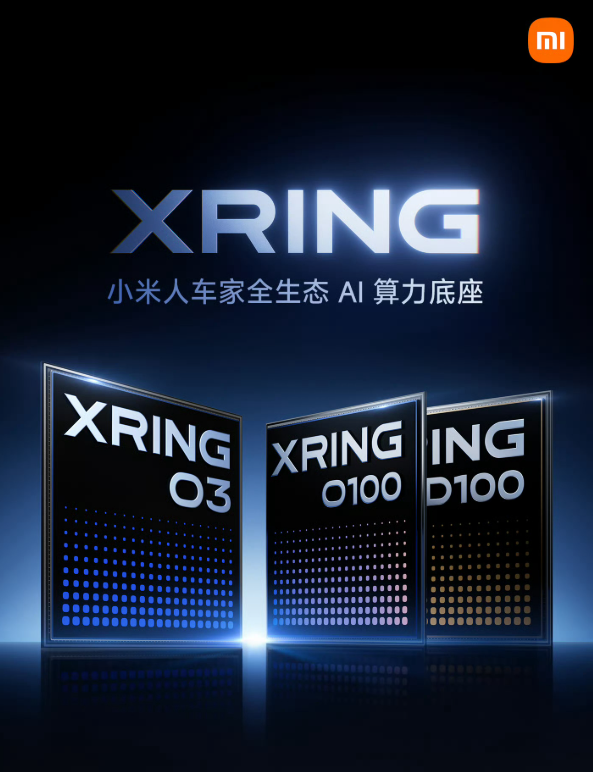
The O3 grabbed the spotlight, but it arrived with two siblings, and together they reveal the bigger plan. The Xring O100 is a 6nm AI-focused chip built around a near-memory architecture designed to stop AI processors choking on data traffic. The Xring D100 is aimed squarely at intelligent driving, a 3nm chip with a 20-core CPU that can run AI models with up to 200 billion parameters locally, with commercial rollout planned for 2027.
Notice the spread there. Phones, AI and cars. Xiaomi is not building one chip; it is building silicon for an entire ecosystem, from the handset in your pocket to the EV on your driveway.
Why Xiaomi Is Doing This
The logic is the same one driving every big tech company toward its own silicon: control. When Xiaomi designs the chip, it decides exactly how the hardware and software fit together, and it can tune a device for the precise workloads it cares about. It also loosens Xiaomi's dependence on Qualcomm and MediaTek, and the leverage that brings is worth real money.
That said, Xiaomi is being measured about it. The Xring O3 is launching in the 18 Fold and a tablet, not the mainstream flagships, and the more conventional Xiaomi 18 Pro and 18 Pro Max at the same event will still run Qualcomm's Snapdragon 8 Elite Gen 6. Xiaomi is proving its silicon in a premium, low-volume showcase first, with initial 18 Fold production reportedly capped around 200,000 to 300,000 units. This is a careful rollout, not a clean break from Qualcomm.
What It All Adds Up To
A 3nm design, a genuinely powerful new GPU, LPDDR6 support and a record AnTuTu run add up to the clearest sign yet of where Xiaomi is heading. Its own silicon is moving from a side project to the centre of its high-end strategy.
The real test comes when the Xiaomi 18 Fold lands in September and independent reviewers can push the O3 in a shipping phone, measuring the things a benchmark cannot: sustained gaming, battery life and how the chip handles heat inside a folding chassis. For now, one thing is clear. Xiaomi has stopped being a customer of the chip industry and started being a competitor.
For more on the tech shaping what comes next, Autoncell follows the story as it develops.