Six months. That is how long you now wait for a Himalayan 440 in India.
Royal Enfield launched it on 4 September, and by the end of the month the order book was full through to roughly March. For a company that spent decades being politely described as a heritage brand with reliability issues, having a six-month queue for an adventure tourer is a remarkable place to arrive.
September was the best month in Royal Enfield's history. It sold 133,958 motorcycles globally, up 8 percent from 124,328 units in September 2025, with domestic sales rising 7 percent to 121,326 units and exports climbing 17 percent to 12,632 units.
That is the headline. The more interesting material sits a layer down, where the growth is coming from and where it has stopped.
The record in context
Taken alone, 8 percent growth is solid rather than spectacular. Put it against the sequence and it looks better. Sales rose roughly 5.91 percent from August's 126,479 units, which is a meaningful month-on-month movement heading into the festive period.
The year-to-date picture is stronger still. Cumulative April to September sales reached 709,096 motorcycles against 591,903 in the same period last year, a 20 percent increase, with domestic sales up 23 percent to 642,021 units.
One caveat worth noting for anyone reading this as a pure win. The 133,958 figure came in marginally below Street expectations of around 135,000 units, a miss of under 1 percent. Hardly a disaster, but it is the sort of detail that moves a share price even as the press release says record.
Metric | September 2026 | September 2025 | Change |
Total sales | 133,958 | 124,328 | 8% |
Domestic | 121,326 | 113,573 | 7% |
Exports | 12,632 | 10,755 | 17% |
April to September total | 709,096 | 591,903 | 20% |
April to September domestic | 642,021 | - | 23% |
April to September exports | 67,075 | - | -5% |
The export number that needs reading twice
Here is where the Nepali coverage, and most coverage generally, has been a little generous.
Monthly exports grew 17 percent, which is genuinely good and roughly double the domestic growth rate. But cumulative exports for April to September actually fell 5 percent to 67,075 units.
So the correct reading is not that Royal Enfield's international business is surging. It is that international business has had a difficult six months and September was the month it turned around. One strong month against a soft half-year is a rebound, not a trend. Whether it holds through October and November is the thing to watch.
That matters for markets like Nepal, because export momentum is what determines how aggressively a manufacturer refreshes lineups outside India.
Small engines are doing the work
The more significant story in these numbers is which bikes are selling.
Models up to 350cc, including electric, sold 121,495 units in September, up 13 percent year on year from 107,478. That is nearly the entire domestic volume, growing almost twice as fast as the company overall.
The segment above 350cc, meanwhile, continues to face volume headwinds.
Think about what that means. Royal Enfield has spent years pushing upmarket with the 650 twins, the Super Meteor, the Shotgun and now the 450s. Those bikes built the brand's credibility abroad and gave it something to sell beyond nostalgia. But the money is still coming from Classic 350s, Hunters and Bullets, the bikes that cost under two lakh in India and sell in enormous numbers.
The Hunter 350 range in Nepal illustrates the same logic. Royal Enfield recently added the Tarmac Black variant here at Rs 4,87,000 and two new colours for the top trim, widening access at the accessible end rather than adding anything premium. That is not a coincidence.
The Himalayan 440
The Himalayan 440 launched on 4 September at ₹2.29 lakh ex-showroom, unveiled at the inaugural Himalayan Basecamp in Ladakh to mark a decade of the Himalayan brand, running a 443cc long-stroke engine with a six-speed gearbox. Colour options are Sela Black, Mustang Brown and Nelong White.
B. Govindarajan, Managing Director of Eicher Motors and CEO of Royal Enfield, said the response had exceeded the company's expectations.
A six-month backlog is a double-edged result. It proves the product landed. It also means Royal Enfield badly underestimated demand and is now leaving money on the table while buyers wait, some of whom will lose patience and buy something else. KTM and Honda both sell adventure machines you can ride away this week.
For Nepal, the backlog has a practical implication. If Indian buyers are waiting half a year, nobody here should expect the Himalayan 440 to arrive through authorised channels quickly.
The electric bet
The other launch in the quarter is the one that will define the next decade.
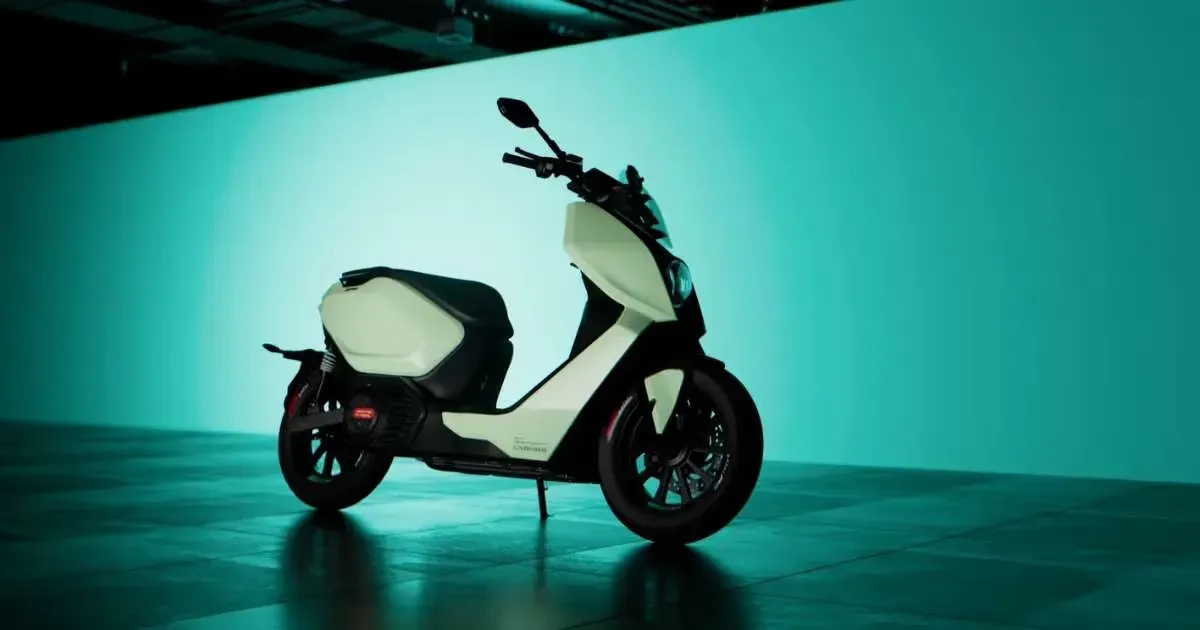
Royal Enfield's electric brand Flying Flea has entered Europe and the UK, with the Flying Flea C6 sold through stores in Paris, Barcelona, Rome, Berlin and London, and deliveries scheduled to begin in October 2026.
Choosing Europe first is deliberate. European cities have the charging infrastructure, the emissions pressure and the customer base willing to pay for a small electric motorcycle. India has none of those at scale yet.
The deeper question is whether Royal Enfield's appeal survives electrification. The brand sells thump, character and mechanical presence. Remove the engine and you remove most of what people are buying. The C6 is attractive and the Flying Flea name carries genuine history, but nobody knows yet whether a Royal Enfield customer wants a silent Royal Enfield.
The rest of the expansion
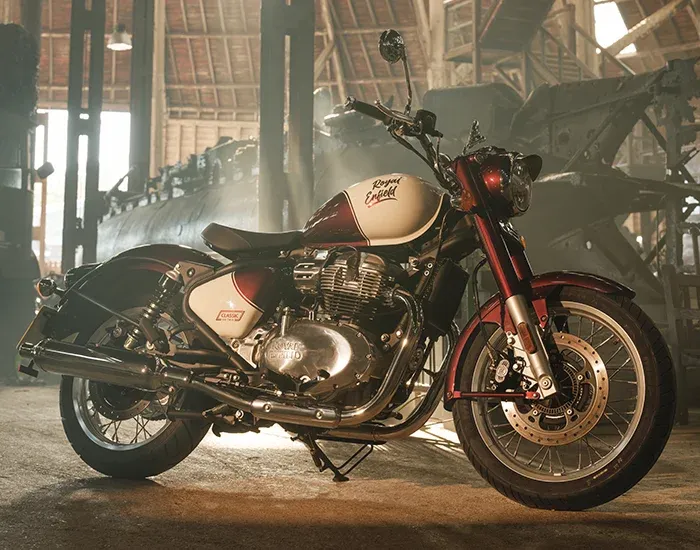
September was not the only activity. The Classic 350 Signature White Edition arrived on 22 September, keeping the volume model fresh without a full redesign.
Internationally, the Guerrilla 450 Apex and Goan Classic 350 launched in the Philippines, while the Bullet 650 and Goan Classic 350 went into Cambodia. The pattern is consistent: mid-capacity retro models into Southeast Asia, electric into Europe, which reads the respective markets correctly.
Royal Enfield now sells in more than 50 countries and overtook Harley-Davidson in global sales back in 2015. It also took the top position in the 2026 FADA Dealer Satisfaction Survey, which matters more than it sounds. Dealer satisfaction tends to predict how well a network holds up when demand softens.
Royal Enfield's recent international launches
Guerrilla 450 Apex and Goan Classic 350 in the Philippines
Bullet 650 and Goan Classic 350 in Cambodia
Flying Flea C6 in Paris, Barcelona, Rome, Berlin and London
Classic 350 Signature White Edition in India
Himalayan 440 in India at ₹2.29 lakh ex-showroom
What it means for Nepal
Royal Enfield's position here is strong and the brand has been actively managing its lineup, with the Hunter 350 range widened in September through the Tarmac Black variant and new colours on the top trim.
Three things follow from these numbers.
The sub-350cc focus suits Nepal. Hunters, Classics and Bullets are what sell here, and that is precisely where Royal Enfield's growth is concentrated. Expect continued variant and colour activity rather than premium launches.
The Himalayan 440 is not coming soon. A six-month Indian backlog means export allocation sits well behind domestic demand.
And the export rebound is worth watching rather than celebrating. September was good, the half-year was not. If the recovery holds, markets like Nepal benefit. If it does not, international lineups tend to go quiet.
The bigger picture
Royal Enfield has built something unusual. A company that was nearly dead in the 1990s now sells over 130,000 motorcycles in a month and leads a global segment it largely invented.
But record months hide the shape of the business. Growth is coming from cheap bikes while expensive ones stall. Exports had a strong September after a weak six months. And the product generating the most excitement is one the company cannot build fast enough.
None of that is a crisis. It is just a more complicated picture than the headline number suggests, and the next two quarters will say far more about where this goes than September did.
For more on new launches and the two-wheeler market in Nepal, Autoncell covers them as they land.