The spy shots are out, the camouflage is thick, and the internet is already losing its mind. Toyota's Fortuner, one of the most dominant body-on-frame SUVs in South and Southeast Asian markets, is finally getting the generational upgrade it has long deserved.
The next-generation Fortuner is set for a global debut in late 2026, with regional launches expected to follow shortly after. Toyota has not made any official announcement yet, but the test mules spotted overseas tell a story that's hard to misread. This is not a facelift. Toyota is planning a full generational upgrade rather than just a minor refresh, the kind of overhaul the Fortuner hasn't seen in close to a decade.
So why now? The current Fortuner has been a sales juggernaut for years, but the competition has caught up. Rivals started shipping ADAS as standard. Interiors got smarter. Buyers started asking uncomfortable questions about why a premium-priced SUV still looked like it belonged to a different era inside the cabin. Toyota clearly heard them.
A Design That Finally Borrows from Its Bigger Siblings
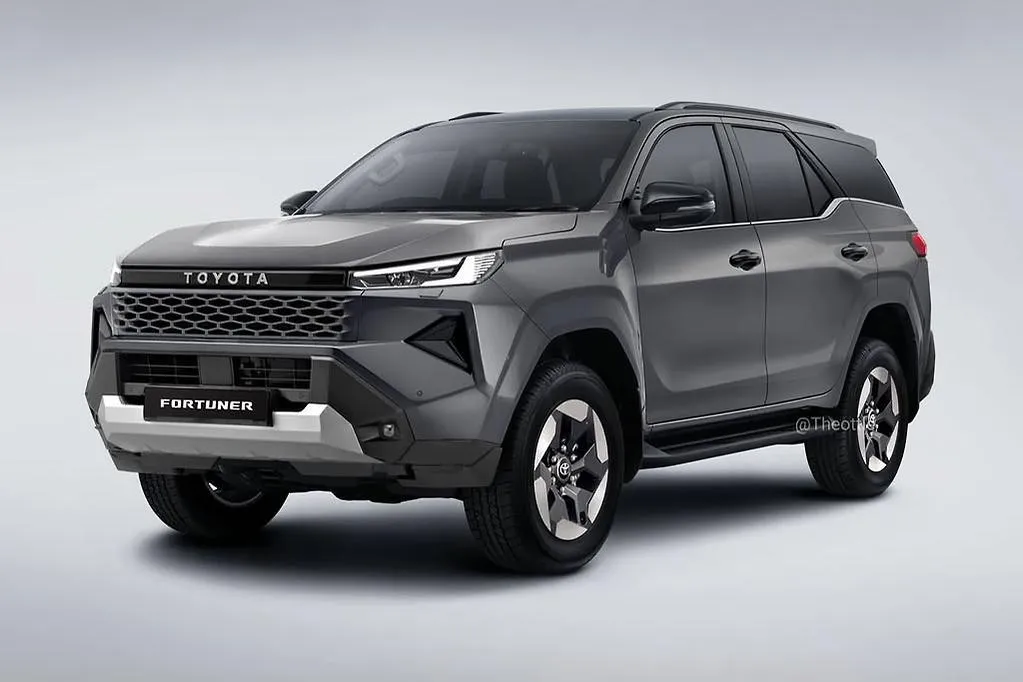
The new Fortuner draws its design language directly from the ninth-generation Hilux pickup truck, and that influence runs deep. Spy images suggest the all-new Fortuner will retain its original silhouette but feature a more upright stance, a wider front fascia, and a flatter bonnet, a combination that gives it a more commanding, planted look on the road.
Up front, the changes are hard to miss. The upcoming model is expected to feature a larger front grille, sleeker LED headlamps, a revised and more aggressive-looking bumper, and slim LED DRLs. Spy shots point to a newly designed grille with two large chromed slats and a redesigned bumper, along with new alloy wheels, a redesigned tailgate, and new LED tail lamps at the rear. A full-width LED light bar and bold Fortuner lettering are expected to give the back end a new identity altogether.
The split headlamp setup borrowed from Hilux aesthetics makes the front look wider and more aggressive without going overboard. It's a smart move, the Fortuner has always had presence, and the new design doubles down on that rather than chasing some soft crossover look.
The Interior Gets the Upgrade It Was Long Overdue For
Here's where the current Fortuner has consistently taken the most heat, and rightly so. An aging interior with limited tech was always the elephant in the room for a vehicle commanding a premium price. The next generation looks set to address that directly.
The all-new Fortuner is expected to sport a 12.3-inch touchscreen infotainment system and a fully digital driver's display, mirroring what Toyota has already rolled out in the new Hilux globally. A dual 12.3-inch display setup, wireless phone charging, ventilated and powered front seats, a 360-degree camera, and OTA (over-the-air) software updates are among the premium features likely to make the cut. A panoramic sunroof, leatherette upholstery, multi-zone climate control, powered seats with memory function, and a premium audio system could round out the package in higher trims.
That is a significant leap from where the current model stands. If Toyota delivers even half of this list as standard across mid-range variants, the conversation around the Fortuner's value proposition changes considerably.
Safety Tech Finally Enters the Picture
One of the biggest criticisms of the current Fortuner has been its absence of advanced driver assistance systems, a gap that competitors had already filled. The new generation is set to close that gap in a big way.
Spy images confirm the inclusion of Toyota Safety Sense, the brand's ADAS suite, which is expected to offer a pre-collision system, lane tracing assist, lane departure alert, dynamic radar cruise control, emergency steering assist, automatic high beam, road sign assist, rear cross-traffic alert, and blind spot monitoring. That is a comprehensive Level 2 ADAS package, and its addition to the Fortuner lineup is arguably the single most important update in this entire generational shift.
For markets where premium SUV buyers have been questioning the Fortuner's pricing against better-equipped rivals, this answers a lot of those questions.
Platform and Performance
The next-gen Fortuner is expected to move to Toyota's IMV ladder-frame platform, also used in the global Hilux, designed to improve strength, ride comfort, and off-road capability, while maintaining the rugged body-on-frame character that defines the nameplate.
Under the hood, Toyota is not expected to rock the boat dramatically. The 2026 Fortuner is expected to retain the existing 2.7-litre naturally aspirated petrol and 2.8-litre turbocharged diesel engine options. The petrol unit produces around 164 bhp with 245 Nm of torque, while the diesel delivers 201 bhp with 420 Nm on manual and 500 Nm on automatic variants.
The more interesting development is on the electrification front. The 2.8-litre diesel is expected to be paired with a 48V mild hybrid system that provides smoother acceleration from a standstill, reduces the characteristic diesel jerkiness in city traffic, and adds extra torque for overtaking. It is not a full hybrid, but in real-world urban driving conditions, the difference is noticeable. There are also reports that Toyota might introduce a 2.4-litre strong hybrid petrol engine for select markets in the future, though that remains unconfirmed.
Transmission options are expected to include a 6-speed manual and a 6-speed torque converter automatic, with four-wheel drive continuing on select variants.
What This Means for the Market
The Fortuner's dominance in markets like Nepal, India, Thailand, and across Southeast Asia has never been purely about specs, it's been about brand trust, resale value, and a reputation built over years of reliable performance in tough conditions. But trust only carries a product so far when the competition starts offering genuinely better technology at comparable or lower prices.
The next-gen Fortuner will continue to face competition from the Skoda Kodiaq, MG Gloster, and upcoming global rivals. The Mitsubishi Pajero is making a comeback. New challengers are entering the full-size premium SUV space with aggressive feature lists and sharper pricing. Toyota knows the landscape has shifted.
The question isn't whether the new Fortuner will sell, it always does. The real question is whether Toyota has done enough to justify the inevitable price increase that comes with a generational upgrade of this scale. If the ADAS suite, the dual-screen interior, and the mild-hybrid diesel all land as standard across most trims rather than being locked behind top-spec variants, the answer is almost certainly yes.
Late 2026 cannot come fast enough.




-original.webp)