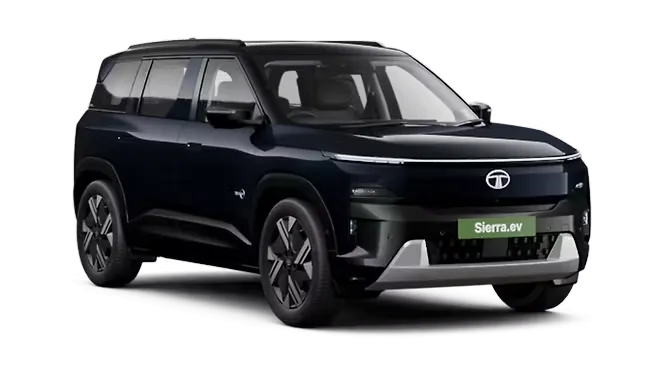
The Sierra name carries weight in India. It was the car that defined an era, and then disappeared. Now Tata has brought it back not as nostalgia bait, but as a fully loaded electric SUV that arrives with enough range, power, and cabin technology to force the competition to pay attention. Launched on June 30, 2026, the Sierra EV opens at INR 18.79 lakh (ex-showroom) and stretches to INR 26.48 lakh at the top, a range wide enough to pull buyers from multiple segments at once.
This is not a cautious product launch. Tata has priced it aggressively, packed it with tech that sits above its price point, and attached a claimed range figure that rivals will find uncomfortable to ignore.
Let's find out what it brings to the table.
Design
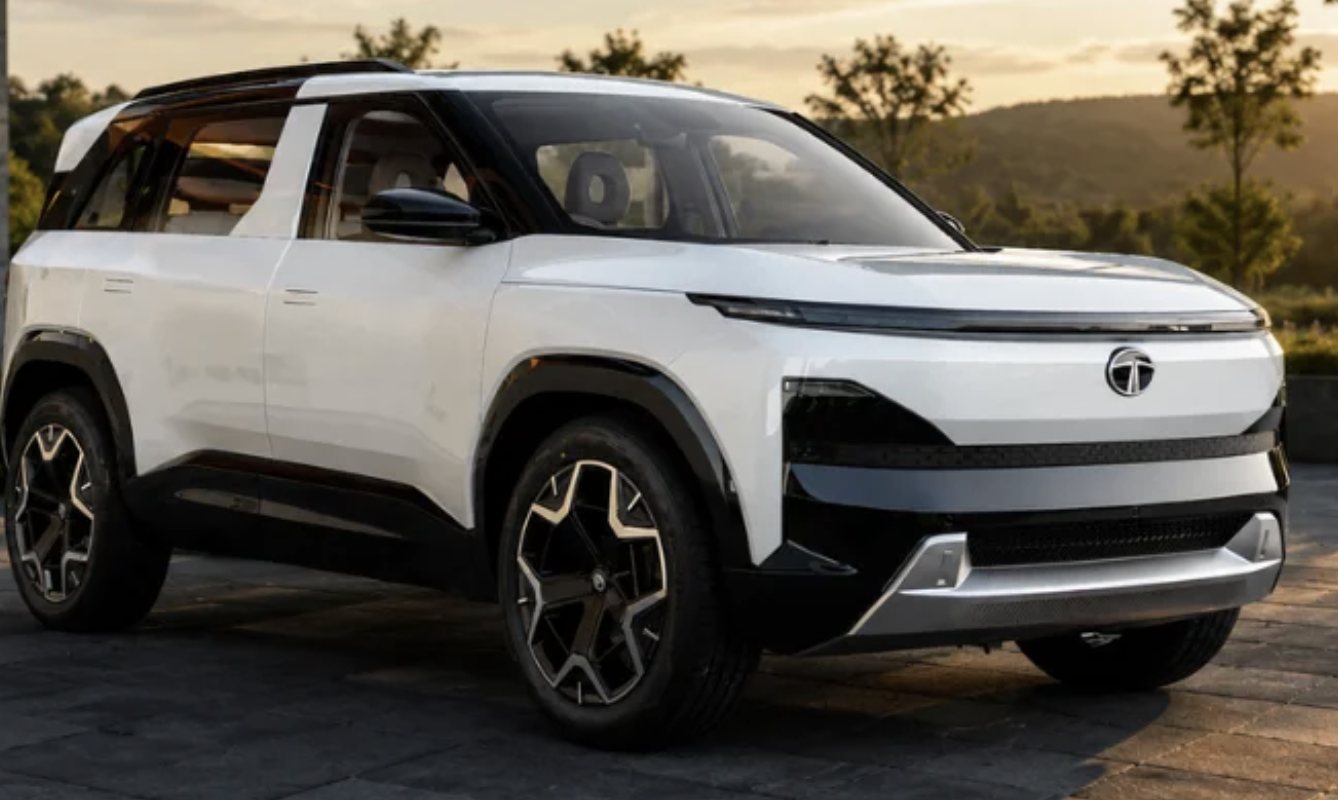
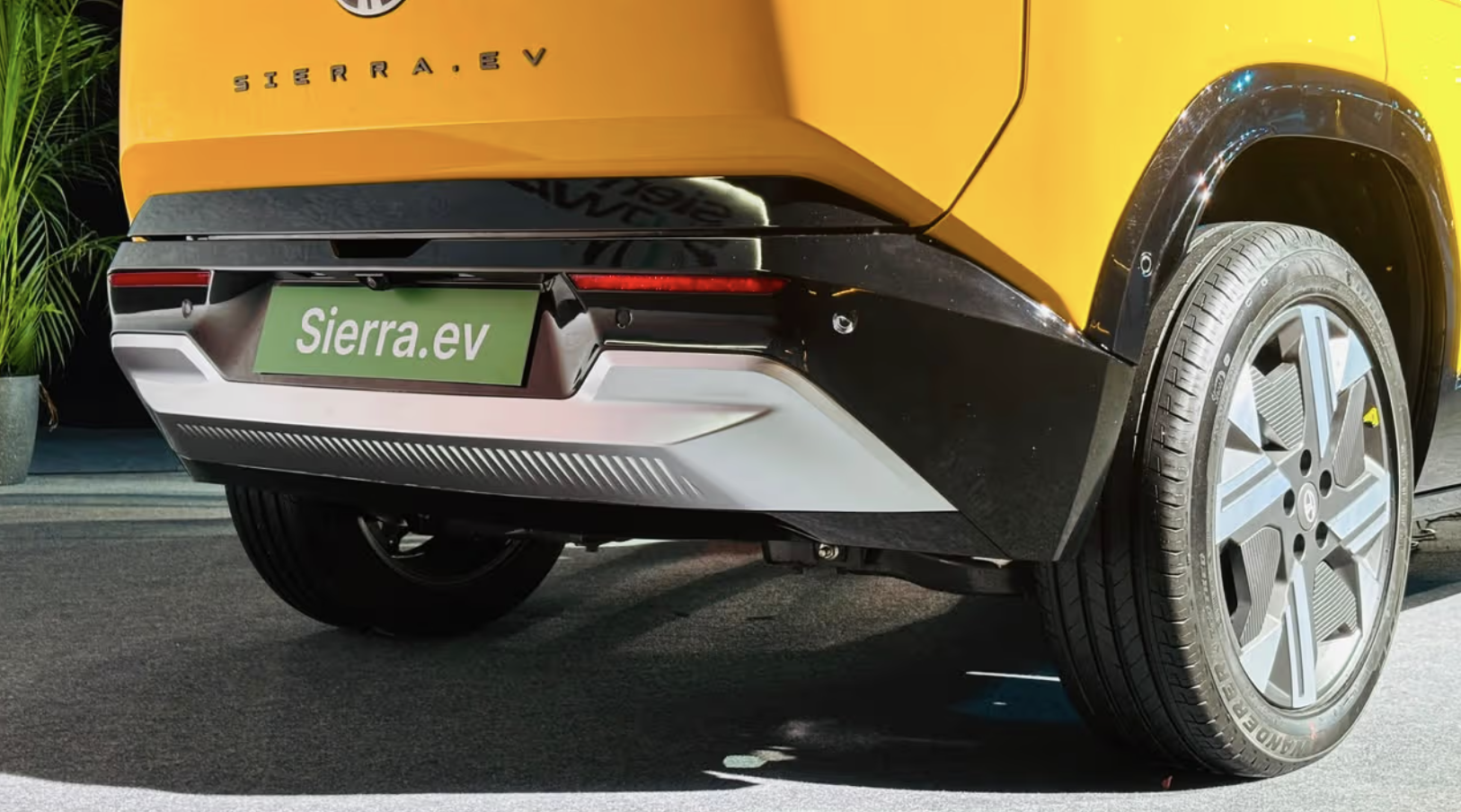
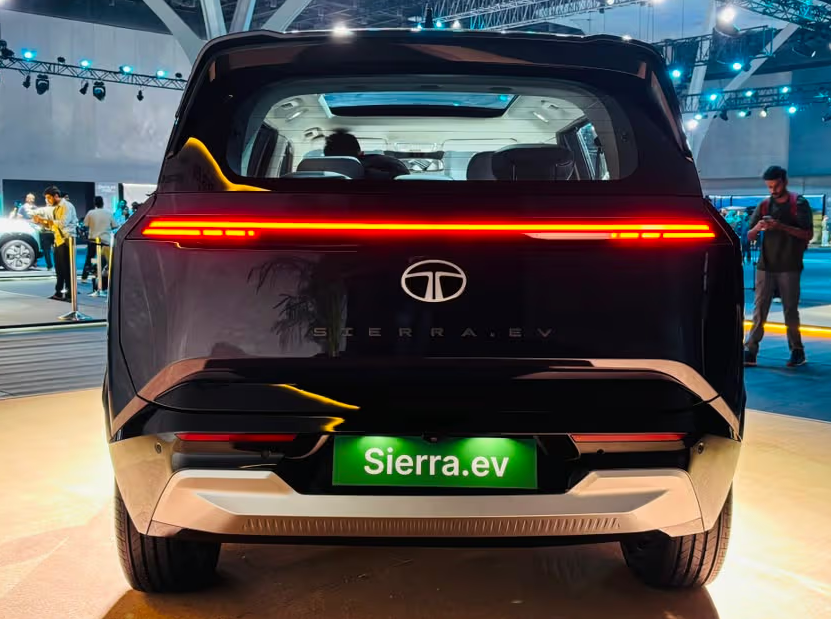
Tata made a deliberate call here: the Sierra EV looks almost identical to its petrol and diesel sibling. You get the upright bonnet, the split LED headlamps with light bars running front and rear, a blanked-off grille where fuel cars breathe, and flush door handles that sit clean against the body. A two-tone roof and dual-tone alloy wheels complete the exterior identity. Around the sides, the 19-inch diamond-cut alloys are the detail that draws the eye. At the rear, EV-specific badging, a spoiler, and a dual-tone bumper mark the only meaningful visual departures from the ICE version.
It is a restrained design confident rather than radical. Some will want more drama from an electric flagship. Others will appreciate that it doesn't alienate the buyers who already love the Sierra's proportions.
Interior
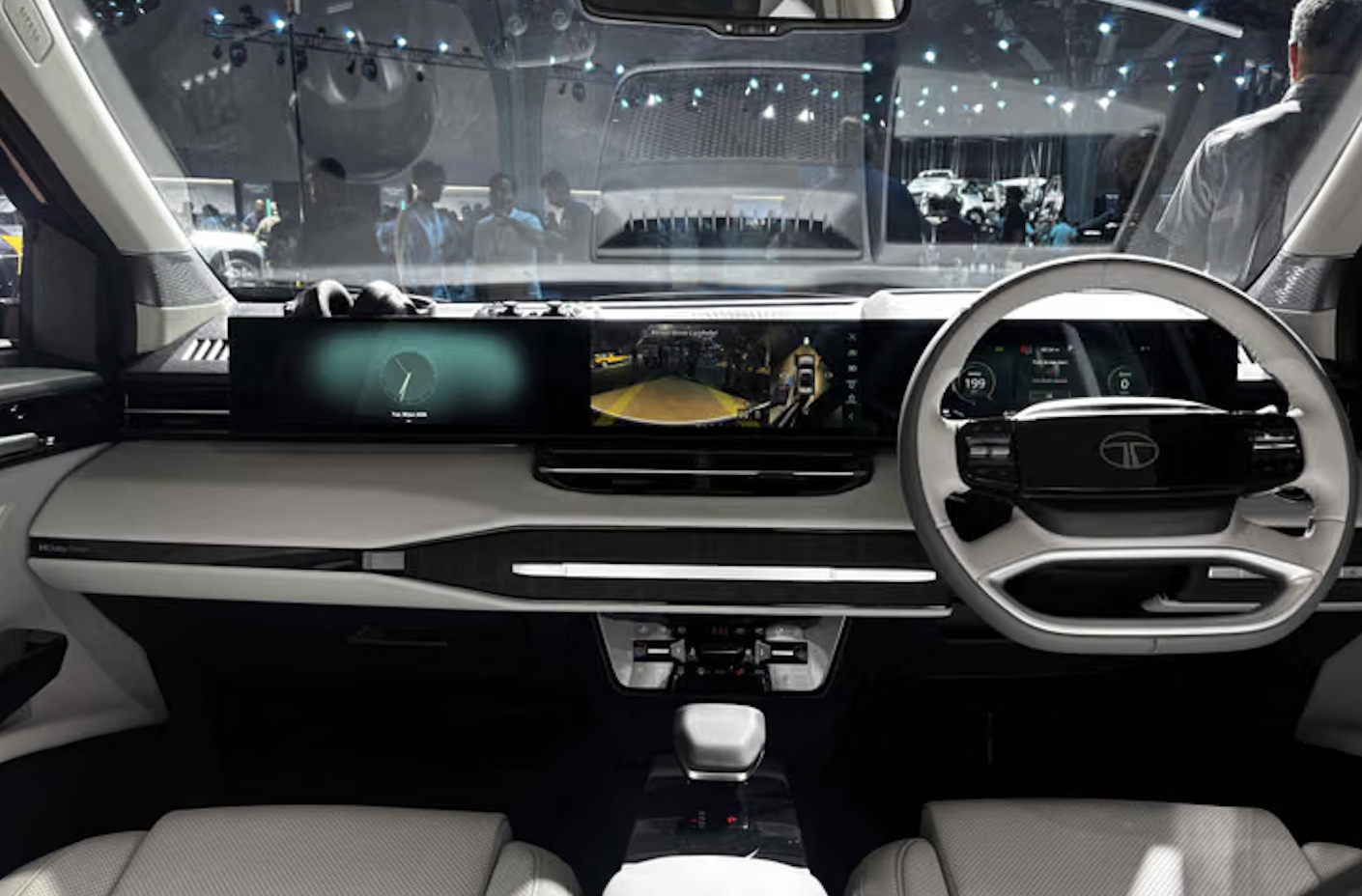
The cabin is where the Sierra EV makes its most aggressive argument. The Horizon View dashboard stacks three displays across the width of the fascia: a 12.3-inch central touchscreen, a 12.3-inch passenger-side screen, and a 10.25-inch digital instrument cluster for the driver. A multicolour HUD sits above that. The audio stack, 12 JBL speakers, Dolby Atmos processing, and a SonicShaft soundbar is what Tata is calling Theatre Pro, a mode that converts the cabin into a proper entertainment space.
The AirConsole feature deserves a mention. It repurposes the infotainment display into a gaming console, with the driver or passenger's smartphone acting as a controller. Gimmick? Partly. But it is the kind of feature that makes long highway stretches considerably more bearable with younger passengers.
Practically, the Sierra EV offers 973 mm of rear legroom and 996 mm of rear headroom both claimed segment-bests. Boot space starts at 633 litres and expands to 1,257 litres with the rear seats folded. Under the hood, a 55-litre frunk adds storage that most rivals in this class simply cannot match.
If you want context on how the Sierra EV's platform and cabin philosophy compare with Tata's other EV offerings, our earlier breakdown of the Tata Curvv EV covers the full detail.
Performance
Built on Tata's Acti.ev+ platform, the Sierra EV is offered with either a 63 kWh or 75 kWh battery pack. The larger unit produces 313 bhp and 504 Nm of torque, with a claimed MIDC range of 665 km. In more real-world C75 terms, that figure settles between 510 and 530 km, still class-competitive and honest enough to hold up outside a lab. ARAI has independently certified a range of 594.88 km.
The top-spec Empowered A variant adds a dual-motor all-wheel drive system Tata calls it QWD and with it comes a Boost mode, activated by a physical button on the centre console, that punches the Sierra EV from standstill to 100 kmph in 5.8 seconds. For a five-seat family SUV at this price, that figure demands respect.
The chassis work is equally serious. Tata has fitted Ultraglide suspension with frequency-dependent damping, a system that reads road conditions and adjusts damping in real time rather than staying locked at one setting. Ground clearance stands at 205 mm. Six terrain modes Normal, Grass, Mud/Ruts/Gravel, Sand, Rock Crawl, and Custom come standard, and the QWD variants add dedicated off-road assist on top of that. This is not an EV built purely for urban commuting.
Specifications
Specification | Detail |
Battery Options | 63 kWh / 75 kWh |
Power Output | 207 bhp (63 kWh) / 313 bhp (75 kWh) |
Torque | 504 Nm (top spec) |
Claimed Range (MIDC) | 535 km (63 kWh) / 665 km (75 kWh) |
ARAI Certified Range | 594.88 km |
0–100 kmph | 5.8 seconds (Boost mode, QWD) |
Drivetrain | RWD / QWD (Dual Motor AWD) |
Suspension | Ultraglide with Frequency-Dependent Damping |
Ground Clearance | 205 mm |
Terrain Modes | 6 (Normal, Grass, Mud/Ruts/Gravel, Sand, Rock Crawl, Custom) |
Wheelbase | 2,730 mm |
Seating Capacity | 5 |
Rear Legroom | 973 mm |
Rear Headroom | 996 mm |
Boot Space | 633 litres (expandable to 1,257 litres) |
Frunk | 55 litres |
Transmission | Automatic |
Airbags | 6 (standard) |
Features
Triple-screen 'Horizon View' dashboard: 12.3-inch central infotainment, 12.3-inch passenger display, 10.25-inch driver's digital cluster
Multicolour heads-up display (HUD)
12-speaker JBL Black sound system with Dolby Atmos and SonicShaft soundbar
AirConsole gaming mode infotainment screen doubles as a gaming console, smartphone acts as controller
Theatre Pro entertainment mode combining the audio system, Arcade Suite, and 30+ curated apps
540-degree surround-view camera with transparent mode (360-degree + 180-degree overlay)
e-Valet system with 16 features for auto parking and remote parking
Level-2 ADAS suite with 22 functions including adaptive cruise control and lane keep assist
1,525 mm × 925 mm panoramic sunroof (claimed segment-largest)
Six-way powered driver seat with memory function; four-way powered co-passenger seat; both ventilated
Android Auto and Apple CarPlay with intelligent EV route planner (analyses route against battery state)
iRA connected car technology
Digital key
5G connectivity
Thigh support extender
Lifetime (15-year) battery warranty on both 63 kWh and 75 kWh packs
Safety
Six airbags come fitted as standard across all variants. The Level-2 ADAS system covers 22 functions including adaptive cruise control and lane keep assist. The 540-degree camera system combining a full 360-degree surround view with an additional 180-degree rear overlay adds meaningful low-speed protection in tight spaces. A GNCAP crash test rating is pending; Tata demonstrated a real-world rear-end collision scenario at launch but independent certification has not yet been awarded. The Mahindra BE 6 already carries a 5-star Bharat NCAP rating; that gap will matter to safety-conscious buyers until Tata closes it.
Price and Variants in India
The Sierra EV is available across five trim families in India, each available with a choice of battery pack:
Variant | Starting Price (ex-showroom) |
Sierra EV Pure | INR 18.79 lakh |
Sierra EV Pure S | INR 19.99 lakh |
Sierra EV Adventure | INR 20.99 lakh |
Sierra EV Empowered | INR 22.79 lakh |
Sierra EV Empowered A (QWD) | INR 24.79 lakh |
On-road prices across major Indian cities vary with state taxes. Delhi buyers are looking at INR 19.96 lakh onwards, Mumbai and Kolkata at INR 19.92 lakh, and Bangalore at INR 21.43 lakh for the base variant. Seven colour options are available: Pristine White, Rishikesh Rapids, Coorg Cloud, Andaman Adventure, Pure Grey, Bengal Rouge, and Nainital Nocturne. Bookings are open.
Nepal Price and Availability
The Tata Sierra EV has not been officially launched in Nepal as of publication. Tata vehicles are distributed in Nepal through the brand's authorized dealer network, but no confirmed launch date, pricing, or variant lineup has been announced for the Nepali market. Given Nepal's import duty structure on electric vehicles, pricing will differ substantially from Indian ex-showroom figures once customs, VAT, and registration charges are applied. For reference on what that typically looks like for Tata EVs in Nepal, our comparison of the best electric vehicles in Nepal in the INR 40–60 lakh range offer useful context. Buyers and enthusiasts interested in the Sierra EV's arrival in Nepal are advised to follow official Tata distributor channels for confirmed updates.
Conclusion
The Sierra EV enters a market that has gotten harder to navigate in the past twelve months. The Mahindra BE 6 opens at INR 18.90 lakh and holds a 5-star Bharat NCAP rating, a credibility advantage that Tata needs to address quickly. The Tata Harrier EV, Tata's own sibling product, starts higher at INR 21.49 lakh, which means the Sierra EV could cannibalize upwards within Tata's own lineup. Meanwhile, the Hyundai Creta Electric comes in cheaper at INR 18.03 lakh but carries a smaller battery and a shorter range ceiling.
The Sierra EV is threading a specific needle: entry pricing that invites comparison with mainstream EVs, but a feature and range story that pushes toward premium territory. Whether the market reads it the same way and whether the Sierra badge carries enough meaning with buyers who were not yet born when the original ran is the question that the next few months of booking numbers will answer.
One thing is clear enough: Tata did not bring this name back just to fill a product gap. The Sierra EV is a statement. Whether it lands is another matter entirely.