-original.webp)
Five lakh rupees separates two electric SUVs that want the same parking spot, the same buyer, and the same piece of Nepal's fastest-growing vehicle segment. The Nammi Vigo sits at Rs 43,99,000. The BYD Atto 2 holds firm at Rs 48,99,000. Both debuted at NADA Auto Show 2025 in Kathmandu. Both have been turning heads on Nepali roads since. So which one actually deserves your money?
The Nammi Vigo is distributed by MAW Vriddhi Motors. The BYD Atto 2 comes through Cimex Inc. On paper, these two SUVs are closer than most buyers realize. In practice, they are built around slightly different priorities, and understanding that difference is exactly what this comparison is about.
Design
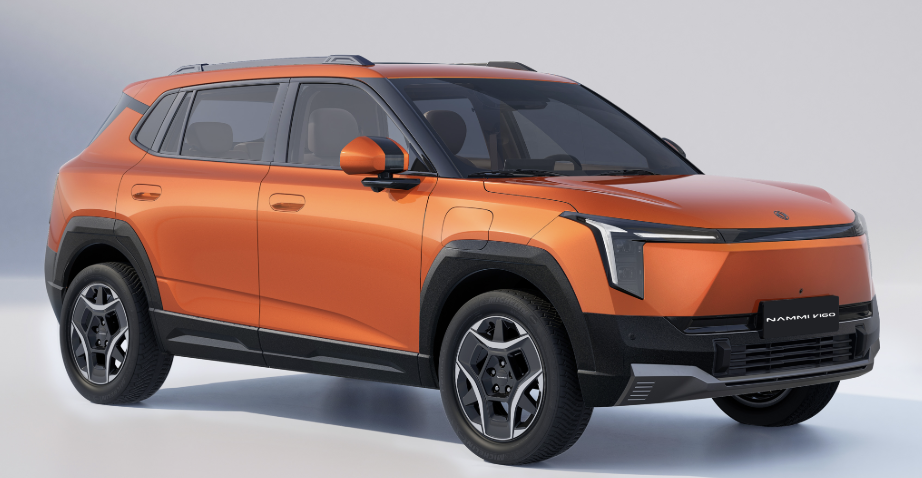
Nammi Vigo does not ask for your attention politely. Its boxy, muscular exterior has a commanding road presence that is hard to ignore, and the signature Heaven and Earth tailgate is the most distinctive design element on any electric SUV currently sold in Nepal. That dual-opening tailgate is not just a style statement, it changes how you interact with the boot every single day. Add an exterior speaker to the mix and you have a vehicle that genuinely enjoys being noticed.
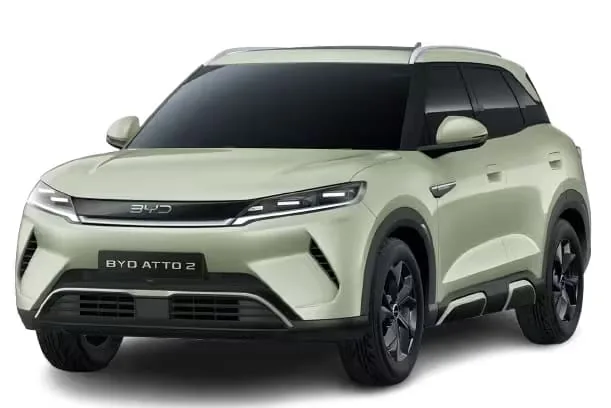
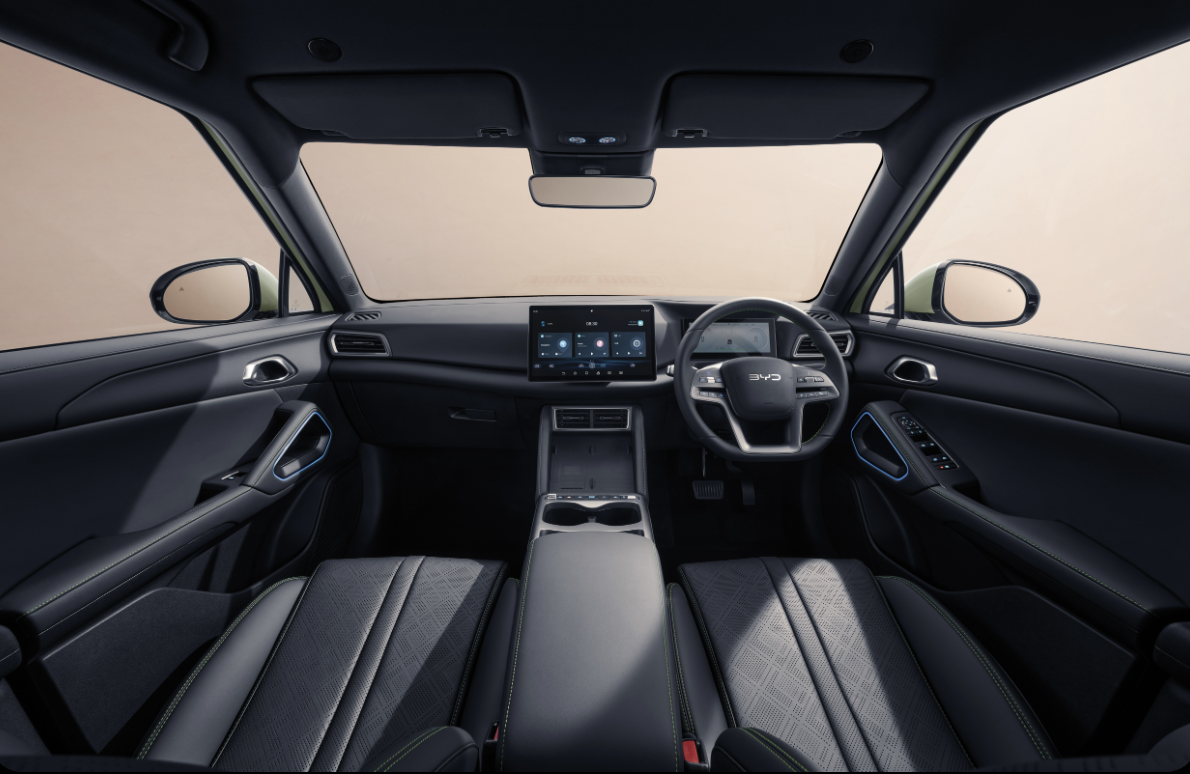
The BYD Atto 2 takes the opposite route. Its silhouette is cleaner, more restrained, and deliberately modern without being aggressive. The interior is where it makes its real impression, a rotating 12.8-inch touchscreen anchors a dashboard that feels genuinely premium rather than simply feature-loaded. Where the Vigo commands the street, the Atto 2 commands the cabin.
Both are good-looking SUVs. They just speak different design languages, and your instinctive preference between the two will likely tell you which buyer you are before you even sit inside either one.
Performance
Under the hood, these two are remarkably similar, which makes the finer differences all the more worth paying attention to.
The Nammi Vigo runs a 99 kW permanent magnet synchronous motor producing 300 Nm of torque. The BYD Atto 2 counters with 100 kW and 290 Nm. Both are front-wheel drive. The power gap is essentially irrelevant in real-world driving, and the 10 Nm torque advantage in the Vigo's favor is equally academic on city roads.
Where performance diverges meaningfully is charging speed. The Vigo supports DC fast charging up to 167 kW, going from 30 to 80 percent in just 18 minutes. The Atto 2 tops out at 82 kW DC, needing around 28 minutes for the same charge window. On a long drive from Kathmandu to Pokhara with a stop at a fast charger, that 10-minute gap becomes very real. Both vehicles use CCS2 charging ports and both support V2L technology, letting you power appliances directly from the car, genuinely useful during load-shedding.
Battery
Battery capacity is almost identical. The Nammi Vigo carries a 51.87 kWh LFP pack with a WLTP-certified range of 350 km per charge. The BYD Atto 2 runs a 51.13 kWh pack rated at 345 km on the same standard. Five kilometres of range difference means nothing in practice, both will comfortably handle Kathmandu to Pokhara on a single charge under normal conditions.
What differs is the technology behind the pack. BYD's Blade Battery, built on E-Platform 3.0 with cell-to-pack body integration, carries a globally proven reputation for thermal stability and long-term durability. The Vigo's LFP chemistry is solid, but it does not carry the same brand story behind it.
On warranty, the Vigo offers 11 years or 2,50,000 km on battery and motor. The Atto 2 covers 10 years or 2,00,000 km. A year and 50,000 km of additional coverage is meaningful for a market where long-term EV ownership is still relatively new ground.
Inside the Cabin
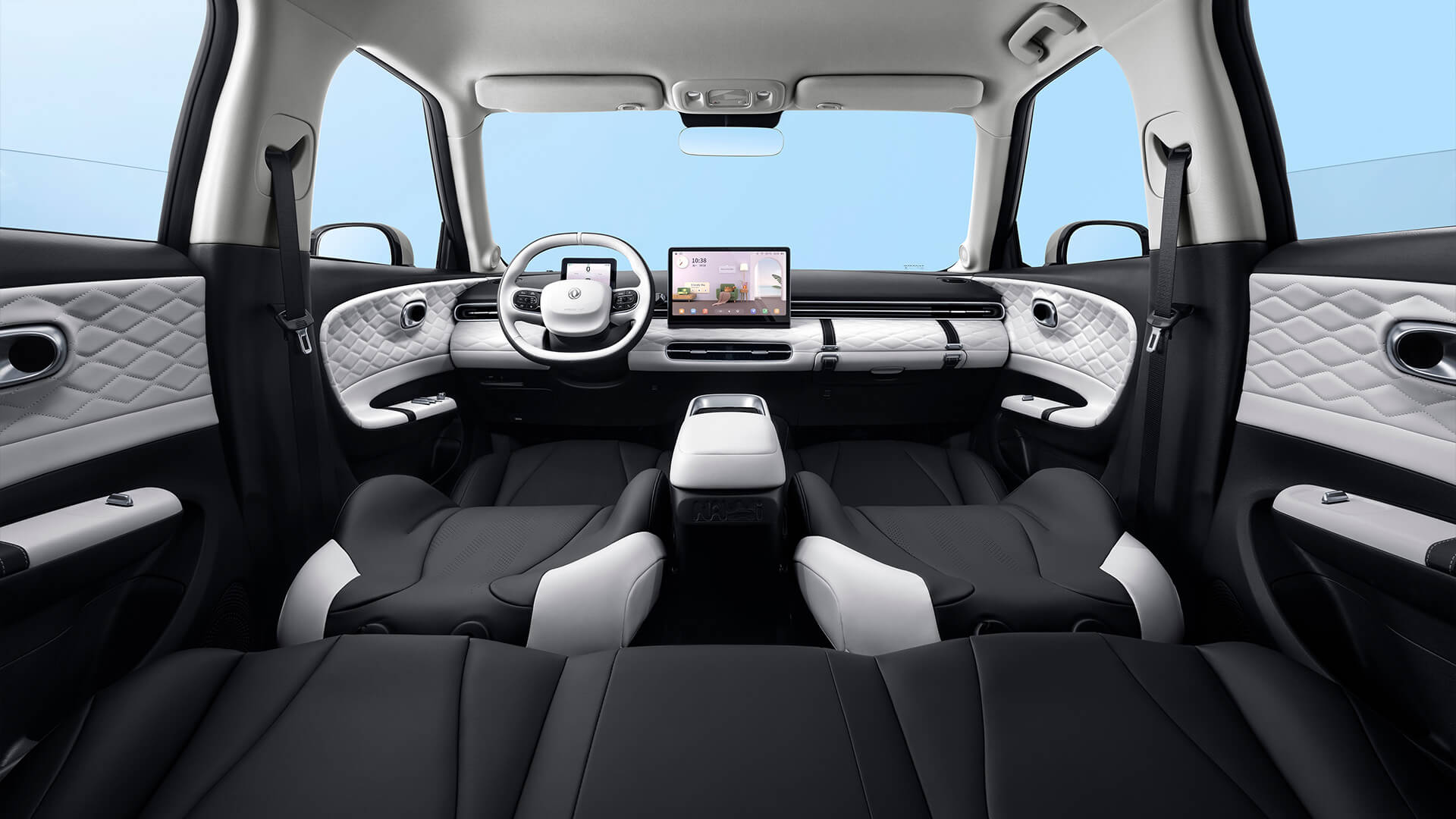
Both cabins are well-loaded and both target buyers who expect a properly connected, modern driving experience. The shared list is long: 12.8-inch touchscreen infotainment, wireless charging, Apple CarPlay, Android Auto, LED headlights, DRLs, keyless entry, automatic climate control, roof rails, one-touch windows, and heated ORVMs. At this level, the two SUVs are nearly indistinguishable.
The BYD Atto 2 pushes its screen further by making it rotate, a feature that either strikes you as genuinely clever or raises the question of whether a fixed screen would have been perfectly fine. The instrument clusters sit at 8.88 inches on the Vigo and 8.8 inches on the Atto 2. Effectively the same number with a different decimal point.
Where the two diverge is in the finer details. The Nammi Vigo brings ambient lighting, a multi-function steering mode, an exterior speaker, and seat functions that include heating, ventilation, memory, and a welcome mode, a combination more commonly found in vehicles costing significantly more. The Atto 2 answers with rain-sensing wipers, which the Vigo lacks, and an extra Snow drive mode sitting alongside its Eco, Sport, and Normal settings. The Vigo offers three modes: Eco, Sport, and Comfort.
Seating material is leatherette on the Vigo and vegan leather on the Atto 2. On paper they sound similar. In daily use, vegan leather tends to age slightly better in heat, though both are reasonable choices at this price point.
The Vigo's cabin feels more indulgent. The Atto 2's feels more considered. Neither is a disappointment, they just reflect different ideas about what premium should feel like inside an electric SUV.
Safety
Both vehicles take safety seriously and neither shortchanges the buyer here. Six airbags, ESP, EBD, auto hold, hill descent control, TPMS, adaptive cruise control, forward collision warning, 360-degree cameras, rear parking sensors, automatic emergency braking, traction control, and ISOFIX child seat mounts are standard on both. This is one area where the comparison is genuinely flat, the Atto 2's Rs 5 lakh premium buys you nothing extra in safety hardware.
Specifications
Specification | Nammi Vigo E2 | Nammi Vigo E2+ | BYD Atto 2 |
Motor | 99 kW PMSM | 99 kW PMSM | 100 kW PMSM |
Torque | 300 Nm | 300 Nm | 290 Nm |
Battery | 44.94 kWh LFP | 51.87 kWh LFP | 51.13 kWh Blade LFP |
WLTP Range | 300 km | 350 km | 345 km |
DC Fast Charging | 167 kW | 167 kW | 82 kW |
30–80% Charge Time | 30 minutes | 18 minutes | 28 minutes |
Charging Port | CCS2 | CCS2 | CCS2 |
V2L Support | Yes | Yes | Yes |
Drive Type | FWD | FWD | FWD |
Ground Clearance | 190 mm | 190 mm | 200 mm |
Boot Space | 500 litres | 500 litres | 400 litres |
Wheels | 18-inch alloy | 18-inch alloy | 17-inch alloy |
Infotainment | 12.8-inch touchscreen | 12.8-inch touchscreen | 12.8-inch rotating touchscreen |
Drive Modes | Eco, Sport, Comfort | Eco, Sport, Comfort | Eco, Sport, Normal, Snow |
Airbags | 6 | 6 | 6 |
Battery Warranty | 11 years / 2,50,000 km | 11 years / 2,50,000 km | 10 years / 2,00,000 km |
Price | Rs 40,99,000 | Rs 43,99,000 | Rs 48,99,000 |
Distributor | MAW Vriddhi Motors | MAW Vriddhi Motors | Cimex Inc |
Price
The Nammi Vigo comes in two variants. The E2 is priced at Rs 40,99,000 and the E2+ sits at Rs 43,99,000. The BYD Atto 2 stands at Rs 48,99,000. That Rs 5 lakh gap is what makes this a genuinely difficult decision rather than an obvious one.
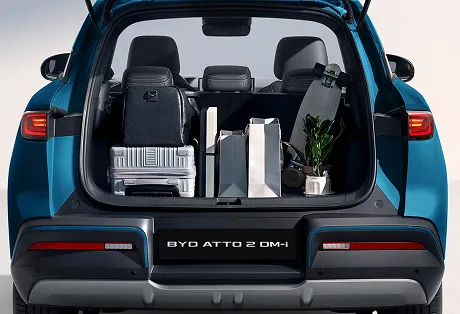
The Vigo delivers faster charging, more boot space, a longer warranty, more generous seat features, ambient lighting, and an exterior speaker, all for less money. The Atto 2 justifies its premium with BYD's globally trusted Blade Battery technology, the rotating screen, NFC key card, app-based vehicle control, better ground clearance, and rain-sensing wipers.
Value per rupee, the Vigo makes the stronger argument. But the Atto 2 is not asking you to pay more for nothing.
Conclusion: Which One Is Actually Right for You?
There is no clean winner here, and that is genuinely good news for anyone shopping in this segment right now.
Go with the Nammi Vigo if you want faster charging on long drives, a bigger boot for family trips, more luxurious seat features, a longer warranty, and a stronger value-per-rupee case overall. At Rs 43,99,000, it is a lot of car for the money.
Go with the BYD Atto 2 if BYD's battery reputation matters to you, if the rotating screen and app-connected ownership experience appeal to how you use a car daily, and if the extra ground clearance gives you more confidence on Nepal's less predictable road surfaces. The Rs 5 lakh premium is real, but so is what you are getting for it.
The more interesting question is what this competition signals for Nepal's electric vehicle market as a whole. Two credible, well-specified SUVs fighting hard in the same price band, that is how a market grows up. Buyers have not had this kind of genuine choice before. Whatever you decide, the segment is better for having both of them in it.