Honda has the hybrid system. It is already in the City, already sells in Nepal, and it works.
So when the Elevate facelift arrived in India this week with ventilated rear seats, a 360-degree camera, powered seats and a new flagship variant, the obvious question was whether the engine had finally caught up.
It has not. Same 1.5-litre naturally aspirated petrol, three years on from launch. Honda has now had its first proper crack at updating this car and chose to improve everything except the part buyers actually complain about.
Which is a shame, because the rest of this update is genuinely good.
Price and variants
Start here, because the headline most outlets ran deserves a closer look.
The Elevate facelift opens at INR 11.80 lakh ex-showroom, identical to before. That is accurate for the base SV, and Honda deserves credit for holding it while adding equipment.
But the V, VX and ZX trims all went up. The ZX, which is where most buyers who want the good stuff end up, climbed from INR 15.18 lakh to INR 15.39 lakh. So "price unchanged" applies to one variant out of six.
The range now runs across SV, V, VX, ZX, ZX+ and ZX+ Black, totalling 11 configurations once you count transmissions.
Variant | Petrol MT | Petrol CVT |
SV (base) | INR 11.80 lakh | - |
ZX | INR 15.39 lakh | INR 16.89 lakh |
ZX+ | INR 16.80 lakh | INR 18.30 lakh |
ZX+ Black | INR 16.90 lakh | INR 18.40 lakh |
The ZX+ Black commands a INR 10,000 premium over the standard ZX+ with either gearbox, which buys you gloss black 17-inch alloys, a black cabin with black leather upholstery and black interior trim.
Bookings opened on 1 October at INR 21,000.
Design
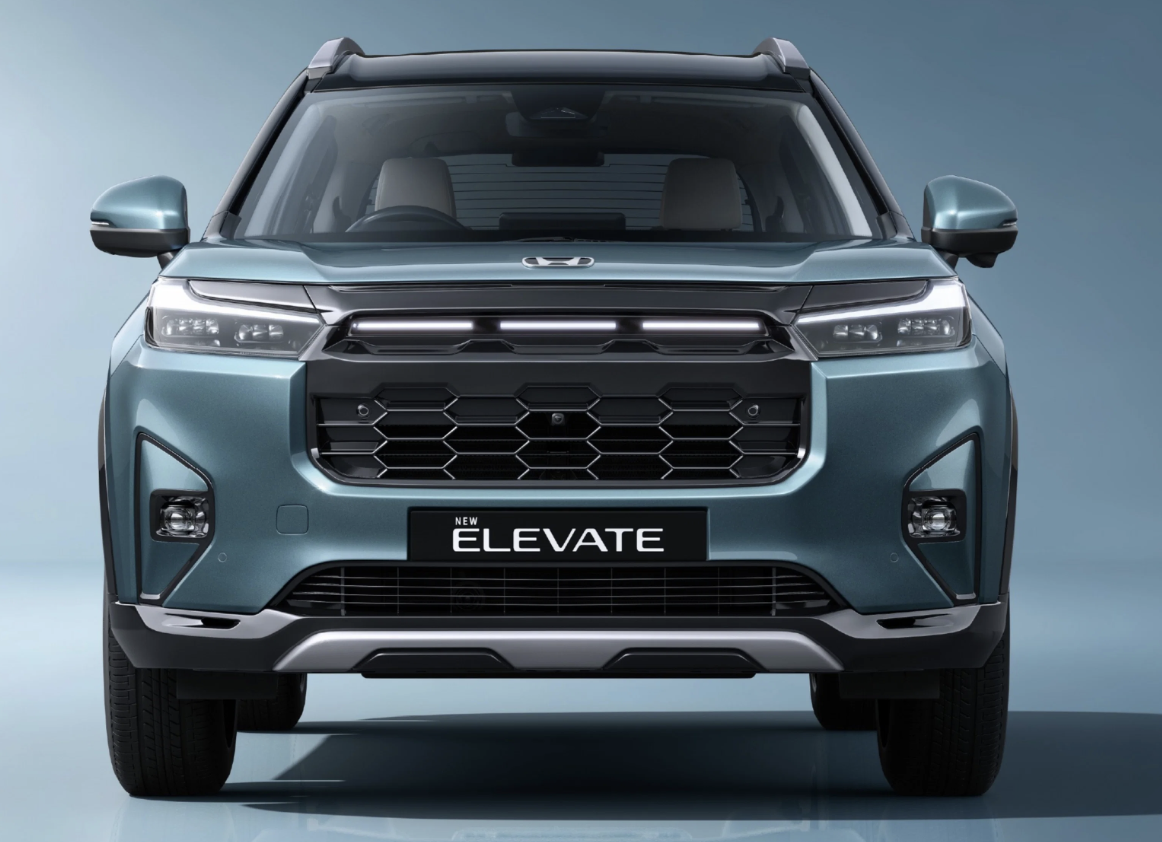
The exterior changes are measured rather than dramatic, which suits a car that never looked wrong in the first place.
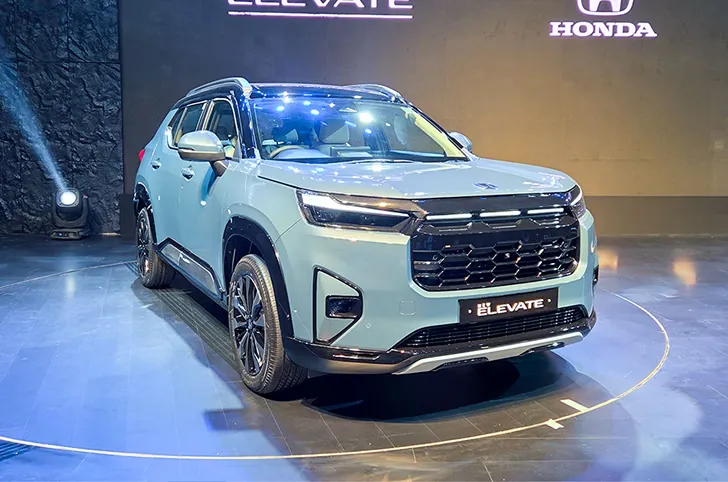
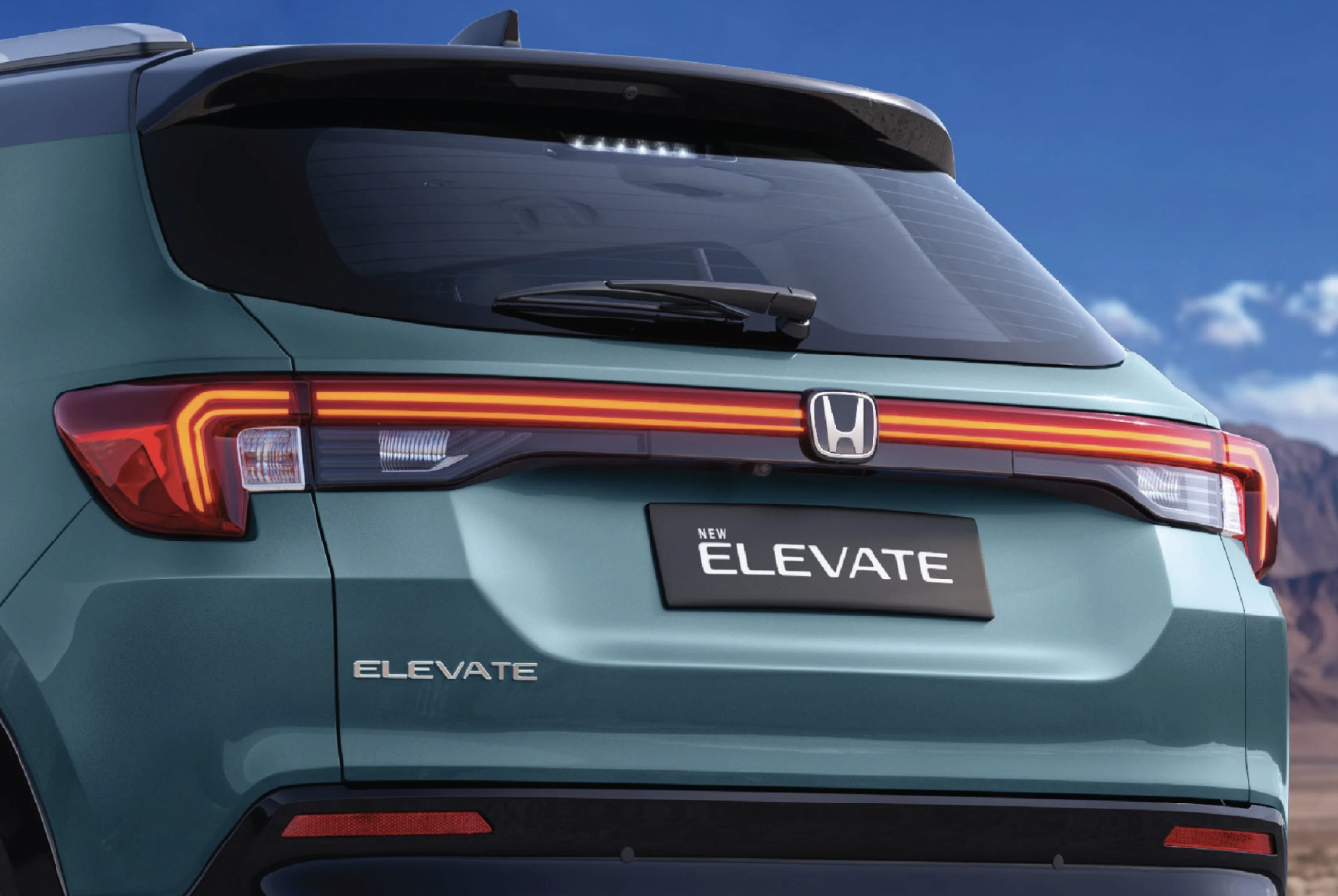
There is a revised mesh grille paired with Tri-Bar Signature LED front position lights, giving the face a more deliberate identity. At the back, the tail lamps now connect across the width. Select variants get 17-inch diamond-cut alloys with a dark finish, and the front bumper has been reworked.
Nordic Fest Pearl joins the colour range, with single-tone and dual-tone combinations both available.
Dimensions carry over unchanged, which means 458 litres of boot space and 220 mm of ground clearance. That second number matters a great deal in Nepal, where 220 mm comfortably clears most of what you will encounter outside the valley.
Inside
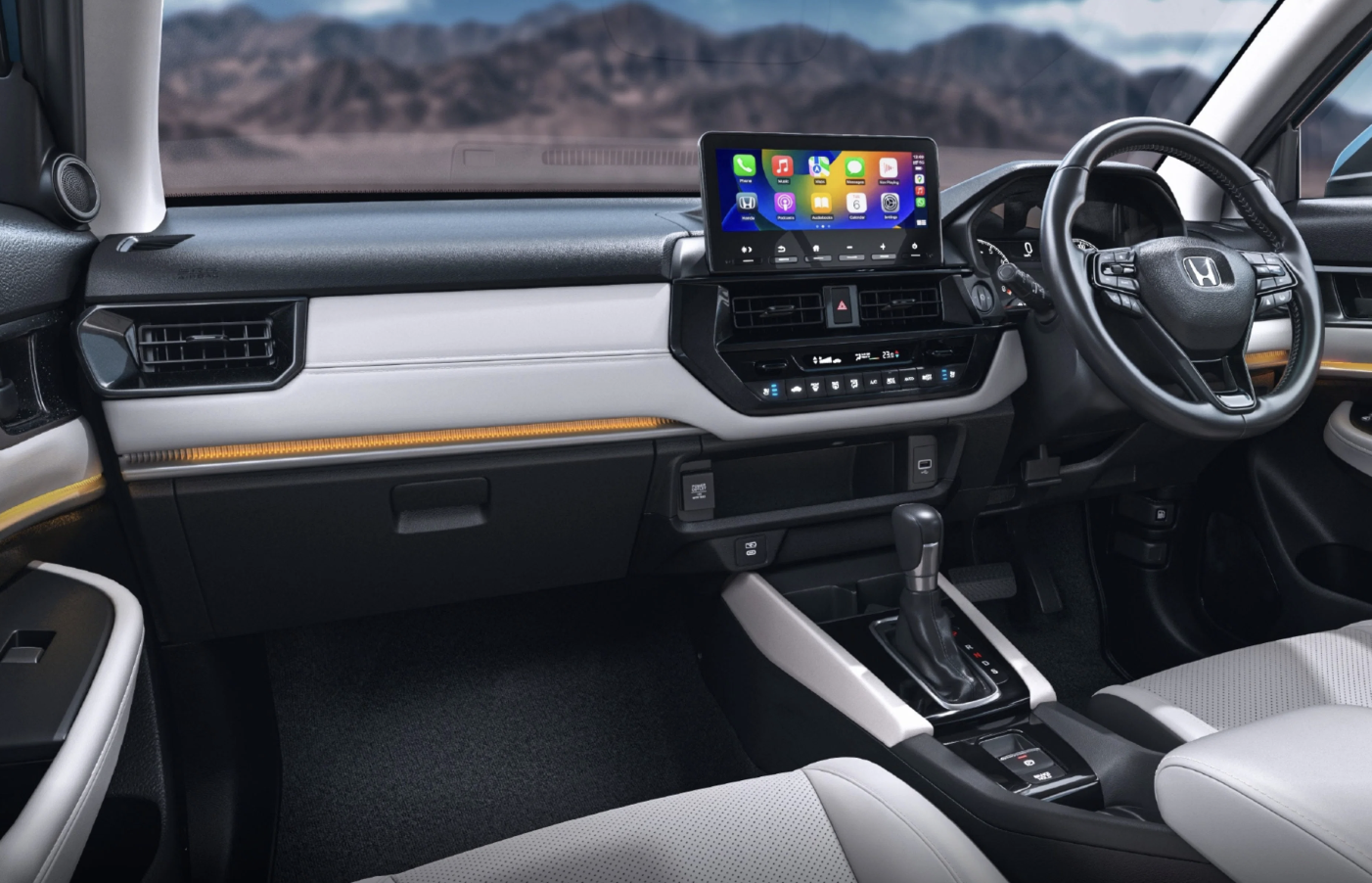
The cabin is where the real work went, and the additions are substantial rather than cosmetic.
Ventilated rear seats are the standout, and they are a segment first. Ventilated front seats join them on the new ZX+, which also brings powered adjustment for both front seats: eight-way for the driver, four-way for the passenger.
Beyond that there is wireless charging, a PM2.5 filter, an ambient lighting package and an electronic parking brake with auto hold on CVT variants. The ZX+ Black gets Active Orange ambient lighting against its all-black interior.
Mechanically, rear disc brakes replace drums. That is a genuine upgrade rather than a brochure line, since plenty of rivals in this bracket still run drums at the back.
Safety
Worth spelling out, because it is the strongest part of the Elevate's case and tends to get buried.
Honda Sensing continues on the top variants, delivering Level 2 ADAS including adaptive cruise control and collision mitigation braking. Few cars at this price in India offer it, and almost none do in Nepal.
The facelift adds a 360-degree surround-view camera along with front and rear parking sensors on the ZX+, and ISOFIX child-seat mounts are fitted.
Level 2 ADAS on a car starting under INR 12 lakh was notable in 2023. It remains notable now.
What's new on the Elevate facelift
Revised mesh grille with Tri-Bar Signature LED position lights
Connected LED tail lamps and reworked front bumper
17-inch diamond-cut dark-finish alloys on select variants
New ZX+ and ZX+ Black variants
Segment-first ventilated rear seats
Ventilated front seats on ZX+
Eight-way power driver's seat, four-way power passenger seat
360-degree camera with front and rear parking sensors
Wireless charging and PM2.5 filter
Ambient lighting package
Electronic parking brake with auto hold on CVT
Rear disc brakes
Nordic Fest Pearl colour option
Engine
Nothing has changed, and that is the whole story of this facelift.
The Elevate continues with Honda's 1.5-litre four-cylinder i-VTEC naturally aspirated petrol, producing 119 bhp at 6,600 rpm and 145 Nm at 4,300 rpm, driving through a six-speed manual or a seven-step CVT.
Here is why the omission grates. Honda's e:HEV hybrid system already exists in India and Nepal, fitted to the City. The engineering is done. Putting it in the Elevate would have reframed the car entirely in a market where running costs now drive purchase decisions more than almost anything else.
There is also no turbo option, which is where most of the competition has gone.
So buyers get a demonstrably better cabin wrapped around the same adequate engine. It will do the job. It will not excite anyone, and it will cost more to run than a hybrid rival.
Specifications
Specification | Detail |
Engine | 1.5-litre, four-cylinder, naturally aspirated i-VTEC petrol |
Max Power | 119 bhp (121 PS) at 6,600 rpm |
Peak Torque | 145 Nm at 4,300 rpm |
Transmission | 6-speed manual or 7-step CVT |
Boot Space | 458 litres |
Ground Clearance | 220 mm |
Wheels | 17-inch diamond-cut alloys on select variants |
Braking | Disc front and rear, electronic parking brake with auto hold on CVT |
ADAS | Honda Sensing Level 2 on top variants |
Camera | 360-degree surround view with front and rear sensors |
Seats | Ventilated front and rear, 8-way power driver, 4-way power passenger |
Variants | SV, V, VX, ZX, ZX+, ZX+ Black |
Manufacturing | Built in India, exported to Japan |
When will it reach Nepal?
Honda has not confirmed a Nepal launch date or price for the facelift, and we are not estimating a figure here.
A few things make it more likely than not. The Elevate already sells in Nepal as part of Honda's current lineup alongside the City, City e:HEV and Amaze. The car is built in India, which keeps logistics far simpler than importing from Japan or Thailand. And Syakar Trading has an established network here.
The same caveats apply as with other recent Indian launches awaiting word on Nepal. Indian production shortens the distance, but it does not schedule a launch.
One practical thought if you are shopping right now. Syakar's festive campaign runs until 16 November with discounts reaching Rs 1 million, plus free insurance, road tax and five years of servicing. If the facelift is a few months out, the current offers on outgoing stock may well beat whatever the updated car arrives at. Distributors always discount hardest on the model being replaced.
How it fits the wider picture
The Elevate update lands in what has been an unusually busy stretch for Indian launches, with manufacturers pushing equipment further down their ranges rather than launching new models.
Honda is playing the same game here. Ventilated rear seats, a 360-degree camera and powered seats are features that belonged two segments higher a short while ago. The difference is that most rivals pairing those features with a modern turbo or hybrid powertrain, and Honda does not.
Worth waiting for?
The facelifted Elevate is a better car than the one it replaces, and in ways owners will notice daily. Ventilated seats front and rear, a proper surround-view camera, rear discs and Level 2 ADAS is a strong package, and 220 mm of ground clearance with a 458-litre boot suits Nepali conditions well.
The engine remains the weak link. A naturally aspirated 1.5 making 119 bhp was acceptable in 2023 and is merely acceptable now, in a market steadily moving toward electrification.
Honda builds this car in India and ships it to Japan, so the Elevate clearly matters to the company. Which makes the decision to skip a hybrid harder to explain, not easier. The technology was sitting right there.
For more on new launches, prices and the auto market in Nepal, Autoncell covers them as they land.