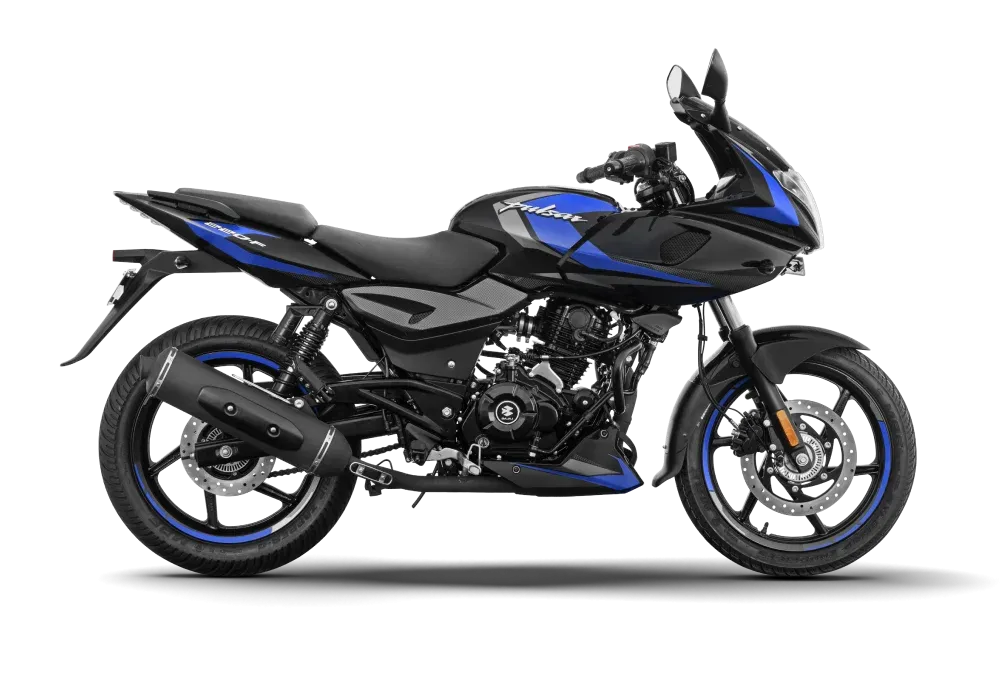
The Pulsar 220F arrived in 2007. Nineteen years later, Bajaj has got round to fitting it with an LED headlight.
That sounds like a joke at the bike's expense, and partly it is. But the 220F has outlived almost everything launched alongside it, and the weak halogen headlight was the single most common complaint from the people who kept buying it anyway.
Hansraj Hulaschand & Company has brought the updated version to Nepal at Rs 474,900, which is Rs 10,000 above the outgoing model. Whether that price makes sense in late 2026 is a question worth working through properly.
What's actually changed
One thing. The headlight.
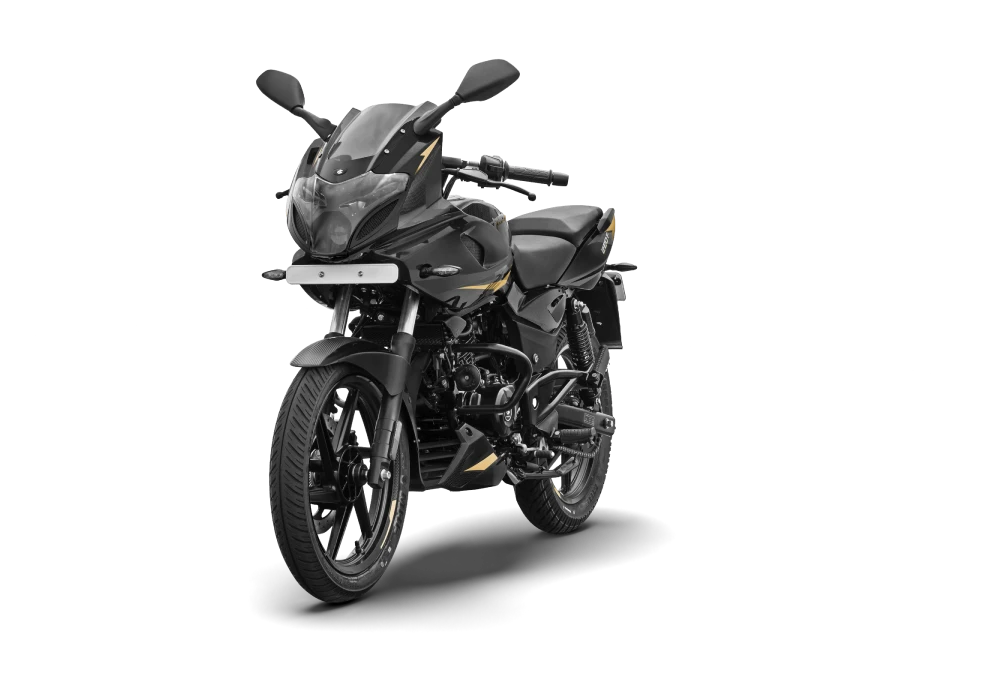
The old setup paired a 55W projector low beam with a 55W ellipsoidal high beam, both halogen, with Auto Headlamp On. The 2026 model replaces that with an LED unit featuring integrated LED daytime running lights.
It is not a cosmetic tweak. Halogen output on the 220F was genuinely poor, and anyone who has ridden one on an unlit stretch of highway at night will tell you the upgrade is overdue. LED throws meaningfully more light with a cleaner cut-off, which matters on a bike people actually tour on.
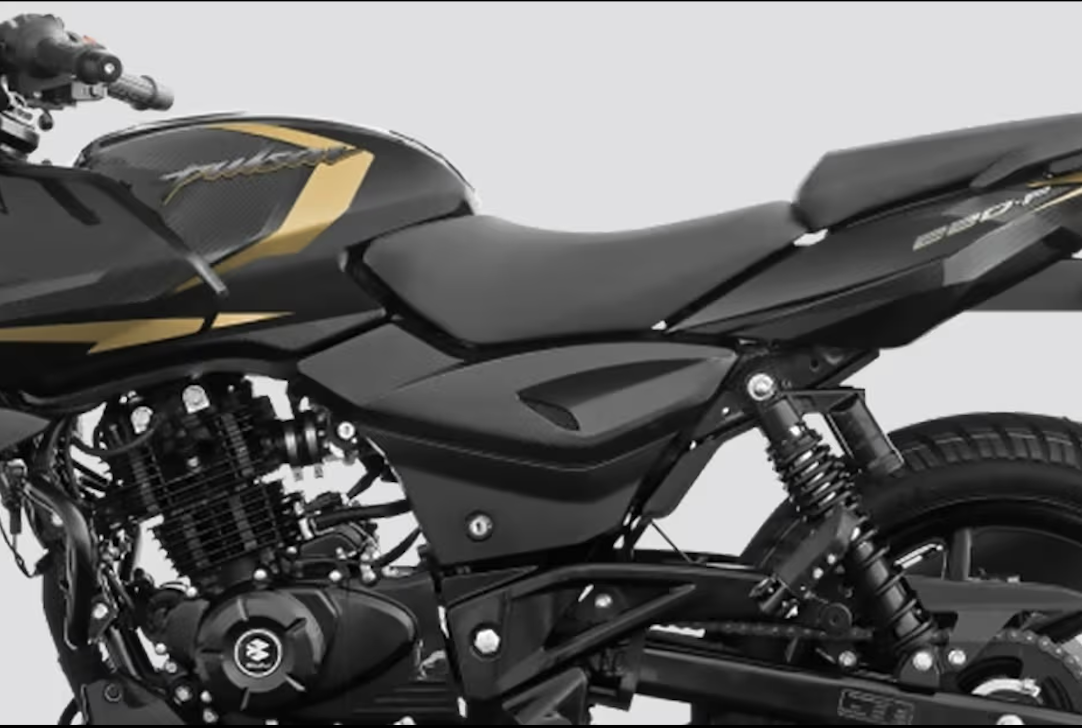
This follows an earlier update that brought LED indicators, next-gen graphics, carbon-fibre styled side panels and a USB charging port. The fascia is now fully LED, and it is the first real change to the 220F's face since 2007.
Everything else is untouched.
Engine
The 220cc Twin Spark FI DTS-i oil-cooled engine carries over, producing 20.9 PS at 8,500 rpm and 18.55 Nm at 7,000 rpm through a five-speed constant mesh gearbox.
Here is the honest assessment. This is a powertrain architecture approaching two decades old. It has been updated over the years to meet emissions standards, but the foundation has not moved. No slipper clutch, no traction control, no liquid cooling.
None of which makes it a bad engine. The 220F has a well-earned reputation for strong mid-range pull, relaxed highway cruising and real durability, which is precisely why it still sells. It is just not modern, and nobody should pretend otherwise.
The 15-litre fuel tank is worth a mention too. Combined with the engine's touring character, it gives the 220F genuine range between stops.
Brakes and suspension
Braking is a 280mm front disc and a 230mm rear disc, with single-channel ABS. That means the system intervenes at the front wheel only, and the rear can still lock under hard braking.
Dual-channel ABS would have been the more meaningful upgrade than the headlight, and Bajaj chose not to fit it. On a bike happy to sit at highway speed all day, that is a real limitation in 2026.
Suspension is telescopic at the front with anti-friction bushes, and a five-way adjustable Nitrox shock at the rear. The adjustability earns its place if you carry a pillion or luggage regularly.
Tyres are tubeless, 90/90-17 front and 120/80-17 rear.
 Features
The equipment list is better than the engine's age suggests.
The fully digital reverse monochrome LCD console has Bluetooth, covering turn-by-turn navigation, call accept and reject, missed call and message alerts, a clock and distance-to-empty.
Beyond that there is a USB charging port as standard, a 12V full DC electrical system, clip-on handlebars, a split seat, split grab rails, fairing-mounted mirrors, LED tail lights, LED indicators and body-coloured alloy wheels.
Bajaj Pulsar 220F features
New LED headlight with integrated LED DRLs
Bluetooth-enabled fully digital LCD console
Turn-by-turn navigation and call and message alerts
Distance-to-empty readout
USB charging port as standard
Five-way adjustable Nitrox rear shock
Telescopic front forks with anti-friction bushes
280mm front and 230mm rear discs with single-channel ABS
Carbon-fibre styled side panels
Split seat and split grab rails
LED tail lights and LED indicators
Alloy wheels with tubeless tyres
Specifications
Specification | Detail |
Engine | 220cc Twin Spark FI DTS-i, single-cylinder, oil-cooled |
Max Power | 20.9 PS (15.37 kW) at 8,500 rpm |
Peak Torque | 18.55 Nm at 7,000 rpm |
Gearbox | 5-speed constant mesh |
Fuel Tank | 15 litres |
Front Suspension | Telescopic with anti-friction bushes |
Rear Suspension | Five-way adjustable Nitrox shock |
Front Brake | 280 mm disc |
Rear Brake | 230 mm disc |
ABS | Single-channel |
Tyres | 90/90-17 front, 120/80-17 rear, tubeless |
Dimensions | 2035 x 750 x 1165 mm |
Wheelbase | 1,350 mm |
Ground Clearance | 165 mm |
Kerb Weight | 160 kg |
Electricals | 12V full DC, USB charging port |
Headlight | LED with integrated LED DRLs |
Instrument Cluster | Bluetooth-enabled digital LCD |
Price in Nepal
Version | Price |
Pulsar 220F with LED headlight (new) | Rs 474,900 |
Pulsar 220F, outgoing version | Rs 464,900 |
So the LED headlight costs you Rs 10,000. For a part that genuinely improves night riding, that is not unreasonable. It is also the third price increase the 220F has taken in roughly a year, having climbed from around Rs 4.2 lakh through Rs 4.4 lakh and Rs 4.64 lakh to get here.
Financing runs through Hulas Finserv Limited, with citizenship-only documentation and approval inside 30 minutes.
The uncomfortable comparison
This is where it gets difficult for the 220F, and it is worth laying out plainly.
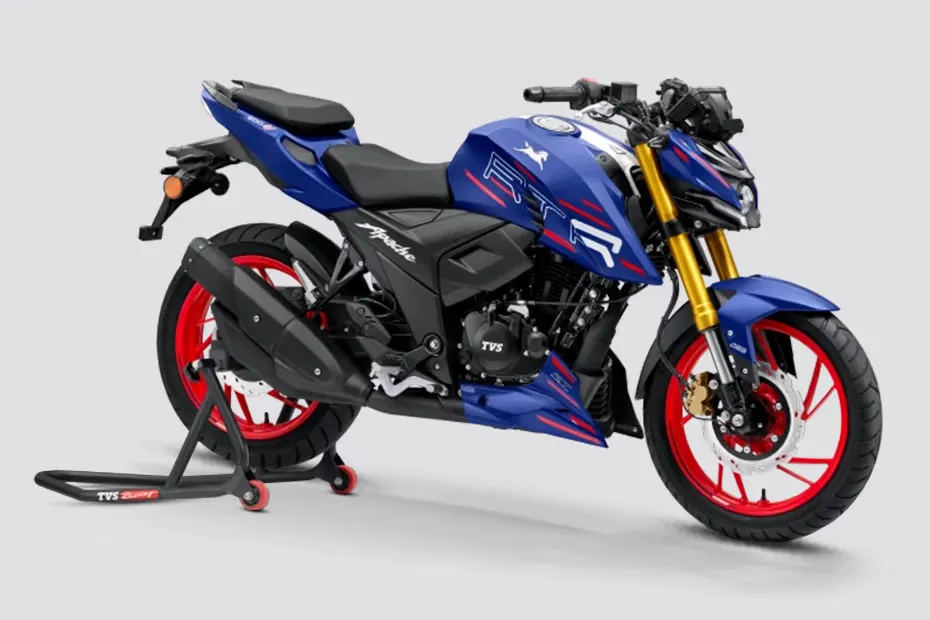
The TVS Apache RTR 200 4V launched in Nepal two weeks ago at Rs 459,900, which is Rs 15,000 less. For that lower price you get adjustable upside-down forks, dual-channel ABS, traction control, three riding modes that genuinely remap the engine, a race-tuned slipper clutch and a 5-inch TFT display.
Then there is the Royal Enfield Hunter 350 at Rs 487,000, about Rs 12,000 more, offering 349cc and an entirely different riding experience.
And within Bajaj's own range, the Pulsar N250 sits at Rs 489,900 with 249.5cc, 24.5 PS and dual-channel ABS, for Rs 15,000 more.
So the 220F is asking near-identical money against newer machines with better brakes, better suspension and more electronics. On a spec sheet it loses every one of those comparisons.
So why does it still sell?
Because spec sheets do not explain the Pulsar 220F.
It has been on Nepali roads for nearly two decades. Every mechanic knows it, parts are everywhere and cheap, and resale value holds unusually well. In a market where service access outside the valley often decides whether a bike is worth owning, that counts for a great deal.
The engine's durability reputation is earned rather than marketed. The riding position suits long distances better than most of its sportier rivals, and 15 litres of fuel means fewer stops. For a certain generation of Nepali riders, the 220F is simply the bike, the one they wanted at eighteen and can finally afford.
There is also the semi-fairing, which still looks right. Plenty of 2007 designs have aged badly. This one has not.
Should you buy it?
If you want the most capable motorcycle for Rs 474,900, the answer is no. The Apache RTR 200 4V beats it on hardware at a lower price, and it is not close.
If you want something simple to maintain, cheap to fix anywhere in the country, comfortable over long distances and carrying a nameplate that holds its value, the 220F still makes a reasonable case. The LED headlight removes its most legitimate weakness.
What Bajaj has not addressed is braking. Fitting dual-channel ABS would have done more for owners than any lighting upgrade, and at this price in 2026 it should not be optional.
Nineteen years in, the 220F is coasting on goodwill and parts availability rather than engineering. That has worked so far. It will not work forever.
For more on new launches and prices in Nepal, Autoncell covers them as they land.