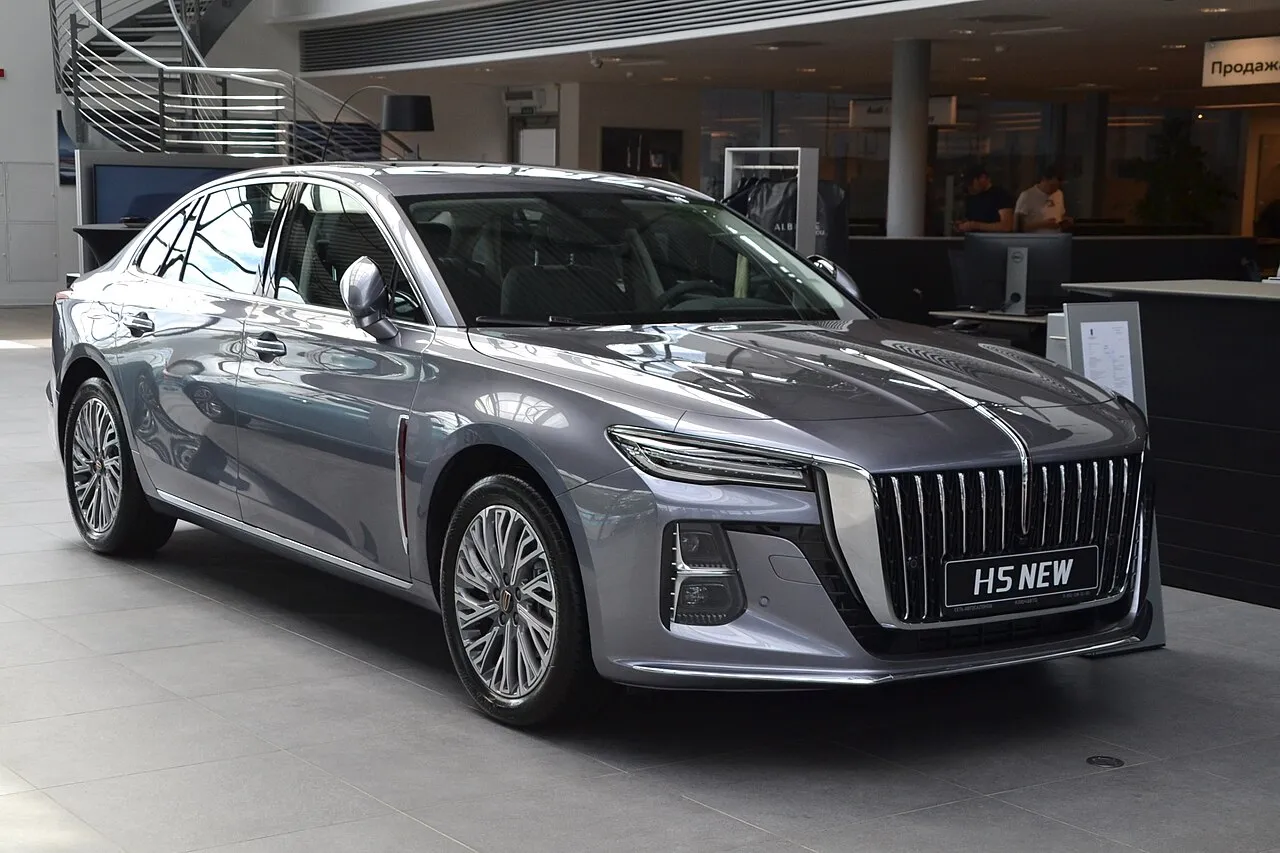
For decades, Hongqi has been the car that carries Chinese heads of state. Now it's heading to Nepal.
The name Hongqi translates to "Red Flag" in Chinese, and there's a reason that symbolism was chosen. This is the brand that ferried President Xi Jinping. The brand that showed up at Tiananmen Square parades. The brand that, for most of its history, the average Chinese citizen could admire but never buy. That version of Hongqi is evolving fast, and Nepal is about to get a front-row seat.
Hongqi will make its official Nepal debut at the NAIMA Nepal Mobility Expo 2026, running August 11 to 16 at Bhrikuti Mandap in Kathmandu. The brand's local distributor, Advanced Automobile Pvt. Ltd., the same outfit that previously handled Renault in Nepal, has already signed the dealership agreement and begun importing the first batch of vehicles ahead of the public unveiling.
A Brand Built on Heritage, Not Hype
Most Chinese automakers entering Nepal have led with affordability. Hongqi is doing the opposite.
The brand is the luxury arm of FAW Group, one of China's oldest and largest automotive conglomerates. For years, Hongqi occupied a peculiar space: technically available to the public, but culturally reserved for the state. Think of it as China's answer to the kind of marque that European royalty used to favor, except state-owned and deeply political in its symbolism.
The modern Hongqi is something different. FAW has spent the last several years repositioning the brand as a genuine contender in the global luxury EV space, competing not on price, but on presence. Arriving in Nepal with that lineage is a calculated move, and it tells you something about where the Nepali premium market is heading.
The Cars: Size, Range, and a Flagship That Makes a Statement
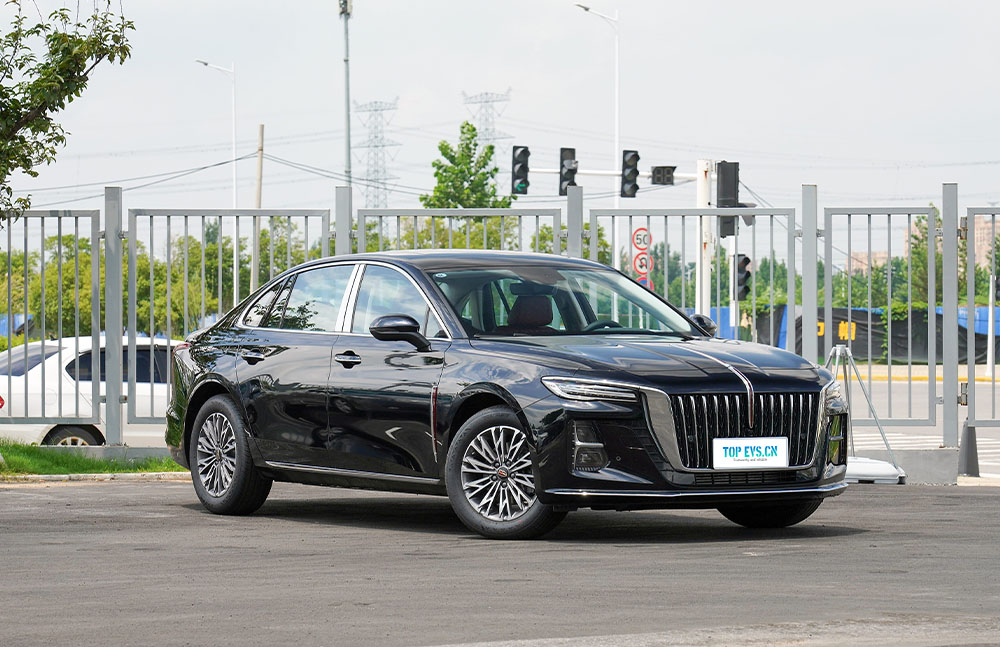
Two models are expected to anchor the Nepal launch: the E-HS4 and the E-HS9. The E-HS4 is the more accessible entry, while the E-HS9 is where Hongqi is really making its argument.
The E-HS9 is a full-size luxury electric SUV, and its dimensions make that clear. At 5,209 mm long, 2,010 mm wide, and 1,731 mm tall, with a wheelbase stretching 3,110 mm, this is not a car that blends into traffic. It's the kind of vehicle that announces itself. Battery options in global markets range from an 84 kWh pack to a 120 kWh long-range unit, the latter delivering a WLTP-rated range of up to 515 km. Power goes to all four wheels through a dual-motor setup, giving it the kind of confident performance that flagship buyers expect without sacrificing ride quality.
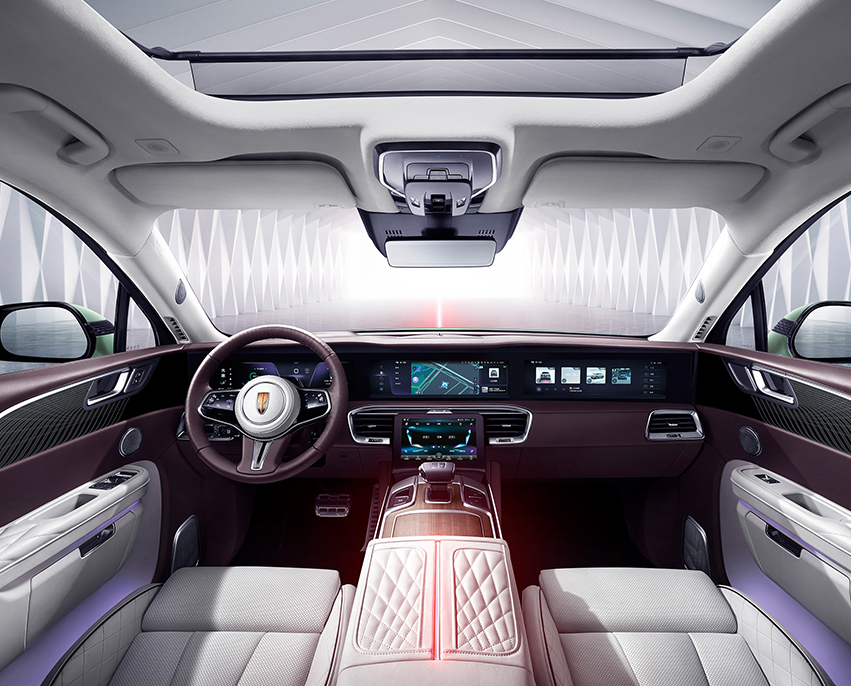
The interior is where Hongqi leans hardest into its luxury credentials. Nappa leather upholstery, Alcantara trim, quad-zone climate control, ventilated and massage seats, up to 16 speakers in the audio system, and multiple digital displays across the cabin. Air suspension and an advanced driver assistance suite round it out. It reads less like a spec sheet and more like a hotel room that happens to move at highway speeds.
The Price
Nepal’s final figures haven't been announced. That positions Hongqi squarely in the premium electric SUV bracket, competing against the kind of established names that Nepali buyers in this segment already know.
Whether that price holds after taxes and duties remains to be seen. But the number itself is telling. This isn't a brand trying to undercut the market. It's a brand that believes its name and spec sheet can justify the task.
What This Actually Signals About Nepal's EV Market
A few years ago, the conversation around electric vehicles in Nepal was dominated by affordability and practicality. Charging infrastructure, range anxiety, entry-level crossovers. Those conversations haven't disappeared, but they're now running alongside a very different one.
Nepal's premium EV segment has quietly matured. Buyers at the higher end of the market are no longer just asking whether an electric car is practical. They're asking whether it's worth owning. That's a meaningful shift, and Hongqi's entry is both a response to it and a bet on its continuation.
The brand also brings something that most Chinese entrants haven't leaned on in Nepal: heritage. Not heritage in the European sense, but a specific, recognizable identity with genuine weight behind it. That's a harder story to tell than "affordable and feature-packed," but it's also a story that tends to stick with buyers who aren't making decisions based on price alone.
Whether Nepal's market is ready to fully embrace that story will become clearer once the doors open at Bhrikuti Mandap in August. But the fact that Hongqi chose Nepal for this launch at all says something worth paying attention to.