-original.webp)
The BYD Atto 1 had Nepal's compact EV hatchback segment on lockdown. In under a year, it crossed 1,300 units imported , a number that most car models in Nepal take years to reach. That kind of dominance attracts challengers, and the Proton e.MAS 5 has now arrived to make things uncomfortable. Two hatchbacks, nearly identical price tags, and a spec sheet where the differences are sharper than they first appear.
The Atto 1 is distributed in Nepal by Cimex Inc. The e.MAS 5 comes through Jagdamba Motors. Both are available in two variants. Both sit in the Rs 29 –35 lakh band that is fast becoming the most contested space in Nepal's EV market. On pricing: both were launched and priced under Nepal's revised Budget 2083/84 tax structure, which replaced the old kilowatt-based excise system with a price-based Clean Infrastructure Investment Levy. The prices listed here are current as of July 2026 and reflect that new regime.
Design
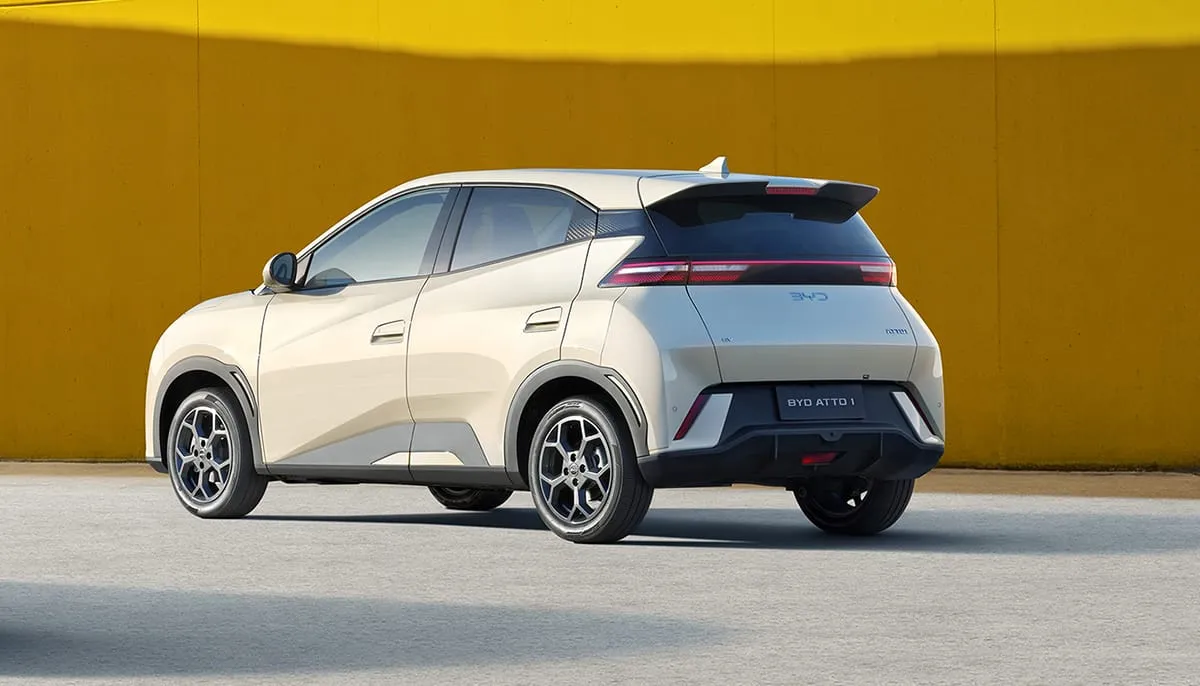
The BYD Atto 1 is compact by intent, not compromise. Built on BYD's e-Platform 3.0, it wears the brand's Dragon Face 3.0 design language , sealed EV grille up front, sleek LED headlights with DRL signature, and a silhouette that reads sporty without trying too hard. Its dimensions are tight: 3,780 mm long, 1,715 mm wide, and 1,540 mm tall. That makes it genuinely easy to thread through Kathmandu's narrower streets, and parking in spaces that larger crossovers simply cannot use is a real daily advantage.
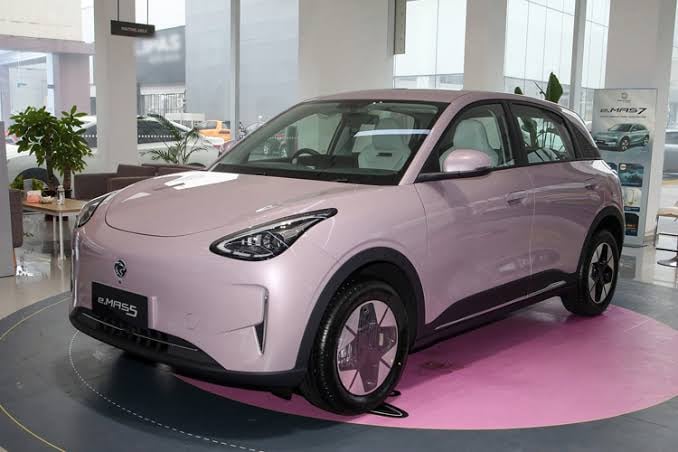
The Proton e.MAS 5 is a substantially bigger car. It measures 4,135 mm in length, 1,805 mm wide, and 1,570 mm tall, on a 2,650 mm wheelbase. The extra size translates directly into more cabin room, particularly for rear passengers. It is more assertive on the road and carries the presence of a family hatchback rather than an urban runabout. Where the Atto 1 is built for the city, the e.MAS 5 is built to handle everything.
Performance
Both cars are rear-wheel drive , which is the first thing worth knowing, and a point in favour of both over the typical FWD-only compact EVs available in Nepal.
Wait, correction: the BYD Atto 1 is front-wheel drive. The Proton e.MAS 5 is rear-wheel drive. That is the distinction that matters here.
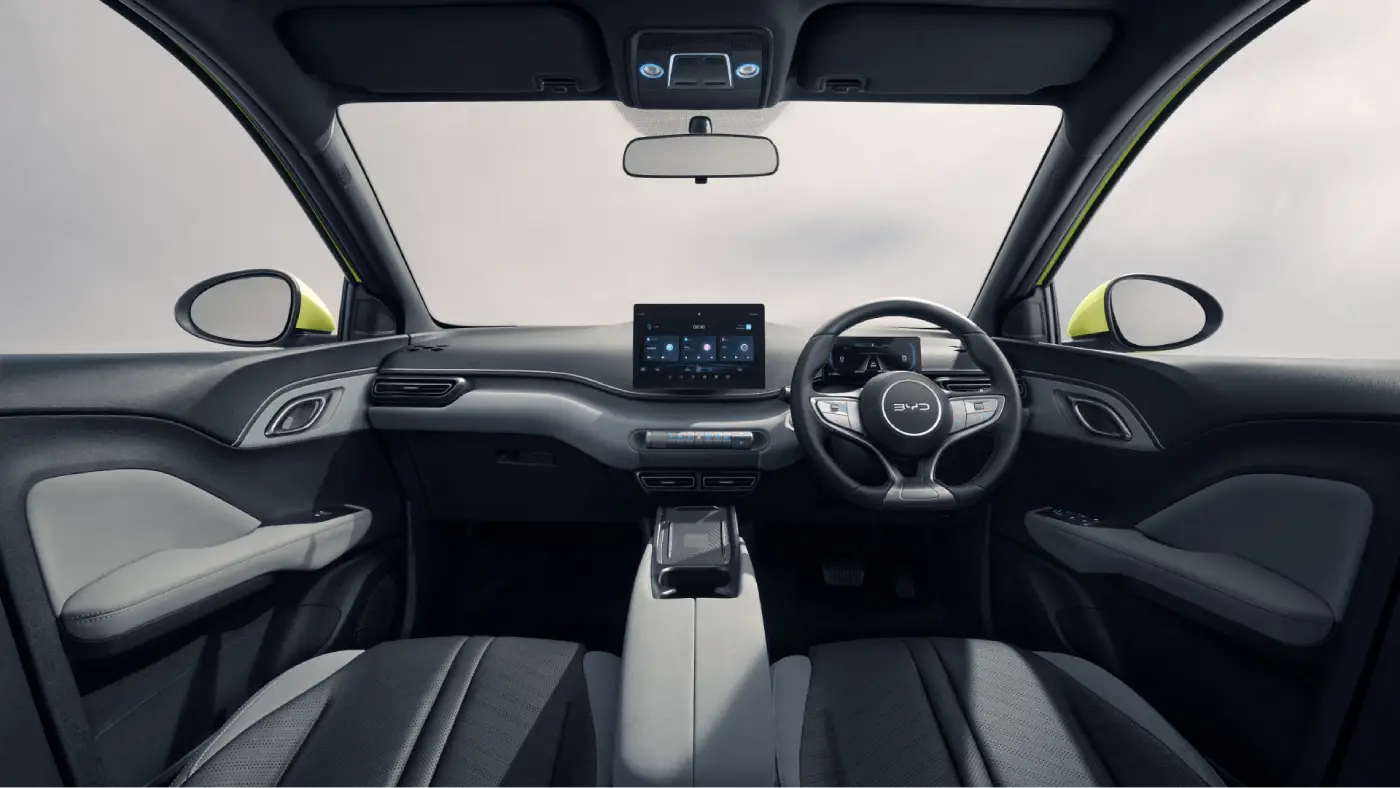
The BYD Atto 1 uses a 45 kW Permanent Magnet Synchronous Motor producing 135 Nm of torque on both variants. Top speed is rated at 130 km/h. The 0–50 km/h sprint takes 5.5 seconds, which is brisk enough for city traffic. It is not trying to be exciting , it is tuned for smooth, efficient urban use, and it delivers that without drama.
The Proton e.MAS 5 Prime gets a 58 kW rear-mounted motor producing 130 Nm of torque. The Premium jumps to 85 kW with 150 Nm of torque and a top speed of 135 km/h. Both variants sprint from 0 to 50 km/h in 3.9 seconds , noticeably quicker than the Atto 1. And because the e.MAS 5 is rear-wheel drive, the driving character is fundamentally different: better weight distribution, more natural cornering, and a liveliness that the Atto 1 simply does not offer. For buyers who spend any time on winding hill roads around the Valley, that matters.
On charging, the e.MAS 5 pulls significantly ahead. It supports 6.6 kW AC and up to 71 kW DC fast charging, with a 30-to-80 percent top-up in roughly 21 minutes via DC. The Atto 1 Dynamic manages 30 kW DC (20–80% in around 40 minutes), while the Premium steps up to 40 kW DC. Both variants support 6.6 kW AC. The gap in DC fast charging speed is significant , on a longer drive with a charger stop, the e.MAS 5 saves you real time.
Battery and Range
The two cars are closely matched on battery size, which makes the comparison cleaner.
The BYD Atto 1 Dynamic uses a 30.08 kWh Blade LFP battery rated at 230 km WLTP. The Premium upgrades to 38.88 kWh for a 300 km WLTP range. BYD's Blade Battery is a cell-to-body (CTB) design built on e-Platform 3.0 , it skips the traditional module structure, reducing thermal runaway risk significantly. It carries a globally proven track record and a 10-year or 2,00,000 km warranty in Nepal covering both battery and motor.
The Proton e.MAS 5 Prime runs a 30.12 kWh CATL LFP battery with a 225 km WLTP range. The Premium steps up to 40.16 kWh for 325 km. CATL is not a small name , it is the world's largest battery manufacturer , and the LFP chemistry handles deep-discharge cycles and temperature variation well. But the Blade Battery carries a stronger brand story in Nepal, where BYD has already built buyer familiarity and trust around that technology specifically.
Specifications
Specification | BYD Atto 1 Dynamic | BYD Atto 1 Premium | Proton e.MAS 5 Prime | Proton e.MAS 5 Premium |
Motor Output | 45 kW PMSM | 45 kW PMSM | 58 kW | 85 kW |
Torque | 135 Nm | 135 Nm | 130 Nm | 150 Nm |
Battery | 30.08 kWh Blade LFP | 38.88 kWh Blade LFP | 30.12 kWh CATL LFP | 40.16 kWh CATL LFP |
WLTP Range | 230 km | 300 km | 225 km | 325 km |
AC Charging | 6.6 kW | 6.6 kW | 6.6 kW | 6.6 kW |
DC Fast Charging | 30 kW | 40 kW | 71 kW | 71 kW |
20/30–80% Charge Time | ~40 min | ~40 min | ~21 min | ~21 min |
Top Speed | 130 km/h | 130 km/h | 125 km/h | 135 km/h |
0–50 km/h | 5.5 sec | 5.5 sec | 3.9 sec | 3.9 sec |
Drive Type | FWD | FWD | RWD | RWD |
Dimensions (L×W×H) | 3780×1715×1540 mm | 3780×1715×1540 mm | 4135×1805×1570 mm | 4135×1805×1570 mm |
Wheelbase | 2,500 mm | 2,500 mm | 2,650 mm | 2,650 mm |
Ground Clearance | 175 mm | 175 mm | 175 mm | 175 mm |
Boot Space | 230 L (up to 930 L folded) | 230 L (up to 930 L folded) | 345 L | 345 L |
Kerb Weight | 1,225 kg | 1,280 kg | , | , |
V2L Support | Premium only | Yes | Yes | Yes |
Battery Warranty | 10 yr / 2,00,000 km | 10 yr / 2,00,000 km | , | , |
Infotainment | 10.1-inch rotating | 10.1-inch rotating | 10.1-inch | 14.6-inch FHD |
Instrument Cluster | Digital | Digital | 8.8-inch digital | 8.8-inch digital |
Airbags | 6 | 6 | 6 | 6 |
360-degree Camera | Yes | Yes | Yes | Yes |
Price | Rs 29,75,000 | Rs 33,80,000 | Rs 29,99,000 | Rs 34,99,000 |
Distributor | Cimex Inc | Cimex Inc | Jagdamba Motors | Jagdamba Motors |
Note: Proton e.MAS 5 battery warranty terms for Nepal not yet officially published. Atto 1 pricing confirmed as per Nepal Budget 2083/84 tax structure (price-based Clean Infrastructure Levy). e.MAS 5 pricing reflects the official July 2026 launch price.
Features
The Proton e.MAS 5 arrives better loaded on features, and the gap is hard to ignore.
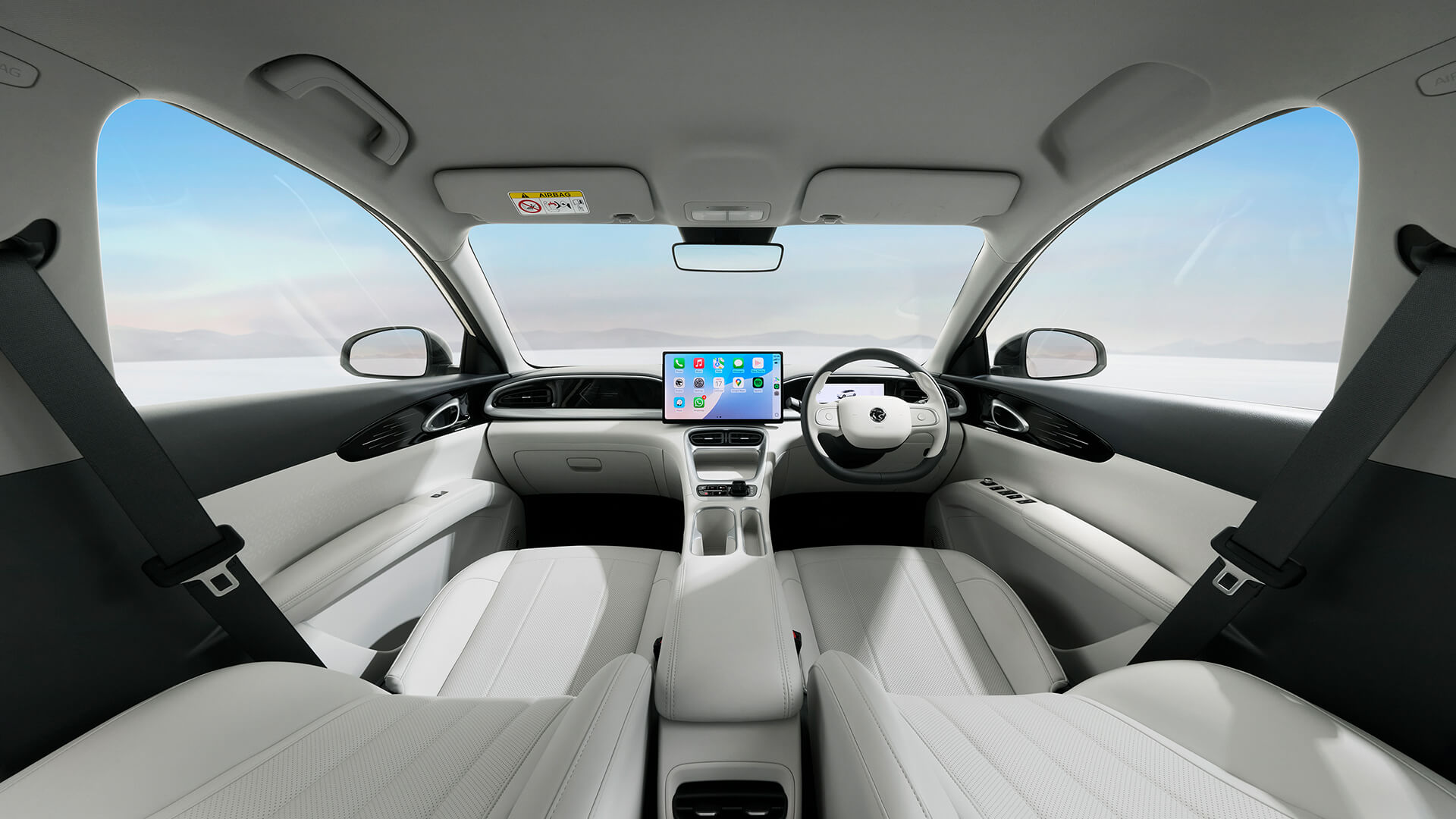
The Premium variant's 14.6-inch FHD infotainment touchscreen is one of the largest in any car at this price point in Nepal. The Prime gets a 10.1-inch screen. Both variants come with an 8.8-inch digital instrument cluster, HiCar connectivity, wireless charging at 50W, 256-colour ambient lighting, keyless entry, and a 4.95-metre turning radius that makes city driving less stressful than the car's size might suggest.
The e.MAS 5 also includes V2L on both variants, letting you run appliances directly from the car ,a practical feature in a country still dealing with occasional power cuts.
Safety across both variants includes six airbags, a 360-degree camera, ADAS with autonomous emergency braking, adaptive cruise control, lane keeping assist, and blind spot detection.
The BYD Atto 1 is not without its own feature story. The rotating 10.1-inch touchscreen is one of its signature cabin elements. Both variants include six airbags, a 360-degree camera, OTA software updates, voice control, wireless Apple CarPlay and Android Auto, and cruise control. The Premium variant adds V2L, 6-way power-adjustable driver seat, synthetic leather upholstery, wireless phone charging, and NFC phone-as-key support.
BYD has built the Atto 1 to feel genuinely usable rather than spec-heavy, and the result is a cabin that most buyers will find intuitive from day one.
Price and the New Tax Context
The BYD Atto 1 Dynamic is priced at Rs 29,75,000. The Premium variant sits at Rs 33,80,000.
The Proton e.MAS 5 Prime opens at Rs 29,99,000 , Rs 24,000 above the base Atto 1. The Premium variant is priced at Rs 34,99,000.
Both cars land in the Rs 30-40 lakh bracket under Nepal's Budget 2083/84 tax structure, which means they attract a 35% Clean Infrastructure Levy on top of 20% customs duty, 5% Road Development Fee, and 13% VAT. The prices listed are official launch prices reflecting this structure , neither distributor has announced revisions since the budget took effect.
The base-level gap between the two is essentially negligible. At the top, the e.MAS 5 costs Rs 1,19,000 more than the Atto 1 Premium. For that premium you get a significantly more powerful motor, rear-wheel drive, faster DC charging, a larger battery with a longer WLTP range, a bigger boot, a larger infotainment screen, and ambient lighting.
On value per rupee, the e.MAS 5 makes a credible argument at the top of the range. The Atto 1 counters with its Blade Battery reputation, a more established service network, and a slightly lower entry price.
Who Should Buy Which?
There is no clean winner, and that is genuinely good news for anyone shopping in this segment right now.
The BYD Atto 1 is the right call if you want a compact, city-focused EV with a globally proven Blade Battery, minimal daily complexity, and the backing of a distributor network that is already well-established across Nepal. If your commute is under 80 km a day and most of your driving happens in the Valley, the Atto 1 does everything you need it to without asking you to pay for things you will not use.
The Proton e.MAS 5 is the stronger case if you want more car for your money , more power, more features, rear-wheel drive dynamics, significantly faster DC charging, a larger cabin, and a feature list that punches above this price bracket. Jagdamba Motors is a credible, established distributor in Nepal, so after-sales anxiety is less of a concern here than it might be with a newer entrant. For a family that wants one car to handle both daily city use and longer weekend runs, the e.MAS 5 makes a compelling argument.
The Atto 1 had Nepal's compact EV segment to itself long enough to prove the market exists. The e.MAS 5 has arrived to argue that buyers are ready to expect more from it. Whatever you decide, that is exactly the kind of competition Nepal's EV buyers have been waiting for.