Volvo Cars and Nvidia are expanding their partnership to develop safer automated driving for future Volvo vehicles, covering everything from highways and busy city streets through to parking.
Announced on 15 October 2026, the expanded agreement pairs Volvo's experience in vehicle safety with Nvidia's artificial intelligence and computing technology.
What the partnership covers
The system will run on three Nvidia technologies working together.
Hyperion provides the sensor and computing architecture inside the car. Halos OS sits above it as the operating layer supporting AI and critical safety functions. Alpamayo Stack supplies the driving software that interprets what is happening on the road and decides how the vehicle responds.
Together, these are intended to help the car understand its surroundings and react appropriately to real-world driving situations.
Where it appears first
The technology will debut in a next-generation Volvo model, part of what the company describes as its largest-ever product expansion.
Volvo plans to introduce more advanced capability gradually rather than all at once. That includes systems which could eventually allow drivers to take their eyes off the road and their minds off the driving task, under permitted conditions.
What the deal brings together
Nvidia Hyperion sensor and computing architecture
Halos OS supporting AI and safety-critical functions
Alpamayo Stack driving software
Coverage across highways, city streets and parking areas
Debut in a next-generation Volvo model
Gradual rollout of eyes-off and mind-off capability
Builds on a collaboration that began in 2017
What the companies said
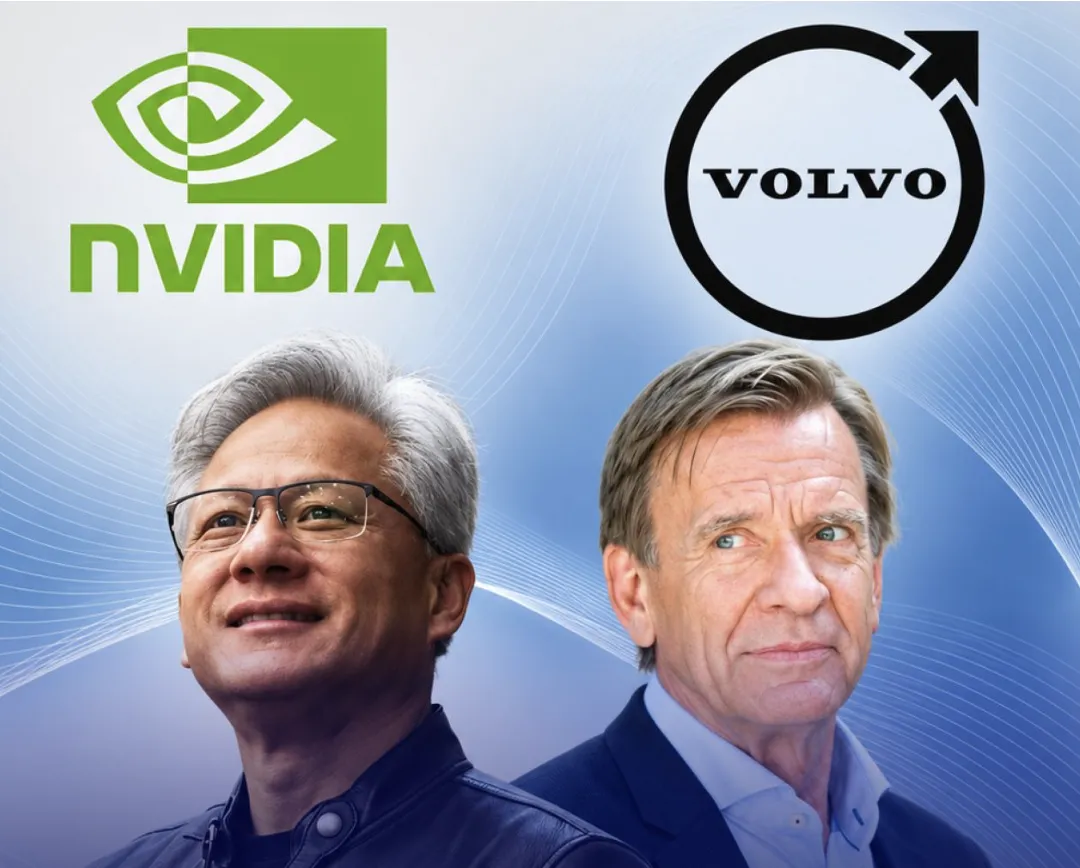
Hakan Samuelsson, President and CEO of Volvo Cars, said the partnership brings together Volvo's long experience in vehicle safety and Nvidia's AI technology to develop safer cars.
Jensen Huang, founder and CEO of Nvidia, said the collaboration would help make driving safer and easier by combining Volvo's safety systems with Nvidia's computing technology.
A partnership nine years in
The two companies first began working together in 2017, so this is an expansion rather than a new relationship.
Alongside it, Volvo is bringing more advanced computing into its next generation of electric vehicles as part of a broader shift toward software-defined cars.
About the companies
Volvo Cars was founded in 1927 and sells vehicles in more than 100 countries. Nvidia is a global technology company known for its AI and accelerated computing systems.
For more on new launches, prices and the auto market in Nepal, Autoncell covers them as they land.