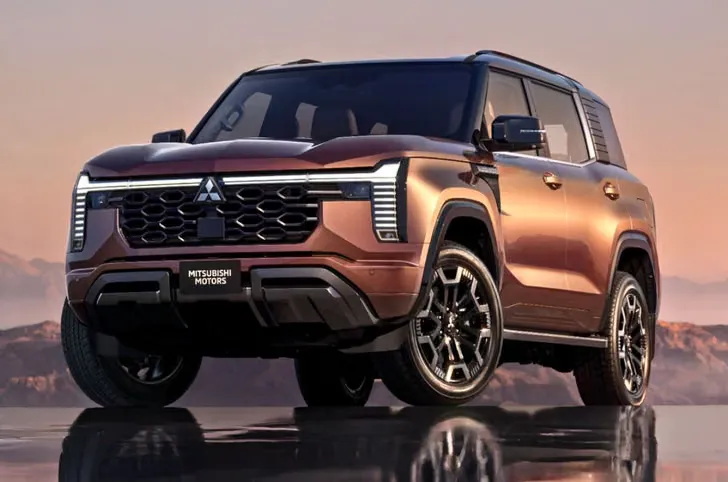
A legend has returned. The Mitsubishi Pajero, one of the most respected names in the off-road world, is back after a long absence, reborn as an all-new fifth-generation SUV. And crucially, Mitsubishi has gone back to basics on what made it great.
Unveiled as the brand's new flagship full-size SUV, the reborn Pajero brings back the body-on-frame construction that defined its earlier, most-loved generations, wrapping it in the technology and refinement expected of a modern machine. It arrives just as genuine off-road capability is becoming a hot topic among Nepali buyers, and for a nameplate that so many enthusiasts here still hold in high regard, this comeback is a genuine event. Let us dig into it.
A Storied Name Returns
To understand why this matters, you have to know the history. The Pajero name has been part of Mitsubishi's story since 1981, with the original establishing a fearsome reputation as a serious off-roader. Across four generations, it became a familiar sight in Japan, Australia and right across Asia, its legend burnished further by rally exploits in the toughest events on earth. More than 3.29 million were built before the fourth-generation model finally bowed out in 2021.
Its absence left a real gap. Now, the fifth-generation model returns to reclaim that legacy, and it does so by embracing exactly the rugged formula that fans missed.
Design
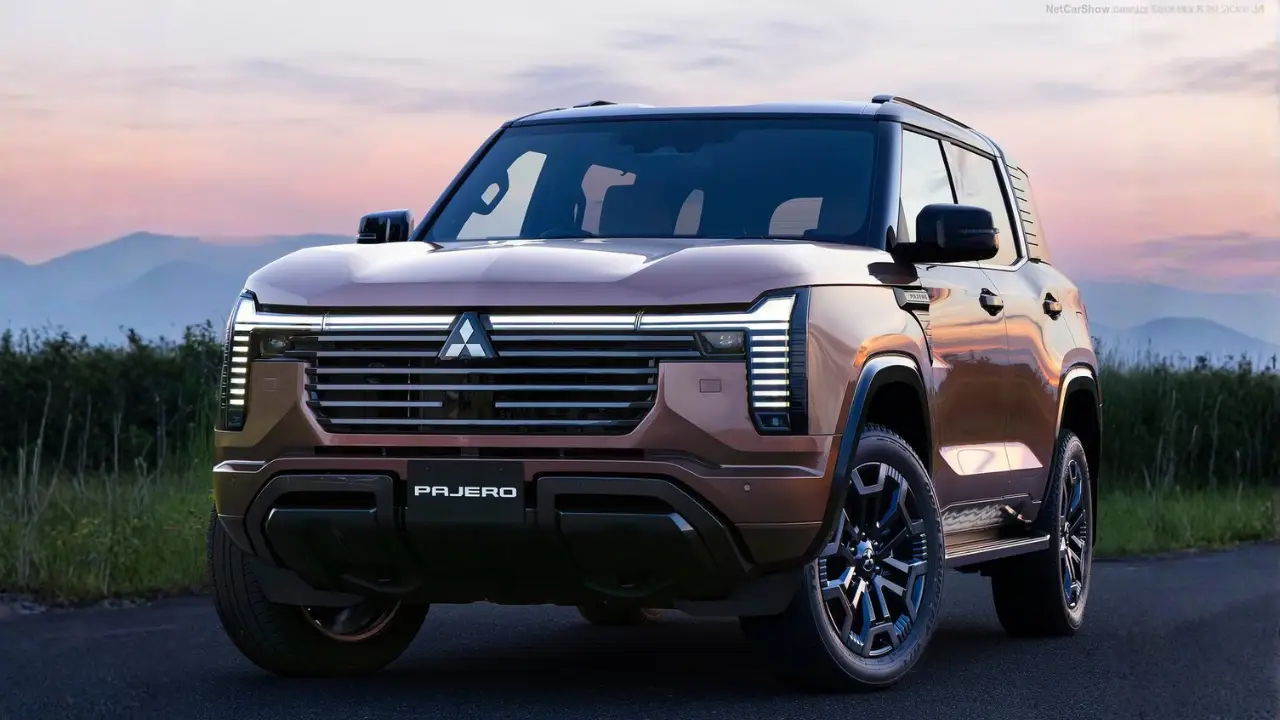
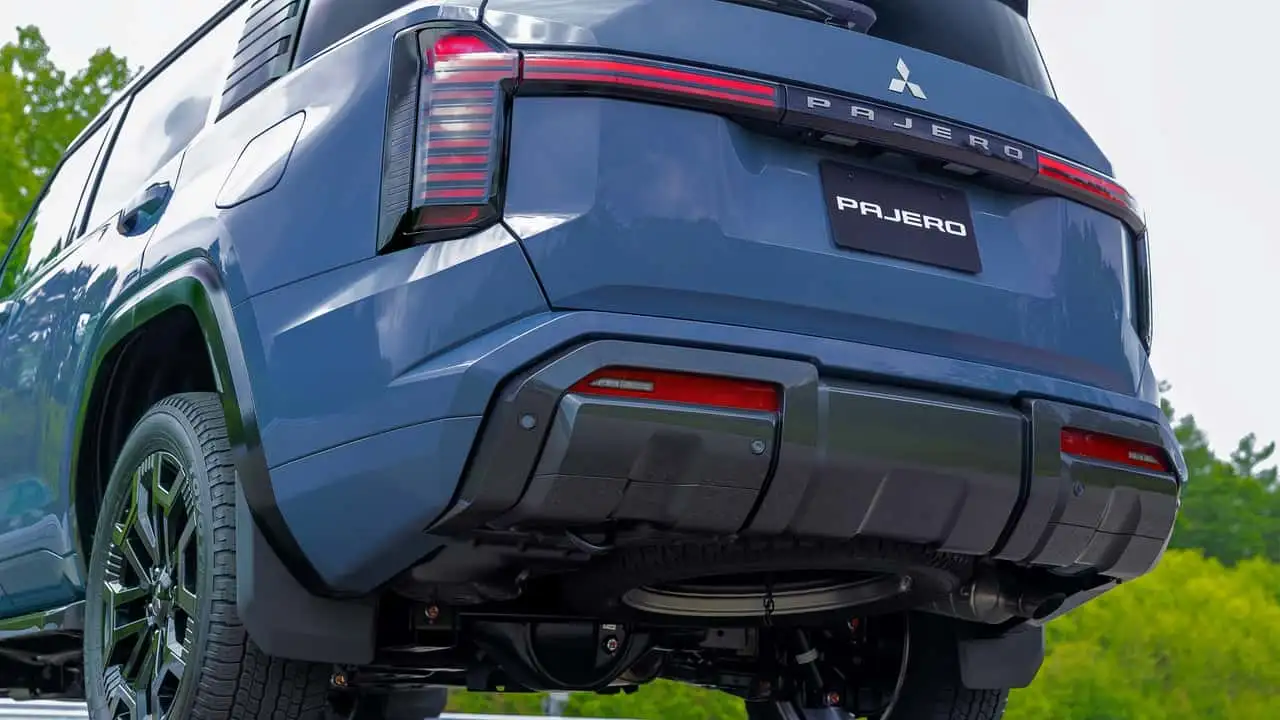
Mitsubishi took a smart approach to the styling: honour the past without slavishly copying it. The new Pajero draws on classic cues, the upright proportions, strong horizontal lines, the distinctive C-pillar and a rear hexagonal motif, but reinterprets them for the modern era. T-shaped lighting and a broad, muscular body give it a genuinely contemporary identity while still reading unmistakably as a Pajero.
It is also a good deal bigger than the Pajeros many owners remember. The new model measures 4,920 mm long, 1,925 mm wide and 1,910 mm tall, a properly imposing full-size SUV. More importantly for its purpose, it packs 230 mm of ground clearance, a 30.4-degree approach angle and a 25.8-degree departure angle, numbers that leave no doubt about its off-road intentions.
Performance and Off-Road Hardware
Here is where the Pajero reclaims its soul. The fifth generation turns away from the more road-biased third and fourth generations and returns to a ladder-frame chassis with traditional 4WD architecture. It runs Mitsubishi's Super Select 4WD-II (SS4-II) system alongside Super-All Wheel Control (S-AWC), the serious hardware that built the badge's reputation. It squares up against the rugged body-on-frame crowd that Nepali off-road buyers already know, machines like the diesel Toyota Hilux.
The SS4-II system offers 2H, 4H, 4HLc and 4LLc settings, and there are seven selectable driving modes, including Gravel, Snow, Mud, Sand and Rock, letting the SUV adapt to almost any surface. Under the bonnet sits a 2.4-litre clean-diesel engine producing up to 480 Nm of torque, paired with a newly developed eight-speed automatic. Note the emphasis: this powertrain is tuned for the low-end muscle a Pajero is expected to deliver, the grunt that gets you up a loose climb or through deep mud, rather than chasing flashy performance figures.
Interior and Features
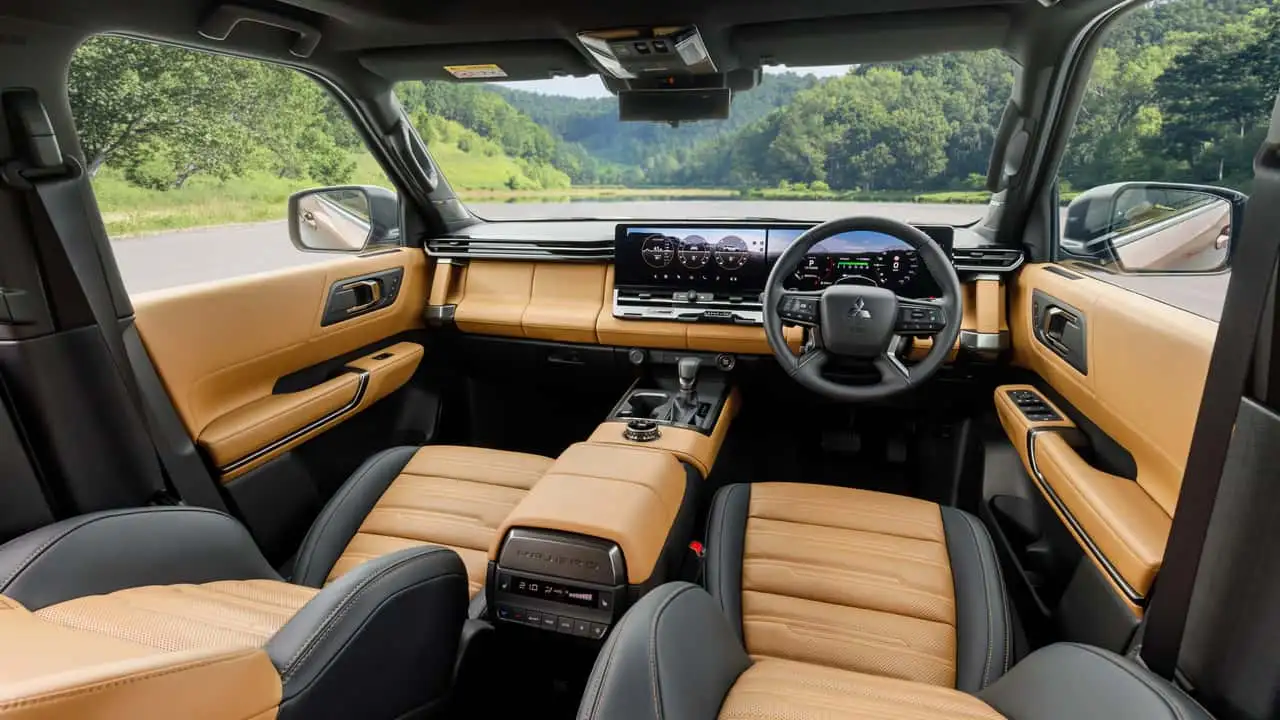
Inside, the new Pajero is a world away from its predecessors. It gets a three-row, seven-seat cabin with a far more sophisticated feel. Two 14.3-inch displays dominate the dashboard, giving it a thoroughly modern look, while three-zone climate control and extra sound insulation are aimed at making long journeys genuinely comfortable.
This is the heart of Mitsubishi's new pitch: the durability and off-road ability of the old Pajero, now paired with the comfort and refinement of a modern flagship.
Mitsubishi Pajero Features
Two 14.3-inch dashboard displays
Three-row, seven-seat cabin
Three-zone climate control
Added sound insulation for refinement
Super Select 4WD-II with 2H, 4H, 4HLc, 4LLc
Seven drive modes (Gravel, Snow, Mud, Sand, Rock and more)
3D multi-around monitor with under-floor view
Eight airbags
Safety
Mitsubishi has brought modern safety tech to the nameplate too. The new Pajero comes with forward collision mitigation, lane assistance, adaptive cruise control and eight airbags. One genuinely clever feature is the 3D multi-around monitor, which can even provide an under-floor camera view, letting drivers spot rocks and obstacles hidden beneath the vehicle when tackling difficult terrain. That is the kind of tech that turns tricky off-roading from nerve-wracking to manageable.
Specifications at a Glance
Specification | Detail |
Type | Full-size body-on-frame SUV |
Engine | 2.4L clean-diesel |
Torque | Up to 480 Nm |
Transmission | 8-speed automatic |
Drivetrain | Super Select 4WD-II with S-AWC |
4WD Modes | 2H, 4H, 4HLc, 4LLc |
Drive Modes | 7 (Gravel, Snow, Mud, Sand, Rock, etc.) |
Length / Width / Height | 4,920 / 1,925 / 1,910 mm |
Ground Clearance | 230 mm |
Approach / Departure Angle | 30.4 / 25.8 degrees |
Seating | 7 (three rows) |
Displays | Two 14.3-inch screens |
Airbags | 8 |
A New Position at the Top
Perhaps the most interesting part of the comeback is where Mitsubishi has placed the Pajero. This is no longer just the rugged family 4WD of old. The company wants the nameplate to sit at the very top of its SUV lineup, blending the classic Pajero formula of durability and off-road ability with a level of comfort and refinement it never had before. It is a bold repositioning, taking a workhorse legend upmarket, into a segment increasingly crowded by high-tech off-roaders like the electric Dongfeng M-Hero 1.
Availability and Nepal Relevance
The new Pajero will be built in Thailand, which gets the model first, followed by Japan and Australia during fiscal 2026. From fiscal 2027, Mitsubishi plans to roll it out to around 100 markets globally.
For Nepal, this return carries extra weight. The Pajero remains a name that commands real recognition among Nepali SUV enthusiasts, particularly those who know its reputation on difficult roads and its long history in the region. While there is no confirmed Nepal launch or price yet, the global expansion plan and the badge's enduring local appeal make it one to watch closely. Any Nepal pricing will depend on import duties and taxes once, and if, it officially arrives.
Conclusion
The fifth-generation Pajero is exactly the comeback fans hoped for. Mitsubishi listened, ditching the softer road-biased approach and returning to the ladder frame, the serious 4WD hardware and the torquey diesel muscle that made the name legendary, then layering on genuine modern comfort, safety and technology.
For Nepal, a country of broken roads, steep mountain tracks and monsoon-flooded routes, a proper body-on-frame off-roader with this pedigree could be a perfect fit. The big questions now are simply when it reaches the region and at what price. If Mitsubishi gets those right, the Pajero could recapture the loyalty it built over four decades.
For more on the latest launches and the vehicles headed our way, Autoncell tracks every new arrival as it lands.