So Apple finally made a foldable. Apple was never going to be first to fold. That was always going to be Samsung. What Apple was waiting for, it turns out, was a version worth its name, and after years of sitting out the category while Samsung, Honor and Xiaomi argued over creases and hinges, it has finally shown up.
The iPhone Duo is the first iPhone you open. Closed, it behaves like any other phone in your pocket. Open it and you are holding a 7.6-inch screen, half again as large as the biggest iPhone Apple has ever sold, with the same flagship chip inside and a version of iOS 27 written specifically for a phone that bends in the middle. It was one of the headline reveals at Apple's 2026 event. Pre-orders open October 16, sales begin October 23. Here is what actually matters.
Design
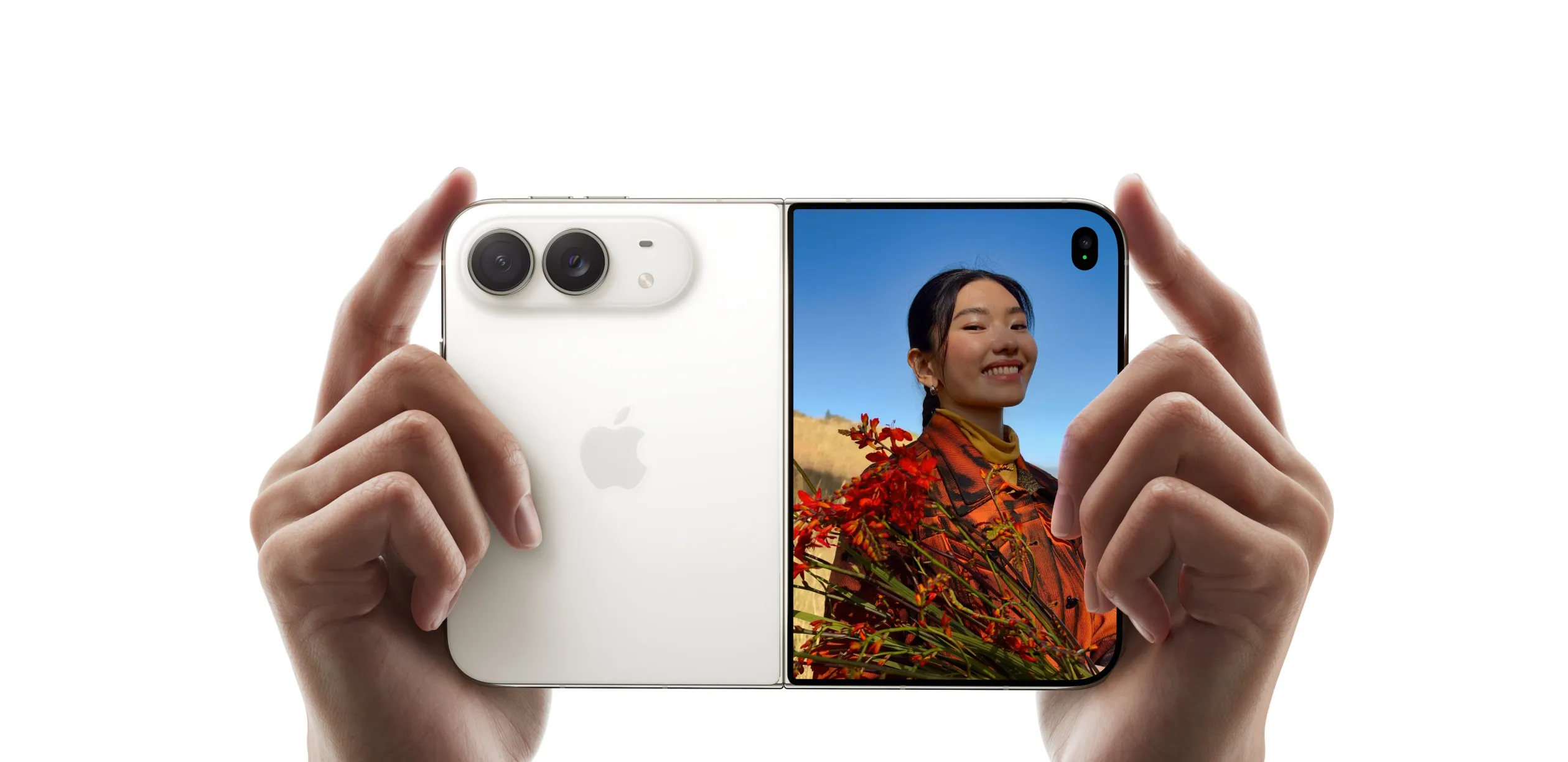
The Duo uses a book-style hinge, so it opens sideways rather than flipping shut like a clamshell. The frame and the hinge cover are Grade 5 titanium, with Ceramic Shield on the front and back and a scratch-resistant coating over the inner panel. It is IP68 rated, which is still rare in this category and probably the most reassuring line on the whole spec sheet.
It weighs around 254 grams and sits at roughly 11.3mm folded, dropping to about 5.2mm open. Apple calls it the thinnest iPhone when unfolded, and that holds, but folded it is a dense thing to carry. The hinge moves with even resistance instead of snapping, and the crease is genuinely hard to spot in use. You can feel it under a finger. You will not notice it watching a film. One real change: Face ID is gone, replaced by Touch ID built into the side button, which works the same open or closed. Colours are Night Sky and Star White.
Display
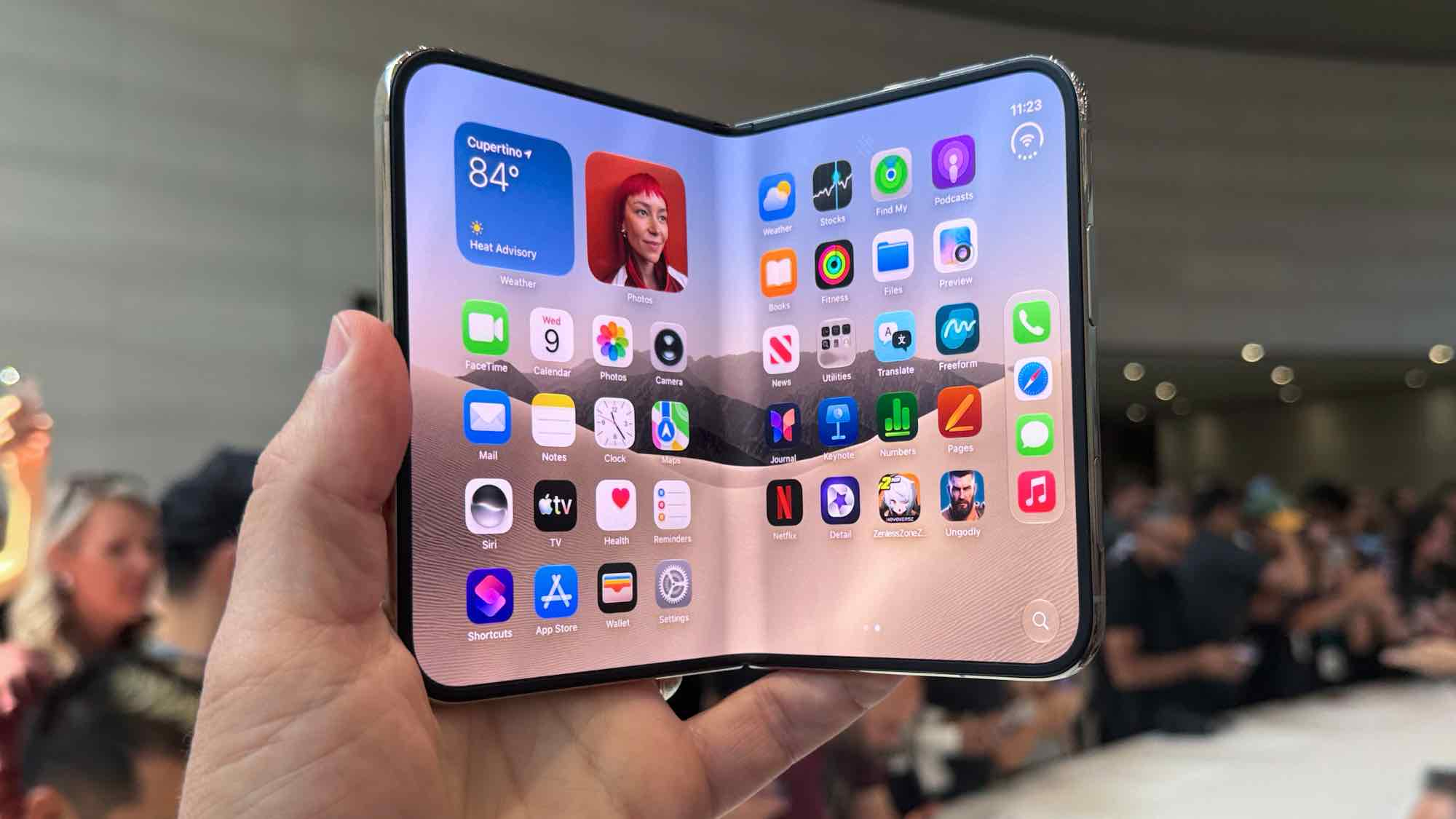
The detail that makes the Duo work is dull on paper and obvious in the hand. Both screens share the same aspect ratio, so content does not crop or reshuffle when you open the phone, and the interface slides across rather than jumping between two layouts.
Outside is a 5.4-inch Super Retina XDR panel, narrow enough for one-handed use and fine for everything you do standing on a bus. Inside is the 7.6-inch folding display, built from ten ultrathin layers with a custom nano-texture finish that cuts glare and helps disguise the fold. Both run ProMotion up to 120Hz and peak at 3,000 nits. Apple has also buried the inner FaceTime camera under the display, so the large screen is one unbroken surface with no cutout sitting in the corner of what you are watching. Apple Pencil (USB-C) support arrives later this year.
Performance
Inside is the A20 Pro on a 2nm process with 12GB of RAM, the same chip powering the Pro lineup. Apple quotes a six-core CPU up to 20 percent faster than the A19 Pro, 50 percent more memory bandwidth, and a Dual 16-core Neural Engine built for heavy on-device AI. A vapor chamber handles thermals, which matters more in a folding body than a slab because there is so little room to shed heat.
The point worth making is that nobody is getting weaker silicon for buying the foldable. That is not how these launches usually go, and it puts the Duo in the same conversation as Xiaomi's record-setting chip rather than a tier below it.
Camera
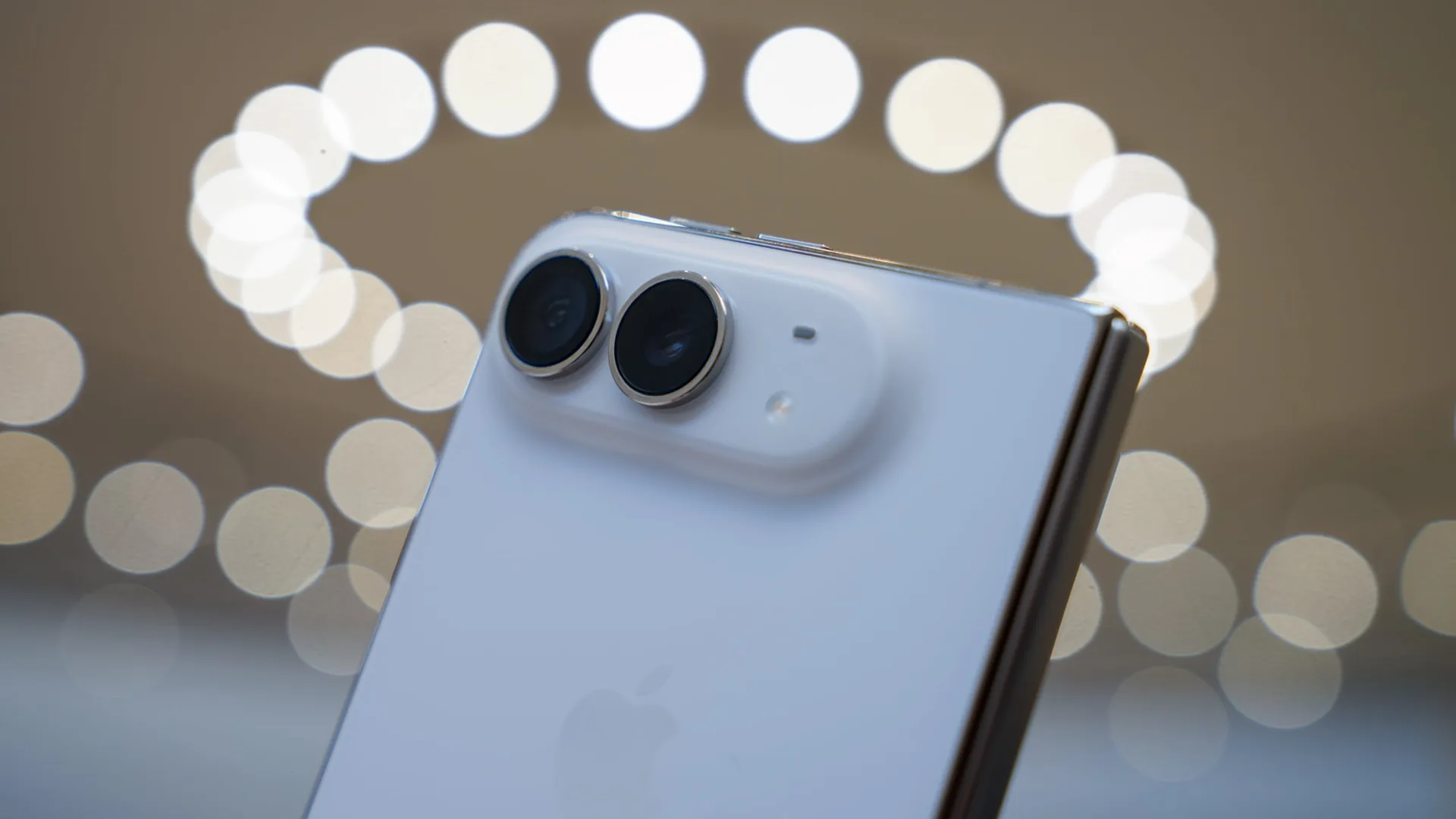
Here is where Apple made its trade. The Duo carries a 48MP Dual Fusion system, a Fusion Main and a Fusion Ultra Wide, with 2x optical-quality zoom cropped from the main sensor. There is no dedicated telephoto and no variable aperture, so if you shoot distant subjects often, the iPhone 18 Pro and Pro Max remain the better cameras and it is not close.
What you get in return is a set of features no other iPhone can do, because no other iPhone has a screen facing both ways. Duo Preview puts a live preview on the outer display so the person you are shooting can fix their own framing. Kid Cue runs animations on that outer screen to pull a child's eyes toward the lens. Smart Take watches the frame and fires when everyone is ready, so nobody has to sprint back from a timer. Duo FaceTime lets people beside you join a call on the outer display instead of crowding in.
Video reaches 4K at 120fps, with Cinematic mode, smart focus tracking and 4K Dolby Vision time-lapse. Selfies come from a 12MP Center Stage camera on the cover, with a second 12MP under-display FaceTime camera inside.
iPhone Duo Features
7.6-inch inner folding display with nano-texture finish
5.4-inch outer display with a matching aspect ratio
Grade 5 titanium frame and hinge cover, IP68 rated
48MP Dual Fusion camera with 2x optical-quality zoom
Smart Take, Duo Preview, Kid Cue and Duo FaceTime
A20 Pro 2nm chip with Dual 16-core Neural Engine
Split View multitasking, laptop and tent modes
Touch ID in the side button, eSIM only
iOS 27 with Siri AI
Software and AI
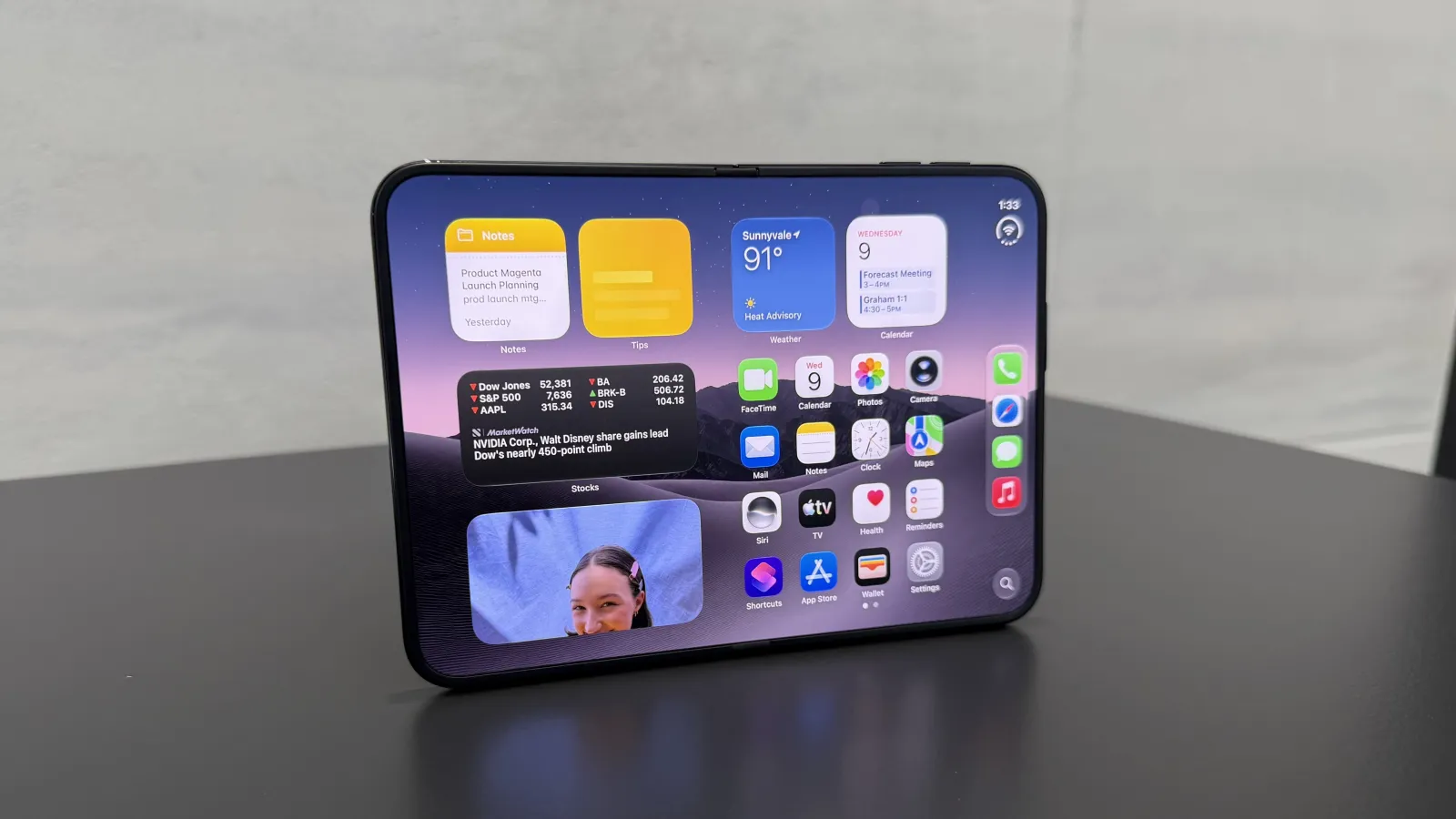
iOS 27 has been reworked for a phone that folds. Split View runs two apps side by side on the inner screen, so you can pull a photo out of your library and drop it straight into an email beside it. Fold it partway and stand it up for hands-free video or a FaceTime call without holding anything. StandBy turns it into a bedside clock or photo frame. Closed, the essential controls shift to the side so your thumb can actually reach them.
Siri AI has more room here than on any other iPhone, using the larger canvas for a proper conversation window alongside personal context, in-app actions and world knowledge. Apple Intelligence adds Photographic Styles 3, Spatial Reframing, the Extend tool and a stronger Clean Up. Siri AI is starting in English and several features carry daily usage limits, so what you actually get depends on where you are.
Battery
Apple has split the battery into two cells, one in each half, a first for the iPhone and the sensible way to use the dead space a fold leaves behind. Going eSIM-only worldwide frees up more room again. The result is up to 31 hours of video playback on the inner display and up to 44 hours on the outer one, with roughly 50 percent charge in about 20 minutes on fast wired charging. MagSafe and Qi2 wireless charging are both supported.
Specifications at a Glance
Specification | Detail |
Inner Display | 7.6-inch Super Retina XDR OLED, 120Hz, 3,000 nits, nano-texture |
Outer Display | 5.4-inch Super Retina XDR OLED, 120Hz, 3,000 nits |
Chipset | Apple A20 Pro (2nm) |
RAM / Storage | 12GB / 256GB, 512GB, 1TB, 2TB |
Rear Camera | 48MP Fusion Main and 48MP Fusion Ultra Wide, 2x optical-quality zoom |
Front Cameras | 12MP Center Stage (outer), 12MP under-display FaceTime (inner) |
Battery | Up to 31 hrs inner, 44 hrs outer video, ~50% in 20 min |
Security | Touch ID in side button |
Connectivity | 5G, Wi-Fi 7, Bluetooth 6, eSIM only, USB-C |
Build | Grade 5 titanium frame and hinge, Ceramic Shield, IP68 |
Weight / Thickness | Around 254g, about 11.3mm folded, 5.2mm unfolded |
Software | iOS 27 |
Colours | Night Sky, Star White |
Price
The iPhone Duo launched globally with the following official US pricing, with pre-orders from October 16 and availability from October 23:
Variant | US Price |
256GB | USD 1,999 |
512GB | USD 2,199 |
1TB | USD 2,599 |
2TB | USD 3,199 |
The iPhone Duo has not yet arrived in Nepal, and Apple has not announced official local pricing. We are not estimating a Nepal figure here. Once it lands through authorised channels, the final price will depend on taxes and market factors, and we will update it then.
Conclusion
The Duo is not the foldable Apple could have shipped three years ago, and that delay shows in the right places. The crease is handled, the two screens agree with each other, the hinge feels built rather than tolerated, and it survives water and dust. Very few foldables can claim that whole list.
The camera is the honest cost of entry. Two lenses and 2x zoom is a real step down from the Pro, and buyers should go in knowing it. What you are paying for is the screen and the shape, and the fact that Apple did not weaken the chip or the battery to deliver them. If the idea of an iPhone that opens into something close to a small tablet has been sitting in the back of your head, this is the first time it exists. For Nepali buyers, the only question left is when it officially arrives and what the local price turns out to be.
For more on the latest phones, chips and gadgets, Autoncell covers every major launch as it lands.