Let's be real. Most people in Nepal who've been thinking about switching to electric haven't done it yet for two reasons: the price feels too high, or the range feels too low. TVS seems to have read that room. The company just launched its brand-new Orbiter electric scooter in Nepal, and it's coming in at a price point that's hard to ignore, with a range figure that should silence most of the "but what if I run out of charge" crowd.
This isn't TVS's first EV entry in Nepal. The iQube was already here. But the Orbiter is a different animal entirely. It's lighter, more accessible, and built specifically for the kind of buyer who commutes through Kathmandu or Lalitpur every single day and just wants something that works without costing a fortune upfront or a visit to the petrol pump every week.
So does it actually make sense? Let's get into it.
Design
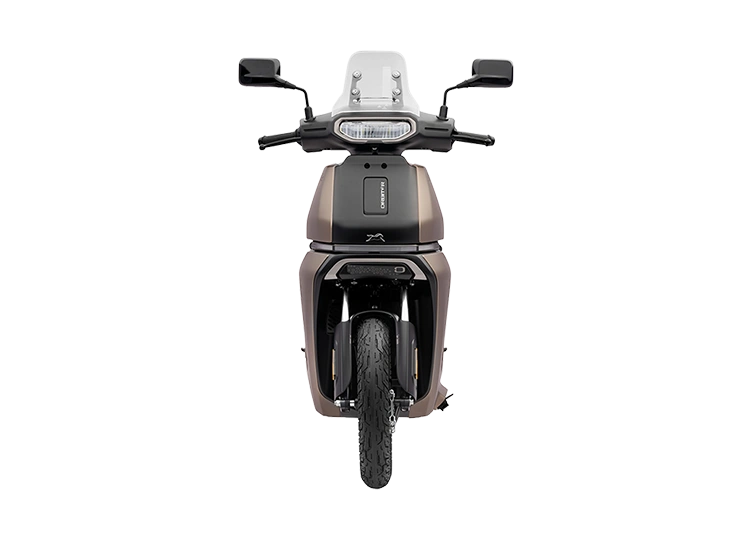
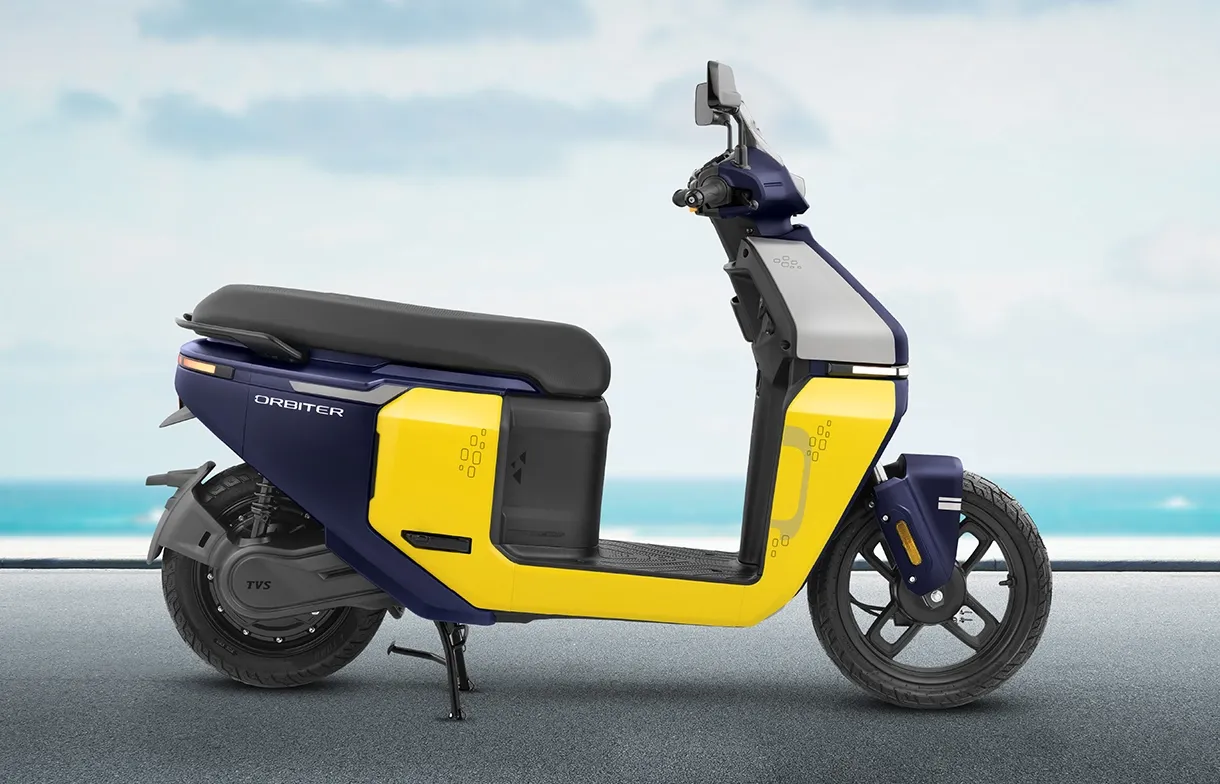
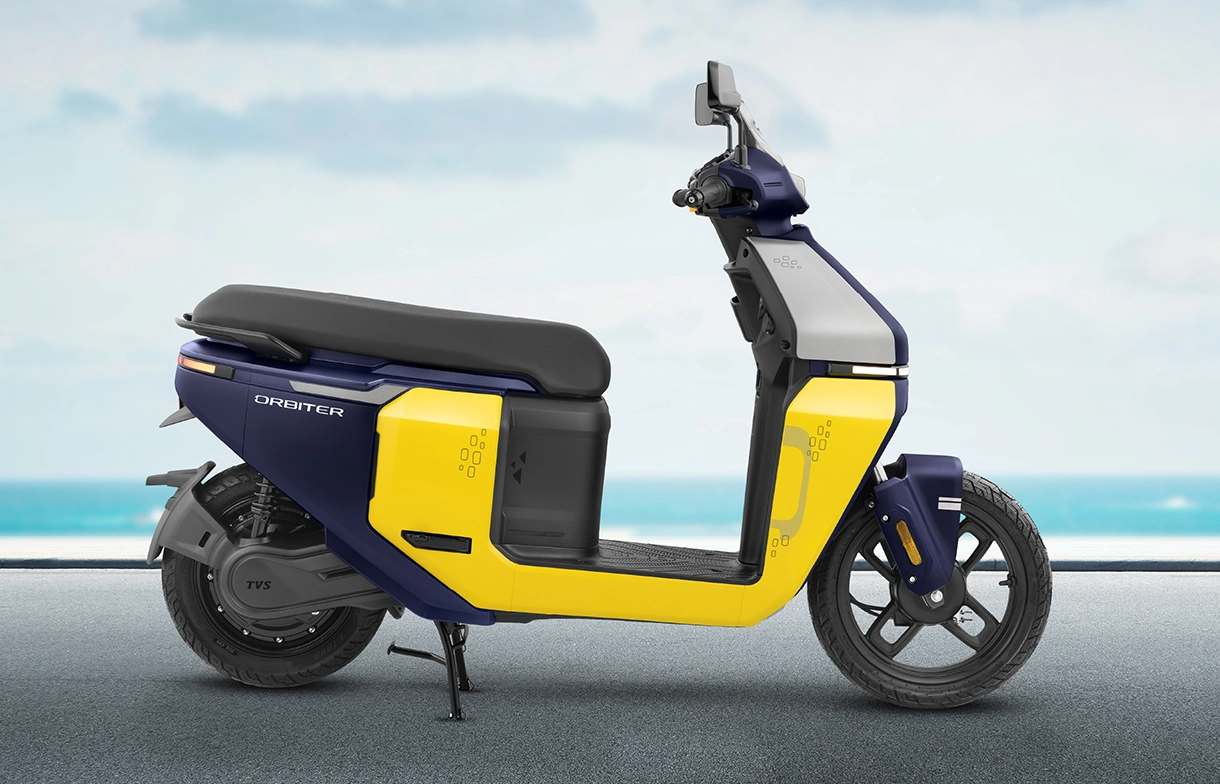
The Orbiter is compact and clean without trying too hard. It measures 1,850 mm in length, 734 mm wide, and stands 1,294 mm tall. The kerb weight sits at 112 kg, which makes it noticeably lighter than a lot of what's currently on the market. For anyone who's wrestled a heavier scooter through tight traffic or tried to park on a slope, that weight difference is felt immediately.
Ground clearance is 165 mm, and the seat height is 763 mm. These are practical numbers for Nepal's road conditions, which range from well-paved main roads to stretches that have clearly not seen maintenance since the previous decade. The 165 mm clearance gives enough confidence for most day-to-day riding without pretending the Orbiter is built for off-road adventures.
Under the seat, you get a 34-litre storage compartment. That fits a full-face helmet comfortably, with room left for a jacket or everyday essentials. It's a detail that matters more than people think until the first time they're standing in the rain with nowhere to put their umbrella.
Performance
The Orbiter runs on a 2.5 kW electric motor paired with a 3.1 kWh lithium-ion battery that holds an IP67 waterproofing rating. TVS claims an IDC-certified range of 158 km, and the real-world estimate comes in between 115 and 120 km depending on how and where you ride.
That real-world number is the one worth paying attention to. For most daily commuters in Kathmandu, 115 km is more than enough to cover a week of back-and-forth without touching the charger more than once or twice. Top speed is capped at 68 km/h, and the scooter goes from 0 to 40 km/h in 6.8 seconds. That acceleration isn't going to impress anyone on a highway, but in city traffic, it's responsive enough to get ahead of the pack when the light turns green.
This is a scooter built for urban efficiency, not thrills. And within that context, the performance numbers are honest and genuinely fit for purpose.
Specifications
Specification | Details |
Motor Power | 2.5 kW |
Battery Capacity | 3.1 kWh |
Battery Rating | IP67 (Waterproof) |
IDC-Certified Range | 158 km |
Real-World Range | 115 to 120 km |
Top Speed | 68 km/h |
0 to 40 km/h | 6.8 seconds |
Charging Time (0-80%) | 4 hours 10 minutes |
Length | 1,850 mm |
Width | 734 mm |
Height | 1,294 mm |
Ground Clearance | 165 mm |
Seat Height | 763 mm |
Kerb Weight | 112 kg |
Under-Seat Storage | 34 litres |
Warranty | 5 years / 60,000 km |
Features
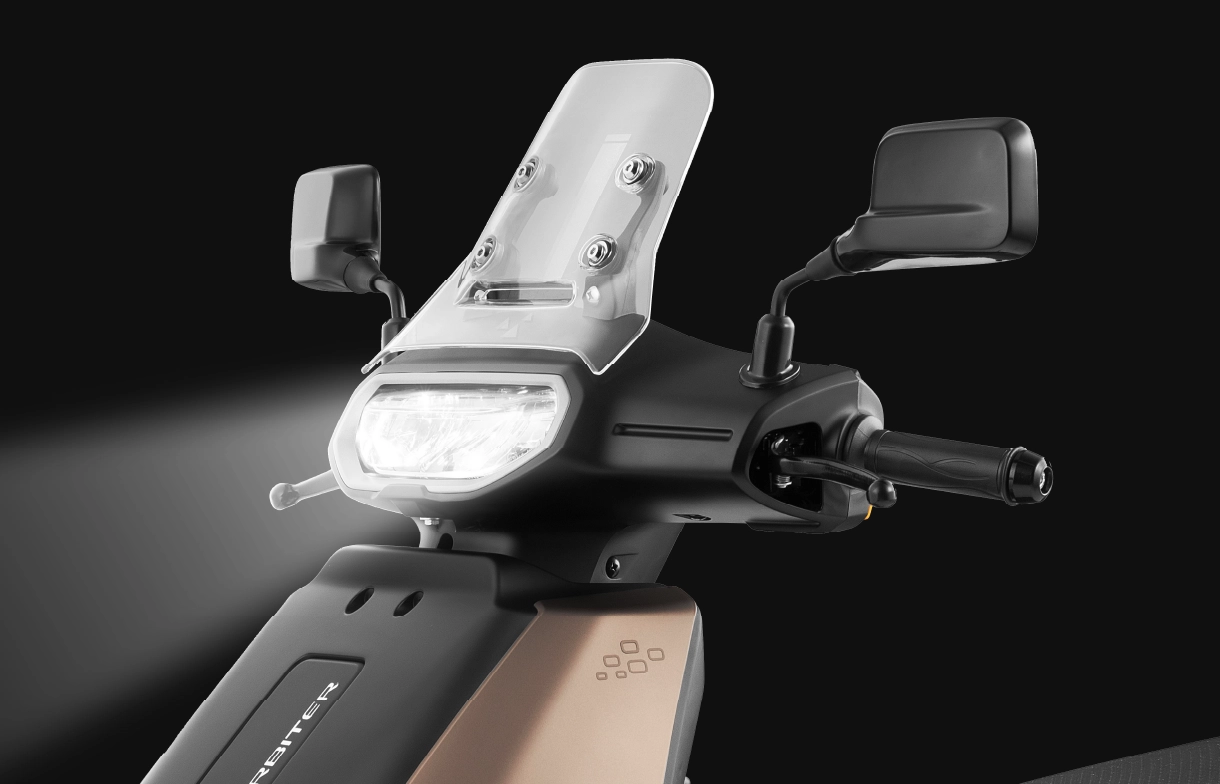
This is where the Orbiter starts to justify itself beyond just the price tag. The instrument cluster is a 5.5-inch LCD unit, which is a solid size for readability in varying light conditions. More importantly, the scooter comes with Bluetooth connectivity, turn-by-turn navigation, and over-the-air software updates.
OTA updates are still far from standard in this price segment across Nepal's EV market. Their inclusion here means the scooter you buy today can improve over time through software without needing a service visit. That's a meaningful long-term ownership benefit that often goes unmentioned but adds real value.
On safety, TVS has built in crash and fall detection that automatically cuts motor power on impact, anti-theft protection, and geofencing capability. Geofencing lets you set a boundary and get alerted if the scooter moves outside it. In a city where vehicle theft is a genuine concern, that's not a feature you dismiss lightly.
Price in Nepal
The TVS Orbiter has been launched at an introductory price of Rs. 2,81,900 in Nepal.
That price positions it as one of the more competitively priced electric scooters currently available in the country. TVS is backing it with a 5-year or 60,000 km warranty, which removes a significant chunk of the financial uncertainty that often makes buyers hesitant about early EV adoption.
Conclusion
The TVS Orbiter is not trying to be everything to everyone. It's a focused, practical urban commuter with honest performance, smart features, and a price that makes it accessible to a buyer who was previously sitting on the sidelines. The real-world range of 115 to 120 km covers most daily commuting patterns without stress, the IP67 battery rating handles Nepal's monsoons, and the OTA updates and geofencing are features you'd expect on something considerably more expensive.
The bigger question isn't whether the Orbiter makes sense on paper. It clearly does. The question is whether it holds up two or three years into daily use on Nepal's roads. That's what will determine whether TVS has genuinely cracked the accessible EV commuter segment here, or just made a strong first impression. Either way, the Orbiter has raised the bar for what buyers in this price range should expect.