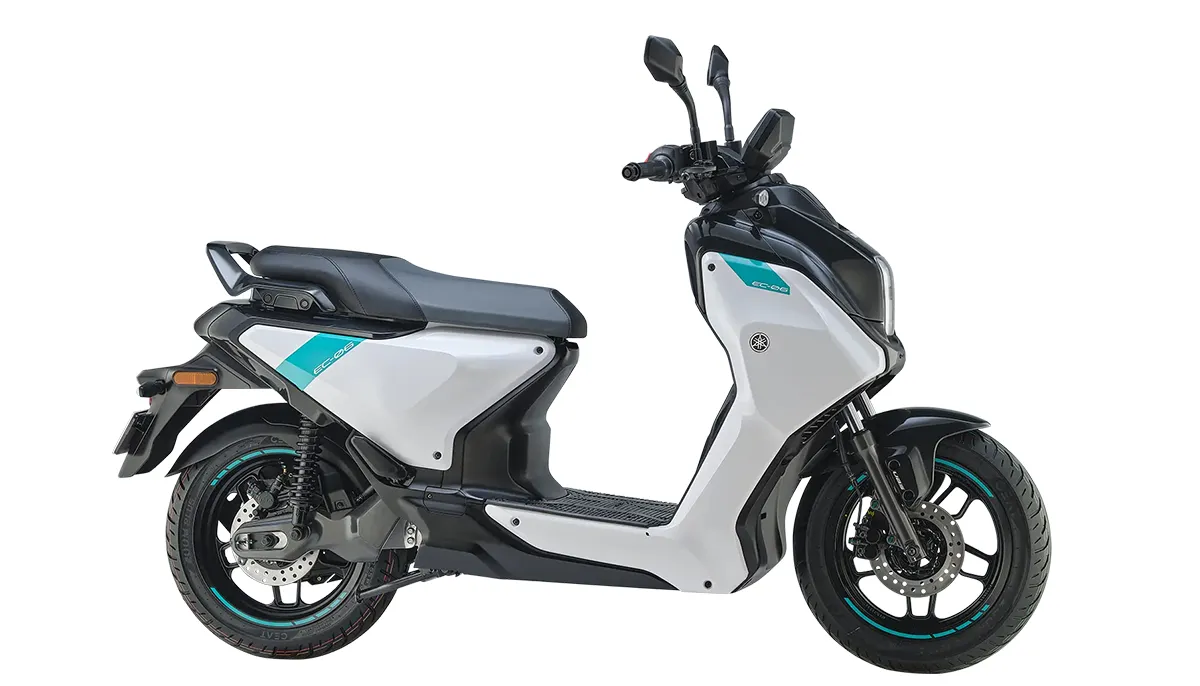
For years, the Indian two-wheeler market has been buzzing with the electric transition, watched closely by legacy manufacturers who have played the waiting game. Finally, the silence from one of the Japanese giants has broken. Yamaha has officially stepped into India’s electric two-wheeler space with the launch of the EC-06.
If you have been following the industry, you know that Yamaha isn’t the type of brand to rush a product out the door just to be part of a trend. The EC-06, first showcased in Mumbai, represents a calculated entry. Currently available in select states including Maharashtra, Karnataka, and Tamil Nadu, this marks a significant pivot in Yamaha’s strategy for the Indian subcontinent.
However, there is a twist in the tale that makes this launch particularly fascinating. The EC-06 isn't built from the ground up in isolation; it shares its platform with the River Indie, a scooter developed by Bengaluru-based startup River Mobility. While the mechanical underpinnings are largely shared, Yamaha has worked to ensure this machine carries its own distinct identity. Let’s dive deep into what this collaboration brings to the table and whether the EC-06 has that quintessential Yamaha DNA.
Design and Visual Identity
When you look at the River Indie, the first things that come to mind are "boxy" and "utilitarian." It was designed to be the SUV of scooters. Yamaha, however, has taken a completely different approach with the EC-06, steering the aesthetic toward a much cleaner and more conventional direction.
The design philosophy here is sharper and distinctly more angular, catering to a rider who wants modernity without the polarizing bulk of the Indie. The scooter features triangular side panels and a sculpted front apron that gives it an athletic stance. A defining feature is the blacked-out upper section which houses a stacked headlamp assembly. While some cues, such as the protruding headlight layout, definitely hint at its River roots, the overall execution is far sleeker.
Yamaha has successfully smoothed out the rough edges. The tail-lamp designs are simpler and more integrated, moving away from the industrial look of its platform sibling. It feels like a vehicle designed for the urban commuter who values style as much as substance, shedding the "luggage-hauler" image for something more aerodynamic and city-friendly.
Powertrain and Performance Specs
Under the hood, or rather, under the floorboard, the EC-06 retains the robust architecture that made the River Indie a reliable machine. The scooter is powered by a 4kWh battery pack paired with a potent electric motor. This setup churns out a peak power of 6.7kW and a very healthy 26Nm of torque. For city riding, that torque figure promises zippy acceleration and the ability to handle overtakes with confidence.
Yamaha claims a top speed of 79kmph, which is more than adequate for Indian metropolitan traffic conditions. Interestingly, the certified range stands at 169km. This is a crucial detail because it is slightly higher than the certified range of the River Indie. This efficiency gain is likely attributed to the EC-06’s leaner aerodynamic profile and reduced weight, proving that design changes can indeed influence performance metrics.
When it comes to keeping the scooter running, Yamaha has kept things simple, perhaps a bit too simple for those used to fast charging networks. Charging is handled via a regular household socket. The claimed 0–80 percent charge time is around eight hours, with a full charge taking close to 10 hours. It is an overnight affair, implying that this scooter is targeted squarely at users who have dedicated parking and charging facilities at home.
Features and Technology
In the cockpit, the EC-06 stays relatively close to its donor platform, ensuring a familiar yet functional experience. The rider interface is managed through a colour LCD display. It is worth noting, however, that the layout mirrors the older River Indie interface rather than the newer Gen 2.5 version. While this might seem like a step back, the interface is proven and functional.
The scooter offers three distinct riding modes to tailor the experience to the rider's needs: Eco, Standard, and Power. Additionally, given the weight and size of electric scooters, the inclusion of a reverse assist feature is a welcome practical addition for navigating tight parking spots.
Practicality and Ergonomics
This is where the divergence between the Yamaha EC-06 and the River Indie becomes most apparent. The River Indie built its reputation on massive storage, boasting a 43-litre underseat boot and front storage options. Yamaha, in its pursuit of a sleeker profile, has dialed this back significantly.
The EC-06 offers 24.5 litres of underseat storage. While this is a substantial reduction compared to the Indie, it is still competitive within the broader segment. Furthermore, Yamaha has done away with the front storage box entirely, utilizing that space to house the charging port instead.
This reduction in utility has a performance upside: weight reduction. The leaner bodywork and removal of storage compartments have helped the EC-06 shed about 3kg, bringing its kerb weight down to 132kg. This weight loss contributes to the slightly better range and potentially sharper handling characteristics, aligning with Yamaha's sporty brand image.
Manufacturing and Market Strategy
Perhaps the most telling aspect of this launch is the manufacturing strategy. Despite wearing the prestigious Yamaha badge, the EC-06 will be manufactured at River Mobility’s facility in Hoskote, Karnataka.
This highlights a deep and strategic collaboration between the legacy giant and the EV startup. For Yamaha, this is a smart, low-risk entry into the market. It allows them to leverage a proven platform and existing manufacturing infrastructure to get a product on the road quickly, without the massive lead times associated with greenfield projects. For the consumer, it offers the reassurance of Yamaha's brand backing combined with the engineering innovation of River Mobility. It is a symbiotic relationship that could set a precedent for how legacy brands adapt to the electric future in India.
-original.webp)
-original.webp)
-original.webp)
-original.webp)