January is usually the month when carmakers try to “set the tone” for the year. Some do it with big discounts, some with new launches, and some simply hope the market stays steady after the year-end rush. But Tata Motors didn’t just start 2026 with a strong month, it started with a statement.
In January 2026, Tata Motors reported its highest-ever monthly passenger vehicle sales, marking a record that reflects more than just a temporary spike. This performance shows how Tata is steadily becoming one of the most serious volume players in India’s car market, backed by a portfolio that’s now working in sync, SUVs bringing in the bulk numbers, EVs delivering fast growth, and exports quietly rising in the background.
And what makes this even more interesting is that it didn’t come from one lucky model or one limited-time push. It came from a wider market shift that Tata seems to be reading better than most: people want SUVs, they want safe cars, and increasingly, they want electric options that feel practical, not experimental.
The Big Sales Record: Tata’s Best Month Ever
Tata Motors recorded 71,066 units of passenger vehicle wholesale sales in January 2026. That’s not just a strong number, it’s a historic one for the company.
To put it into perspective, Tata sold 48,076 units in January 2025. So this year’s performance represents a massive 47.1% year-on-year growth, which is the kind of jump that usually only happens when multiple factors align at the same time: strong demand, improved supply, and products that are genuinely connecting with buyers.
From an expert lens, this kind of growth also suggests something else: Tata’s pipeline and production rhythm are improving. When a manufacturer crosses 70,000+ in a month, it usually means the brand has moved beyond being “popular” and is now operating at a high-efficiency scale.
Domestic Strength and the Quiet Rise of Exports
Tata’s record month wasn’t limited to Indian showrooms. The company also continued expanding its international presence.
In January 2026, Tata exported 844 units, a big jump compared to 240 units exported in the same period last year. While exports are still a small share compared to domestic volume, the growth trend matters.
Because exports aren’t just about numbers, they’re about stability. When domestic demand slows down, export channels can soften the impact. For Tata, increasing exports is also a sign that the company is gradually improving its product competitiveness beyond its home market.
This matters in the long term, especially as Tata pushes newer platforms, stronger build quality, and more modern technology that can appeal across regions.
The Sierra Effect: A Launch That Boosted Momentum
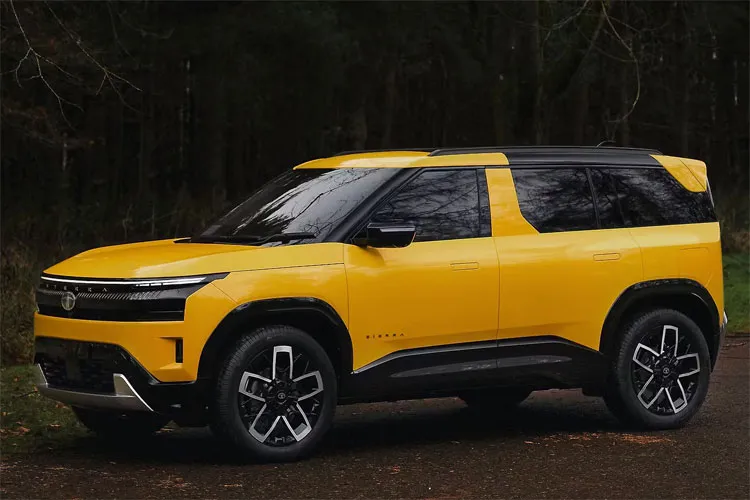
One of the most important triggers behind Tata’s January 2026 performance is the timing of its latest SUV push. The company launched the Tata Sierra SUV in the previous month, and the expectation of higher volumes carried into January exactly the way Tata would have wanted.
Now, the Sierra name carries a certain emotional weight. It’s not just a new SUV, it’s a brand memory for many Indian buyers. Tata bringing it back signals a strategy that blends nostalgia with modern demand, and it appears to be working.
From a market perspective, SUVs are no longer a niche upgrade, they’re the default choice for many buyers. When Tata adds a high-interest SUV into the lineup at the right time, it naturally lifts showroom footfall, increases enquiries across the range, and often boosts sales of other models too.
EV Sales Surge: Tata’s Biggest Growth Engine
If Tata’s SUV line is its volume backbone, its EV portfolio is clearly its growth rocket.
In January 2026, Tata sold 9,052 electric vehicles, compared to 5,240 EV units in January 2025. That’s a sharp 72.75% increase year-on-year.
This is not a small achievement. EV growth at this pace shows that Tata’s electric strategy is moving beyond early adopters and into the mainstream. And the most impressive part is that Tata has built EV credibility in a market where buyers still worry about charging, resale value, battery life, and service readiness.
Tata’s EV rise also reflects something deeper: Indian customers are beginning to see EVs not as “future tech,” but as practical daily cars, especially in cities where fuel costs, traffic, and running expenses are constant headaches.
And when a brand becomes the default EV choice, it creates a powerful cycle: more EVs on the road increases consumer trust, which drives more sales, which strengthens the ecosystem further.
Design
Tata’s growth isn’t only about pricing or timing. One of the most underappreciated reasons behind this record month is how Tata’s design language has matured.
Tata cars today look confident. They look bold without being overly aggressive, modern without being confusing, and premium without trying too hard. This matters because Indian buyers are now heavily influenced by road presence and style, especially in the SUV-heavy market.
The Sierra launch also strengthens this design perception. A brand that can revive a legacy nameplate and still make it feel contemporary sends a clear message: Tata isn’t just selling cars, it’s building a modern identity.
And in a crowded market, identity is what separates “a car people consider” from “a car people want.”
Performance and Drivability
Tata’s sales performance in January 2026 also reflects that the company has been building cars that feel suitable for Indian driving realities, uneven roads, mixed traffic, and long daily usage.
SUVs remain dominant because buyers want ground clearance, strong build, and the confidence to drive anywhere without worrying too much. Tata’s ability to deliver this experience across models has helped it capture both city buyers and semi-urban customers.
On the EV side, the performance story is different but equally powerful. EV buyers care about smoothness, silent driving, and low running cost. Tata’s EV growth suggests that many customers are now convinced that electric performance isn’t just “acceptable”, it’s enjoyable and practical.
In simple terms, Tata’s portfolio is hitting both emotional and functional expectations at the same time.
Features and Tech
Today’s car buyers don’t just compare engines and mileage, they compare features, screens, safety tech, and the overall cabin experience.
Tata’s rise is closely linked to how its cars have become more feature-rich and value-driven. Buyers in 2026 want modern interiors, connected features, and the feeling that their car is not outdated the moment they drive it home.
The real win for Tata here is that it has managed to grow without becoming “too premium to afford.” That balance is difficult. Many brands either stay affordable but feel basic, or go premium and lose mass-market strength.
Tata’s January 2026 record suggests it is currently sitting in a sweet spot: aspirational, but still reachable.
Based on the January 2026 Report
Tata’s January 2026 performance can be summarized through these key numbers:
Total passenger vehicle wholesale sales (January 2026): 71,066 units
Year-on-year growth vs January 2025: 47.1% increase
Passenger vehicle wholesale sales (January 2025): 48,076 units
Exports (January 2026): 844 units
Exports (January 2025): 240 units
EV sales (January 2026): 9,052 units
EV sales (January 2025): 5,240 units
EV growth year-on-year: 72.75% increase
These figures alone show that Tata isn’t growing in just one area. It’s expanding across overall volume, electric mobility, and international markets at the same time.
Expert Take: What This Record Really Means for Tata
A record month is exciting, but what matters more is what it signals for the future.
From an expert perspective, Tata’s January 2026 performance suggests three strong realities:
First, Tata has achieved a scale where it can compete month after month, not just occasionally. Crossing 70,000+ units means the brand has operational strength and demand stability.
Second, Tata’s EV story is becoming mainstream. A 72% growth in EV sales isn’t just a statistic, it’s a clear sign that the market is responding strongly to Tata’s electric direction.
Third, Tata’s product strategy is finally aligned. The SUV momentum, the Sierra buzz, and the EV rise are not separate wins, they are connected. They all point toward a company that is building a strong brand pipeline instead of relying on one hit product.
And that is what makes this January record important: it feels repeatable, not accidental.
Conclusion
Tata Motors’ highest-ever passenger vehicle sales in January 2026 is not just a headline-worthy record, it’s a sign of a brand that is moving with the market, not chasing it.
With 71,066 units sold, a 47.1% year-on-year jump, a sharp rise in exports, and a massive 72.75% EV growth, Tata has shown that it is building strength across multiple fronts.
This isn’t just Tata having a good month. This is Tata proving it can lead the conversation in 2026, and possibly dominate it.
-original.webp)
-original.webp)
-original.webp)
-original.webp)
-original.webp)