-original.webp)
If 2024 was the year Nepal experimented with electric vehicles, 2025 is the year it fully committed. The numbers tell a story that even the most skeptical petrolhead can no longer ignore. Car imports grew by 15 percent year-on-year, reaching 15,847 units, and what’s striking is not just the growth, but where that growth came from.
Out of the total imports, 11,773 units were electric vehicles. That means EVs didn’t just participate in the market; they dominated it. Among nearly 80 car models from more than four dozen brands, only a handful managed to cross the psychologically important 1,000-unit mark. And in 2025, only three electric cars achieved that milestone.
Those three cars, BYD Atto 2, MG S5, and Tata Tigor EV (Express-T), are not just bestsellers. They represent three very different philosophies of electric mobility in Nepal: premium-leaning urban SUVs, feature-rich value SUVs, and no-nonsense commercial sedans. Their success reveals exactly where the Nepali EV market is heading, and why.
BYD Atto 2
Market Impact and Positioning
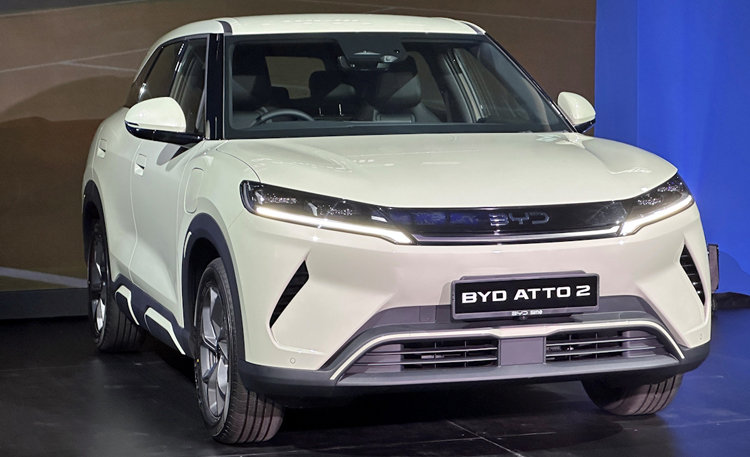
When BYD unveiled the Atto 2 at the NADA Auto Show 2025, expectations were high, but few predicted it would cross 1,000 imported units in just four months. Yet that’s exactly what happened. Simex Inc., BYD’s official distributor in Nepal, imported 1,074 units in that short span, making Atto 2 one of the fastest-selling EVs the country has ever seen.
This wasn't an accidental success. BYD had already built strong trust with the Dolphin and Atto 3. The Atto 2 arrived as a perfectly timed middle ground, more premium than compact EVs, yet still realistically attainable for upper-middle-class buyers.
Design and Road Presence
One of the biggest reasons behind the Atto 2’s popularity is how confidently it wears the “SUV” badge. With a ground clearance of 200 mm, it immediately addresses a long-standing concern among Nepali buyers: road conditions. This is noticeably higher than most electric cars in its segment, and it shows real-world usability on uneven city roads and semi-rural stretches.
Dimensionally, the Atto 2 feels well-balanced. Its proportions give it a planted stance without making it bulky, and the 17-inch alloy wheels further enhance its road presence. It looks modern, clean, and unmistakably premium, something Nepali buyers increasingly value.
Performance and Battery Confidence
BYD’s biggest strength globally has been battery technology, and the Atto 2 benefits directly from that expertise. The 51 kWh Blade Battery is not just about range, it’s about durability, thermal stability, and long-term confidence.
With a WLTP-certified range of 345 km, the Atto 2 fits comfortably into the daily and weekly driving needs of most urban households. The 100 kW electric motor, producing 290 Nm of torque, delivers instant acceleration that feels effortless in city traffic while remaining composed at highway speeds.
This balance between performance and efficiency is one of the Atto 2’s quiet strengths, it never feels overengineered or underpowered.
Interior Experience and Features
Inside, BYD clearly aimed to justify its premium positioning. The 12.8-inch rotating infotainment display remains a conversation starter, while the 8.8-inch digital instrument cluster keeps information clean and readable. Features like a 50W wireless charger, six airbags, and a thoughtfully laid-out cabin elevate the ownership experience.
Pricing
At Rs 43.99 lakh, the Atto 2 isn’t cheap, but its sales numbers prove that many buyers see value beyond the price tag.
Read the full article The Price of BYD Atto 2 in Nepal
MG S5
Sales Performance and Market Acceptance
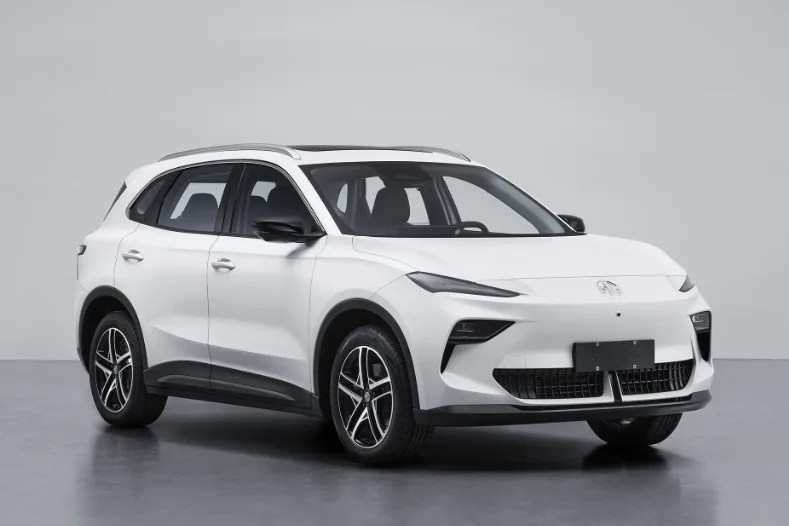
Launched in Nepal in March 2025, the MG S5 took a different route to success. Instead of explosive early sales, it built momentum steadily, and convincingly. By the end of the year, Paramount Motors had imported 1,052 units, hitting the 1,000-unit milestone in just nine months.
The MG S5 resonates with buyers who want maximum features, strong safety credentials, and flexible options, without stretching into luxury pricing territory.
Design Philosophy and Dimensions
The MG S5 is physically larger than the Atto 2, and you feel that immediately. Its longer wheelbase of 2,730 mm translates into better rear-seat comfort, while the wider body gives it a more substantial on-road footprint.
Ground clearance stands at 175 mm, which may not be class-leading but is adequate for urban and highway use. The design leans toward modern European SUV styling, understated but confident.
Battery Options and Driving Range
One of the MG S5’s biggest advantages is choice. Buyers can select between a 49 kWh or 62 kWh battery, depending on budget and range requirements. The smaller battery offers around 340 km, while the larger one stretches up to 430 km, making it one of the more range-flexible EVs in its class.
Power comes from a 99 kW motor producing 250 Nm of torque. On the road, the S5 feels smooth rather than aggressive, prioritizing comfort and predictability, qualities that appeal to family buyers.
Features and Safety Depth
MG has clearly positioned the S5 as a feature-forward SUV. The 12.8-inch infotainment system, 10.25-inch digital display, wireless Android Auto and Apple CarPlay, automatic AC, and V2L capability all strengthen its value proposition.
Where it truly stands out, however, is safety. With seven airbags and advanced driver assistance features like automatic emergency braking, lane departure warning, traffic jam assist, and collision warnings, the S5 feels engineered for long-term peace of mind rather than just showroom appeal.
Pricing
Priced at Rs 43.99 lakh, it competes directly with the Atto 2, but speaks to a slightly different buyer mindset.
Read the full article The price of MG S5 in Nepal
Tata Tigor EV (Express-T)
Why It Imported the Most Units
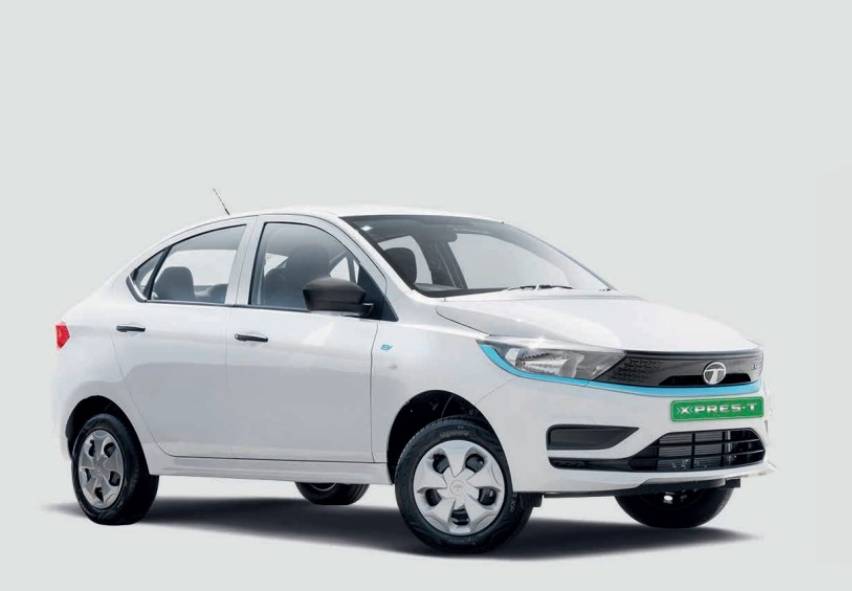
On paper, the Tata Tigor EV doesn’t look like a headline grabber. Yet in pure numbers, it was the most imported EV of 2025, with 1,146 units brought in by Sipradi Trading.
The reason is simple: purpose. Sold in Nepal as the Express-T, the Tigor EV has become the backbone of electric taxi operations across the country. Its success is less about aspiration and more about reliability, cost efficiency, and daily usability.
Design and Practicality
As a compact sedan, the Tigor EV doesn’t aim to impress visually. Its dimensions are modest, making it easy to maneuver in dense city traffic. For taxi operators, this is a strength, not a limitation.
The interior prioritizes durability over flair, which aligns perfectly with its commercial role.
Battery, Performance, and Real-World Use
The 24 kWh battery offers a claimed range of over 260 km, which fits well with daily taxi routes and overnight charging cycles. The 48 kW motor producing 170 Nm of torque ensures smooth urban driving without stressing components.
This is an EV built for consistency, not excitement, and that’s exactly why fleet buyers trust it.
Pricing
At Rs 36.99 lakh, the Tigor EV undercuts most private-use electric cars while delivering predictable operating costs. Over time, its lower running and maintenance expenses have made it one of the most financially sensible EVs in Nepal’s commercial segment.
Conclusion
The fact that only three EV models crossed the 1,000-unit import mark in 2025 is revealing. Nepali buyers are no longer experimenting blindly, they are choosing proven products with clear use cases.
The BYD Atto 2 shows that buyers are ready to pay for quality and battery confidence. The MG S5 proves that features and safety can be decisive factors. And the Tata Tigor EV reminds us that practicality still rules when economics matter most.
Together, these three cars don’t just top the sales charts, they define the present and future shape of electric mobility in Nepal.
For more auto and tech related news visit Autoncell