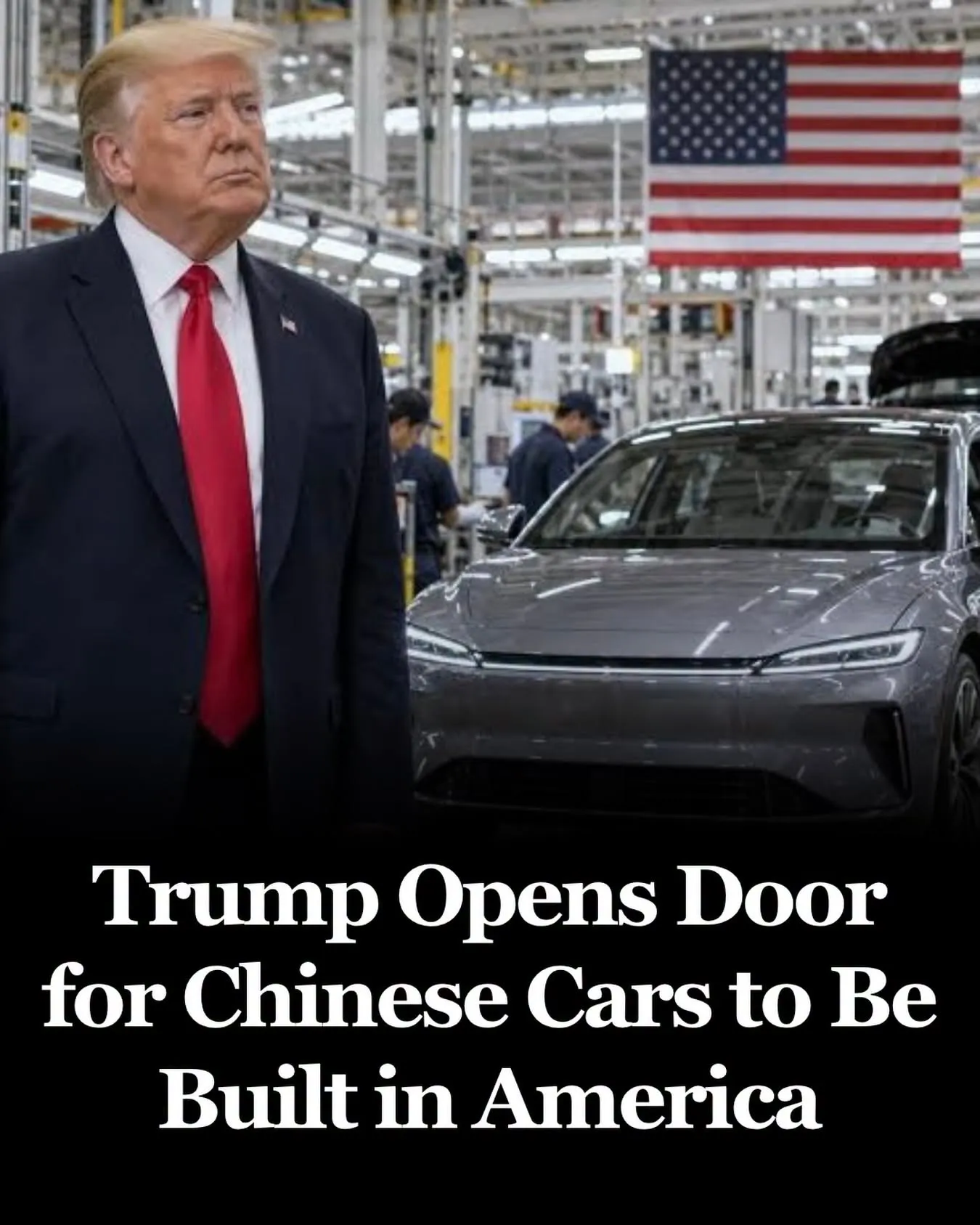
The condition is simple. Build here, hire here, and the door is open.
Speaking on Fox News' Ingraham Angle, US President Donald Trump said he has no objection to Chinese automakers selling electric vehicles in America, provided they set up factories on American soil and employ American workers. What he will not accept is the workaround: building cars in Mexico and routing them into the US to sidestep trade rules.
The barriers are still stacked high
Whatever Trump's tone suggests, the current rulebook makes the American market close to impenetrable for Chinese EVs.
Vehicles manufactured in China face a 100 percent import tariff. On top of that sits a restriction on cars running Chinese-developed software and hardware, which has caught brands like Polestar in its net even where the corporate structure sits outside China.
Washington wants the door shut entirely
Trump's flexibility is not a consensus position. A number of American lawmakers, Michigan Senator Elissa Slotkin among them, are pushing legislation to block Chinese vehicles from the US market altogether.
The pressure extends to American companies working with Chinese partners. The US Department of Transportation recently criticised Ford over a technology agreement with Chinese battery maker CATL covering a plant in Michigan. The message to domestic manufacturers was not subtle.
What's actually at stake
Chinese-built vehicles carry a 100 percent import tariff
Cars with Chinese software and hardware face separate restrictions
Brands including Polestar have already been affected
Legislation is moving to ban Chinese vehicles outright
US-China manufacturing partnerships are drawing federal scrutiny
Trump's condition: factories and jobs in America, not Mexico
Why the timing matters
Chinese President Xi Jinping is due to visit the United States, and Trump's softer framing landing just ahead of it has not gone unnoticed. Taken together, the two suggest the trade relationship between the world's two largest auto markets may be heading somewhere new.
Whether that translates into Chinese EVs on American roads is another question entirely. The tariffs, the software restrictions and the legislative push are all still in place, and none of them move on a presidential remark alone.
For more on global auto policy and the EV market, Autoncell tracks the shifts as they happen.