-original.webp)
Suzuki has quietly done something significant. It has revealed the first official images and full details of the e Sky, a compact electric hatchback designed with one clear mission: to make the jump from petrol to electric feel painless. And true to Suzuki's instincts, it did it small, sensible and cheap rather than big and flashy.
This is not a car chasing spec-sheet glory. It is Suzuki doing what Suzuki does best: squeezing maximum practicality out of a minimal package. And for a brand that built its name on compact, affordable, sensible cars, an electric city runabout this focused feels overdue.
Design
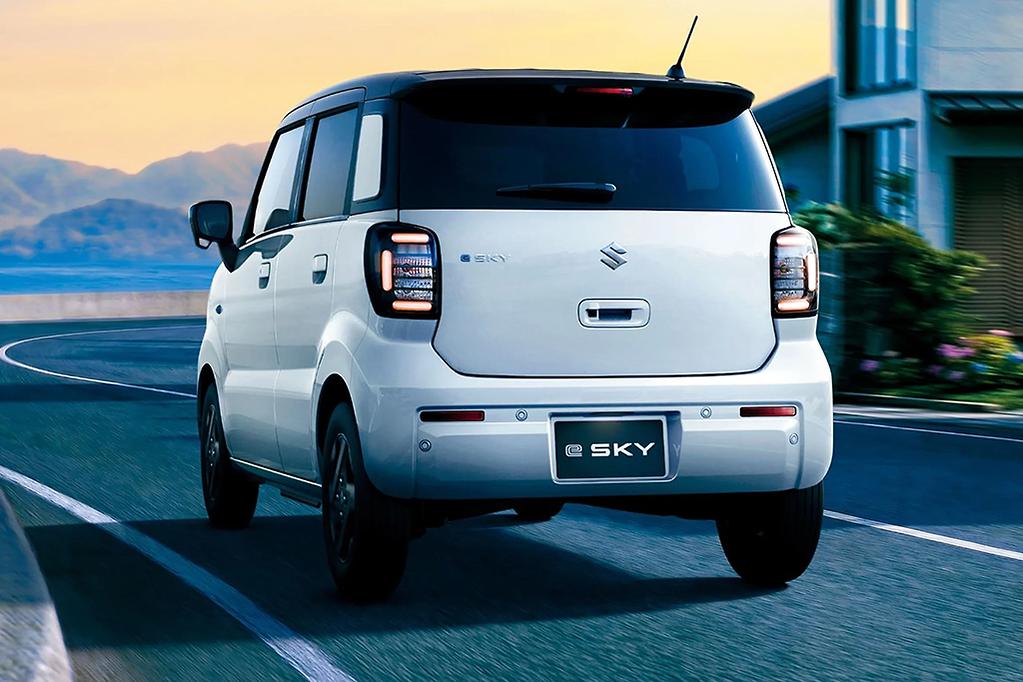
Suzuki has toned down the concept's wilder details for production, but the essence survives. Up front you get larger LED headlights with tinted backgrounds, while the concept's illuminated grille gives way to a simpler black trim panel, a revised Suzuki badge, and a single cooling intake in the bumper.
Down the sides it looks more conventional, with smaller wheels, bigger mirrors and ordinary door handles replacing the concept's flush units. But the nice touches remain: the floating-roof look and body-coloured C-pillar trim carry over, and the rear gets larger LED tail lamps and body-coloured cladding. The proportions are dictated by kei-car rules, 3,395 mm long, 1,475 mm wide and 1,625 mm tall on a 2,460 mm wheelbase, which is exactly why it will thrive on tight city streets , the same compact-and-nimble appeal behind small EVs already on sale here like the BYD Atto 1.
Interior
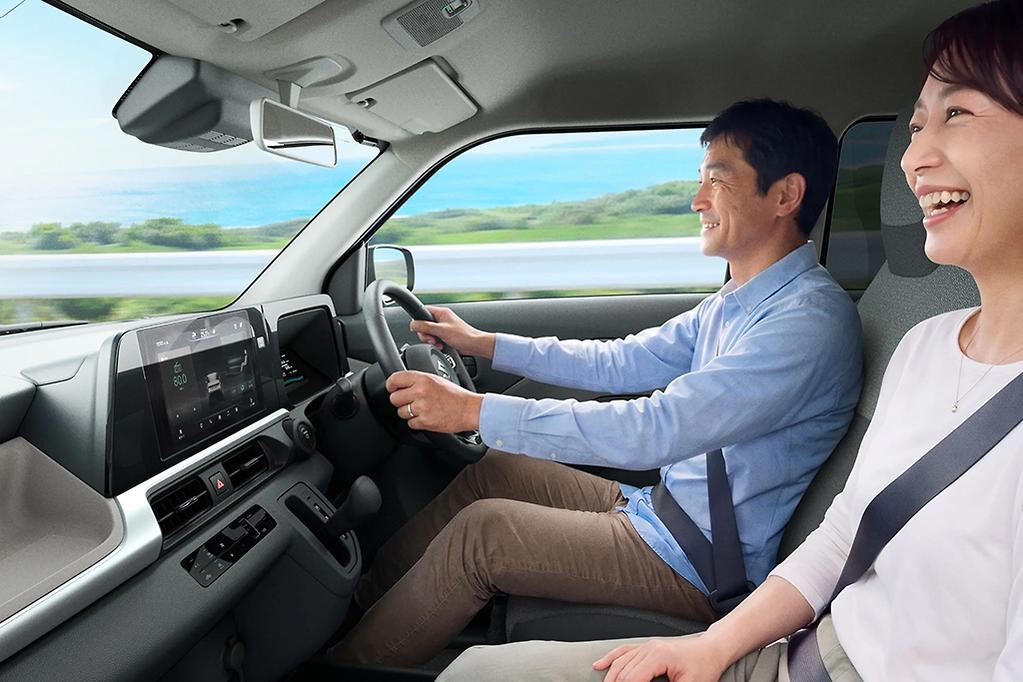
Inside, Suzuki has gone practical rather than futuristic. Gone are the concept's pale materials and heavy ambient lighting, replaced by a sensible, production-ready cabin. A 10.1-inch infotainment screen anchors the dashboard alongside a digital instrument cluster, but crucially, Suzuki kept a traditional gear selector and physical climate controls. Anyone tired of burying every function in a touchscreen menu will appreciate that.
Practicality is clearly the priority. There is a passenger-side storage tray, and heated front seats plus a heated steering wheel to take the sting out of winter. As a kei car it seats four with a modest boot, so it is no family hauler, but that is not the job. Tight streets and tighter parking spaces are.
Range and Efficiency
The e Sky runs a modest 26 kWh lithium-iron-phosphate battery mounted under the floor, yet Suzuki targets up to 310 km of range. If it hits that in production, it will be one of the most range-efficient kei EVs on sale.
The contrast with a rival makes the point. The BYD Racco manages a similar 320 km but needs a much larger 35.84 kWh battery to do it. Suzuki gets nearly the same distance from a pack a third smaller, thanks to aerodynamic work, motor efficiency and a featherweight 1,030 kg kerb weight. That low mass matters: a lighter car needs less battery, which keeps both cost and weight down, a virtuous circle for an affordable EV. It sits on Suzuki's Heartect e platform with a front-mounted e-Axle, and while final motor output is not confirmed, kei rules cap it at 47 kW.
Cars in this efficient, affordable mould are exactly what a market like Nepal has started to embrace, as the growing crop of budget options in the best electric cars at the Rs 35 lakh range shows.

Charging and Power Features
The e Sky is built around everyday charging rather than long hauls. A full charge takes roughly eight hours from a household outlet or about 4.5 hours on a 6 kW wallbox. It also supports 50 kW DC fast charging, with Suzuki targeting an 80 percent top-up in around 25 minutes.
The standout feature is Vehicle-to-Home. Through a 100V/1,500W outlet, the e Sky can act as a power source for external equipment, which makes it useful well beyond simple transport. For a cheap city EV, pairing solid efficiency and range with bidirectional power is a genuinely smart differentiator, and in a market prone to outages, that is the kind of feature that sells itself.
Price and Availability
Now the reality check for buyers here: the e Sky is a Japan debut, full stop. It goes on sale in Japan within the financial year ending March 2027, prices are not yet announced, and Suzuki has only said it wants the car cheap enough to tempt petrol owners across to electric. An India launch has not been confirmed, and there is no word on Nepal.
It is still worth watching. Suzuki has a huge, trusted presence in Nepal, and a genuinely affordable, city-sized EV with real range and V2L could find a natural home here if the brand ever brings it over. Japan's electric kei segment is heating up too, with new rivals like the BYD Racco arriving, and that competition is exactly the pressure that pushes cars like this toward export markets. There is no confirmed Nepal or India launch, so for buyers here it remains one to watch rather than one to plan around.
Conclusion
The e Sky is a reminder that a meaningful EV does not have to be big, fast or expensive. Sometimes the smartest electric car is the small, sensible one built to make city life easier, and with its clever packaging, useful range, one-pedal driving and standout V2L, the e Sky nails that brief.
The open question is whether Suzuki takes this formula beyond Japan. For traffic-choked, value-hungry markets like Nepal, a car like the e Sky could be a perfect fit. Whether Suzuki seizes that chance is the story to watch.
For more on the cars shaping the future of mobility, Autoncell tracks every new launch as it lands.