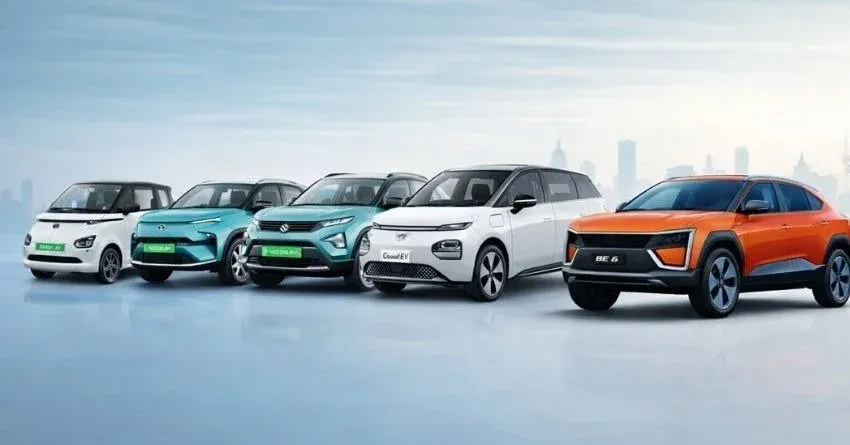
Nepal's EV market has never offered this many long-range options. A few years ago the choice was thin and the ranges modest, with most electric cars struggling to promise more than 300 km. Today the market runs from crore-plus luxury flagships to sensibly priced family SUVs, and almost every one of them leads with a range figure built to turn heads. The Avatr 11 sits on top of the pile with a claimed 680 km, the kind of number that ends showroom conversations before they start.
But that figure deserves a much closer look before anyone crowns it the definitive champion. Range in Nepal is measured on four different scales, and they do not agree with each other, which is exactly why the biggest number is not always the car that takes you furthest.
The surge in options is no accident. Chinese brands have flooded in through official distributors, government policy keeps EV import duties well below those on petrol cars, and buyers have grown comfortable with electric daily drivers. Recent arrivals like the Deepal Nevo Q05 and the Avatr 07 show just how quickly the field is filling out. The result is a crowded, fast-moving market where range has become the headline selling point, and where reading that headline correctly is the difference between a smart buy and an expensive misjudgment.
How to Read a Range Figure
The four standards in play are NEDC, CLTC, WLTP and MIDC, and the gap between them is wide enough to change a buying decision. NEDC and CLTC are the most generous, often overstating real-world range by 30 to 40 percent. WLTP, the global benchmark, comes closest to what a driver actually sees on the dashboard. India's MIDC sits somewhere in between.
The practical lesson is that the standard matters as much as the number. A 656 km MIDC figure and a 500 km WLTP figure can deliver almost identical range on the same road. Every entry in this list marks both, so the comparison is fair.
The Longest Range EV in Nepal
According to figures, the Avatr 11 leads at 680 km on the NEDC cycle, drawing on its 116.79 kWh battery. Among the cars quoting the stricter WLTP standard, the BYD Seal Premium tops the field at 570 km. Both figures are confirmed through their official Nepal distributors, CG Motors and MAW for Avatr, Cimex for BYD.
For most buyers, the WLTP figure is the one worth trusting.
Top 12 Longest Range EVs in Nepal
The table below ranks the longest-range electric cars in Nepal by manufacturer-claimed range. Prices are ex-showroom and checked against official distributor listings. The 2026 budget shifted EV taxation to an import-value basis, so prices move, and confirming the current figure before purchase is wise.
Rank | Model | Claimed Range | Standard | Battery | Price (Nepal) |
1 | Avatr 11 (Long Range) | 680 km | NEDC | 116.79 kWh | Rs 1.60 crore |
2 | Tata Sierra EV (75 kWh) | 665 km | Claimed | 75 kWh | To be confirmed |
3 | Mahindra XEV 9e Pack Three | 656 km | MIDC | 79 kWh | From Rs 69 lakh |
4 | GAC Aion V Luxury | 650 km | NEDC | 75.3 kWh | Rs 69.99 lakh |
5 | Skywell ET5 | 620 km | NEDC | 85.96 kWh | Rs 1.09-1.15 crore |
6 | Avatr 07 | 575 km | NEDC | 82.16 kWh | Rs 2.20-2.30 crore |
7 | BYD Seal Premium | 570 km | WLTP | 82.56 kWh | Rs 1.45 crore |
8 | Mahindra BE 6 Pack Three | 557 km | MIDC | 79 kWh | From Rs 57 lakh |
9 | Avatr 11 (Standard Range) | 555 km | NEDC | 90.38 kWh | Rs 1.45 crore |
10 | Deepal L07 | 540 km | NEDC | 66.8 kWh | Rs 69.99 lakh |
11 | XPeng X9 | 500 km | WLTP | 84.5 kWh | Rs 2.20-2.30 crore |
12 | Deepal S07 L (Long Range) | 485 km | WLTP | 79.97 kWh | From Rs 81.99 lakh |
The Tata Sierra EV, which arrived in Nepal ahead of NADA 2026, was shown before a full launch, so its 665 km claim and Nepal pricing were still being finalised at the time of writing. Two cars in this list, the Skywell ET5 and GAC Aion V, post big NEDC numbers that deserve the same scrutiny as the Mahindras below them.
Note that Deepal sells the S07 in two versions: the long-range S07 L listed above (79.97 kWh, 485 km WLTP), and a standard S07 (66.8 kWh, 410 km WLTP) that appears in the mainstream table further down. They are the same model in two different battery and motor configurations.
The Mahindra and NEDC Figures Need Context
On paper, the XEV 9e and BE 6 look like range champions at 656 km and 557 km. The reality is more layered. The versions Mahindra sells in Nepal are not the full-power Indian cars. To keep import duties manageable, they arrive with smaller motors, mostly 99 kW units, with only the XEV 9e Pack Three getting a 199 kW motor. The Indian cars run 210 kW.
The bigger issue is the test standard. Those numbers are MIDC-certified, and MIDC flatters. Independent WLTP estimates put the XEV 9e closer to 423 km. The same caution applies to the NEDC cars. The Skywell ET5's 620 km NEDC figure translates to roughly 489 to 520 km on WLTP, and the GAC Aion V's 650 km NEDC works out near 420 km in real-world terms. None of these are poor cars. The GAC Aion V Luxury at Rs 69.99 lakh, in particular, offers more claimed range per rupee than almost anything else on this list. The dashboards simply will not show the brochure numbers.
Ranked by Real-World Range
Re-rank the list by WLTP alone and the order shifts. The BYD Seal Premium leads at 570 km, followed by the XPeng X9 at 500 km, the Deepal S07 L at 485 km, and the Skywell ET5 at around 489 to 520 km. These are smaller headline numbers than the NEDC and MIDC claims above them, but they are the honest ones. When two EVs sit close on paper, the WLTP-rated car almost always covers more ground in practice.
The Mainstream Bracket: Popular EVs With 200 to 500 km Range
The elite long-range list above is not where most Nepali buyers actually shop. The heart of the market sits in the 200 to 500 km bracket, the affordable and mid-priced EVs that handle daily commuting and valley runs with ease. For most people driving in and around Kathmandu, this is the sensible sweet spot, and the prices are far friendlier. Here are the popular options on sale, with figures verified against distributor and market listings.
Model | Claimed Range | Standard | Battery | Price (Nepal) |
Nammi VIGO E2/E2+ | 350-471 km | WLTP/CLTC | 51.87 kWh | Rs 35.99-43.99 lakh |
BYD M6 | 440 km | WLTP | 71.8 kWh | From Rs 58.90 lakh |
BYD Atto 3 Superior | 420 km | WLTP | 60.48 kWh | Rs 78.00 lakh |
Deepal S07 (standard) | 410 km | WLTP | 66.8 kWh | Rs 74.99 lakh |
Deepal S05 | 405 km | WLTP | LFP | Rs 50.99-57.99 lakh |
iCar V23 | 401 km | WLTP | 59.93 kWh | Rs 53.99 lakh |
GAC Aion Y | ~400 km | NEDC | LFP | Rs 58.50 lakh |
BYD Atto 3 Advanced | 345 km | WLTP | 49.92 kWh | Rs 62.90 lakh |
BYD Atto 2 | 345 km | WLTP | 51.13 kWh | Rs 45.95 lakh- Rs.51.99 lakh |
MG S5 | 340 km | WLTP | LFP | Rs 43.99-55.99 lakh |
MG Windsor EV | 332 km | WLTP | 38 kWh | Rs 34.99 lakh-Rs. 44.99 lakh |
Nammi Box | ~330 km | CLTC | 44.94 kWh | Rs 30.99 lakh |
Tata Nexon EV | 325 km | MIDC | 45 kWh | Rs 36.99 lakh- Rs.48.99 lakh |
Tata Punch EV | 300-325 km | Real-world | 40 kWh | Rs 37.99-Rs.39.99 lakh |
Tata Tiago EV | 250-315 km | MIDC | 19.2/24 kWh | Rs 27.49- Rs.30 lakh |
Tata Tigor EV / Xpres-T | ~315 km | MIDC | 26 kWh | From ~Rs 34 lakh- Rs.41.99 lakh |
GWM Ora 03 | ~310 km | WLTP | 48 kWh | Rs 47.49 lakh |
BYD Atto 1 Premium | 300 km | WLTP | 38.88 kWh | Rs 34.80 lakh |
Hozon Neta V | ~300 km | NEDC | LFP | Rs 38.99 lakh |
BYD Atto 1 Dynamic | 230 km | WLTP | 30.08 kWh | Rs 30.75 lakh |
The pattern is clear. For roughly Rs 29 to 55 lakh, most buyers can get a genuine 250 to 350 km of real-world range, which comfortably covers daily life and the occasional trip to Pokhara with a charging stop. The Tata models in particular anchor the affordable end, backed by Sipradi's nationwide service reach, while newer Chinese entrants like the Nammi VIGO pack in more tech and range for similar money. Chasing a 600-plus km claim only makes sense if you regularly drive long distances without access to a charger.
Charging Speed Matters Too
Range gets the attention, but charging speed shapes the ownership experience more than most buyers expect. The XPeng X9 runs an 800V architecture supporting up to 330 kW DC charging, enough for a 10 to 80 percent top-up in under 20 minutes. The GAC Aion V manages 30 to 80 percent in about 16 minutes, and the Avatr 11 does 30 to 80 percent in roughly 25 minutes on a 240 kW charger. At those rates, a smaller battery stops being a limitation, since a short stop is all it takes to get moving again.
Two other factors carry real weight in Nepal. Ground clearance matters on rough roads, and a heat pump matters on cold mornings, since cabin heating drains range fast. An EV with slightly less claimed range but a heat pump on board can outlast a bigger-battery rival on a genuine winter drive.
Charging Network in Nepal
The old barrier to EV ownership, the shortage of chargers, is easing. The NEA and private operators including BYD, Tata and MAW Vriddhi keep adding stations along the main highways, steadily reducing the need for an enormous battery. Running costs strengthen the case further: an EV costs roughly Rs 1,000 to 2,000 a month to charge, against Rs 6,000 to 8,000 to fuel an equivalent petrol car. Buyers timing a purchase around an auto show have found financing cheaper too, with a recent bank price war on auto loans pushing rates to record lows.
Conclusion
The range race in Nepal is led almost entirely by Chinese brands, and it shows no sign of slowing. Newer flagships and extended-range hybrids are already pushing combined figures past 1,000 km in other markets, and those numbers will reach Nepal in time. Even established players keep raising the bar, as fresh launches like the BYD lineup at NADA 2026 show.
The more telling trend is charging speed. Once a highway top-up takes 15 minutes rather than 45, the longest-range EV in Nepal stops being the one with the biggest battery and becomes the one that refills fastest. That shift is already underway, and for the average buyer it will count for more than another 100 km of lab-rated range that vanishes the moment the heater comes on.
For more on Nepal's fast-moving EV market, Autoncell tracks every new launch as it lands.