-original.webp)
It is a bit odd, when you think about it. Kia is a huge name, yet while Chinese brands and Tata were busy selling electric cars all over Nepal, Kia was nowhere to be seen. That has now changed.
The Syros EV has arrived, and you can go look at it right now at Kia's showroom in Garidhara, Kathmandu, even before the official launch. Prices start at Rs 35.90 lakh for early buyers, which puts it right in the busiest part of the market. So is Kia late but good, or just late? Let us take a look.
The Price
The Syros EV costs Rs 37.90 lakh in its HTK trim, the only version coming to Nepal. But if you were one of the first 100 people to book it at the NAIMA Expo, you paid Rs 35.90 lakh, so Rs 2 lakh less for booking early. At this price it goes head to head with the Tata Nexon EV, the MG Windsor and a long list of Chinese crossovers.
Design
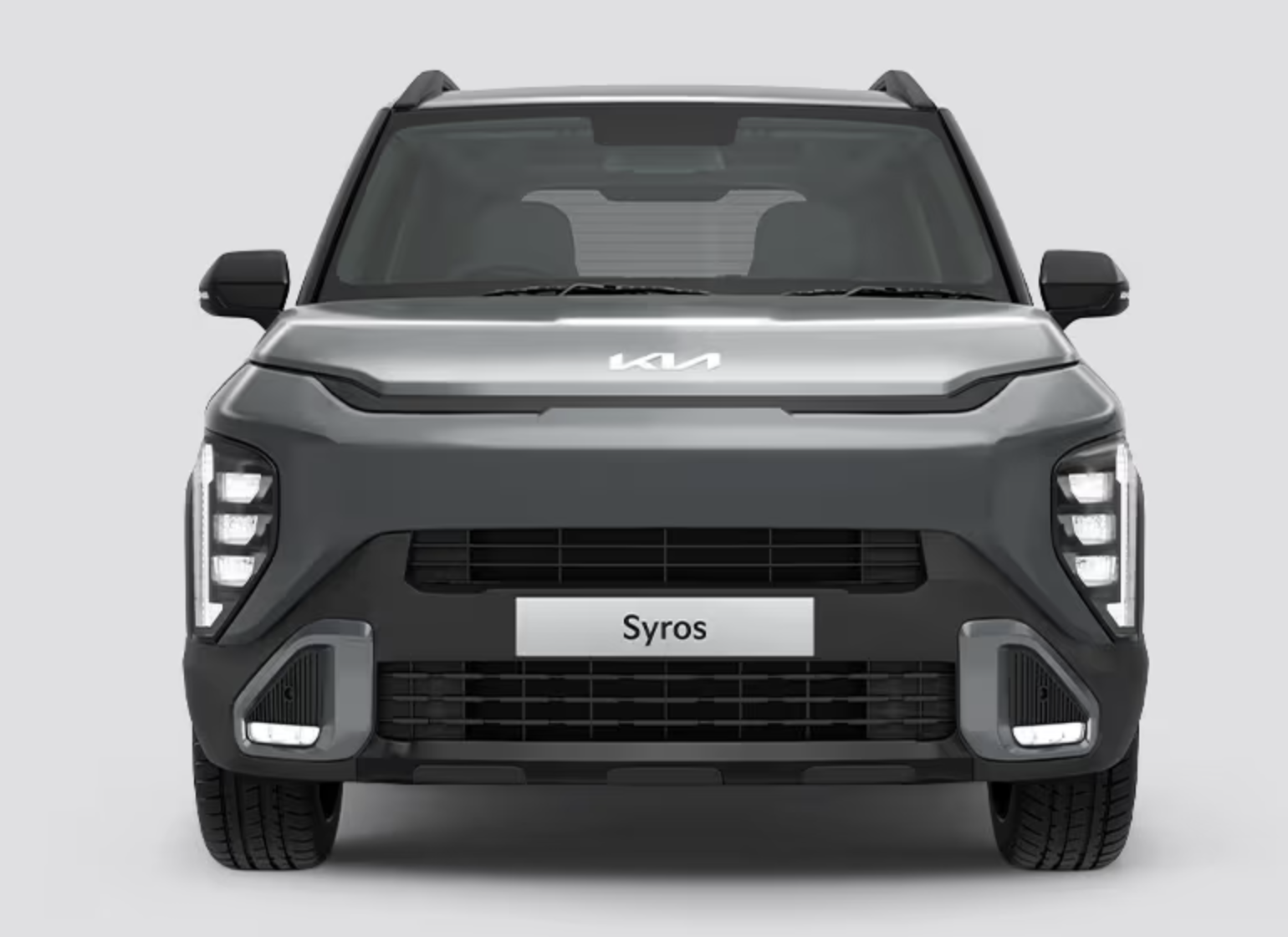
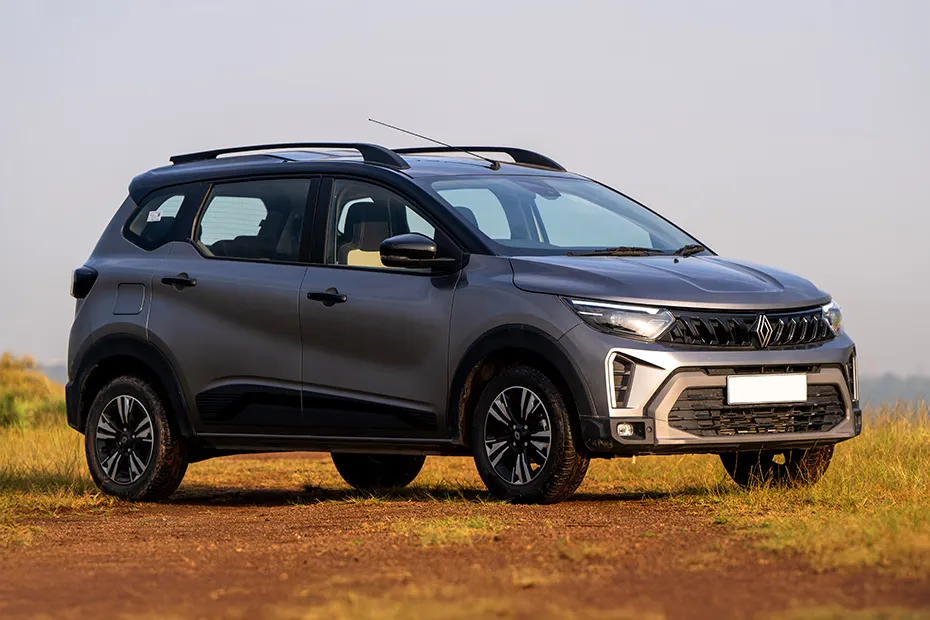
Kia clearly did not want the Syros to disappear into the crowd, and it does not. The front is the star of the show, built around the brand's bold Digital Tiger Face. Instead of a traditional grille, you get a clean, closed-off panel, the usual sign these days that a car runs on electricity. Framing it are the Star Map LED daytime running lights, a distinctive pattern that lights up like scattered stars and instantly marks the car out, even from across a busy parking lot.
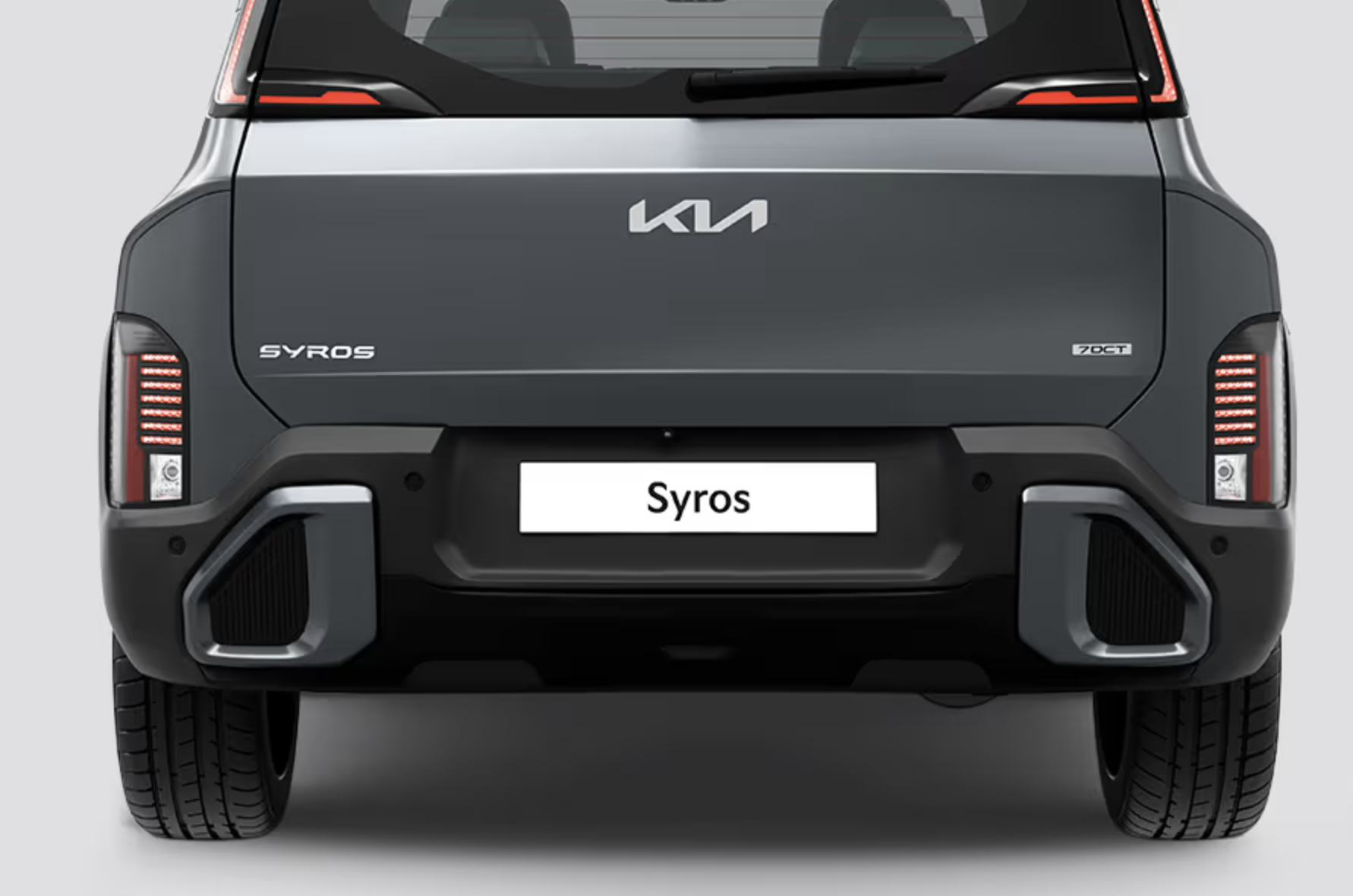
Below those sit the Ice Cube LED headlamps, a cubic design that gives the front a sharp, almost jewel-like look. Kia carried the same Star Map lighting theme to the rear too, so the tail lamps echo the front and give the Syros a consistent, recognisable face coming and going. It is the kind of detailing you normally expect on pricier cars.
The overall shape is compact and upright, more small SUV than crossover, which suits Nepal's tight city streets and rough roads. It rides on 16-inch dual-tone aero alloy wheels, with the HTK variant wrapped in 215/60 R16 tyres. Those aero alloys are not just for looks either, the design helps airflow, which gives a small boost to efficiency and range.
Put it all together and the Syros manages something a lot of electric crossovers fail at: it has genuine personality. Where many rivals settle for soft, forgettable shapes, Kia gave this one a face you will actually remember.
Performance and Range
At the heart of the Syros is a 42 kWh liquid-cooled lithium-ion battery, paired with an electric motor that puts out 99 kW, which works out to 135 PS, along with 255 Nm of torque. Those are sensible numbers for a compact electric SUV, not built to shock you off the line, but plenty for confident city driving and easy overtakes on the highway. The liquid cooling matters too, since it helps keep the battery working properly in Nepal's summer heat and protects it over the long run.
Kia claims a range of 443 km on the MIDC cycle. As with every MIDC or NEDC figure, the real-world number will land lower once you factor in hills, traffic and the air conditioning, but even a cautious estimate leaves you with enough range for days of city commuting between charges, plus the occasional longer run without much worry.
Charging is handled through a CCS2 port, which is the standard most of Nepal's public fast chargers are built around, so you will not be hunting for a compatible plug. On the road, you get three drive modes, Eco, Normal and Sport, letting you choose between stretching the range or having a bit more fun. There is also regenerative braking to claw back energy as you slow down, and Kia has added paddle shifters to control the i-Pedal system, so you can adjust how strongly the car slows the moment you lift off the accelerator. It makes the Syros easy and relaxing to drive in stop-start traffic, which is exactly where most of us spend our time.
Interior and Technology
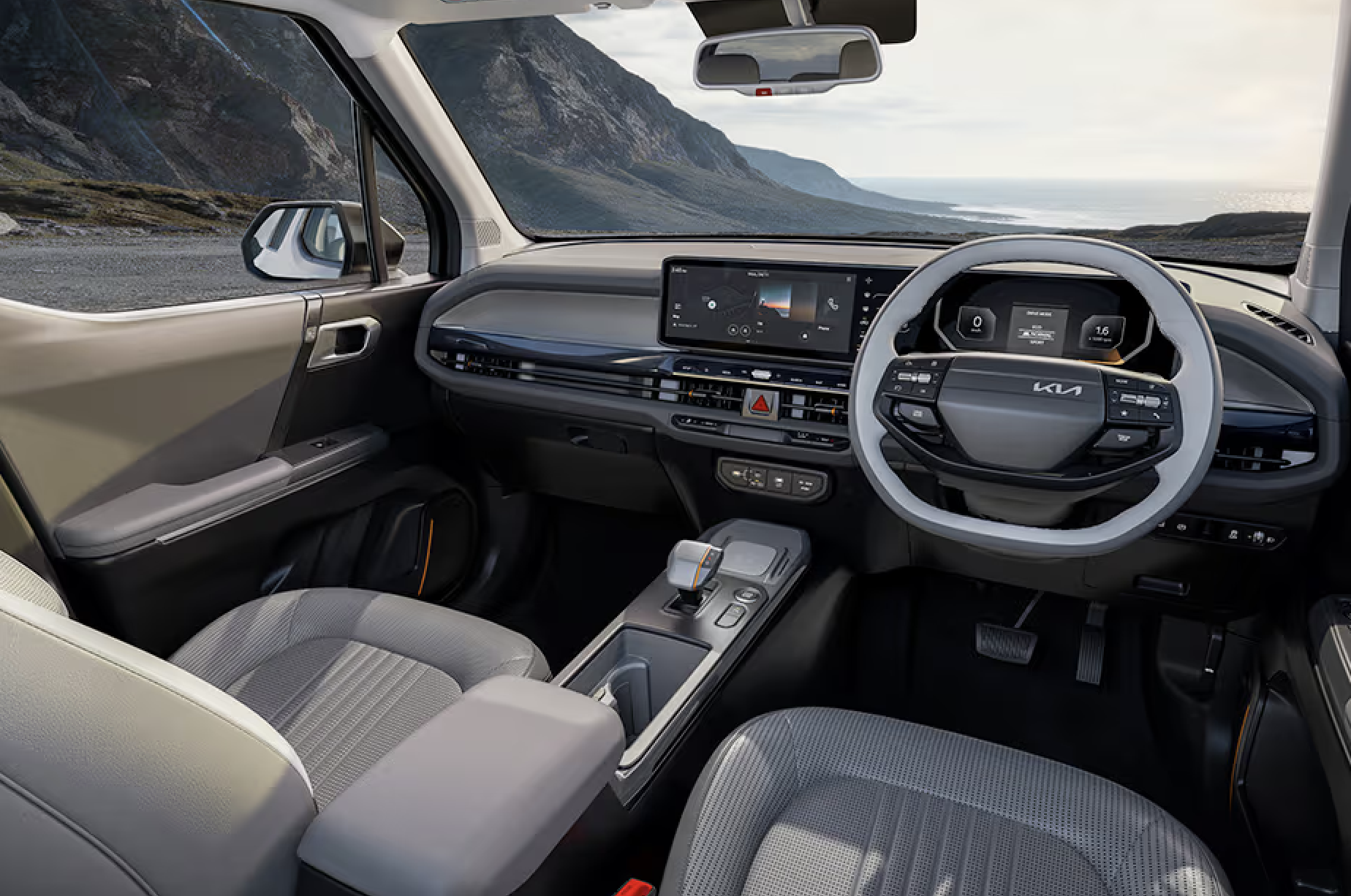
The cabin is where the Syros really wins for the money. There are two 12.3-inch screens on the dash, plus a separate little 5-inch screen just for the AC controls, which is handy. Wireless Android Auto and Apple CarPlay come as standard, along with a four-speaker system and two tweeters.
You also get an electric parking brake with Auto Hold and four USB-C ports. Small things, but they show Kia thought about daily life. The cabin feels a step above its price.
Kia Syros EV Features
Two 12.3-inch screens plus a 5-inch AC screen
Wireless Android Auto and Apple CarPlay
Four-speaker audio with two tweeters
Shift-by-wire and paddle shifters for i-Pedal
Eco, Normal and Sport modes
Regenerative braking
Electric parking brake with Auto Hold
Four USB-C ports
Disc brakes on all four wheels
Digital Tiger Face with Star Map LED lighting
Safety
Kia kept the safety kit strong. The HTK gets six airbags, ABS with Brake Assist, Electronic Stability Control, Vehicle Stability Management, Hill-start Assist, an Emergency Stop Signal and TPMS. On top of that there are rear parking sensors, three-point seatbelts with reminders, ISOFIX anchors, a rear occupant alert and rollover sensors. That is a solid list for the price.
Specifications at a Glance
Specification | Detail |
Variant | HTK |
Battery | 42 kWh liquid-cooled Li-ion |
Motor | 99 kW (135 PS) |
Torque | 255 Nm |
Range | 443 km (MIDC) |
Charging | CCS2 |
Drive Modes | Eco, Normal, Sport |
Front Suspension | MacPherson strut |
Rear Suspension | Coupled torsion beam axle |
Brakes | Disc (all four wheels) |
Wheels | 16-inch dual-tone aero alloy |
Tyres | 215/60 R16 |
Displays | Dual 12.3-inch + 5-inch AC |
Airbags | 6 |
Price in Nepal
Offer | Price |
NAIMA introductory (first 100 buyers) | Rs 35.90 lakh |
Regular price | Rs 37.90 lakh |
At this price the Syros join a crowded fight. Kia is hoping its looks, its screens and, most of all, its trusted service network are enough to win people over from cheaper Chinese options. If you want to see how it compares, the list of best electric cars under Rs 45 lakh in Nepal is a good place to start.
Conclusion
The Syros EV is a good first move from a brand that should have shown up sooner. It looks sharp, the cabin feels better than the price suggests, the range is believable and the safety kit is solid. As Kia's first proper mainstream EV in Nepal, it is a strong start.
The real test comes after launch. Kia's service network gives it an edge over the newer brands, but buyers here have plenty of choice and know a good deal when they see one. Can the Syros turn all this early interest into real sales? That is the part worth watching.
For more on Nepal's EV market, Autoncell covers every new launch as it happens.