-original.webp)
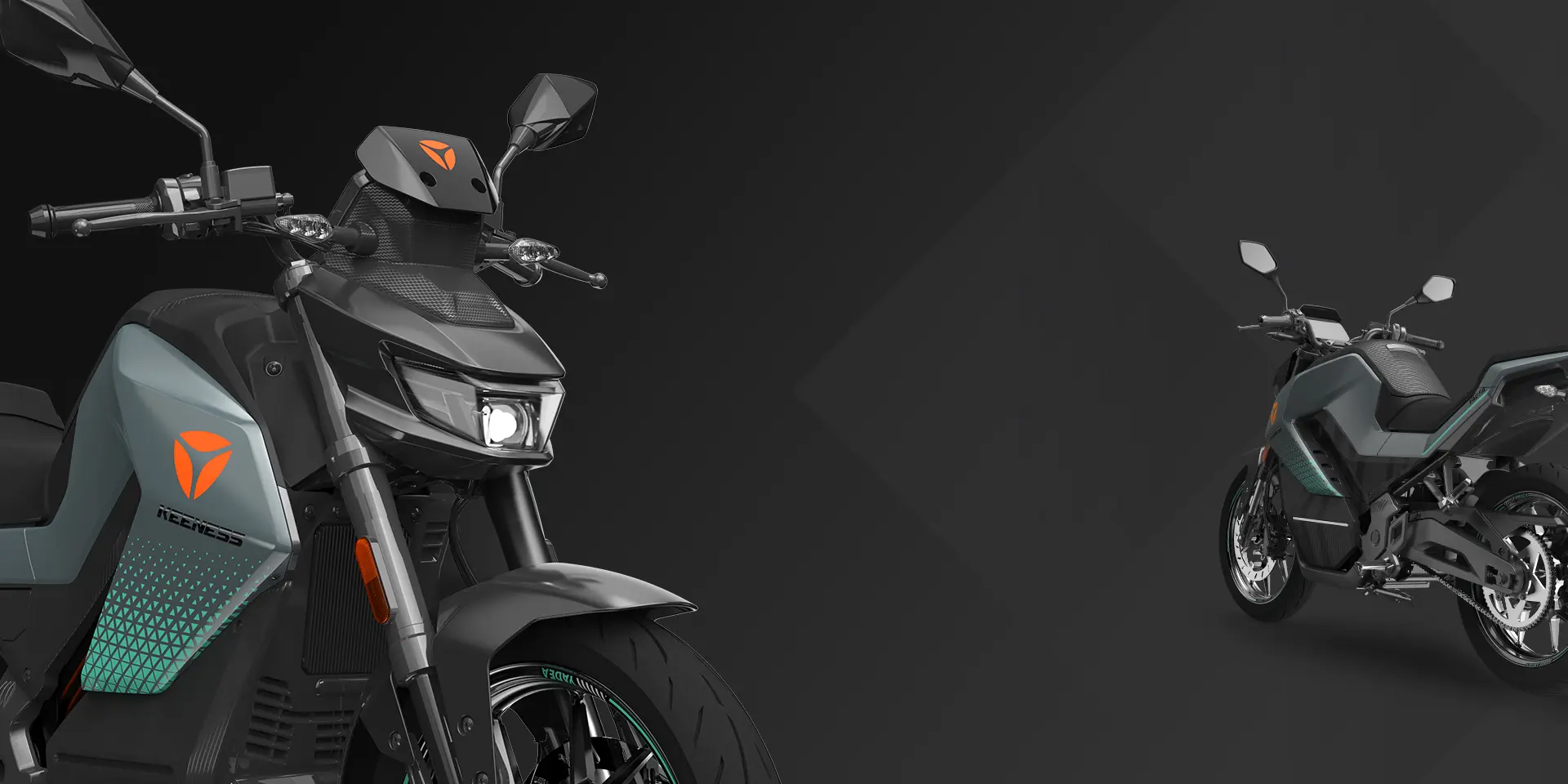
Nepal's electric two-wheeler market just got its most serious contender yet. Yadea has officially launched the Keeness electric motorcycle in the Nepali market through its authorized distributor Kuzu Nepal Pvt. Ltd., and for the first time, the brand isn't asking riders to compromise performance for the sake of going electric.
Priced at Rs 6,60,000, the Keeness isn't a commuter scooter with a new badge. It's a full naked sport motorcycle, built around a mid-drive architecture, wrapped in award-winning design, and aimed squarely at Nepali riders who want something more than a glorified city runabout.
Design
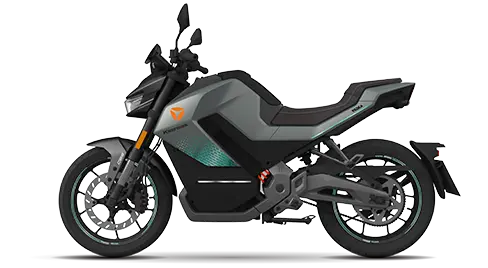
The Keeness carries an aircraft wing outline design, an aggressive expression of speed and power, paired with a shooting star-style front LED headlight rated at 30,000 CD brightness. It's a naked sports silhouette, stripped-down and purposeful, and it reads performance before you even turn the key.
The Keeness is a Red Dot Design Award winner, recognized for its classic yet distinctive urban street design. That's not a marketing footnote. The Red Dot is one of the most respected industrial design honors globally, and winning it puts the Keeness on a level that most electric two-wheelers, in Nepal or anywhere else, simply haven't reached. For a market where EVs have largely looked utilitarian, this matters.
Performance
At the core of the Keeness is an 11 kW mid-drive high-performance motor generating 300 Nm of torque. The motorcycle accelerates from 0 to 50 km/h in just 3 seconds and reaches a top speed of 100 km/h, making it one of the most performance-focused electric motorcycles available in Nepal.
Three seconds to 50 km/h. That's not a grocery-run number. That's the kind of pull that will catch petrol bike riders completely off guard. The mid-drive placement matters too, centering the motor in the frame keeps weight distribution balanced in a way that hub-drive motors, which dominate most cheaper EVs, simply can't replicate.
The motor is rated at 5,500W continuous with a peak output of 11,000W, meaning it has real grunt in reserve, not just a headline peak figure that collapses under load.
The Keeness also has a climbing capacity of 20 degrees, which is a spec that means far more in Nepal than it would almost anywhere else. Kathmandu's hills, Lalitpur's lanes, and the country's broader topography are not kind to underpowered machines. This one is built to handle them. If you're weighing this against other Rs 6 lakh contenders in Nepal's two-wheeler market, the performance gap between petrol and electric is narrowing fast.
Specifications
Motor Type: Mid-drive high-performance motor
Rated Power: 5,500W
Peak Power: 11,000W (11 kW)
Maximum Torque: 300 Nm
Top Speed: 100 km/h
0–50 km/h Acceleration: 3 seconds
Climbing Capacity: 20 degrees
Dashboard: 5-inch high-resolution digital meter
Headlight: LED, Class C
Length: 1,990 mm | Width: 775 mm | Height: 1,090 mm
Seat Height: 770 mm
Seat Length: 600 mm
Wheels: F&R 17-inch aluminium alloy
Tyre Size: Front 100/80R17, Rear 130/70R17
Front Suspension: Inverted fork
Rear Suspension: Mono-shock (centre-mounted)
Braking: Disc brakes front and rear with CBS (Combined Braking System)
Key Features
Dual removable battery packs both 72V 32Ah units can be detached for indoor charging, eliminating range anxiety at home or office
Regenerative braking system recovers energy while braking and downhill riding, extending real-world range
Advanced BMS the intelligent Battery Management System covers 40-plus protection functions, significantly improving battery lifespan and security, with IPX waterproofing and stable operation across charging and discharging temperature ranges
5-inch digital dashboard full instrumentation at a glance
Cruise control a genuine highway-use feature rarely found at this segment in Nepal
16L under-seat storage practical onboard storage for daily use
USB charging port integrated for device charging on the go
Red Dot Design Award internationally recognized design distinction
Aircraft-inspired LED headlight 30,000 CD brightness for strong nighttime visibility
If you're comparing options, our roundup of the best electric two-wheelers currently available in Nepal is a good place to see where the Keeness stands against the broader field.
Battery & Range
The Keeness runs on a dual ternary lithium battery setup, with two removable 72V 32Ah packs combining for a total capacity of 4.6 kWh. Both packs detach independently, meaning you can pull one or both out for indoor charging, a practical solution in a country where dedicated EV charging points are still sparse.
Yadea's official EEC-tested range figure stands at 129 km on a full charge, while the Nepal market claim pushes that to 150 km. Real-world numbers will sit somewhere between the two depending on load, terrain, and riding style, as they always do.
What helps close that gap is the onboard regenerative braking system. The Smart Energy Retrieval system converts kinetic energy back into electrical charge while sliding, braking, and descending, which on Nepal's hilly terrain is less of a bonus feature and more of a genuine range extender. Every descent gives back a fraction of what the climb cost you.
Price in Nepal
The Yadea Keeness is officially priced at Rs 6,60,000 in Nepal and is available through Kuzu Nepal Pvt. Ltd. Yadea has held the title of the world's No.1 electric two-wheeler brand for nine consecutive years, serving over 100 million users across more than 150 countries. That track record gives buyers at this price point reasonable confidence in parts availability and after-sales support, two things that matter as much as the spec sheet when you're spending Rs 6 lakh plus. It's also worth noting that Nepal's revised EV tax structure has been reshaping what buyers pay across segments worth understanding before you finalize any EV purchase decision.
Conclusion
The Keeness isn't a press release on wheels. The specs are legitimate, the design recognition is real, and the dual removable battery setup addresses the single biggest practical concern Nepali EV buyers have, what happens when the charge runs out away from a station.
The test, as always, will be durability and dealer follow-through. Nepal's Rs 6-lakh-plus buyer doesn't buy on hype and doesn't forgive quickly. If Kuzu Nepal delivers on service and Yadea's hardware holds up to Nepali roads, this launch will look like a turning point in hindsight.
The Keeness is the most complete electric motorcycle Nepal has seen at launch. Whether it's the one that finally makes performance EV riding mainstream here is a question only the road , and the riders, will answer.


-original.webp)