After a decade of absence from South Asia's new markets, the world's biggest ride-hailing company has planted its flag in Kathmandu. For Nepal's crowded mobility sector, nothing will be quite the same.
A Decade in the Making
Uber has officially launched in the Nepali market, making Nepal its 11th territory across the Asia-Pacific region, a debut that comes more than ten years after the company last entered a new South Asian market. That's not a footnote. It means Nepal sat on the sidelines while the rest of the region built digital economies around app-based transport, and now the most recognizable brand in the game has finally shown up.
The company had actually been providing services informally since early May before formally launching operations on June 5. A soft entry, typical of Uber's playbook , tests the waters, gets drivers on board, then makes the official announcement with government officials in the room.
What's on Offer
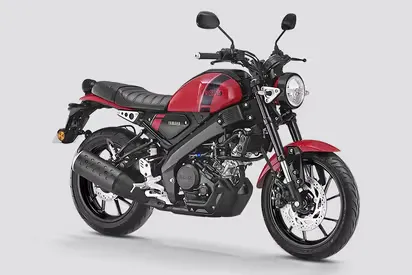
The rollout covers both wheels. For four-wheeled commutes, Uber is deploying Uber Go as an affordable, everyday compact car alternative for budget-conscious riders, alongside Uber Comfort, a premium, spacious tier targeting passengers looking for an elevated travel experience. Uber Bike, the two-wheeler option, is designed as a rapid, on-demand motorcycle service built to cut through heavy city traffic.
Three tiers, three different riders in mind. The Uber Bike makes sense in Kathmandu's notoriously gridlocked lanes where a car can double your commute time. Uber Comfort, on the other hand, is clearly angled at the tourist coming off a flight at Tribhuvan International Airport who just wants a clean, predictable ride to their hotel.
While the company is initially focusing on the Kathmandu Valley, it is also preparing to gradually expand services to other major cities across Nepal.
The Numbers Behind the Launch
Dominic Taylor, Regional General Manager, Rides of Asia Pacific, said the company is "really excited with the early trend seeing over two thousand drivers signing up." Two thousand drivers before the official launch event even happened. That's not bad for a market where Uber had zero presence just weeks ago.
Taylor described Nepal as "a vibrant and fast-growing market shaped by increasing digital adoption, urban mobility needs and a thriving tourism economy," and specifically pointed out that international travellers landing at Tribhuvan International Airport will be able to use Uber services to reach their hotels. That airport-to-hotel use case is a smart opening move, foreign visitors already have Uber on their phones. No download friction, no new account to create.
Stepping Into a Crowded Room
Don't mistake this for an easy win. Ride-hailing services first entered Nepal in 2017 with the launch of Tootle, a homegrown app. The market expanded in 2018 with Pathao's entry, followed by inDrive in 2022. As of now, there are about 30 ride-sharing platforms operating in Nepal , some foreign, some domestically led.
Pathao, InDrive, and Yango are already household names, while several smaller service providers are also operating in the market. InDrive in particular has earned loyalty through its negotiable fare model , riders can counter-offer the price, something Uber's fixed-pricing model doesn't allow. Pathao has deep brand recognition built over nearly a decade. Uber's global name recognition is a genuine asset, but name recognition doesn't pay for a bike ride.
Government Backing and Diplomatic Weight
The launch drew more than just tech enthusiasts. Nepal's Ministry of Culture, Tourism and Civil Aviation and the Ministry of Physical Infrastructure and Transport both sent secretaries to the event, signaling institutional support. The US Embassy in Nepal also weighed in, with Acting Deputy Chief of Mission Chelan Bliss attending the launch and calling Uber's decision "a vote of confidence in Nepal's trajectory, and in the Nepali people."
That kind of diplomatic presence around a ride-hailing launch is unusual. It reflects how seriously both governments are treating this as a signal of Nepal's growing appeal for foreign tech investment , not just a new app on the store.
The Regulatory Question Nobody's Answering Clearly
There's a layer here that deserves scrutiny. The Department of Transport Management has drafted the Digital Mobility Service Operation Standard 2026 and forwarded it to the Ministry of Physical Infrastructure and Transport for further discussion, meaning the regulatory framework governing all these platforms, including Uber, is still being finalized. The ride-hailing sector has continued to operate in something of a legal grey area in Nepal, and Uber's high-profile entry may actually be the push that forces clearer regulation faster.
What This Really Means
Founded in 2009, Uber currently operates in more than 10,000 cities across over 70 countries worldwide. Nepal is a small market by global standards, but symbolically it closes a long gap in South Asia's map. For Nepali riders, competition between this many platforms should mean better pricing, better service, and faster accountability when things go wrong.
The real test won't be the launch event. It'll be six months from now, whether Uber's drivers are still active, whether pricing holds up against InDrive's flexibility, and whether the company commits to markets outside the Kathmandu Valley. Nepal's geography is brutal, its internet infrastructure uneven, and its consumers price-sensitive. Uber knows how to scale. Whether it knows how to stay is the more interesting question.
Uber is currently available in the Kathmandu Valley through the Uber app on iOS and Android.



-original.webp)