After 125 years of selling motorcycles built on petrol, thunder, and nostalgia, Royal Enfield has finally flipped the switch. The Flying Flea C6 launched today in India, the brand's first production electric motorcycle, and it arrives carrying the weight of history, a retro aesthetic that genuinely turns heads, and at least one specification that has industry analysts quietly raising an eyebrow.
Let's start with the name, because it earns its place. The original Flying Flea was a stripped-down military motorcycle that British paratroopers used during the Second World War, literally air-dropped from aircraft, parachute and all, into active combat zones. Royal Enfield has resurrected that name for its new electric sub-brand, and even stitched a parachute emblem onto the production bike as a tribute. It's deliberate brand mythology, connecting a 1940s battlefield workhorse to a 2026 city commuter. Somehow, it doesn't feel forced.
The wait itself has been long enough to generate mythology. After its EICMA 2024 debut in Milan drew crowds and genuine excitement, the C6 spent over a year moving from show-floor concept to production reality. Serial manufacturing is now underway at Royal Enfield's Chennai facility. Bookings opened this morning. The experiment begins.
Design
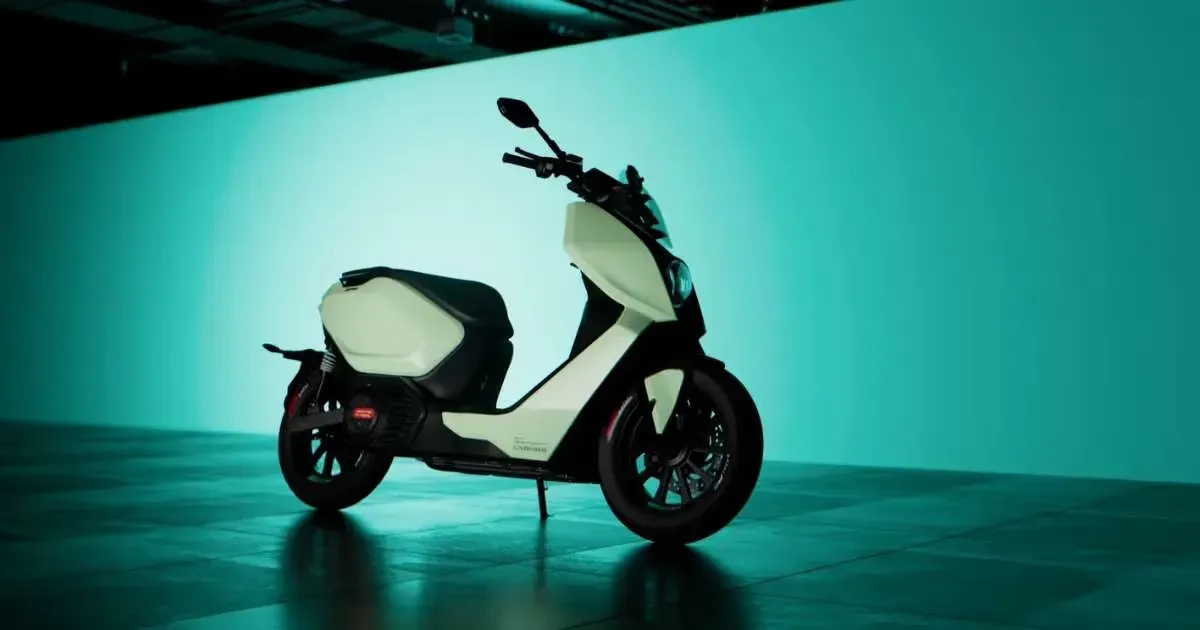
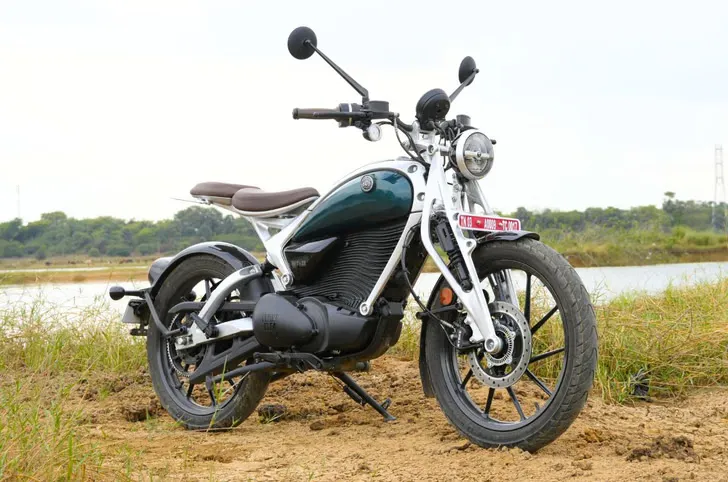
The Flying Flea C6 looks like nothing else in the electric motorcycle market , and that is entirely the point. Where rivals lean into sharp angles and digital-futurist styling, Royal Enfield went the other direction. Round LED headlamp. Exposed frame. A girder-style front fork lifted straight from pre-war motorcycle design. A floating solo saddle. The silhouette is slim, minimal, and deliberately retro , drawing directly from the original Flying Flea, the lightweight military motorcycle British paratroopers air-dropped into active combat zones during the Second World War. Even the parachute emblem stitched onto the production bike is a deliberate nod to that wartime legacy.
The "fuel tank" is actually a cosmetic shell , inside sits a wireless charging pad and a USB-C port. The battery is housed in a magnesium casing designed to mimic the cooling fins of an air-cooled engine. It comes in two colours: Storm Black and Flea Green.
Performance
The C6 is powered by a permanent magnet synchronous motor producing 15.4 kW and 60 Nm of torque. It sprints from 0 to 60 km/h in 3.7 seconds, with a governed top speed of 115 km/h , numbers that place it comfortably on par with a 150–200cc petrol motorcycle. There is no chain drive; the C6 runs a belt system for quieter, smoother city operation.
At 124 kilograms, it is the lightest motorcycle Royal Enfield has ever built. That matters more than the power figures. Lightness is a feature in city riding; it makes the bike more agile, more manageable, and more accessible to a wider range of riders.
Battery
The C6 runs a 3.91 kWh lithium-ion pack housed in a lightweight magnesium casing. Royal Enfield claims a range of 154 km on a single charge , a figure drawn from India's IDC test cycle, which is built around low-speed, idealised riding conditions. Real-world range will be lower, likely in the 90–110 km bracket depending on speed, load, and riding style. Charging from zero to full takes approximately 2 hours and 16 minutes.
The Battery-as-a-Service option is worth noting. Instead of paying the full INR 2.79 lakh ex-showroom price, buyers can opt for BaaS at INR 1.99 lakh , under which they don't own the battery but pay a usage-based rental fee instead. It removes the upfront cost burden and eliminates long-term anxiety around battery degradation.
Features
This is where the C6 genuinely surprises. It is the first Royal Enfield motorcycle to offer cornering ABS, traction control, and cruise control , all of them, as standard. A 3.5-inch circular TFT touchscreen handles navigation, call and message notifications, music control, and voice commands. Five riding modes , City, Rain, Highway, Sport, and a fully configurable Custom mode , adjust throttle response and traction control per setting.
Additional features include hill-start assist, tip-over alerts with live location sharing, an electronic steering lock, remote app unlock via smartphone, bidirectional crawl mode for tight parking situations, and full LED lighting throughout. Over-the-air software updates are supported, meaning the bike can be improved remotely after purchase. For a brand whose recent flagships still used analogue instruments, this is a generational leap in one move.
The Number Nobody Wants to Talk About , But Everyone Is
Royal Enfield claims a range of 154 km on a single charge. On the surface, competitive. Under scrutiny, uncomfortable.
That figure comes from India's IDC test cycle , a standardised laboratory methodology built around low-speed, idealized riding conditions that bear increasingly little resemblance to how motorcycles actually get used. Applying the IDC number to the C6's 3.91 kWh battery implies an efficiency figure that would place this motorcycle among the most energy-efficient electric two-wheelers ever tested , not just in its class, but across the entire industry. That's a bold implication for a sub-4 kWh pack that competes on urban commuter duty.
Real-world range will land lower. How much lower depends on speed, load, road conditions, and rider behaviour , the same variables that always collapse manufacturer claims back to earth. Royal Enfield's own pre-launch test rides covered a 70-kilometre loop near Chennai, and the brand has been notably quiet about what the battery readouts showed at the end.
This matters because trust in range claims is already fraying across the EV sector. Inflated test-cycle numbers have become a predictable genre of disappointment , the buyer reads 154 km, rides it daily, and settles into a lived reality of something closer to 90. That gap doesn't just frustrate riders; it chips away at brand credibility. Royal Enfield has spent over a century earning the kind of loyalty that competitors would pay handsomely for. Betting even a fraction of that on a number that strains physical plausibility seems like an unnecessary gamble, especially when the motorcycle is compelling enough without it.
The Price Play Is Smarter Than It Looks
The Flying Flea C6 is priced at INR 2.79 lakh ex-showroom , a fair position for what's on offer. More interesting is the Battery-as-a-Service option, which brings the upfront cost down to INR 1.99 lakh. Under BaaS, the customer doesn't own the battery; instead, they pay a usage-based rental fee, eliminating both the capital hit and the long-term anxiety about battery degradation. It's a financing model borrowed from the broader EV playbook, and it removes one of the most common objections Indian buyers raise when considering an electric motorcycle.
For European markets, Royal Enfield has confirmed pricing under €7,000 , a figure that positions the C6 against boutique electric motorcycles like the Maeving RM1S. In India, the competitive set is denser: the Ola Roadster X, Revolt RV400, and Oben Rorr all compete in the same urban segment. What none of those machines have, to be fair, is the Royal Enfield badge, the design language, or the brand story. That counts for more than specs sheets typically acknowledge.
What This Actually Means
A scrambler-style S6 will follow later this year, and together these two models represent Royal Enfield's first genuine structural commitment to electrification , not a concept, not a prototype, not a limited-run experiment, but motorcycles rolling out of a production line and into showrooms. That threshold matters. Companies can announce electric futures indefinitely. Actually delivering them is a different discipline.
Build quality, for its part, appears to have received serious attention. Indian journalists who rode pre-production units in Chennai flagged the fit and finish as reaching a level the brand hasn't previously demonstrated , the magnesium battery casing, the metal switchgear, the paint depth. Royal Enfield has historically been a brand that rewards its riders with character rather than precision. The C6 appears to be attempting both.
But the harder question lingers. Royal Enfield's identity is built around sensation , the thump of a single-cylinder engine, the unhurried pace of a long ride, the feeling that the machine has a personality. Electric powertrains are smooth, instant, and silent. They are also, to some ears, personality-less. Can the Flying Flea C6 make electric feel like a Royal Enfield , or will it simply feel like a very well-designed electric motorcycle that happens to carry the badge?
That's not a question the spec sheet can answer. It's not a question the press rides will answer, either. It'll be answered over months, by the people who buy one, live with it, and decide whether the feeling was worth the journey. And honestly? That uncertainty is what makes this launch interesting.