Six minutes to charge. 1,500 kilometres on a single top-up. If these numbers hold up in the real world, the last major excuse for not going electric is about to disappear.
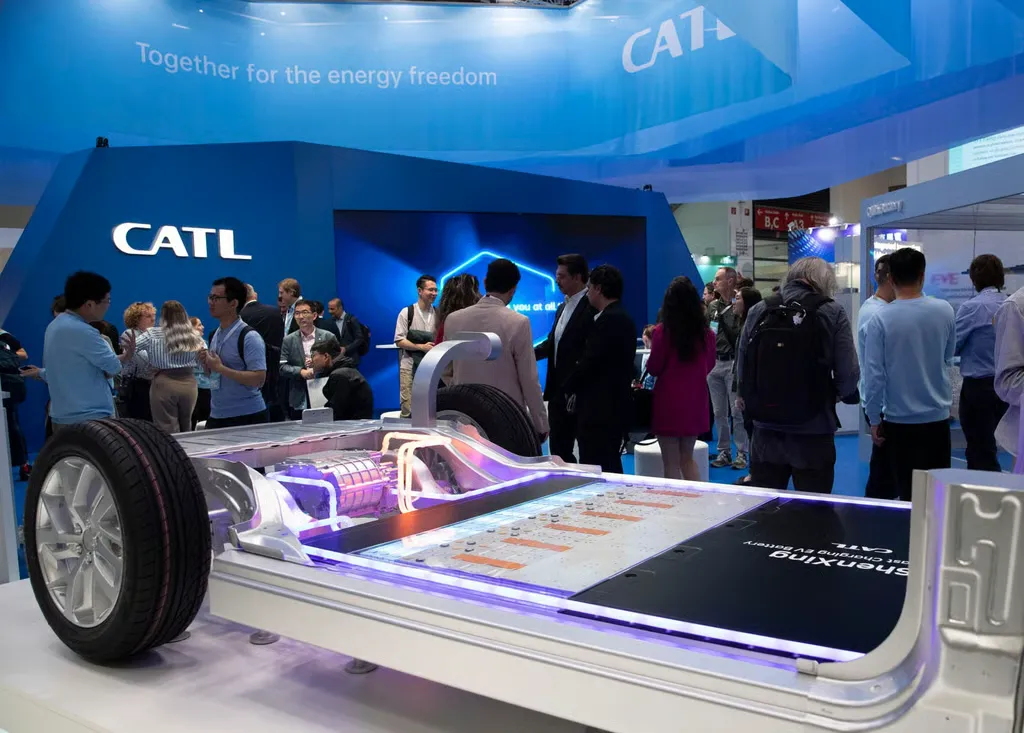
Chinese battery titan CATL didn't just announce a product upgrade at its "Super Tech Day" event. It drew a new boundary for what electric mobility can look like. With back-to-back reveals covering ultra-fast charging, record energy density, sodium-ion cells, and a reimagined charging infrastructure model, the company is signalling something bigger than incremental progress, it's signalling dominance.
Third-Generation Shenxing: Speed That Makes Gas Stations Look Slow
The headline act was CATL's third-generation Shenxing lithium iron phosphate (LFP) battery. The company claims it can push a depleted pack from 10% to 80% charge in just 3 minutes and 44 seconds under optimal conditions. Getting to 90% takes roughly 6 minutes and 27 seconds. That's not fast charging, that's borderline instantaneous.
What makes this genuinely remarkable isn't just the speed. Shenxing is built on LFP chemistry, historically the more affordable, thermally stable, but energy-limited sibling of nickel-based batteries. CATL has engineered around those limitations through reduced internal resistance, a completely redesigned thermal management system, and expanded cooling architecture that keeps heat from becoming the enemy during high-speed charge cycles.
Cold weather has always been a silent killer of EV range and charging performance. CATL addresses this head-on, claiming the Shenxing battery can reach near-full charge in under 10 minutes even at minus 30 degrees Celsius. For markets in northern China, Europe, or high-altitude regions like Nepal where winter temperatures are punishing, that's not a minor footnote, it's a fundamental shift in usability.
The Qilin Gets an Upgrade: 1,500 km and Aviation-Grade Materials
While Shenxing grabbed the speed headlines, CATL's upgraded Qilin battery platform is the one that should make range-anxiety sufferers sit up straight.
The latest Qilin iteration achieves up to 350 Wh/kg at the cell level, a figure that puts it firmly in the upper tier of what's currently achievable in mass production battery systems. More importantly, CATL says this translates to driving ranges of up to 1,500 kilometres for sedans on a single charge. That's Kathmandu to Mumbai and back, roughly, without stopping to plug in.
The construction reflects just how seriously CATL is engineering for performance. The cells use aviation-grade structural materials, a high-nickel cathode, and a silicon-carbon anode. Silicon-carbon anodes have long been the industry's "almost there" technology, capable of dramatically higher energy storage than conventional graphite anodes but historically prone to expansion and degradation. Getting this into mass production reliably is an engineering achievement in itself.
Sodium-Ion Moves from Lab to Factory Floor
Less flashy but arguably more strategically significant is CATL's announcement that its sodium-ion battery technology is crossing from research and development into large-scale manufacturing.
Sodium-ion cells don't match lithium in energy density, but they bring something the global supply chain desperately needs: independence from lithium, cobalt, and nickel, three materials whose mining is geographically concentrated, geopolitically sensitive, and environmentally controversial. Sodium is abundant, cheap, and widespread.
CATL positions sodium-ion as the chemistry of choice for applications demanding resilience in extreme temperatures and cost-sensitive markets. Think entry-level EVs, grid storage, and two- and three-wheelers in emerging markets. As the EV transition accelerates globally, having a credible, scalable alternative chemistry in the portfolio isn't optional, it's essential.
CATL's Infrastructure Vision
Hardware alone doesn't win the EV war. CATL seems to understand this. Alongside its cell-level announcements, the company unveiled plans for an integrated energy ecosystem that brings together home charging, public fast charging, and battery swapping under a single unified infrastructure network.
The goal is to eliminate the inefficiencies that plague today's fragmented charging landscape, where energy conversion losses, incompatible standards, and sparse coverage continue to frustrate adoption. CATL says it aims to build thousands of these integrated stations across China by the end of 2026, serving both private passenger vehicles and commercial fleets.
Battery swapping, where a depleted pack is physically replaced with a fully charged one in minutes, remains controversial. Some automakers have committed to it; most Western brands have avoided it. CATL's integrated approach suggests the company sees swapping not as a replacement for fast charging but as a complementary layer, particularly for commercial operators who can't afford downtime.
The Gap Between Claim and Road
A necessary dose of realism is warranted here. CATL's performance figures come from the company itself, under optimal laboratory and controlled conditions. Real-world numbers are almost always humbler. The 6-minute charge time assumes access to an ultra-high-power charger that most public networks , and virtually no home setups, currently support. The 1,500 km range figure is a ceiling, not a daily average.
Grid capacity is the elephant in the room. Charging a large battery pack at extreme speeds pulls enormous amounts of power from the grid in a very short window. Scaling this across millions of vehicles simultaneously is an infrastructure challenge that no battery chemistry solves on its own. Vehicle integration, whether the car's power electronics can actually accept charge at the rates CATL enables, adds another layer of complexity.
Industry analysts are measured in their enthusiasm for exactly these reasons. The technology is real and the progress is significant. But the distance between what a battery can theoretically do and what a driver experiences on a rainy Tuesday morning is still measured in engineering problems, grid investments, and regulatory approvals.
Why This Matters Beyond China
CATL's announcements don't exist in a vacuum. The company is in a fierce, ongoing battle for global EV battery supremacy, primarily with domestic rival BYD, but also facing pressure from South Korean manufacturers and growing Western ambitions to rebuild battery supply chains at home.
Every technological benchmark CATL sets raises the bar for the entire industry. When a Chinese company announces 6-minute charging and 1,500 km range in mass-production batteries, automakers in Germany, the United States, and Japan have to respond, either by matching the technology or by differentiating on other axes.
For a country like Nepal, where EV adoption is climbing steadily and the charging infrastructure is still nascent, these developments carry a different kind of relevance. The technology being developed today will shape the vehicles available in South Asian markets within three to five years. The faster charging gets and the longer ranges become, the more viable EVs are in markets where charging stations are still sparse and distances between cities can be unforgiving.
Conclusion
The real question isn't whether CATL has achieved something technically impressive, it clearly has. The question is how quickly the world around the battery can catch up. Infrastructure, grids, and vehicle platforms move slower than chemistry does. Whether 6-minute charging becomes a daily reality or stays a laboratory talking point depends entirely on how fast everything else moves to meet it.
-original.webp)