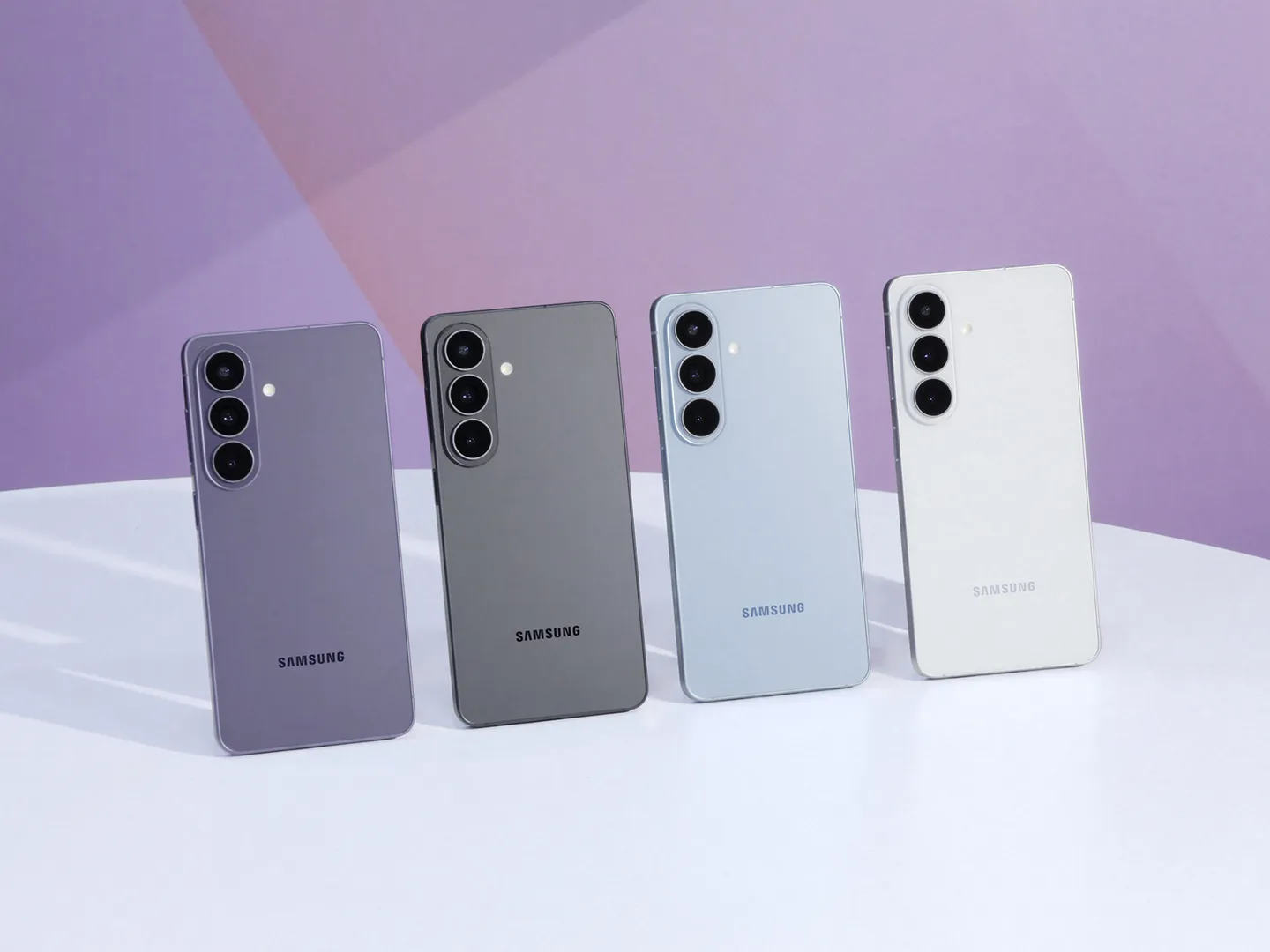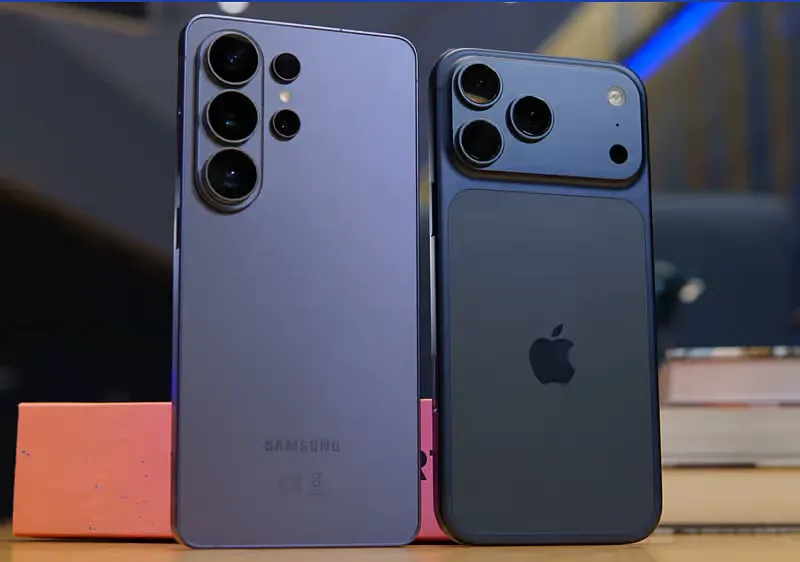
Three Years Running, Samsung's Flagship Refuses to Let iPhone Sleep at the Top.
For the third straight year, Samsung has walked away with the crown. Consumer Reports, the gold-standard independent testing body in the United States, has ranked the Galaxy S26 Ultra first among all smartphones, scoring it 88 out of 100 and edging out Apple's iPhone 17 Pro Max by two points. That margin might sound slim on paper, but in a category where both phones cost well over a thousand dollars and each company pours billions into R&D, two points is a statement.
Apple isn't collapsing, the iPhone 17 Pro Max scored 86, which is an objectively strong result. But second place in Consumer Reports is second place. And when you've been second three times in a row, that pattern starts to tell its own story.
What Makes the S26 Ultra Stand Out
Battery: The Game-Changer Nobody Saw Coming
The biggest leap for the Galaxy S26 Ultra wasn't the camera, the display, or some flashy AI gimmick. It was the battery. Consumer Reports upgraded the S26 Ultra's Battery/Charging rating from "Very Good" to "Excellent", and that upgrade didn't come out of thin air.
Samsung rolled out Super-Fast Charging 3.0 with the S26 Ultra, bumping wired charging speeds from 45W on the S25 Ultra to a significantly faster 60W. The real-world impact? Battery runtime improved by 3.5 hours compared to the previous generation. Consumer Reports tested this using YouTube playback at default settings in dark mode, about as real-world as benchmark testing gets.
In a smartphone market where consumers have grown increasingly vocal about battery anxiety, Samsung targeted the right pain point at the right time.
Performance That Earns Its Score
The S26 Ultra's overall score of 88 reflects consistent strength across categories, not a single outlier metric carrying dead weight. Samsung's entire S26 lineup performed well, the S26+ landed in 7th place with a score of 85, and the base Galaxy S26 came in 11th with an 84. For a flagship family to sweep the upper tier of a Consumer Reports ranking like this, the engineering has to be solid across the board, not just at the top.
Samsung also leaned into software-side advancements, with AI features and a Privacy Display mode contributing to the overall evaluation. These aren't gimmicks, Consumer Reports evaluates holistically, meaning they added measurable value to the final score.
Design That Commands the Premium Market
The Galaxy S26 Ultra carries forward Samsung's design language for the Ultra tier, a large, flat-screen form factor with integrated S Pen stylus support, titanium framing, and a camera module architecture that houses a sophisticated multi-lens system. It's a device built to look and feel like it belongs in the premium segment, and it does. Nothing about the S26 Ultra's construction feels like an afterthought.
How It Stacks Up Against the iPhone 17 Pro Max
Apple's iPhone 17 Pro Max is not a bad phone, let's be completely clear about that. An 86 from Consumer Reports means it's an exceptional device. But Samsung didn't just edge Apple out this year. It did it last year with the S25 Ultra, and the year before that with the S24 Ultra. At this point, Samsung has built a structural advantage in how Consumer Reports weighs real-world performance, particularly around battery endurance and charging, two areas where Apple has historically moved more cautiously.
Apple's strengths, software integration, ecosystem cohesion, video recording quality, remain formidable. But Consumer Reports tests phones, not ecosystems. And on that specific playing field, Samsung has figured out how to win.
Price and Value Context
Both flagships sit at the top of the premium market, where $1,000-plus price tags are simply the price of entry. The Galaxy S26 Ultra and iPhone 17 Pro Max compete directly in this bracket. When Consumer Reports assigns an 88 to Samsung and an 86 to Apple at comparable price points, the implicit message to consumers is clear: you're getting marginally more measurable performance per dollar with the Samsung, at least by their methodology.
Conclusion
Three consecutive Consumer Reports wins isn't luck, and it's not a fluke in testing methodology. Samsung has identified what matters to the modern smartphone buyer, battery life, fast charging, AI utility, and premium build, and it's executing on those fronts consistently.
The real question now is whether Apple recalibrates for 2027, or whether it decides Consumer Reports rankings simply don't reflect its core user base's priorities. Given that Apple has never needed a trophy to sell iPhones by the tens of millions, that's a defensible position. If you're not already an Apple die-hard, the numbers say Samsung is the better buy right now.