April 2026 just proved that India's electric vehicle revolution isn't slowing down, it's accelerating with a vengeance. The country's electric passenger vehicle segment recorded 23,163 retail units last month, marking a 73% year-on-year surge and cementing itself as the second-best month in the industry's history, trailing only March 2026's 23,749 units.
For context, this is an industry that closed FY2026 with a record 200,946 units and 85% annual growth.
April's numbers suggest FY2027 isn't just picking up where things left off, it's pushing harder.
Let's talk in detail.
Tata Still Leads, But Its Grip Is Loosening
Tata Motors remains the undisputed king of India's EV market, posting 8,506 units in April, a 77% jump from the 4,816 units it sold in the same month last year. That gives it a 37% market share, marginally up from 36% a year ago on a monthly basis. But zoom out to the full fiscal year picture, and the story gets more complicated.
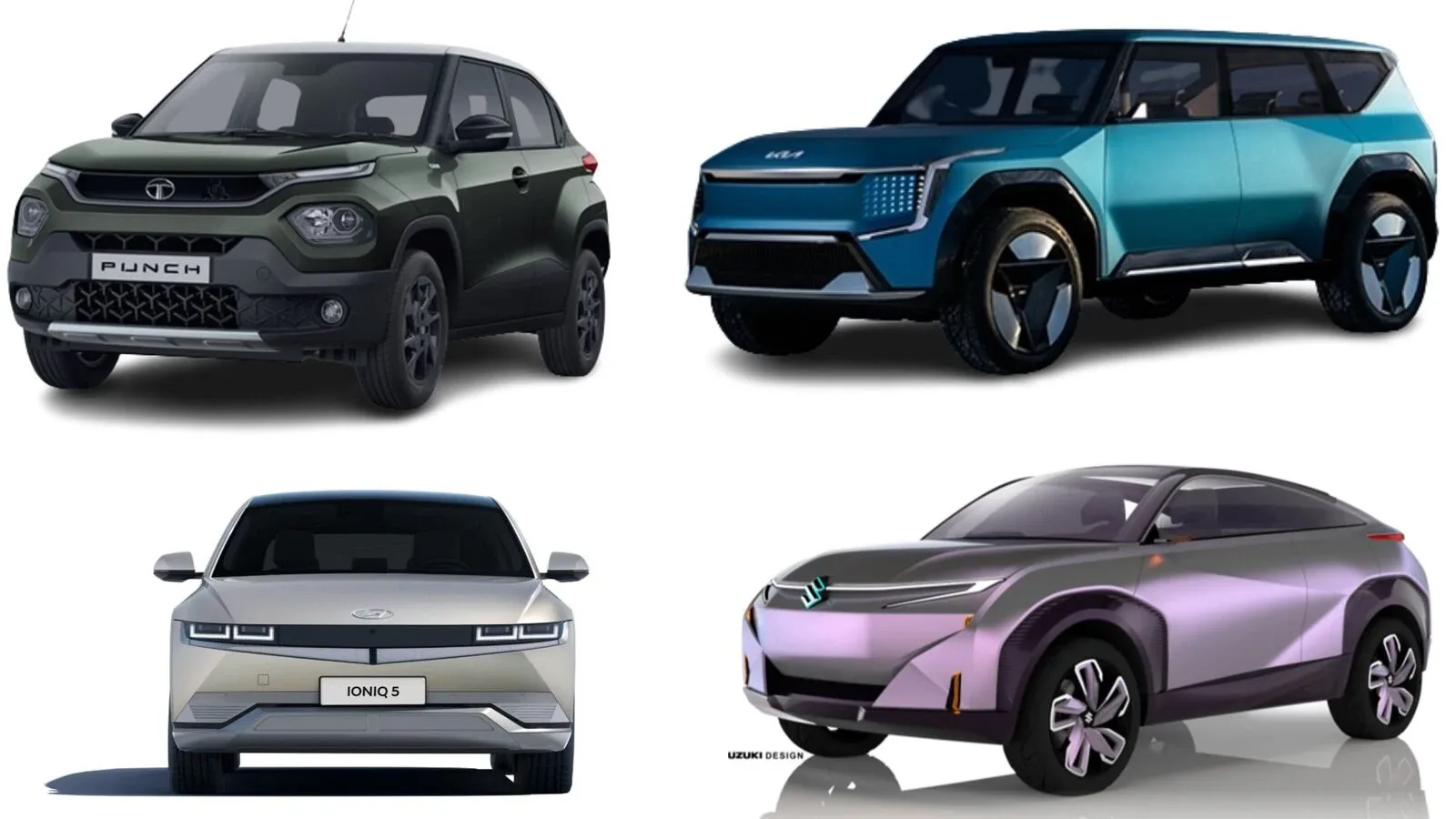
In FY2025, Tata commanded 53% of the EV market. By FY2026, that share had eroded to 40%. The Nexon EV, Tiago EV, and Punch EV still pull their weight, and the Harrier EV has done a reasonable job reviving momentum. The Curvv coupe-SUV, however, hasn't found its audience yet, a rare stumble for a brand that's usually sharp about reading India's appetite for SUVs.
The broader erosion in Tata's dominance isn't a sign of failure so much as a sign of a market growing up. When you're the only serious player, you own everything. When competition matures, market share redistribution is inevitable.
Mahindra Past MG Again
The real headline from April isn't Tata's performance. It's Mahindra & Mahindra posting 5,394 EV deliveries, up 63% year-on-year, and outselling JSW MG Motor India for the second consecutive month. That's not a fluke. That's a trend.
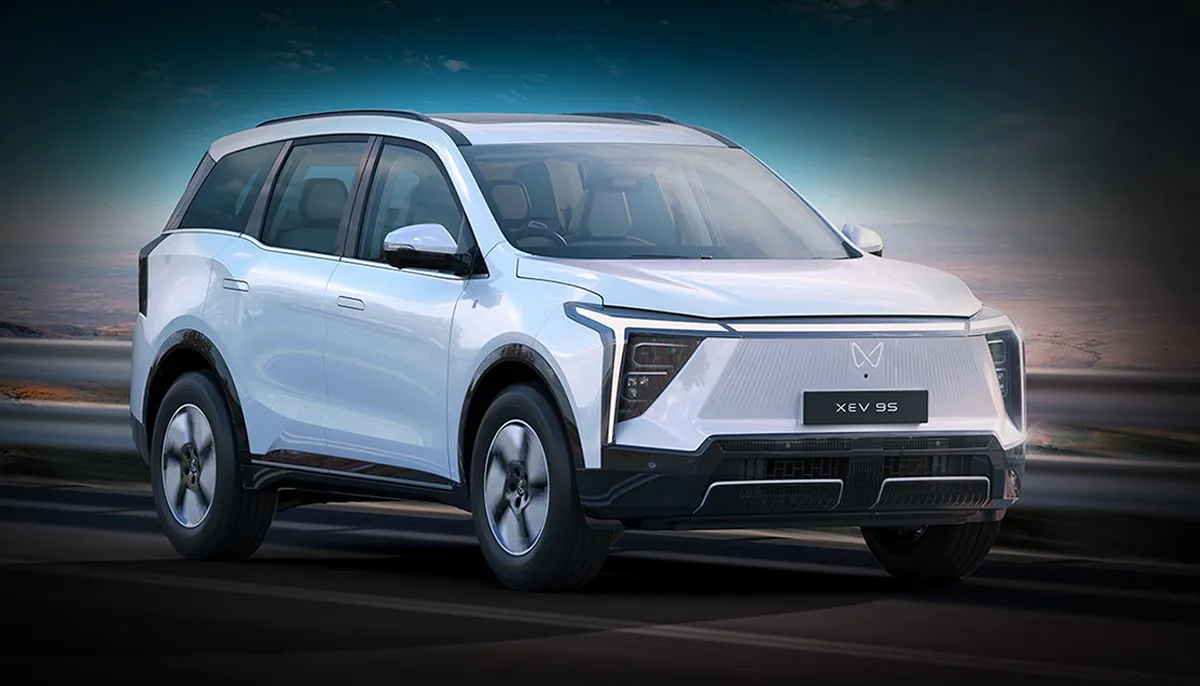
Just a month prior, in March 2026, Mahindra had beaten MG for the very first time ever in a single month (5,651 units vs MG's 5,550). Now it's done again. The BE 6 and XEV 9e, both launched in early 2025, have been the engines of this growth. Add to that the November 2025 debut of the XEV 9S, Mahindra's first three-row born-electric SUV, with battery options ranging from 59 kWh to 79 kWh, and you have a brand that has built genuine EV depth across multiple price points and use cases.
Mahindra now commands 24% of the market. That's not a challenger position anymore. That's a contender.
MG Slips to Third, But Holds Ground
JSW MG Motor India, now officially the third-ranked EV maker in India, sold 4,978 units in April , a 32% year-on-year increase from 3,776 units. Its 22% market share remains formidable, largely because the Windsor EV and its Battery-as-a-Service model continue to convert fence-sitters into buyers. The portfolio, which includes the M9 MPV, Cyberster roadster, ZS EV, and Comet EV, gives MG coverage across a wide spectrum, though the monthly ranking tells its own story right now.
Losing the No. 2 spot to Mahindra in back-to-back months isn't catastrophic, but it does raise questions about where MG goes next in terms of product launches to reclaim that position.
The New 1,000-Unit Club: Vinfast and Maruti Break Through
Two brands crossed the psychologically significant 1,000-unit monthly threshold for the first time in April, and they couldn't be more different in origin story.
Vinfast India, the local arm of Vietnam's EV major, delivered 1,231 units, its highest ever since it started locally assembling the VF6 and VF7 SUVs in October 2025. The more recently launched VF MPV7, claiming a 517 km range on a full charge, has added another string to its bow. Vinfast's cumulative total since October 2025 now stands at over 3,500 units. For a brand that arrived with considerable skepticism around it, hitting 5% market share in April is a statement.
Maruti Suzuki, on the other hand, is India's largest carmaker finally getting serious about EVs. The e-Vitara clocked 1,222 units in April for a 5% share. The caveat? Production constraints mean the company is allocating only 2,000–2,500 units monthly for the domestic market, with a significant chunk headed overseas.
The e-Vitara was actually the fifth most-exported SUV in all of FY2026, behind the Fronx, Jimny, Nissan Magnite, and Toyota Hyryder. Maruti clearly sees the e-Vitara as a global product as a domestic one.
Hyundai Feels the Squeeze
While most of the market is growing, Hyundai is heading in the opposite direction. The Korean brand sold just 512 EVs in April, a 31% year-on-year decline from 747 units. Its market share has collapsed from 6% to just 2% in a year. The Creta EV, which was supposed to be the mass-market anchor, is struggling to hold attention in a segment that has become far more competitive since its launch. The Ioniq 5 remains a niche product at its price point.
Hyundai's EV story in India needs a rethink, and the company knows it.
BYD Raises Prices, Kia Finds Its Footing
BYD India managed 467 units in April, up 17% year-on-year, modest growth by the standards of this market, but growth nonetheless. Starting May 1, prices across its portfolio increased by INR 50,000 to INR 1 lakh, covering the Atto 3, e-Max 7 MPV, Seal sedan, and Sealion 7. With entry-level pricing at INR 24.99 lakh for the Atto 3 and up to INR 54.90 lakh for the top-spec Sealion 7, BYD occupies an interesting middle ground, but price hikes rarely help momentum.
Kia India posted 341 units, a 903% jump on a very low base of 34 units from April 2025. The Carens Clavis EV has meaningfully widened Kia's EV funnel beyond the expensive EV6 and EV9 CBU imports. That said, monthly numbers peaked at 681 units in October 2025 and have since drifted lower. Sustaining volume past an initial launch surge is Kia's challenge now.
Luxury EVs: BMW Dominates, Tesla Rises, Mercedes Eyes a Breakout
India's luxury EV sub-segment also had a strong April, with eight manufacturers collectively selling 487 units, up 70% year-on-year. Over the past four fiscal years, luxury EV demand has risen 450%, from 986 units in FY2023 to 5,450 units in FY2026. That's not a niche anymore.
BMW India is the dominant force here, selling 296 units in April, a 106% year-on-year increase , for a 61% share in the luxury EV category. It topped FY2026 with 3,566 units, and April suggests it intends to defend that position aggressively.
Mercedes-Benz sold 104 units, up 20% year-on-year, for a 21% share. But the more interesting Mercedes story is what's coming. The CLA electric sedan has already attracted 400-plus bookings at an indicative price of around INR 60 lakh, with a majority of those buyers reportedly entering the luxury segment for the first time. Built on a dedicated EV architecture with an 800-volt system and Mercedes' MB.OS operating system, the CLA is positioned as a technology-forward product rather than a price disruptor. If that story lands right, monthly numbers could shift meaningfully.
Tesla now sits third among luxury EV makers with 43 units, having overtaken Volvo. Its Model Y is still the primary product, but the newly launched Model Y L, a long-wheelbase, six-seat version priced at INR 61.99 lakh, gives the brand a more layered position in India's premium market. It sits comfortably above Chinese rivals like BYD while remaining below the chauffeur-driven luxury bracket occupied by products like the MG M9.
Volvo India, which has consistently held third place in this category, slipped to fourth with 41 units, a 7% year-on-year decline. Porsche and Audi managed one unit each. JLR and Rolls-Royce reported zero EV sales for the month.
India EV passenger vehicle retail sales April 2026
Rank | Brand | Apr 2026 (Units) | Apr 2025 (Units) | YoY Growth | Market Share |
1 | Tata Motors | 8,506 | 4,816 | 0.77 | 37% |
2 | Mahindra & Mahindra | 5,394 | 3,301 | 0.63 | 24% |
3 | JSW MG Motor India | 4,978 | 3,776 | 0.32 | 22% |
4 | Vinfast India | 1,231 | New entrant | 5% | |
5 | Maruti Suzuki India | 1,222 | New entrant | 5% | |
6 | Hyundai Motor India | 512 | 747 | −31% | 2% |
7 | BYD India | 467 | 398 | 0.17 | 2% |
8 | Kia India | 341 | 34 | 9.03 | 1% |
9 | BMW India | 296 | 144 | 1.06 | 61% (of luxury) |
10 | Mercedes-Benz India | 104 | 87 | 0.2 | 21% (of luxury) |
11 | Tesla India | 43 | New entrant | 9% (of luxury) | |
12 | Volvo India | 41 | 44 | −7% | 8% (of luxury) |
13 | Porsche India | 1 | |||
13 | Audi India | 1 | |||
JLR India | 0 | ||||
Rolls-Royce India | 0 | ||||
Total | All OEMs | 23,163 | 13,409 | 0.73 | |
Luxury sub-total | 487 | 286 | 0.7 | 2.10% penetration |
Conclusion: What April 2026 Is Really Telling
The second-highest monthly EV sales in Indian automotive history, achieved in a month that traditionally sees post-financial-year demand moderation, is significant. It tells you that EV adoption in India is no longer driven purely by early adopters or government fleet mandates , it has broad, organic consumer momentum behind it.
The competitive map, though, is evolving faster than most expected. Tata's dominance continues but is clearly being tested. Mahindra's back-to-back wins over MG mark a genuine shift in positioning. Two new entrants, Vinfast and Maruti, are now crossing volume thresholds that matter. And the luxury segment, long dismissed as irrelevant to India's EV story, is quietly building a real market.
The question heading into the rest of FY2027 is whether this pace holds, or whether the industry is about to discover the limits of its own infrastructure, financing ecosystem, and charging network. Because selling 23,000 EVs a month is impressive. Selling 50,000 will require an entirely different kind of country to support them.
-original.webp)