-original.webp)
Nepal's roads are changing. Quietly, steadily, and faster than most people expected. Diesel vans that once coughed through Kathmandu's narrow alleys are getting replaced, one school route at a time, by something cleaner, quieter, and, for the first time, genuinely affordable. The Joylong EA5, a 17-seater electric minivan brought to Nepal by VG Motors, is at the center of that shift.
This isn't a concept vehicle sitting behind a velvet rope at a motor show. It's on the road. Parents trust it with their kids every morning. And at around NPR 64 lakh, it's becoming the hardest argument diesel van operators can ignore.
Let’s dive in to know more about it.
The Van That Made Schools Go Electric
The Joylong EA5 didn't arrive in Nepal to much fanfare. VG Motors, the Kathmandu-based authorized importer behind both SRM and Joylong EVs, forged its distribution agreement with Joylong Automobile quietly in mid-2024. But the impact on the ground has been anything but quiet.
Schools have been the fastest adopters. The economics are blunt: operational costs on a diesel school van are brutal, and with fuel prices unpredictable, headmasters running tight budgets have been doing the math. VG Motors itself has highlighted that switching from diesel to electric vans slashes maintenance costs by more than 60 percent, while urban pollution near schools drops by as much as 80 percent. That last number isn't just an environmental talking point, it's a selling point for parents increasingly worried about air quality around school campuses.
VG Motors has been operating in Nepal since 2014 and is part of the larger Vishal Group. The company holds ISO 9001, ISO 14001, and ISO 45001 certifications, and its service network now spans all seven provinces and 77 districts. That kind of reach matters in a country where "after-sales support" for EVs has historically been the biggest reason buyers hesitated.
Price in Nepali Market
The Joylong EA5 is priced in Nepal at approximately NPR 64,00,000 - NPR 76,00,000 . That figure places it competitively in a category that has grown noticeably crowded in the past year.
VG Motors also offers flexible financing options with no collateral requirements, which significantly lowers the barrier for small operators and schools that can't front the full purchase amount.
Also read The price of SRM X30L 11 Seater Van in Nepal
Design
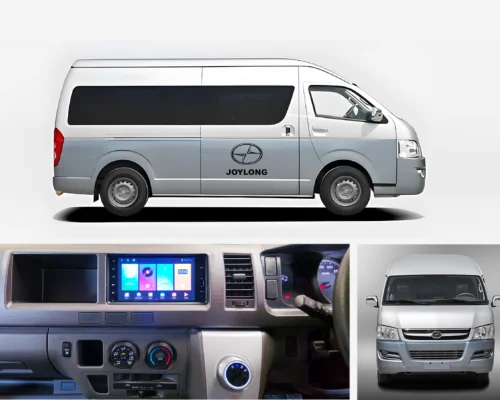
The Joylong EA5 is no stripped-down import. The van measures 4,840 mm in length, 1,880 mm in width, and 2,080 mm in height, compact enough to navigate Kathmandu's tighter streets, but spacious enough for 17 passengers. The 2,570 mm wheelbase gives it a stable stance, and 215/75R16LT tyres provide the kind of grip that Nepal's varied road surfaces demand.
Ground clearance sits at 185 mm, not exceptional by SUV standards, but reasonable for an urban-to-semi-rural minivan that will occasionally deal with broken tarmac and monsoon-scarred back roads.
The front-disc, rear-drum brake setup with ABS and EBD is standard, and the electric hydro power steering (EHPS) makes the van considerably easier to maneuver than older diesel counterparts. The interior includes electric air conditioning, a front defroster, spacious seating, USB charging ports, and an MP5 entertainment system with a rearview camera, features that signal Joylong is positioning this well above the bare-bones transport category.
Performance
Nepal's terrain is the ultimate stress test for any vehicle. The Joylong EA5 runs on a 100 kW electric motor producing 320 Nm of torque, rear-wheel drive, which keeps the powertrain simple and reliable. Maximum speed is rated at 100 km/h, and the gradeability figure of 25 percent or more means the van can handle steep inclines without complaint.
That last point is not trivial. Many of Nepal's school routes and commercial corridors involve sustained hill climbing. A van that fades on a 15-degree grade is useless regardless of how clean its emissions are. The EA5's gradeability rating, combined with the torque delivery characteristic of electric motors, instant and linear, gives it a practical edge over similarly priced diesel alternatives when the road tilts upward.
The gross vehicle weight rating is 3,450 kg, giving it enough structural capacity to handle a full 17-passenger load on longer routes without straining the chassis.
Battery, Range & Charging
The EA5 carries a 60.1 kWh Lithium Iron Phosphate (LFP) battery pack. LFP chemistry is a deliberate choice for commercial applications, it trades some energy density for significantly better thermal stability, a longer cycle life, and safer operation under heavy daily use. For a van running school routes or corporate shuttles six days a week, that resilience matters more than raw range figures.
On the NEDC cycle, the EA5 is rated at 300 km of range on a full charge. In real-world stop-and-go urban conditions, that number will be lower, but for most Nepal-specific use cases, school pickups, intercity hotel shuttles, local commercial routes, it's more than adequate for a full operating day without needing a top-up.
Charging is handled via the GB/T standard. Using AC charging, a full charge takes approximately 9 hours, making overnight charging the natural rhythm for fleet operators. DC fast charging brings the battery from 20 to 80 percent in just 40 minutes, a meaningful option when the van needs a mid-day refresh. VG Motors has already deployed over 75 fast-charging stations across Nepal, with plans to expand the network further.
Features
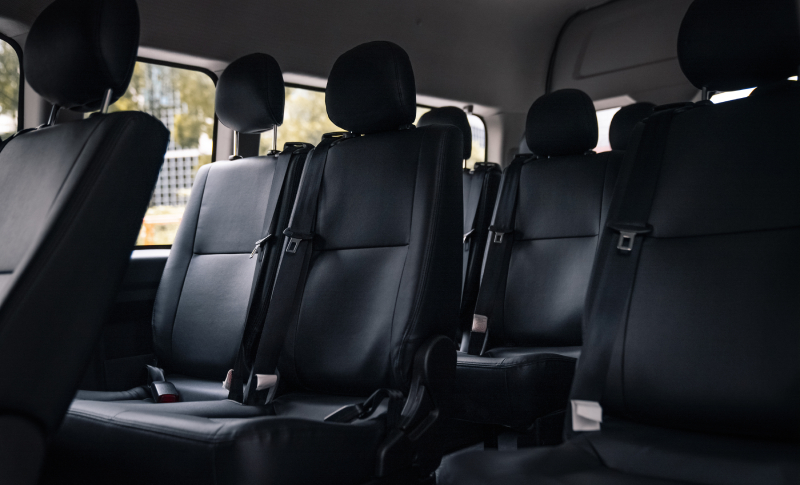
Beyond the powertrain, the Joylong EA5 is loaded with features that matter for daily operations. The safety package includes door-unclosed warnings, an unplug-key alarm, reversing radar, and a central locking system across all doors, basics that fleet managers expect but often don't get in budget commercial vehicles.
The suspension setup, advanced front and rear systems designed for a smooth ride is calibrated for passenger comfort, not just cargo. For school operators, comfort on a jarring commute route directly affects the van's reputation.
VG Motors has also underlined a price advantage on spare parts that shouldn't be overlooked. According to the company, replacement parts for SRM and Joylong vehicles cost approximately 80 percent less than comparable components for other EVs on the Nepali market. For anyone running a small fleet, that gap in maintenance expenditure compounds significantly over five years.
Specifications at a Glance
Parameter | Specification |
Seating Capacity | 17 Passengers |
Motor Power | 100 kW |
Torque | 320 Nm |
Battery Type | Lithium Iron Phosphate (LFP) |
Battery Capacity | 60.1 kWh |
Range (NEDC) | 300 km |
Max Speed | 100 km/h |
AC Charging Time | ~9 hours |
DC Fast Charging | 40 min (20%–80%) |
Charging Standard | GB/T |
GVW | 3,450 kg |
Dimensions (L×W×H) | 4840 × 1880 × 2080 mm |
Wheelbase | 2,570 mm |
Tyres | 215/75R16LT |
Ground Clearance | 185 mm |
Drive | Rear-Wheel Drive |
Brakes | Front Disc / Rear Drum (ABS+EBD) |
Steering | Electric Hydro Power Steering (EHPS) |
Conclusion
The question isn't whether electric vans make sense in Nepal. The economics answer that themselves. The real question is whether the infrastructure, the financing ecosystem, and the cultural shift in buyer confidence can keep pace with the hardware.
VG Motors is betting they can. With 75-plus charging stations already installed, 20-plus service centers operating nationally, and spare parts pricing that undercuts the competition, the company has made a credible infrastructure argument. The 24/7 customer support commitment, unusual in Nepal's automotive sector, signals an understanding that commercial fleet buyers need reliability, not just specs.
The Joylong EA5 won't be the last electric van to arrive in Nepal, and the market will only get more competitive from here. But right now, in early 2026, it occupies a sweet spot: enough range for practical daily use, a price that doesn't require a leap of faith, and a dealer network that extends well beyond Kathmandu. Whether Nepal's transport operators fully embrace it, or keep hedging with diesel, will say a lot about where the country's transition to clean mobility actually stands.