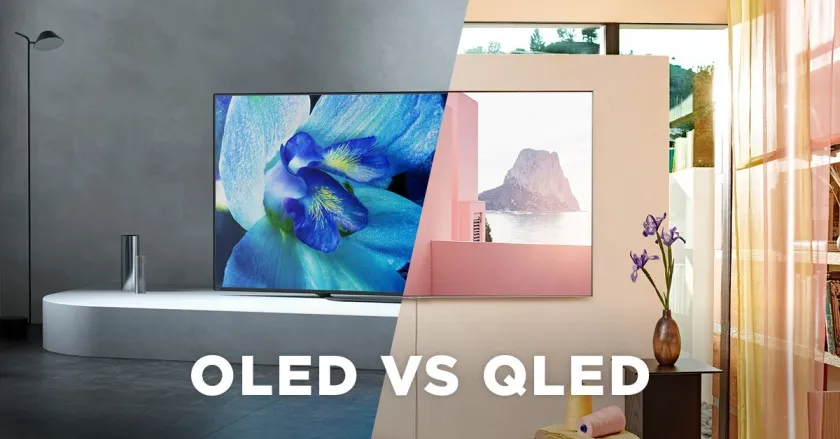
Which one is Better?
If you have thought of buying a new TV these terms QLED and OLED must have crossed your path. The two similar-sounding TV technologies are offered by many TV manufacturers combining them with 4k and HDR support. TV technologies have changed vastly and every year it’s getting better and better. But the question of QLED or OLED display still remains among the buyers.
Today let’s take deep dive into the world of QLED and OLED TV technologies competing in the premium end of the Nepali TV market. Are they as similar as their name, what exactly are they, are there any differences, which one is the better, which one should you consider buying? Let us try to solve your confusion.
What is OLED?
Image source: OLED Info
OLED stands for Organic Light-Emitting Diode. It is a technology used to create a display of your TV. The specialty of OLED is that every single pixel in an OLED panel is a small tiny LED light, which can produce both light and color. In simple terms, each pixel in an OLED TV produces its own light without needing a backlight. In technical terms, these kinds of displays are called “self-emissive”.
LG is only the company that makes the OLED panels, They also sell their OLED panels to companies like Sony, Panasonic, and Plilpips. TVs with OLED panels can reach superb black level unlike QLED or LED TV, also the OLED TV can be made more flexible.
You may like: Samsung RU7100 4K UHD TV launched in Nepal
What is QLED?
Image source: Samsung Global Newsroom
QLED stands for Quantum Light-Emitting Diode. QLED uses tiny nanoparticles called quantum dots that can glow when you shine a light on them. QLED TVs use separate backlights to light the quantum dots and the ability of the quantum dots to maximize that light makes QLED TVs the brightest. QLED technology is easier and less expensive to produce at larger sizes.
The technology of QLED was first introduced by Sony but Samsung started selling its QLED TVs and now owns the licensing partnership with other manufacturers. Now we can find QLED TVs from brands like Sony, TCL, Hisense, and Vizio.
OLED vs QLED
Comparing the two display technologies both have the advantage in different categories when you consider buying a TV. QLED has an advantage when it comes to brightness as they use separate LED backlights which can be made incredibly bright. But you can notice the OLED can go completely black and bring the best black levels and contrast. OLED takes the upper hand when it comes to response time and refresh rate. The response time of OLED is about an incredible 0.1 millisecond compared to QLED which varies between Two and eight milliseconds.
OLED screens have better viewing angles compared to QLED screens but some QLED TVs have improved in the sector of viewing angles. OLED screens can have up to 84 degrees of viewing angle. OLED is also better when it comes to power consumption as it doesn’t have a backlight as QLED which consumes a significant amount of power. Also, OLED should provide a better eye comfort level than QLED because of the significantly less blue light produced by the OLED compared to QLEDs back-lit panel. When it comes to price some of the QLED TVs can be found at a very affordable price because unlike the OLED TV, QLED TVs have far more varieties in their build, design, and picture processing. However, premium end QLED TVs are equal to the OLED TVs when it comes to price.
Which one should you consider buying?
The option of both QLED and OLED TVs is available in the Nepali market. Both of these technologies are unique and impressive. QLED provides higher brightness, big screen sizes, and a lower price whereas OLED delivers a better viewing angle, higher response rate, deeper black level, and also uses less power. Currently, OLED seems a better choice when buying a new TV, but it is completely dependent on what features you like in a TV and how much you want to spend while buying one.
Also Read: Redmi Max Ultra HD TV | Price, Specs