-original.webp)
Nissan just played its most important card in years. The Tekton went on sale on July 9, 2026, with prices starting at INR. 10.49 lakh (ex-showroom), and for a brand that has been coasting on the aging Magnite for far too long, this launch carries more weight than a typical product introduction. This is Nissan's bid to stay relevant in the one segment that decides whether you matter in India or not.
Design
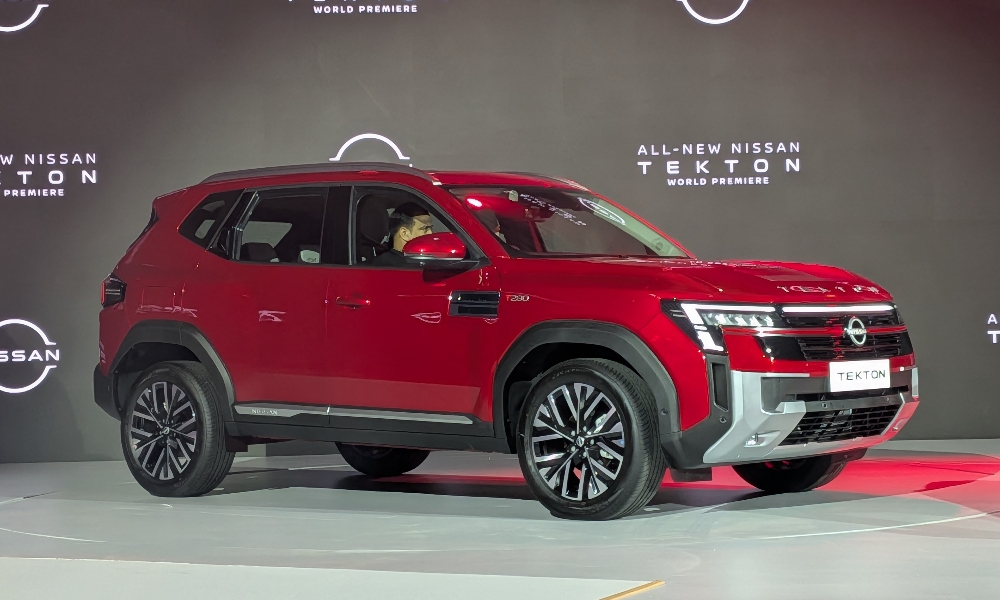
Tekton's front end is its strongest argument. Nissan drew directly from the Patrol's design DNA , upright fascia, inverted L-shaped LED DRLs, slim LED headlamps, and a full-width red strip running across the grille. A large Nissan logo sits front and center, flanked by faux silver skid plates, with "Tekton" lettering on the bonnet. It is bold without being messy, which is harder to pull off than it sounds.
The side profile is actually cleaner than the Renault Duster, despite sharing the same platform. Less pronounced wheel arches, 18-inch alloy wheels, and roof rails give it a composed, slightly upmarket look. At the rear, connected LED tail lamps, an integrated spoiler with a high-mounted stop lamp, shark-fin antenna, rear wiper and washer, and "Tekton" lettering on the tailgate round off the design neatly.
Dimensions sit at 4.3 metres in length with a 2.6-metre wheelbase. Boot space is 518 litres with seats up, expanding to 1,789 litres with the rear row folded, competitive numbers for this segment.
Six single-tone colour options are available: Moonbrow Grey, Indigo Blue, Flare Garnet Red, Blade Silver, Onyx Black, and Pearl White. All five dual-tone combinations pair a primary colour with an Onyx Black roof.
Engine and Performance
Nissan launched the Tekton with two petrol engines. The entry unit is a 1.0-litre three-cylinder turbo-petrol producing 99 bhp and 166 Nm, paired exclusively with a six-speed manual. It gets the job done at this price point, but buyers expecting effortless highway cruising should look up the trim ladder.
The more interesting engine is the 1.3-litre turbo-petrol making 160 bhp and 280 Nm of torque. It is available with either a six-speed manual or a six-speed wet-clutch DCT, a proper dual-clutch unit, not the AMT that several rivals continue to pass off as an automatic. ARAI-certified fuel efficiency stands at 19.5 kmpl for the 1.0-litre MT, 17.8 kmpl for the 1.3-litre MT, and 18.5 kmpl for the 1.3-litre DCT.
The anticipated 1.8-litre petrol-hybrid did not make it to the launch lineup. Nissan appears to be holding it back to differentiate the Tekton from the Duster at a later stage, which is a reasonable strategy , though buyers shopping against the Toyota Urban Cruiser Hyryder or Maruti Grand Vitara strong-hybrid will notice its absence immediately.
Features
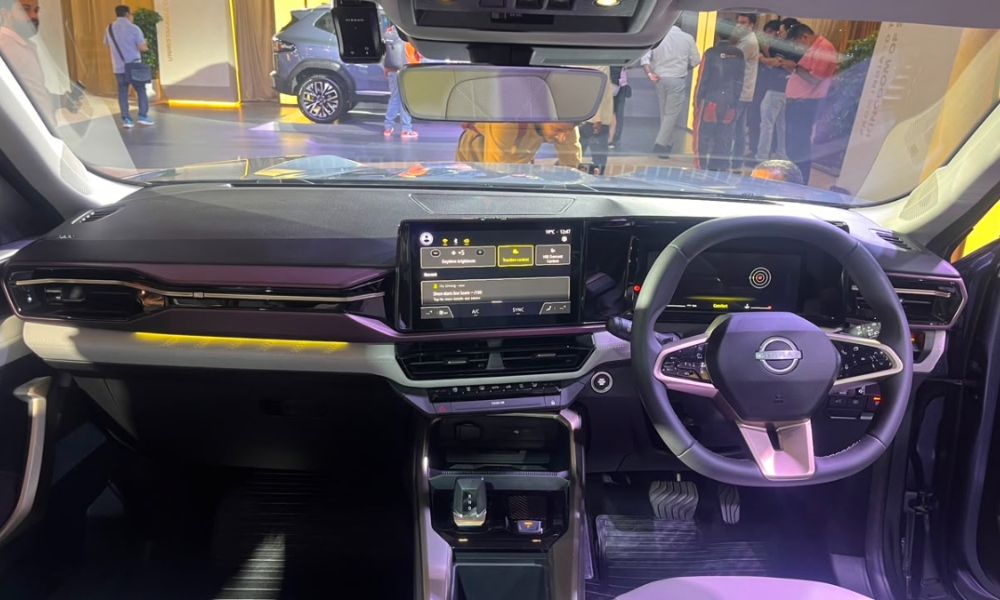
The top-spec Tekna Plus gets a 10.10-inch infotainment system with Google integration, a 10.25-inch fully digital instrument cluster, panoramic sunroof, leatherette upholstery, front powered and ventilated seats, a 360-degree camera, ambient lighting, Level 2 ADAS, and a powered tailgate. The cabin theme is beige and black with a three-spoke multifunction steering wheel, rotary dials on the centre console, rear AC vents, and climate control. Apple CarPlay and Android Auto are standard across variants.
Safety
The Tekton earned a five-star Bharat NCAP rating before launch, scoring 30.49 out of 32 for adult occupant protection and 45 out of 49 for child occupant protection. Those are comfortable scores, not borderline ones. Every variant gets six airbags, ABS with EBD, electronic stability programme, ISOFIX mounts, rear parking sensors, speed alert, and seat belt reminders for all occupants. Higher trims add TPMS and the full Level 2 ADAS suite.
Variants and Price
Nissan structured the Tekton across six variants, casting a wide net from entry buyers to near-premium shoppers.
Variant | Price (Ex-Showroom) |
Visia | INR. 10.49 lakh |
Visia Plus | INR. 11.14 lakh |
Acenta | INR. 11.79 – 14.99 lakh |
N-Connecta | INR. 13.69 – 16.49 lakh |
Tekna | INR. 15.39 – 17.79 lakh |
Tekna Plus | INR. 16.49 – 18.59 lakh |
Bookings opened on launch day with a token amount ofINR. 21,000. On-road prices vary by state, Delhi buyers are looking at roughly INR. 12.30 lakh for the base variant, while Bangalore and Chennai sit marginally higher due to local taxation.
The Tekton goes up against the Hyundai Creta, Kia Seltos, Maruti Grand Vitara, Maruti Victoris, Honda Elevate, Volkswagen Taigun, Skoda Kushaq, Tata Sierra, Toyota Urban Cruiser Hyryder, and the Renault Duster, its own platform sibling. That last rivalry is the most interesting one to watch.
Conclusion
The Tekton is the most complete product Nissan India has launched in years. A proper six-variant lineup, a strong 280 Nm DCT option below INR. 17 lakh, a genuine five-star safety rating, and a design identity borrowed from one of the most respected SUVs on the planet , it all adds up. A three-row version is also confirmed for 2027, suggesting Nissan is treating this platform as a long-term commitment rather than a one-shot attempt.
Whether it actually converts interest into sales will depend less on the product and more on whether Nissan's dealership and aftersales network can match the ambition of the car itself. That has been the brand's weak point in India for years. The Tekton gives Nissan something worth selling. Now they have to prove they can sell it.



-original.webp)