-original.webp)
Speeding could cost you Rs 50,000. Tinted windows? Rs 1 lakh. The government is finally done playing nice with road offenders, and the bill is almost ready.
Nepal's roads have long been a free-for-all. Buses bulged with passengers, motorcycles weaving without helmets, trucks carrying double their legal load, and fines so light that most drivers simply shrugged and paid up. That era may be ending. The Ministry of Infrastructure Development has drafted a new Vehicle and Transport Management Bill and sent it to the Ministry of Law, proposing penalties that are, by Nepal's standards, genuinely punitive, reaching as high as Rs 1 lakh for certain violations.
The bill has been in circulation for years, but it is Infrastructure Minister Sunil Lamsal who reportedly pushed for significantly higher fine amounts before moving it forward. If passed, this would be the most aggressive overhaul of Nepal's traffic penalty structure in recent memory.
Proposed Traffic Fines at a Glance
Violation | Two/Three-Wheeler | Small Vehicle | Medium/Large Vehicle |
Speeding (base fine) | Rs 25,000 | Rs 35,000 | Rs 50,000 |
Drunk driving | Rs 25,000 | Rs 35,000 | Rs 50,000 |
No license / wrong class | Rs 5,000 | Rs 10,000 | Rs 15,000 |
No fitness certificate | Rs 5,000 | Rs 10,000 | Rs 15,000 |
No pollution certificate | Rs 5,000 | Rs 10,000 | Rs 15,000 |
Wrong vehicle use (off-purpose) | Rs 5,000 | Rs 10,000 | Rs 15,000 |
No insurance | Rs 5,000 | Rs 10,000 (public) | |
Tinted / opaque windows | Rs 1,00,000 | Rs 1,00,000 | Rs 1,00,000 |
No helmet (two-wheeler) | Rs 3,000 | ||
Lane violation / phone use / wrong way | Rs 10,000 | Rs 10,000 | Rs 10,000 |
Traffic signal violation | Rs 3,000–5,000 | Rs 3,000–5,000 | Rs 3,000–5,000 |
Unsafe / prohibited overtaking | Rs 2,000 | Rs 2,000 | Rs 2,000 |
Driving without lights at night | Rs 2,000 | Rs 2,000 | Rs 2,000 |
No route permit | Rs 10,000 | Rs 10,000 | |
Overloading passengers (long distance) | Rs 20,000 | ||
Overloading passengers (medium distance) | Rs 10,000 | ||
Overloading passengers (short distance) | Rs 5,000 | ||
Overweight cargo | Rs 15,000 | ||
Blocking public road | Rs 5,000–25,000 | Rs 5,000–25,000 | Rs 5,000–25,000 |
Tampering with traffic signs | Rs 5,000 | Rs 5,000 | Rs 5,000 |
Foreign vehicle without permit | Rs 25,000 | Rs 25,000 | Rs 25,000 |
Honking in restricted zone | Rs 500 | Rs 500 | Rs 500 |
Driving without documents | Rs 1,000 | Rs 1,000 | Rs 1,000 |
Littering from vehicle | Rs 1,000 | Rs 1,000 | Rs 1,000 |
Pedestrian crossing outside designated area | Rs 500 (pedestrian) |
39 Offences, Instant Action
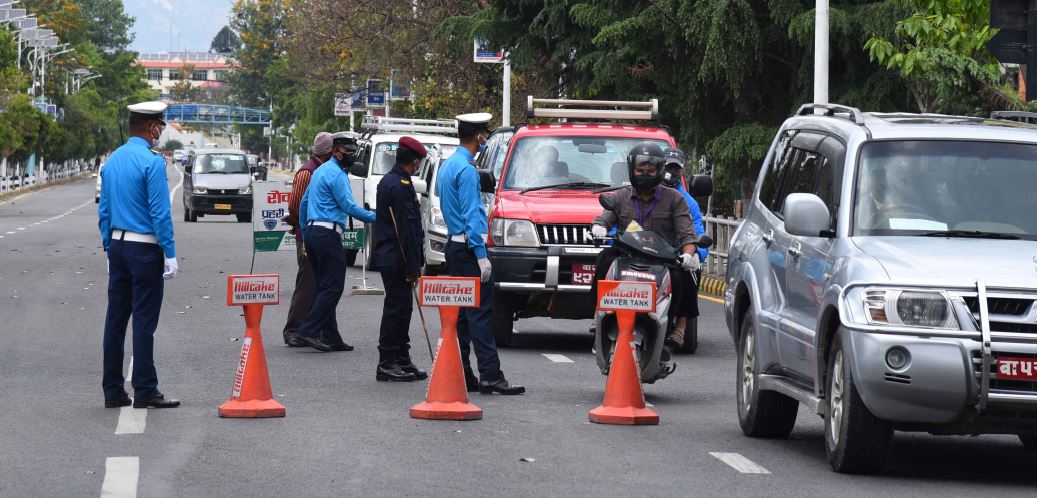
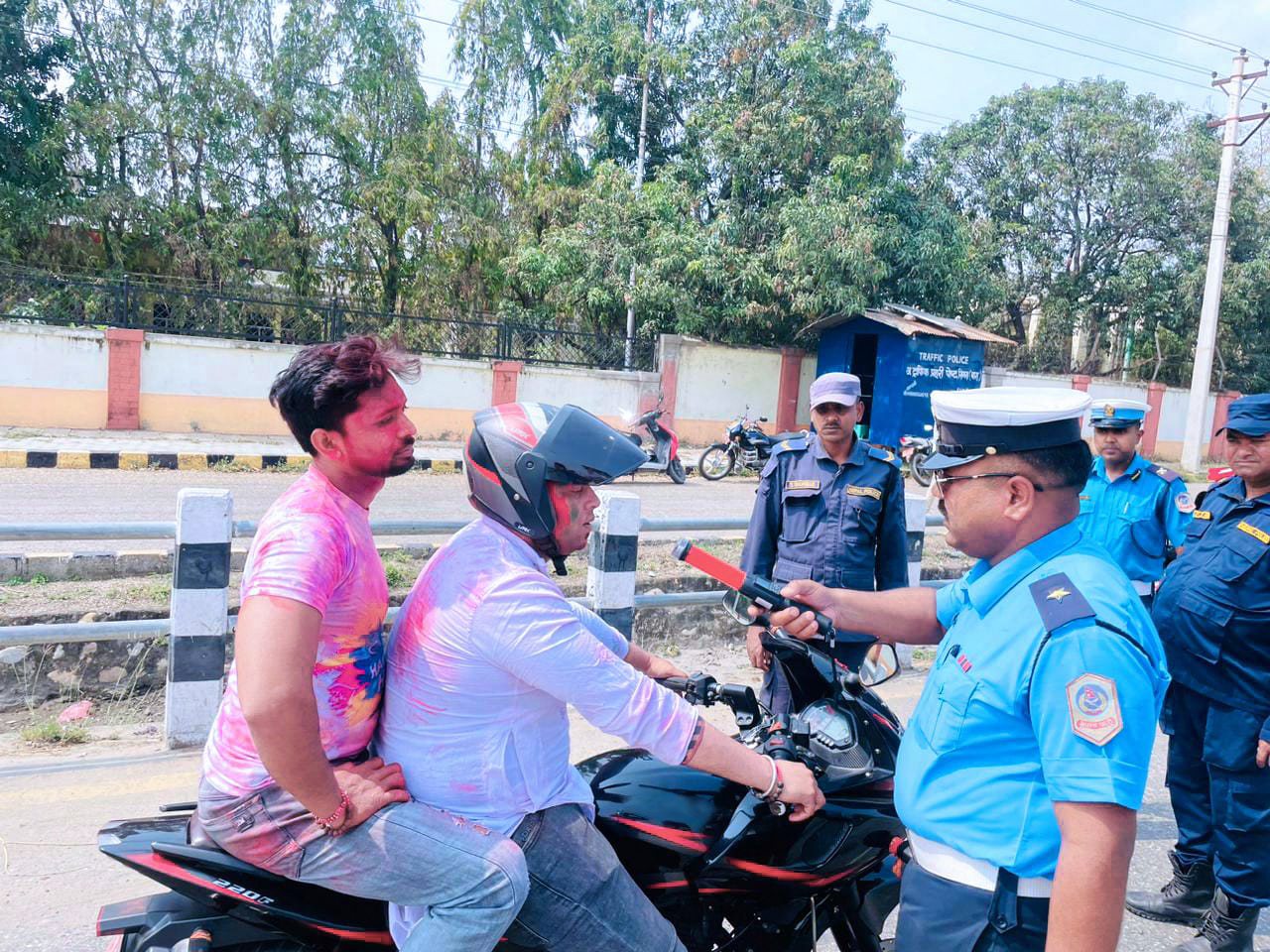
Under Section 62 of the proposed bill, traffic police would be empowered to issue on-the-spot penalties for 39 separate offences, no court date, no bureaucratic delay. Payment would be required through the Nagarik App or an electronic system, removing the cash-in-hand culture that has historically allowed fines to quietly disappear.
The repeat offender clause is where it gets sharp. Commit the same violation twice, and you pay an additional 50 percent on top of the standard fine. Do it a third time or more, and the surcharge doubles to 100 percent. The government is clearly betting that making violations expensive enough will change behavior where years of awareness campaigns have failed.
Speeding: A Sliding Scale With Real Teeth
The bill introduces a tiered speeding penalty system that scales with how far over the limit you go. Two and three-wheelers face a base fine of Rs 25,000 for speeding, small vehicles Rs 35,000, and medium to heavy vehicles Rs 50,000, but the final amount depends on the degree of excess.
Go up to 20 percent over the limit and you pay 20 percent of the base fine. Between 20 and 40 percent over, it rises to 40 percent. Push it to 40–60 percent above the speed limit and you owe 60 percent of the base fine. Cross 60 percent over the posted limit and you pay the full amount , no discounts, no arguments. There is one small grace: a 5 percent buffer above the limit before penalties kick in at all, which at least acknowledges that speedometers aren't always perfectly calibrated.
Going too slow, interestingly, also carries a penalty, Rs 3,000 to Rs 5,000 for driving significantly below the designated safe speed, a provision that will likely surprise many drivers.
Lane Discipline, Phone Use, and the Basics
Rs 10,000 is the proposed fine for a cluster of offences that dominate Kathmandu's daily traffic chaos: not following lane discipline, changing lanes without signaling, driving on the footpath, going the wrong way on a one-way road, and using a mobile phone while driving. These are the violations that kill people on Kathmandu's streets every week, and the fact that they now carry a five-figure penalty signals that the government understands the problem, even if enforcement remains the harder question.
Overtaking in prohibited or unsafe zones carries a Rs 2,000 fine. Driving at night without lights is the same. Ignoring traffic signals costs Rs 3,000 to Rs 5,000. Honking in a restricted zone , something Kathmandu's drivers do reflexively, will cost Rs 500.
Drunk Driving Gets Serious
Driving under the influence carries some of the bill's steepest fines. Two and three-wheelers face Rs 25,000. Taxis and private cars face Rs 35,000. Microbuses, buses, and trucks, the vehicles most likely to cause mass casualties in a DUI incident, face a Rs 50,000 fine. These numbers are meaningfully higher than current penalties and reflect a shift toward treating impaired driving as the public safety emergency it actually is.
Tinted Windows: Rs 1 Lakh
The single highest penalty in the entire bill, Rs 1 lakh, is reserved for vehicles fitted with opaque glass or any material that makes it impossible to see inside from outside. This is a provision that has obvious law enforcement implications beyond mere traffic safety, and the Rs 1 lakh figure reflects that. It is a clear message that the era of VIP-style blacked-out vehicles operating with impunity is supposed to be over.
Public Transport Under the Microscope
Overloading passengers on long-distance routes will cost operators Rs 20,000. Medium-distance overloading draws Rs 10,000, and short-distance Rs 5,000. Refusing to take passengers up to seated capacity is Rs 2,000. Meter taxis that refuse to use their meters face Rs 3,000. Charging above the posted fare schedule costs between Rs 2,000 and Rs 10,000 depending on vehicle type. Drivers and conductors who show up without the required uniform and ID badge face a Rs 500 penalty.
Cargo vehicles that exceed their weight limits face Rs 15,000. Vehicles operating without insurance, which remains depressingly common, face Rs 10,000 for public transport and Rs 5,000 for private vehicles.
No License, Wrong Class, No Papers
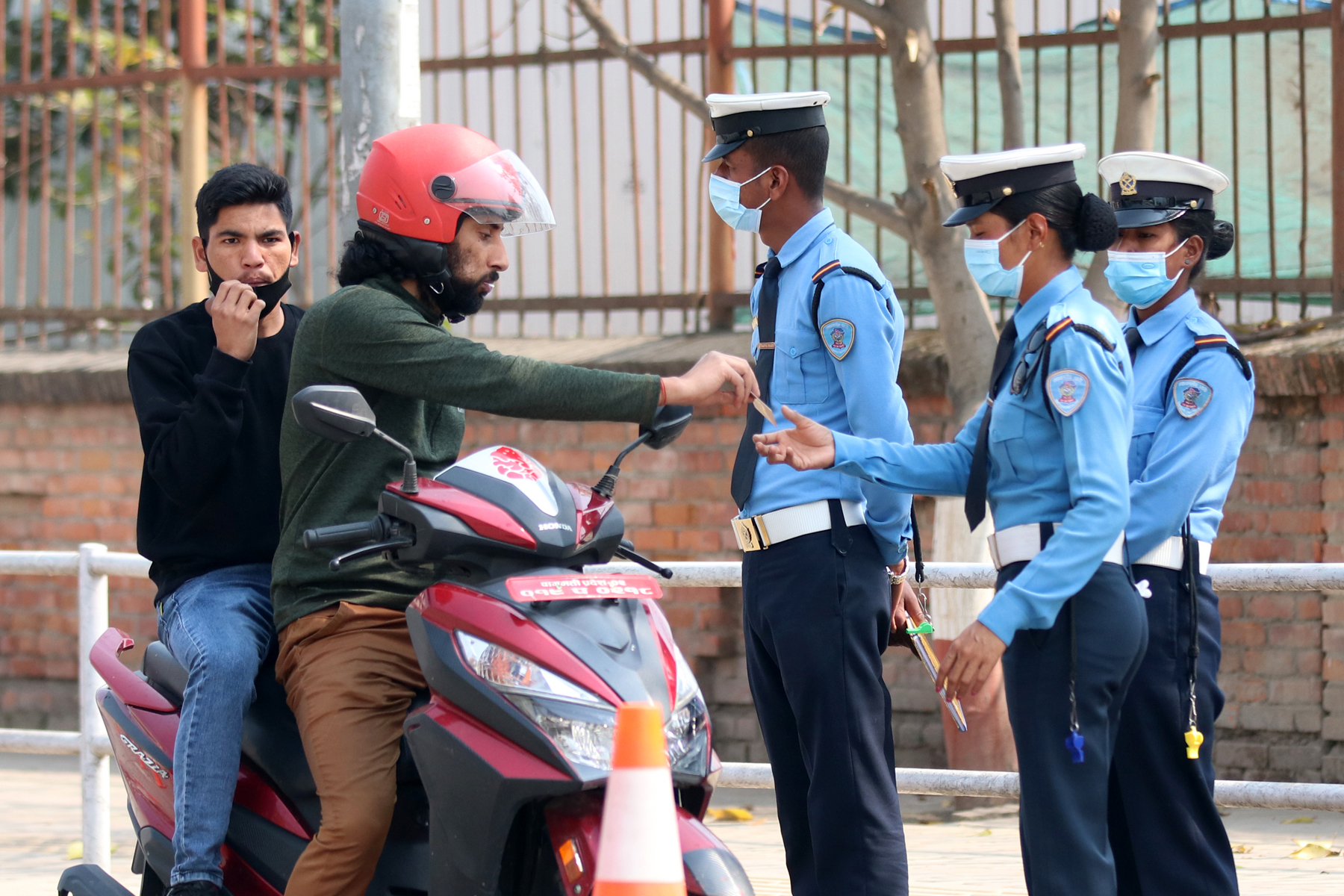
Driving without a license, or with a license for one category of vehicle while operating another , costs Rs 5,000 for two-wheelers, Rs 10,000 for small vehicles, and Rs 15,000 for buses and trucks. The same scale applies to vehicles without a valid fitness certificate. Operating a vehicle without a route permit costs Rs 10,000. Driving without the required documents on hand costs Rs 1,000, although that fine is waived if the driver can pull up the documents digitally through an official government portal.
Roads Aren't Parking Lots or Storage Units
The bill also targets road blockages. Placing goods, construction materials, or vehicles on public roads, or letting livestock wander onto them, carries a fine of Rs 5,000 to Rs 25,000. Tampering with, removing, or defacing traffic signs costs Rs 5,000. Pedestrians crossing outside designated areas face Rs 500. Littering from a vehicle costs Rs 1,000.
Foreign vehicles operating in Nepal without proper authorization will be fined Rs 25,000.
Will Enforcement Match the Ambition?
The fines are bold on paper. The question every Nepali driver is probably asking is whether the enforcement will be any different from what has come before. Nepal has passed ambitious traffic legislation in the past, and Kathmandu's roads have not noticeably improved. The digital payment requirement, through the Nagarik App, is a structural change that could reduce under-the-table settlements, which has long been the real reason fines failed to deter anyone. If the electronic system is genuinely implemented, the bill has more teeth than it first appears.
The bill still needs to pass through the Law Ministry and Parliament. But if it does, Nepal's traffic offenders are going to need much deeper pockets, or they are finally going to have to learn to drive properly.
The Vehicle and Transport Management Bill is currently under review at the Ministry of Law after being submitted by the Ministry of Infrastructure Development.