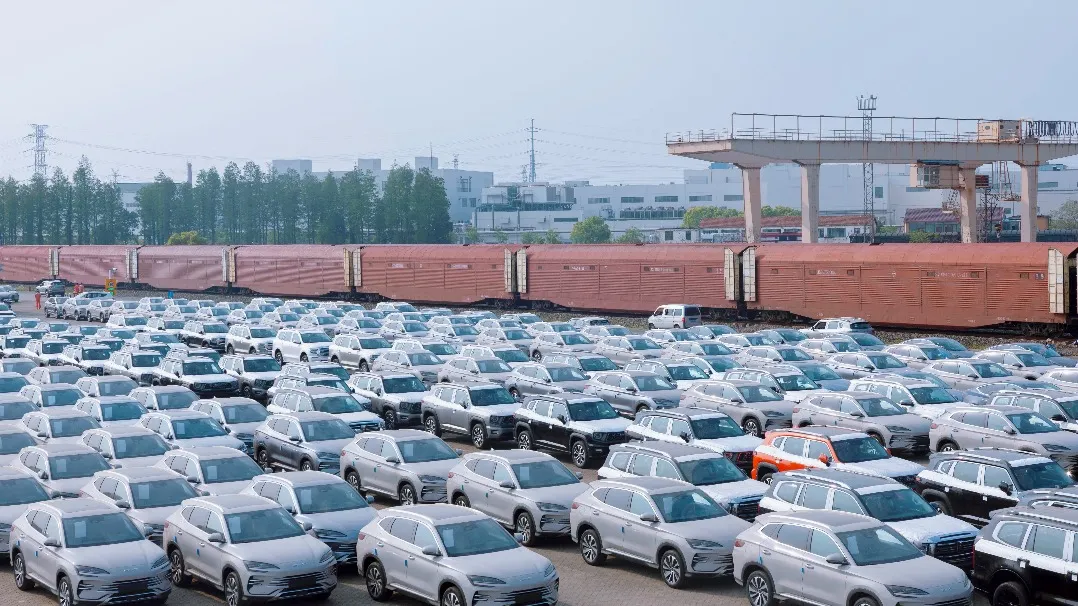
Nepal's electric vehicle importers did not wait for the government to make up its mind. In the single month before the national budget announcement, customs data shows 2,746 electric cars crossed into the country in a pre-budget scramble that has become as predictable as the monsoon.
According to customs records, the imports took place between mid-Baisakh and mid-Jestha (roughly May 2026), with the bulk arriving in a concentrated burst 2,139 units in just the first 15 days of Jestha alone, while the remaining 607 units trickled in during the preceding fortnight. The pattern is not accidental. Nepal's importers have watched enough budget cycles to know that holding stock before a potential duty revision is simply good business.
BYD Runs the Table
The numbers tell a story that requires little interpretation. Of the 2,746 units imported across 26 brands, a single Chinese manufacturer BYD accounted for 1,396 units, or 50.83 percent of the entire month's intake. One brand. Half the market. The math is straightforward, and it underscores just how thoroughly BYD has redefined Nepal's automotive landscape in a few short years.
Cimex Inc., BYD's official distributor in Nepal, routed the vehicles through the Rasuwagadhi and Korala border checkpoints. The shipment covered four models: the Sealion 7, Atto 1, Atto 2, and Atto 3. The diversity of models tells its own story BYD is no longer selling a single car to a niche audience. It is building a product ladder from accessible family SUVs to premium crossovers, and Nepali buyers are climbing it.
Cimex Nepal Pvt. Ltd. currently offers seven BYD electric models in the Nepali market, with prices starting at Rs. 28.95 Lakhs for the Atto 1 and reaching Rs. 1.95 Crore for the flagship BYD Seal Performance, a price range that covers everything from the urban commuter to the premium executive buyer.
The Rest of the Field
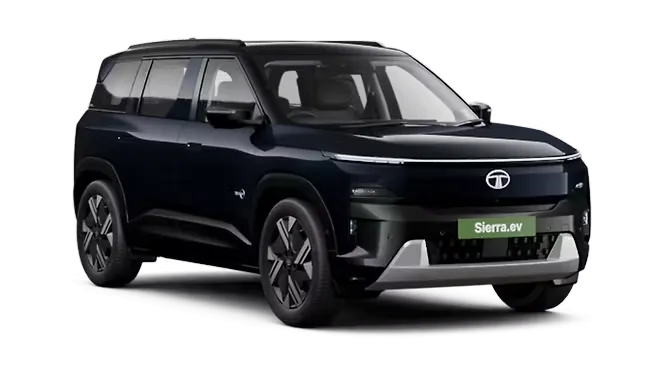
Tata held its ground in second place. Sipradi Trading imported 286 Tata units during the period. The Xpres-T, a model largely sold into the taxi segment, led Tata's volume at 122 units, with the remaining 164 units comprising the Tiago EV, Punch EV, and Nexon EV. It is worth watching the taxi angle here: fleet sales are an underappreciated driver of EV adoption in Kathmandu, and Tata's grip on that channel gives it structural staying power even if consumer-segment rivals outgun it on features and price.
Deepal finished third, with MAW Vriddhi importing 246 units. Most of these were the Deepal S05 SUV, a model that has carved a clear identity as a direct challenger to the BYD Atto 3. Priced between Rs. 48.99 Lakhs and Rs. 56.99 Lakhs and built around a 175 kW motor paired with a 56.1 kWh CATL battery, the S05 promises up to 510 km of range (CLTC) and charges from 30 to 80 percent in roughly 30 minutes on a DC fast charger.
Dongfeng came fourth with 210 units, all of them the Nammi Vigo, again imported by MAW Vriddhi while MG finished fifth with 134 units brought in by Paramount Motors, consisting of the MG S5 and MG S6.
The Dongfeng Nammi Vigo, which debuted at the NADA Auto Show 2025, has quickly become one of the more talked-about new entrants in the sub-Rs. 40 lakh bracket, built around LFP battery chemistry and 3C fast-charging capability specs that resonate in a market where range anxiety and charging infrastructure are still live concerns for buyers outside Kathmandu.
21 More Brands Competing for Scraps
Beyond the top five, the remaining 21 brands combined for fewer than 500 units. SPG Automobiles imported 77 units of the Chery iCaur V23, along with 65 Jaecoo and 50 Omoda units. Further down the list: 60 units of KYC, 31 each from Suzuki and India-made MG, 25 Forthing Friday, 21 Dayun, 14 Mahindra, 13 GAC Aion, and 10 units each from Leapmotor and Xpeng.
Nine brands recorded fewer than 10 units each, BMW at 8, Great Wall Motor at 7, Geely and IM Motors at 3 each, followed by Avatr, Henrey, Hyundai, and LS Auto at 2 each, and Denza with a single unit. Premium and European names making cameo appearances in single-digit volumes is not a sign of irrelevance; it reflects the reality that Nepal's EV market is still a volume game won at the affordable end.
The Budget Question- And What Changed
The pre-budget rush is a rational market response to a government that has repeatedly signaled its intent to raise duties. That fear proved well-founded. Nepal's 2083/84 budget introduced a significant structural shift: a uniform 20 percent customs duty replacing the older motor-capacity-based slabs, with excise duty abolished and replaced by a tiered Clean Infrastructure Investment Fee ranging from 2.5 percent for affordable EVs to a staggering 110 percent additional levy for luxury models priced above Rs. 50 Lakhs.
For importers who stockpiled inventory ahead of the budget, the new structure is manageable on the lower end but punishing at the top. Chinese brands occupying the Rs. 30–40 lakh segment BYD, Deepal, Seres, MG absorb a 15 percent additional levy that is workable. But the luxury segment, where Tesla had been exploring market entry, effectively faces cost barriers that make mass-market viability difficult.
The new framework also reflects a deliberate policy direction: moving from a motor-power-based system to a value-based import tax structure, with the intent of channeling levy revenue toward charging infrastructure and battery management. Whether that revenue actually flows into charging stations rather than the general fiscal account remains a question worth asking.
Nepal's EV Story Is Still Being Written
With over 73 percent of all new four-wheeler imports now electric, and the country ranking second globally for EV share of new vehicle sales behind only Norway, Nepal's transformation has already happened at the headline level. The deeper question is what comes next particularly with a new value-based tax structure that could reshape which brands can grow and which get priced out.
BYD's dominance is commanding but not permanent. Competitors like Deepal and Dongfeng are scaling rapidly, backed by the same MAW Vriddhi distribution network, while Indian brands like Tata retain structural advantages in fleet and lower-cost segments. The 2,746 units that crossed the border in a single month are not just a statistic, they are a market telling the government, in its own commercial language, how quickly things are moving.
The real test will be whether Nepal's infrastructure can keep up with the ambition of its import numbers.
-original.webp)