A market that sells 14,000 cars a year has no business hosting 94 competing brands. What's happening in Nepal's automobile sector is not competition, it's fragmentation. And someone is going to pay for it.
Market Overview: The Numbers That Tell the Real Story
Nepal's four-wheeler market has a size problem, not in the direction you'd expect. The total annual volume sits at roughly 12,000 to 14,000 units. That figure has held relatively flat. What has not held flat is the number of brands competing for those sales.
There are currently 94 four-wheeled vehicle brands registered and active in Nepal, according to data from NADA (Nepal Automobile Dealers Association) and NAIMA (Nepal Automobile Importers and Manufacturers Association). Run the simple arithmetic: if sales were distributed evenly, each brand would move fewer than 150 units per year. The reality is far more skewed, the top eight to ten brands capture the vast majority of volume, leaving the remaining 80-plus labels fighting over a combined market share that wouldn't sustain a single mid-sized dealership.
This is not a healthy competitive market. It is a market that has been flooded, and the flood is doing damage.
The surge is largely a byproduct of the electric vehicle boom. Nepal's geography, urban pollution, rising fuel costs, government EV incentives, created genuine consumer appetite for electric vehicles. That appetite attracted serious brands, but it also attracted opportunists. Chinese manufacturers in particular, facing saturation at home and looking for export volume, identified Nepal as a low-barrier, high-absorption market. Getting a few hundred units into the country requires far less infrastructure than building a genuine distribution and service network. Many chose the former.
The result: a marketplace where a buyer can walk into a showroom, purchase a vehicle from a brand that sounds credible enough, and find two years later that the company has no presence in Nepal, no spare parts supply chain, and no mechanism to honor its warranty.
The Dumping Ground Risk: What Industry Leaders Are Saying
The term "dumping ground" is not journalistic hyperbole, it's the language that established dealers and industry veterans are using among themselves, and increasingly in public.
Rajanbabu Shrestha, CEO of Sipradi Trading, the authorized distributor of Tata Motors in Nepal and one of the most established auto businesses in the country, frames the problem plainly. Small importers arrive, move a handful of units, and exit. There is no service infrastructure. No parts supply. No accountability structure.
"Two, four cars are brought in, sold, and then tomorrow when it's time for spare parts and service, the company simply doesn't exist," Shrestha said. The vehicle becomes scrap. The customer has no legal or practical avenue for redress.
Beyond the individual consumer harm, Shrestha points to the macroeconomic dimension that is easy to miss. Nepal is spending foreign currency, hard foreign exchange, on vehicles that generate no downstream productivity. No employment created in service networks. No supply chain development. The money leaves the country and returns nothing except a vehicle that will be unusable within a few years.
Deepak Thapalia, General Manager of Laxmi Intercontinental (Hyundai's authorized dealer), adds a structural market argument. Competition has pushed vehicle prices down by Rs 200,000 to Rs 300,000 across multiple segments. That looks like a consumer win. But it's a misleading one. The price cut is real. The savings, however, evaporate the moment the vehicle needs service that no authorized center can provide. The discount is borrowed against future expenses, and in the worst cases, against the total loss of the vehicle's value.
His observation on revenue is equally stark: despite a proliferation of brands and importers, government tax revenue from vehicle imports has not grown proportionally. Employment in the sector hasn't expanded meaningfully either. The volume of foreign currency exiting Nepal has increased. The returns to Nepal's economy have not. That is the mathematical definition of a bad deal for the country.
Brand-by-Brand Analysis: Who Is Actually Winning
Beneath the noise of 94 competing labels, the Nepali market is effectively controlled by a small group of brands with genuine infrastructure, established dealer networks, and actual sales volume. Here is where each major player stands and why.
Tata Motors
Tata has occupied either first or second place in Nepal's automobile market for years, a dominance that has proven more resilient than most analysts expected given the sheer volume of new entrants. The model lineup driving that performance covers a range of price points: the Nexon EV and Tiago for the value-conscious EV buyer, the Punch and Altroz for the entry-to-mid segment, and the Express-T for commercial-adjacent buyers.
What sustains Tata's position is not any single model, it's the ecosystem. Sipradi has built a network of charging stations across Nepal, battery repair centers, and service workshops in accessible locations. When a Tata owner has a problem, there is a documented path to resolution. That confidence is worth more to many buyers than a Rs 150,000 price advantage from an unknown brand with no service center outside Kathmandu.
The brand's consistent market positioning also means its resale values hold better than less-established competitors, a factor that rational buyers increasingly weigh into purchase decisions.
BYD
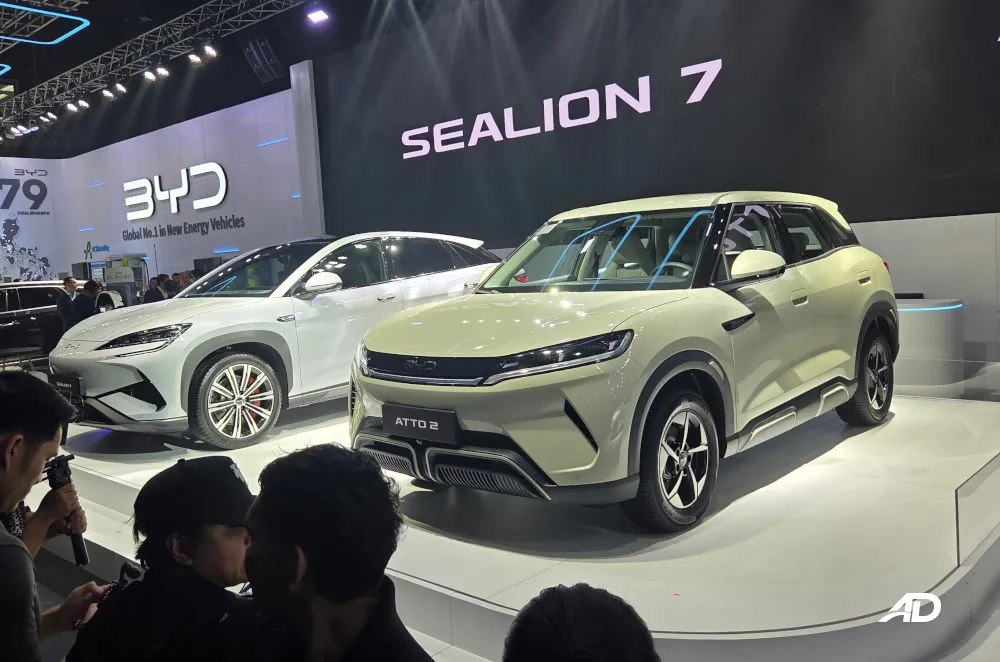
BYD's rise in Nepal mirrors its global trajectory, just compressed into a shorter timeframe. The Atto 2 has crossed 2,500 cumulative units sold, making it arguably the single most commercially successful EV model Nepal has seen. The Atto 1 moves approximately 1,500 units annually. Cimex Inc., BYD's official distributor, has been aggressive on pricing and visible on marketing.
The brand carries strong global credibility, BYD is now the world's largest EV manufacturer by volume, which means parts availability, battery technology, and brand stability are not the concerns they would be with a lesser-known Chinese label. The risk question for BYD in Nepal is not whether the company will disappear; it's whether Cimex Inc. can build the after-sales infrastructure quickly enough to match growing ownership volumes. As the fleet in Nepal ages, the quality of the service network will matter as much as the initial sale.
Toyota
Toyota operates in a different register entirely. The Land Cruiser LC250, the latest version of the legendary Prado, retails at NPR 3 to 4 crore and moves approximately 150 units annually through United Traders Syndicate. For a vehicle at that price, that is a significant volume and reflects an important market reality: Nepal has a substantial population of buyers for whom price sensitivity is a secondary concern. Brand trust, off-road capability, and the historical reliability of the nameplate drive their decisions.
The Euro 6 transition has created some short-term disruption. Hi-Ace and certain other models have faced import delays as specifications are updated to meet the new emissions standard. But Marketing Head Mahendra Shrestha is candid about the fact that Toyota's customer base does not leave the brand over model transitions, they wait, or they buy what's available. Repeat buyers trading in older models for new ones remain the engine of Toyota's Nepal business.
Hybrid demand is a significant growth signal. Buyers who need genuine off-road performance but want better fuel economy than a pure ICE vehicle, a very specific and sizable Nepali buyer profile, are increasingly gravitating toward Toyota's hybrid lineup.
Hyundai
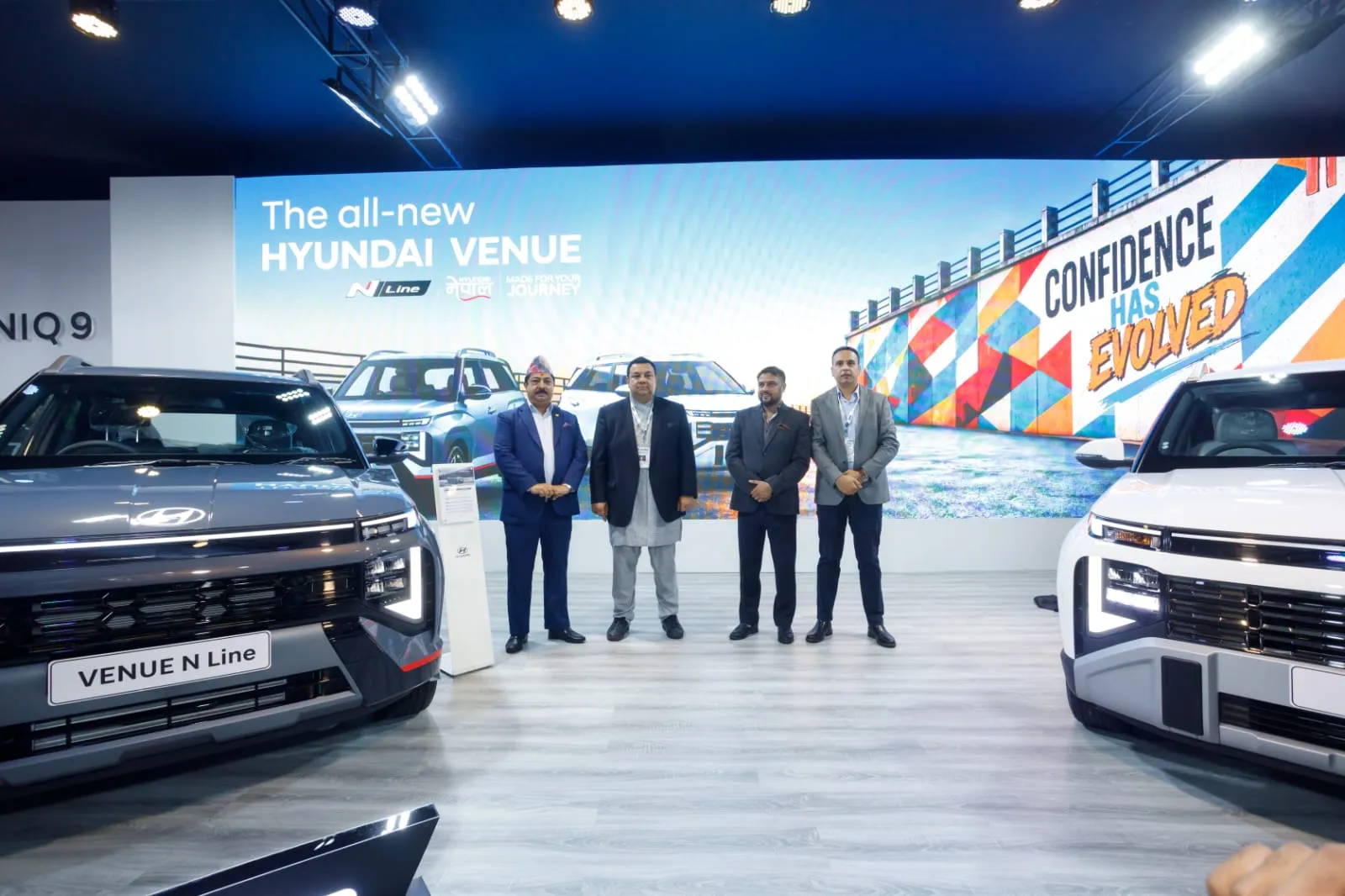
Hyundai's strongest competitive card in Nepal right now is one that no purely import-dependent brand can match: local assembly. Laxmi Intercontinental assembles the Venue and Exter domestically, and that manufacturing footprint accounts for roughly 50% of Hyundai's approximately 2,000 annual unit sales, around 1,000 vehicles per year built in Nepal.
The implications are significant. Local assembly reduces final vehicle price, making these models accessible to buyers who would otherwise be priced out. It creates employment in Nepal rather than simply exporting jobs. It deepens the brand's regulatory goodwill, a government pushing for domestic industrial activity will look more favorably on brands that invest in local production than on those that simply import finished goods. And it strengthens Hyundai's parts availability, since some components are sourced and managed locally.
The remaining 1,000 units annually, primarily the Creta and related models, are imported. This hybrid model gives Hyundai flexibility that most competitors don't have.
Competitive Landscape: The Wider Field
Beyond the four brands analyzed in depth, several others warrant attention in Nepal's current market:
Mahindra, a long-established presence with a loyal customer base, particularly in the commercial and semi-urban segment. The Scorpio and XUV variants have defined Nepal's mid-range SUV market for years.
MG (Morris Garages), gaining traction with urban buyers attracted by design and feature sets at competitive prices. The MG ZS EV has been competitive in the electric SUV segment.
Kia, building a premium positioning below Toyota, with the Sonet and Seltos finding buyers who want Korean build quality at a more accessible price than Japanese alternatives.
Proton, a newer entrant with Malaysian backing and competitive pricing, carving space in the mid-SUV segment.
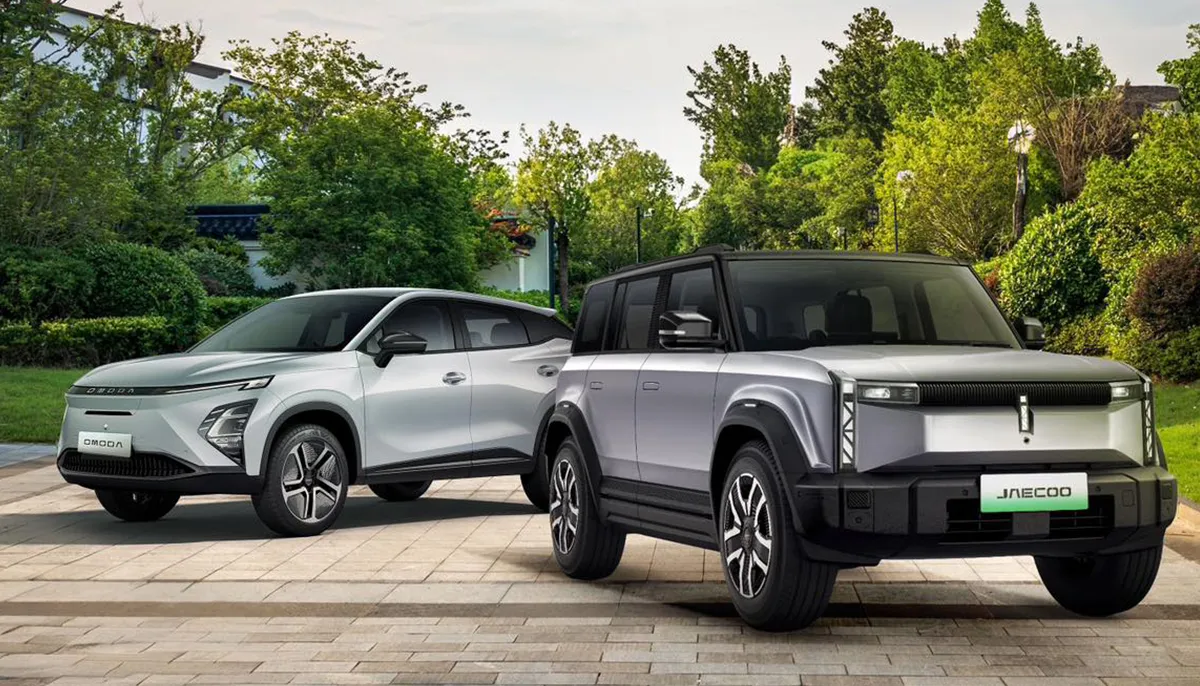
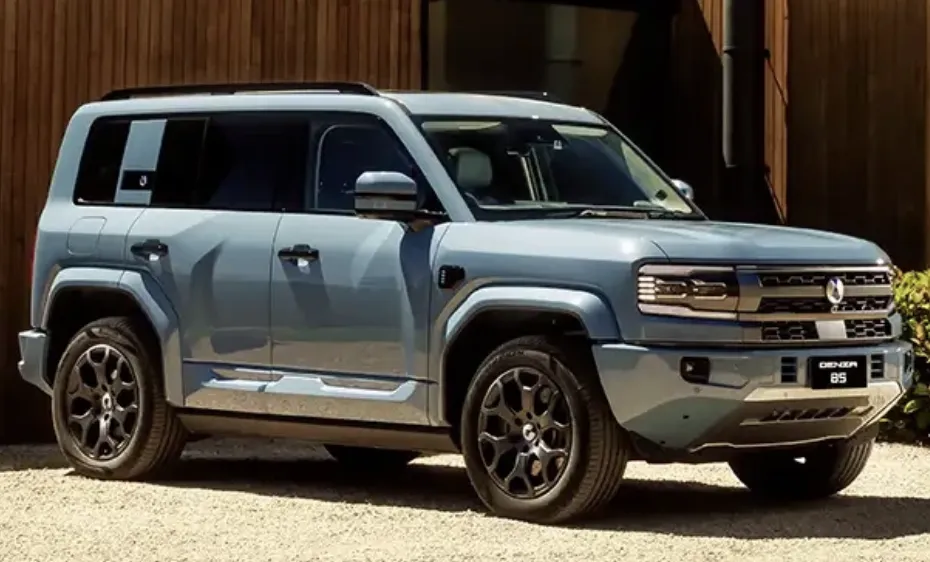
Deepal, Leapmotor CG, Omoda Jaecoo, newer Chinese-linked brands that have entered with aggressive pricing. Their long-term viability in Nepal will depend entirely on whether they build service infrastructure or follow the pattern of earlier arrivals: volume first, accountability never.
The honest assessment of the wider market is that it contains perhaps 10 to 12 brands with genuine long-term viability, 10 to 15 in a middle ground where survival depends on execution, and 60-plus brands whose presence is commercially questionable and whose exit is a matter of when, not if.
Policy & Regulatory Analysis: What the Government Is , and Isn't Doing
The Department of Transport Management (DoTM) is working on a new import directive, and the framework is clearer than it has been at any point in recent years. Maniram Bhusal, head of the department's technical division, has been explicit about the direction, even if the timeline is frustratingly elastic.
The core of the new policy rests on quality standards rather than brand restrictions. Nepal cannot, under WTO-compatible trade rules, simply designate certain brands as prohibited. But it can, and intends to, set technical thresholds that effectively filter out the lowest-quality entrants.
For all imported vehicles: Mandatory third-party quality certification and independent laboratory test reports will be required before any model can be registered for sale. This closes the most obvious loophole that currently allows vehicles to enter the market with only manufacturer-supplied documentation.
For electric vehicles specifically: The requirements are more demanding. Road tests, battery approval, motor approval, and critically, full-load uphill climbing performance tests. The last of these is not a bureaucratic checkbox. Nepal's road network includes mountain passes and rural inclines that would expose any EV with inadequate motor torque or thermal management. The government wants verified data, not manufacturer claims, before allowing these vehicles near those roads.
For fuel-powered vehicles: Euro 6 emissions compliance is already mandatory, a standard that eliminates older-generation powertrains and raises the baseline quality of ICE imports.
The public transport registration freeze deserves separate analysis. Bhusal describes it as temporary, a pause while the government studies what the system actually needs, in terms of quantity, vehicle type, and quality standard. That study is ongoing. When it concludes, new registrations for public transport will resume. The implication is that when registrations do open, they will likely be governed by more precise criteria than existed before.
The full directive is expected in two to four months, pending completion of stakeholder consultations with importers, manufacturers, and industry bodies. The two-to-four month window has been cited before. The directive has been drafted. Implementation has been where the process stalls.
Bhusal's public statement, "We don't name brands, but we don't compromise on quality", is the right principle. The question is whether the institutional capacity and political will exist to apply it consistently against importers with established commercial relationships and, in some cases, connections to influential stakeholders.
What This Means for Nepal's Economy
The automobile import problem is a specific expression of a broader structural issue: Nepal consistently imports more than it exports, and the foreign currency gap is a persistent vulnerability in the economy. Vehicle imports are among the largest contributors to that gap.
A rational import policy for automobiles would ask not just "is this vehicle acceptable?" but "what is this vehicle's total economic contribution to Nepal?" A brand that imports finished goods, employs minimal local staff, provides no after-sales service infrastructure, and exits when volume declines is an almost purely extractive economic actor. It captures consumer spending without creating proportional economic value in return.
The brands that build dealer networks, train mechanics, stock parts warehouses, and, like Hyundai, actually assemble vehicles locally, create a different economic profile. The policy gap between these two models is currently almost zero. Both pay import duties. Both can sell to Nepali consumers. The directive being drafted has the potential to change that, not by banning the extractive model outright, but by making the cost of market entry high enough that commitment becomes a prerequisite.
How to Navigate a Fractured Market
For Nepali consumers navigating this environment, the practical advice from every established dealer is variations on the same theme: the price you see is not the total cost of ownership.
A vehicle that costs Rs 200,000 less than its nearest competitor from a known brand carries embedded risks. Spare parts availability, or the absence of it, can stop a vehicle from being usable within two to three years of purchase. Service costs at non-authorized centers, which are the only option when the authorized network doesn't exist, are typically higher and quality is inconsistent. Resale value for unknown brands depreciates faster and becomes effectively zero if the brand exits the market.
The questions every buyer should ask before committing: Does this brand have an established dealer network outside the main city? Are spare parts stocked domestically, or imported on order? Has this brand been in Nepal for more than three years? What is the warranty enforcement mechanism if the distributor ceases operations?
If the answers are uncertain, so is the purchase.
Conclusion
Nepal's automobile market is at a genuine inflection point. The EV transition is real and accelerating. Consumer sophistication is growing. And the government, however slowly, is moving toward a regulatory framework that could meaningfully reshape who can compete here and on what terms.
The brands that will dominate the next five years are already visible: they're the ones with service networks, parts availability, and in some cases, local manufacturing investment. The brands that will vanish are also already visible, they're the ones that haven't answered any of those foundational questions about long-term market commitment.
The directive cannot come soon enough. Every month it is delayed is another month in which consumers make purchase decisions without the protection they deserve, and in which foreign currency leaves Nepal without generating the economic return that a better-regulated market would demand.
Ninety-four brands. Fourteen thousand cars. The math has never made sense. The policy is catching up, but not fast enough.

-original.webp)