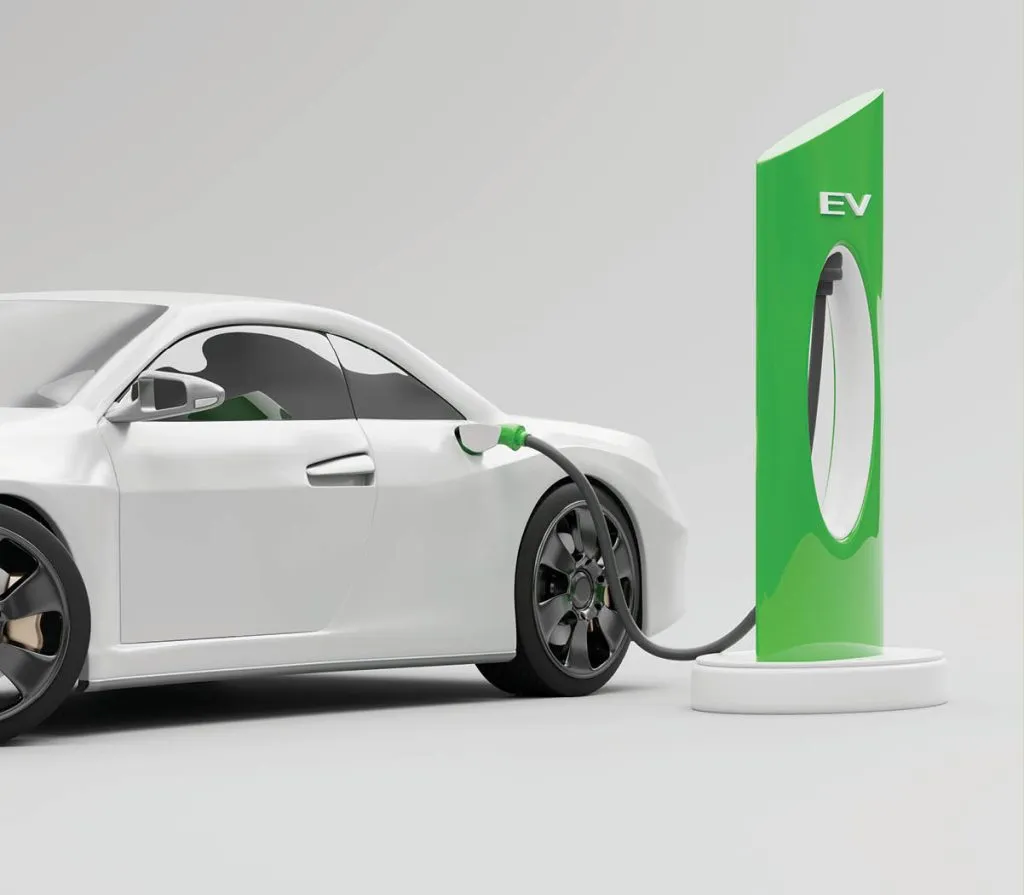
If you have driven through Kathmandu in the last two years, you may have noticed something subtle but transformative. The hum of engines is changing. The familiar vibration of internal combustion is slowly being replaced by the near-silent glide of electric mobility. What once seemed like an ambitious environmental goal has now become a statistical reality: Nepal is officially the world’s second-largest electric vehicle (EV) market by penetration rate.
According to data from the International Energy Agency and energy research group Ember, Nepal ranks second globally in 2025 based on the share of EVs in new car sales. A remarkable 73 percent of all new cars sold in Nepal this year are electric. That means out of every 100 new cars sold, 73 are either battery electric vehicles (BEVs) or plug-in hybrid electric vehicles (PHEVs).
To put this into perspective, in 2019, EVs accounted for just 8 percent of new car sales in Nepal. In only six years, the country has expanded its EV share by more than eightfold. For a developing nation with complex terrain and limited industrial infrastructure, this is not just growth. It is a structural shift.
From 8 Percent to 73 Percent: The Acceleration Curve
In 2019, EVs were largely viewed as niche products in Nepal. Concerns about charging infrastructure, battery durability in mountainous terrain, and upfront costs made buyers cautious. Fast forward to 2025, and those concerns have been significantly mitigated.
The leap from 8 percent to 73 percent EV penetration represents one of the fastest adoption curves globally. It places Nepal behind only Norway, which leads the world with a staggering 97 percent EV share in new car sales this year. In Norway, only three out of every 100 new cars sold in 2025 are internal combustion engine (ICE) vehicles.
What makes Nepal’s case particularly compelling is context. Unlike Norway, which is a high-income European nation with long-standing green energy policies and strong purchasing power, Nepal is a lower-middle-income country. Yet it has managed to outpace several advanced automotive markets.
The Global Ranking: Beating Giants at Their Own Game
The list of countries with the highest EV penetration rates in 2025 reads largely like a European roll call. After Norway and Nepal, the top spots are occupied by:
Denmark at 69 percent
Sweden at 61 percent
Iceland at 61 percent
Finland at 56 percent
Among major global auto markets, China records a 53 percent EV share, an impressive figure considering its scale as the world’s largest automotive market. Belgium, Portugal, and Ireland also make it into the top ten.
What stands out most, however, is who is missing from the top tier. The United States, despite its technological leadership, has an EV penetration of only 10 percent. Brazil sits at 9 percent, India at 4 percent, and Japan at just 3 percent.
Nepal has effectively outperformed some of the world’s largest and most industrialized automotive markets in one of the most critical transitions of this century.
Policy Design: The Real Engine Behind the Shift
The transformation did not happen by accident. It was engineered.
One of the most decisive factors behind Nepal’s EV surge is government tax policy. By significantly reducing customs duties and excise taxes on electric vehicles compared to petrol and diesel cars, the government narrowed the price gap between EVs and traditional vehicles. In some segments, EVs are now even more affordable than comparable ICE models.
This price parity changed consumer psychology. EVs stopped being premium experiments and started becoming rational financial decisions.
Additionally, Nepal’s electricity is largely hydropower-based. This means that electric mobility is not just cleaner at the tailpipe; it is cleaner at the grid level. The alignment between renewable electricity generation and EV adoption has created a uniquely sustainable ecosystem.
Charging Infrastructure: From Anxiety to Accessibility
Six years ago, “range anxiety” was a common phrase among Nepali car buyers. Charging stations were sparse, and long-distance travel required meticulous planning.
Today, the landscape is dramatically different. Charging networks have expanded along major highways and urban corridors. Both public and private players have invested in fast-charging stations, significantly reducing downtime and improving usability.
Experts argue that infrastructure confidence is often more important than actual range. Once drivers see visible charging points across cities and highways, the psychological barrier collapses. Nepal appears to have crossed that threshold.
Cost of Ownership: The Financial Logic of Going Electric
Beyond policy incentives, economics has been a powerful persuader.
Operating an EV in Nepal is substantially cheaper than running a petrol vehicle. Electricity costs per kilometer are a fraction of fuel costs. Maintenance expenses are also lower due to fewer moving parts, no oil changes, and simplified mechanical systems.
For a price-sensitive market like Nepal, total cost of ownership matters more than brand prestige. Consumers are increasingly calculating long-term savings, not just upfront prices. This rational decision-making is one of the strongest drivers of EV adoption.
Industry analysts note that in developing economies, adoption accelerates when technology aligns with everyday practicality. In Nepal’s case, EVs are no longer aspirational, they are economically logical.
Performance and Practicality: Designed for Nepal’s Terrain
Skeptics once questioned whether EVs could handle Nepal’s diverse geography, from steep Himalayan roads to congested urban traffic. Real-world performance has largely answered those doubts.
Electric motors deliver instant torque, which is particularly advantageous on uphill climbs. Regenerative braking also improves efficiency in mountainous terrain, allowing vehicles to recover energy while descending slopes.
Urban environments, especially Kathmandu Valley, benefit from EVs’ smooth acceleration and low noise. Traffic congestion becomes more tolerable when the vehicle beneath you is quiet and vibration-free.
The combination of torque delivery, efficiency, and lower running costs has turned what was once a concern into a competitive advantage.
A Regional Outlier and a Global Signal
Nepal’s rise to second place is not just a national milestone; it is a global signal. It demonstrates that rapid EV adoption is not limited to wealthy Western nations. With the right mix of policy, infrastructure, and market alignment, developing countries can leapfrog traditional automotive transitions.
Experts believe Nepal’s case may become a study model for other South Asian and emerging markets. Unlike countries that rely heavily on fossil-fuel-based electricity, Nepal’s hydropower backbone gives EV adoption an environmental authenticity that many nations struggle to achieve.
At the same time, challenges remain. Sustaining momentum will require continued infrastructure expansion, grid stability, and careful policy calibration to prevent market distortions.
Conclusion: More Than a Statistic
A 73 percent EV penetration rate is not just a number. It represents a transformation in consumer behavior, public policy, and national ambition.
Nepal now stands just behind Norway in the global EV race, an extraordinary position for a country often overlooked in global automotive discussions. It has surpassed industrial giants and rewritten expectations about what is possible in emerging markets.
The real story here is not that Nepal is second. It is that Nepal has proven the transition to electric mobility can be swift, strategic, and scalable, even in challenging economic conditions.
And if the current trajectory continues, the quiet revolution on Nepal’s roads may soon become the defining chapter of its modern transport history.
For more auto and tech news visit Autoncell
-original.webp)
-original.webp)
-original.webp)
-original.webp)
-original.webp)