Nepal's roads have a noise and light problem , and the government has finally had enough.
The Department of Transport Management (DoTM), under the Ministry of Infrastructure and Transport, has issued an urgent public notice warning vehicle owners across the country: if your headlights or horn don't meet official specifications, you are breaking the law. Strict action will follow.
The Problem on Nepal's Roads
Walk around Kathmandu , or any major city, really , after dark, and you'll understand why this notice exists. Blinding aftermarket HID or LED conversions, pressure horns that shake windows, and sound systems disguised as horn setups have become almost standard modifications on everything from motorcycles to SUVs. Drivers install them because they can. Workshops fit them because no one asked questions. That era, at least officially, is now over.
The DoTM notice, published on 2083/02/26 (BS), makes clear that manufacturers set specific technical specifications for a reason , and fitting lights or horns outside those specs is not just a modification, it is a legal violation under Section 29 of the Vehicle and Transport Management Act, 2049. No approval from the department means no permission. Full stop.
What the Law Actually Says About Headlights
The standards cited in the notice come directly from the Vehicle Inspection and Testing Standards 2074, which set hard limits on how bright a vehicle's headlights can be.
For dip beam (low beam) or fog lamps, the permitted intensity range is 15,000 to 30,000 candela. That upper ceiling matters , it is exactly the range where most stock halogen headlamps operate. Go above it and you are throwing illegal light onto the road.
High beam limits are tighter still. Each individual high-beam headlamp must not fall below 100,000 candela, and the combined output across all four headlamps must stay above 200,000 candela. The key word in both rules is must not exceed on one end and must not fall below on the other , the standards define a corridor, not just a ceiling.
Aftermarket lights that sit outside this corridor , whether they are too dim (unsafe) or too bright (blinding to other road users and pedestrians) , are illegal under these provisions. The notice specifically calls out vehicles found running non-specification lights as both a traffic hazard and a danger to pedestrians, a point that should not be lost on anyone who has ever been temporarily blinded by an oncoming vehicle at night.
The Horn Problem Is Just as Serious
It is not only lights. Nepal's roads are also plagued by horns that have no business being on public streets.
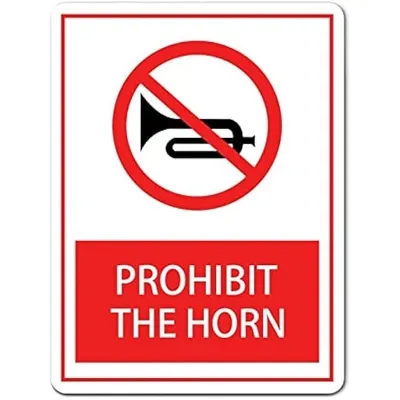
The legal range, as specified in the notice, is a minimum of 90 dB and a maximum of 112 dB. Pressure horns , the kind that produce a sharp, piercing blast well above that ceiling , are explicitly prohibited. So are any other non-standard horn types fitted arbitrarily to vehicles.
112 dB is already loud enough to cause hearing discomfort at close range. The pressure horns common on trucks and buses in Nepal routinely exceed that by a significant margin. Beyond the annoyance factor, prolonged exposure to sound above 85 dB causes measurable hearing damage. This is a public health issue as much as a traffic one.
Legal Consequences for Violations
The government has not left the penalty language vague. The notice states that any vehicle found operating with non-compliant lights or horns will face action under prevailing laws and regulations. While specific fines are not enumerated in the notice itself, Section 29 of the Vehicle and Transport Management Act carries provisions for both fines and vehicle impoundment. Traffic police and transport officers conducting roadside checks will have clear grounds for enforcement.
This also applies to vehicles that had compliant lights at the time of registration but have since been modified. If workshop records or inspection data show post-registration changes, the owner bears the liability.
Why This Matters Right Now
Nepal's road fatality rate is among the highest in South Asia relative to its population, and poor visibility conditions, both caused by inadequate lighting and by blinding glare from over-bright aftermarket setups, are consistently cited as contributing factors in nighttime accidents. The government has issued notices before. The difference this time may lie in enforcement appetite.
With vehicle registration numbers rising steadily in Kathmandu Valley and secondary cities, and with imported vehicles carrying a wider variety of factory light configurations, the DoTM's move to restate the standards clearly is also a signal to importers and dealers: compliance starts before a vehicle hits the showroom floor.
For ordinary drivers, the message is simple. Get your vehicle checked. If a workshop installed aftermarket lights or a non-standard horn, get it reversed before you encounter a checkpoint that decides the issue for you.
What Drivers Should Do
If you are unsure whether your vehicle's lights or horn meet the legal standard, the safest course is to visit a certified vehicle inspection center. Factory-fitted equipment on vehicles legally imported and registered in Nepal generally complies by default , the risk sits with post-purchase modifications.
For motorcycles especially, the aftermarket accessory market has long operated in a grey zone. Bright LED conversions, additional fog lights, and pressure-style horns are sold openly across Kathmandu's parts markets. The notice makes the legal position clear: selling and fitting them may be easy, but operating a vehicle equipped with them is now an explicitly stated violation.
The DoTM notice will mean nothing if it lives only on a government website. The question, as always with transport regulation in Nepal, is not whether the rules exist , they do, and they are specific , but whether the enforcement will be consistent enough to change behavior on the ground. Road users are watching.


-original.webp)