Shangrila Motors has already shipped the first unit. The B03 is on its way, and Nepal's affordable EV segment may never look quite the same.
The Leapmotor B03 will make its Nepal debut at the NAIMA Nepal Mobility Expo 2026, running August 11 to 16 at the Bhrikutimandap exhibition grounds in Kathmandu, the country's largest automotive showcase, featuring more than 55 brands and over 40 new product launches. For Shangrila Motors, which has already established a credible track record with the C10 and T03, the B03 is the next piece of a very deliberate puzzle.
With the launch of the B03, Leapmotor will expand its lineup in Nepal to four models, joining the B10, C10, and T03. That progression tells you something about the pace at which this brand is moving in this market.
A Global Debut That Happened on Leapmotor's Own Terms
The B03 did not quietly appear. First unveiled at the Guangzhou Auto Show in November 2025, the vehicle was introduced under the banner of "smart premium long-range SUV", a positioning Leapmotor describes as its answer to three industry assumptions it wants to challenge: that premium must mean expensive, that small cars must be low-tech, and that compact dimensions must mean sacrificing interior space.
It is sold as the A10 in China and as the B03X in European markets. The name shift from A10 to B03X was deliberate, to avoid buyers confusing it for an A-segment vehicle, since Leapmotor classifies it as a genuine B-segment SUV, much like the B10 is a C-segment and the C10 a D-segment car. In Nepal, it arrives as the B03. Same car, different badge, same ambition.
The B03X is built on Leapmotor's latest LEAP architecture and offers door-to-door advanced driver assistance, an AI-powered cockpit, and full over-the-air software updates throughout the vehicle's lifecycle.
Design
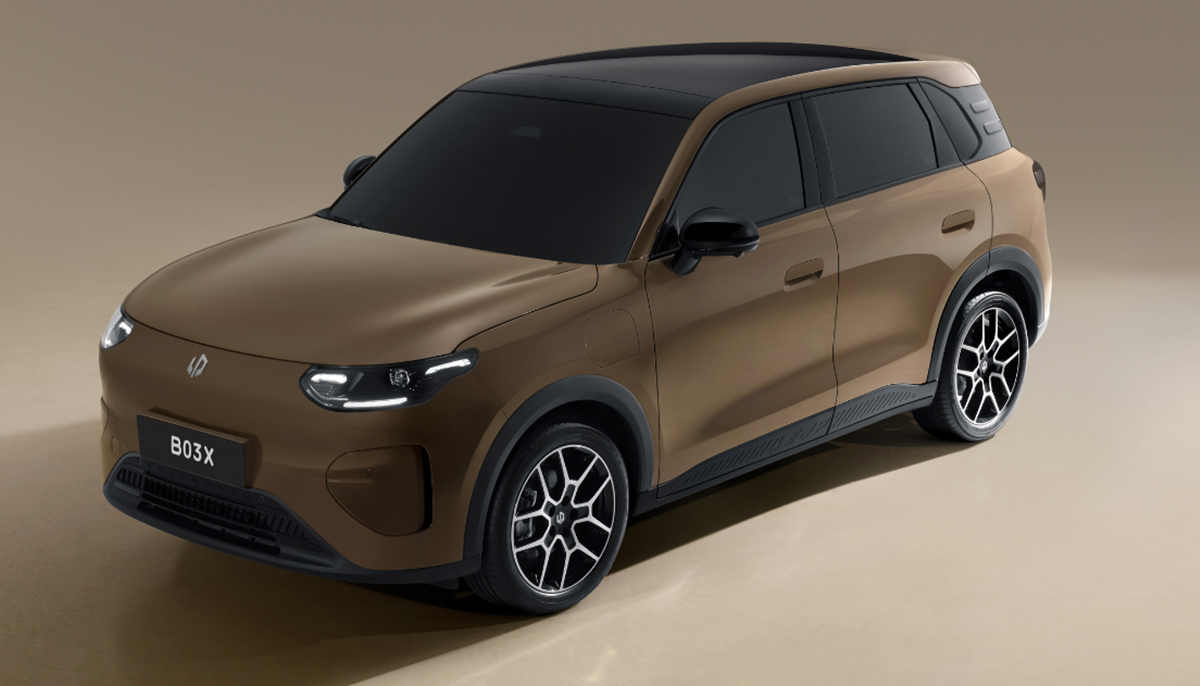
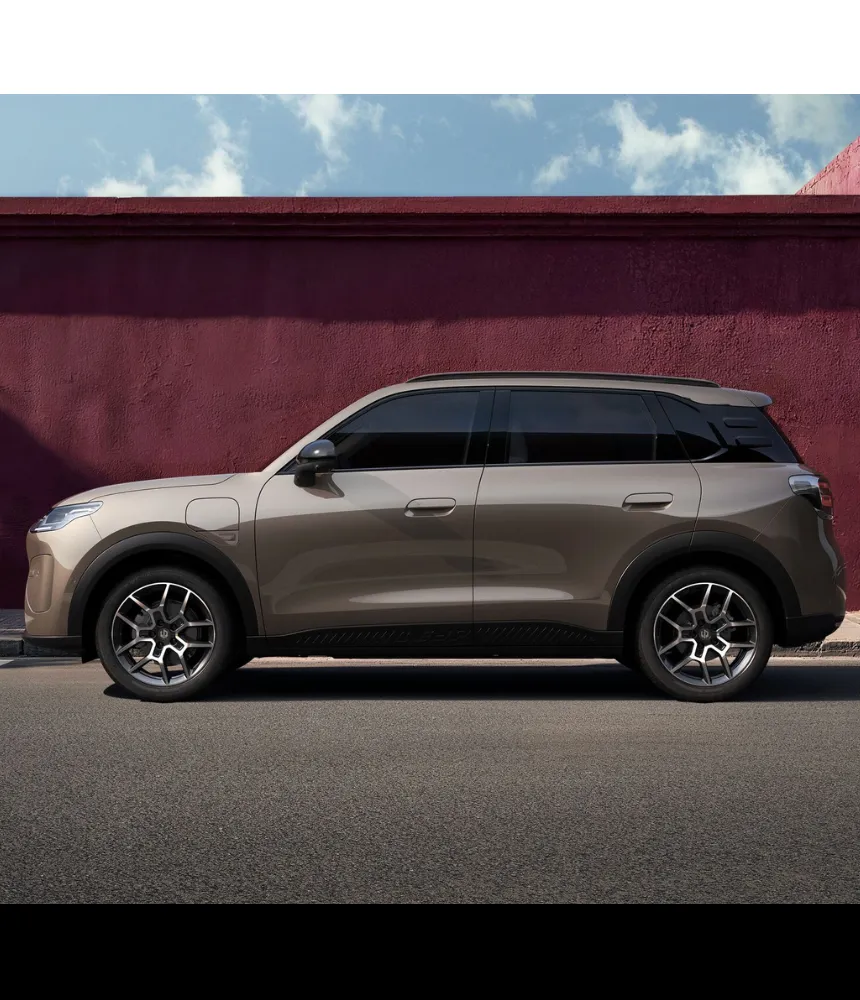
The B03 shares visual language with its siblings but has a personality of its own. Unlike the B10 and C10, which rely on full-width light bars for their aesthetic identity, the B03X is a more rounded, warmer design.
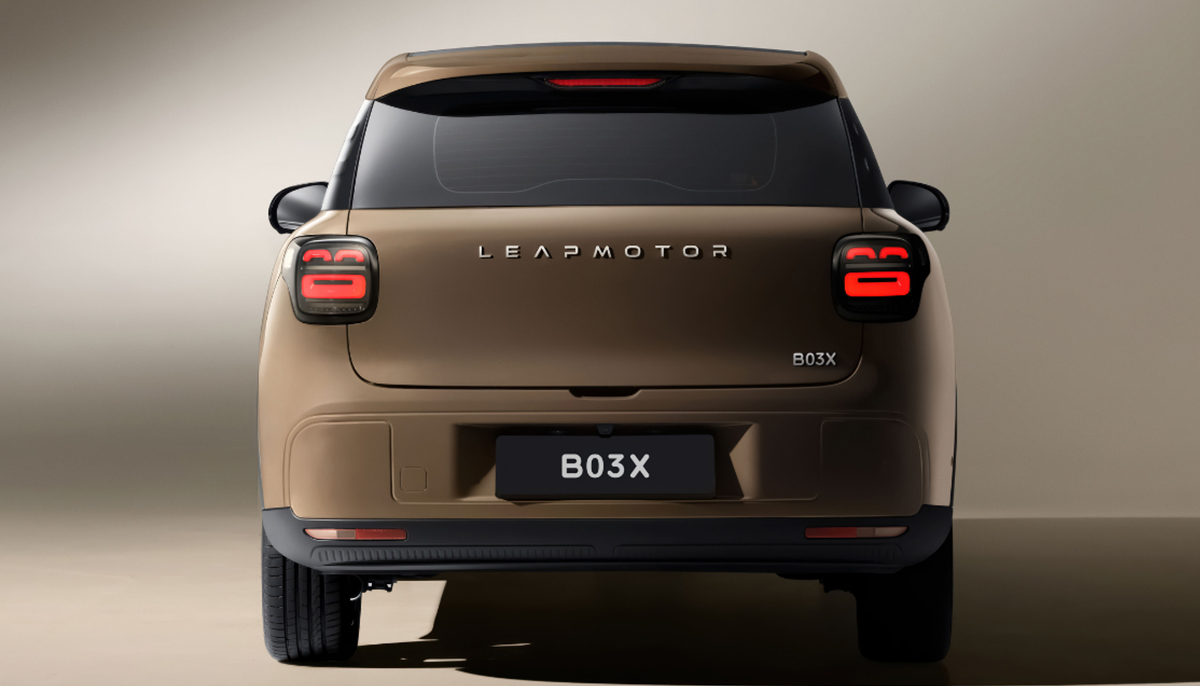
The exterior comes with six global colour options, 18-inch alloy wheels, semi-hidden door handles, a floating roof effect, and a distinctive "smile" lighting signature front and rear. That last detail is worth a second look, both the front and rear LED signatures were deliberately designed to resemble smiley emojis, a design choice that reads as playful without being juvenile. A roof-mounted LiDAR sensor and a black C-pillar reinforce the floating roof illusion and signal the tech payload sitting beneath the skin.
Dimensionally, the B03X measures over 4,200 mm in length and 1,800 mm in width, with a wheelbase exceeding 2,600 mm, numbers that put it squarely in B-SUV territory despite its compact footprint. The platform is designed to maximize usable cabin volume within those dimensions, which matters considerably for a market like Nepal where practicality drives purchase decisions.
Performance and Powertrain
The B03 is powered by a front-wheel-drive setup with a 100 kW electric motor producing 200 Nm of torque. That output is not going to set any drag strip records, but it is tuned for the kind of driving most Nepali owners will actually do, urban commutes, valley roads, occasional highway stretches.
An ultra-high-density LFP battery delivers a claimed range of up to 500 km on the CLTC cycle. The CLTC figure is the Chinese test standard, and real-world range in varied terrain will be lower , but even with a meaningful discount applied, the numbers should comfortably cover daily driving in and around Kathmandu. In Europe, the same battery options, 39.8 kWh and 53 kWh, return WLTP-rated ranges of 292 km and 382 km respectively, giving a more conservative but honest baseline.
Fast charging is genuinely impressive for this segment. DC fast charging at a 2.5C rate brings the battery from 30% to 80% in approximately 16 minutes, a number that would feel at home in a considerably more expensive vehicle.
The B03 is expected to arrive in Nepal in two variants, with different battery capacities and feature-specific differences. Pricing and full variant details are expected to be revealed at the NAIMA expo itself.
Specifications and Technology
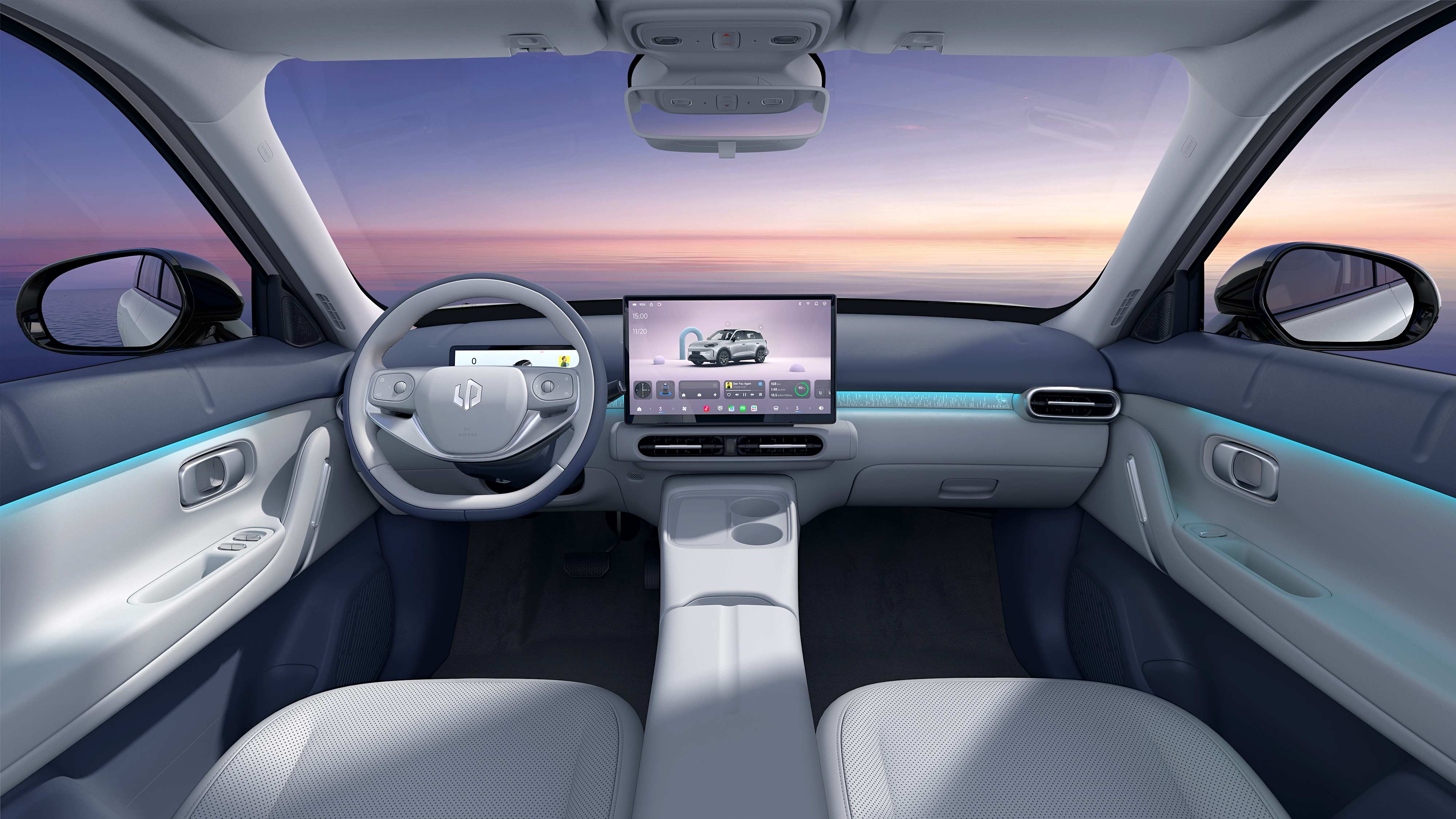
This is where the B03 gets interesting. Leapmotor has packed technology into this vehicle that would typically require a considerably higher budget to access.
The dashboard features an 8.8-inch digital instrument cluster and a 14.6-inch 2.5K-resolution central infotainment touchscreen, powered by a Snapdragon 8295P chip on higher configurations. That same processor powers infotainment in vehicles that cost multiples of what the B03 is expected to command.
The advanced ADAS system, optional on the A10 in China, uses a sensor suite comprising one 128-line Hesai LiDAR, three millimetre-wave radars, 11 cameras, and 12 ultrasonic sensors, all powered by a Qualcomm Snapdragon 8650 SoC. The result is a system capable of what Leapmotor calls parking-space-to-parking-space autonomy, urban navigation assist, highway driving assist, and automated parking across different scenarios.
The boot offers 510 litres of luggage space, and a 106-litre storage space sits beneath the boot floor, almost as large as the Ford Puma's "Gigabox." The rear seat base can also be lifted upward, creating an additional 39-litre space for larger items.
Quick summary of key specifications:
Motor: 100 kW, 200 Nm torque, Front-Wheel Drive
Battery: LFP, two options , 39.8 kWh and 53 kWh
Range: Up to 500 km (CLTC) / Up to 382 km (WLTP)
Fast Charge: 30% to 80% in approximately 16 minutes
Infotainment: 14.6-inch 2.5K touchscreen, Snapdragon 8295P chip
ADAS: Level 2, roof-mounted LiDAR, Snapdragon 8650 driving chip
Wheels: 18-inch alloy
Boot Space: 510 litres
Dimensions: 4,200+ mm (length) / 1,800+ mm (width) / 2,600+ mm (wheelbase)
Market Momentum
Any conversation about the B03 has to include the numbers behind it. The B03 has already delivered an exceptionally strong market reception in China, contributing to Leapmotor achieving record sales of 93,376 vehicles in June 2026 alone.
That kind of volume matters for Nepal buyers too, it means the platform is battle-tested, supply chains are established, and software updates are being actively developed. Leapmotor is not a boutique brand experimenting with export markets. It is a company on a serious growth trajectory, backed by Stellantis, moving products at scale.
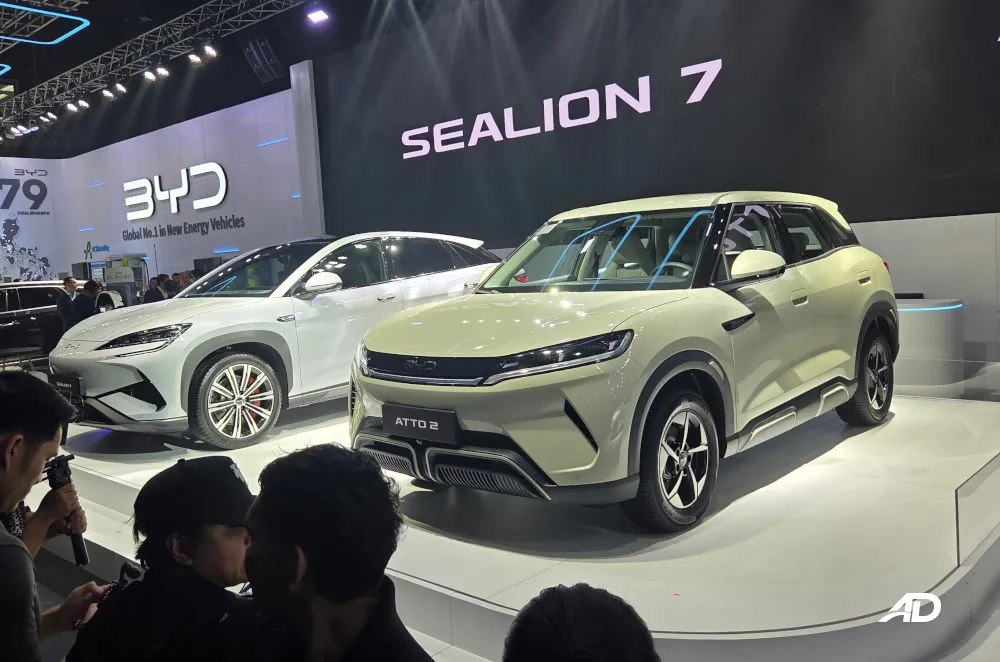
In Nepal's context, the B03 enters as a direct rival to the BYD Atto 2, and sits below the B10 in Leapmotor's own lineup. The C10 has sold over 300 units in Nepal to date, and the T03 has delivered decent results in a segment that traditionally lacked excitement. Those are proof points that Shangrila Motors has both the distribution muscle and the brand recognition to move the B03 once pricing is announced.
Price
No official Nepal price has been confirmed yet. Pricing and detailed specifications are expected to be announced at the NAIMA expo.
For context, the B03X starts from 24,900 euros in Europe, while in China domestic pricing starts from approximately 65,800 yuan, and the model was positioned as aggressively affordable even by Chinese market standards. Nepal's import duties, logistics costs, and Shangrila Motors' pricing strategy will determine where it lands locally, but given how the T03 was priced relative to its feature set, there is reason to expect the B03 to come in competitively.
If Shangrila Motors prices this right, the B03 could do to Nepal's sub-50 lakh EV segment what the T03 did to the compact EV space, arriving with specs that make similarly priced alternatives feel like they belong to a different era.
August 11 cannot come soon enough.



-original.webp)