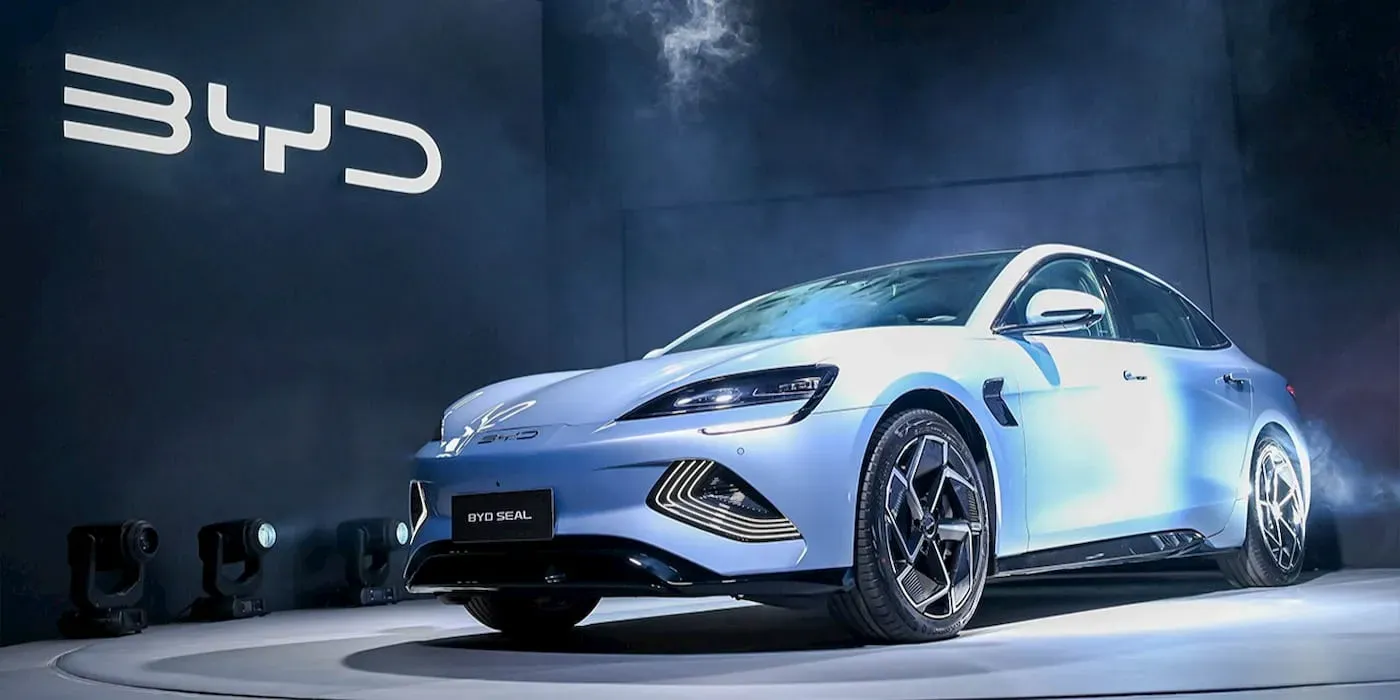
China’s electric vehicle revolution continues to reshape the global automotive industry, and once again, one company is standing firmly at the top. BYD has maintained its leadership in China’s rapidly expanding new energy vehicle (NEV) market, reinforcing its position as the country’s most dominant electric mobility brand.
According to the latest retail sales data for February 2026, BYD sold 88,697 passenger NEVs, securing 19.1 percent market share and comfortably leading the industry. In a market that includes some of the world’s most aggressive EV manufacturers, this level of dominance reflects not only BYD’s scale but also its highly strategic approach to electrification.
While competition from domestic rivals and international brands continues to intensify, BYD’s broad product portfolio and strong manufacturing ecosystem allow it to maintain a clear advantage.
Top 10 Automakers in China’s NEV Market (February 2026)
The following table shows the automakers with the highest passenger NEV retail sales in China during February 2026.
Rank | Automaker | NEV Sales | Market Share |
1 | BYD | 88,697 | 19.10% |
2 | Geely | 76,636 | 16.50% |
3 | Tesla China | 38,206 | 8.20% |
4 | Changan | 28,220 | 6.10% |
5 | HIMA | 28,212 | 6.10% |
6 | Li Auto | 26,421 | 5.70% |
7 | Nio | 20,750 | 4.50% |
8 | Xiaomi EV | 20,414 | 4.40% |
9 | Leapmotor | 18,298 | 3.90% |
10 | Seres | 17,598 | 3.80% |
The Competitive Landscape of China’s NEV Market
China’s NEV market includes battery electric vehicles (BEVs), plug-in hybrid electric vehicles (PHEVs), and fuel cell vehicles. This broader definition allows companies with diversified electrified powertrains to capture a wider customer base.
In February 2026, BYD led the industry with 88,697 units sold, followed by Geely with 76,636 units and 16.5 percent market share. Tesla ranked third with 38,206 units, capturing 8.2 percent of the market.
Further down the rankings, several Chinese manufacturers continue to gain momentum. Changan and HIMA both recorded slightly over 28,000 units, while Li Auto delivered 26,421 vehicles. Nio and Xiaomi EV also crossed the 20,000-unit mark, showing the growing strength of China’s EV startup ecosystem.
The intense competition highlights how China’s EV market has evolved into the most dynamic and technologically aggressive automotive sector in the world.
Tesla’s Strong Return
One of the more interesting developments in February was Tesla’s return to the NEV top rankings. After briefly dropping out of the top ten in January, the American EV manufacturer rebounded strongly.
Tesla recorded 38,206 retail sales in China during February, representing 42.7 percent growth year-on-year and an impressive 106.7 percent increase compared to January. This surge pushed Tesla back into third place in the NEV market.
However, despite the rebound, Tesla still trails significantly behind domestic leaders such as BYD and Geely, highlighting the growing competitiveness of Chinese EV manufacturers.
Year-to-Date Performance
Looking at the first two months of 2026 provides a broader perspective on market dynamics. Between January and February, BYD delivered 182,873 NEVs, securing 17.2 percent market share and maintaining its top position.
Geely followed closely with 168,771 units and 15.9 percent market share, confirming its status as BYD’s strongest domestic challenger.
Although both brands experienced year-on-year declines, the early months of the year often show seasonal fluctuations in China’s automotive market. Despite this, BYD’s cumulative performance demonstrates strong momentum and consistent leadership.
Position in the Overall Car Market
When looking beyond electrified vehicles to include traditional internal combustion engine cars, the rankings shift slightly.
Geely ranked first in China’s overall passenger car market in February with 145,281 units sold and 14.1 percent market share. BYD placed second, selling 88,697 vehicles and capturing 8.6 percent share.
Traditional joint-venture brands such as FAW-Volkswagen also remained strong in the broader market. Tesla, meanwhile, ranked eighth overall with 3.7 percent market share.
This contrast highlights how the transition to electrification is reshaping the industry. While legacy automakers still perform strongly in the total vehicle market, the NEV segment increasingly defines the future of automotive leadership in China.
Why BYD Continues to Lead
BYD’s success in China’s NEV market is the result of several strategic advantages. The company produces both battery electric and plug-in hybrid vehicles, allowing it to cater to different customer needs and infrastructure conditions.
Equally important is BYD’s vertically integrated manufacturing strategy. By producing key components such as batteries in-house, the company maintains strong control over supply chains and costs, an advantage that many competitors lack.
Combined with an extensive lineup of affordable and premium electric vehicles, this strategy allows BYD to compete aggressively across multiple market segments.
Conclusion
China’s electric vehicle market is evolving at an extraordinary pace. New players are emerging, technology cycles are shortening, and competition continues to intensify.
Yet despite the shifting landscape, BYD’s leadership remains firmly intact. With strong sales momentum, diversified products, and deep control over its supply chain, the company continues to set the pace in the world’s largest EV market.
If current trends continue, BYD’s dominance in China may increasingly translate into global influence as the electric mobility revolution expands beyond its home market.