-original.webp)
There’s a quiet but meaningful shift happening in Nepal’s automotive landscape, and this time, it’s coming from a brand most Nepalis already trust. When CG Motocorp, the official distributor of Suzuki vehicles in Nepal, opened bookings for the all-new e Vitara at the ongoing NADA Auto Show 2026 in Pokhara, it wasn’t just another launch. It felt like a statement.
For years, electric vehicles in Nepal have largely been dominated by newer, often lesser-known brands. But now, a familiar Japanese name is stepping into the ring with a product that promises affordability, practicality, and brand confidence, all at once. With a starting price of NPR 49.99 lakh, the e Vitara is positioned to disrupt expectations in the compact electric SUV segment.
And perhaps the biggest question is this: can Suzuki bring the same reliability and mass appeal to EVs that it has long delivered with petrol cars?
Design
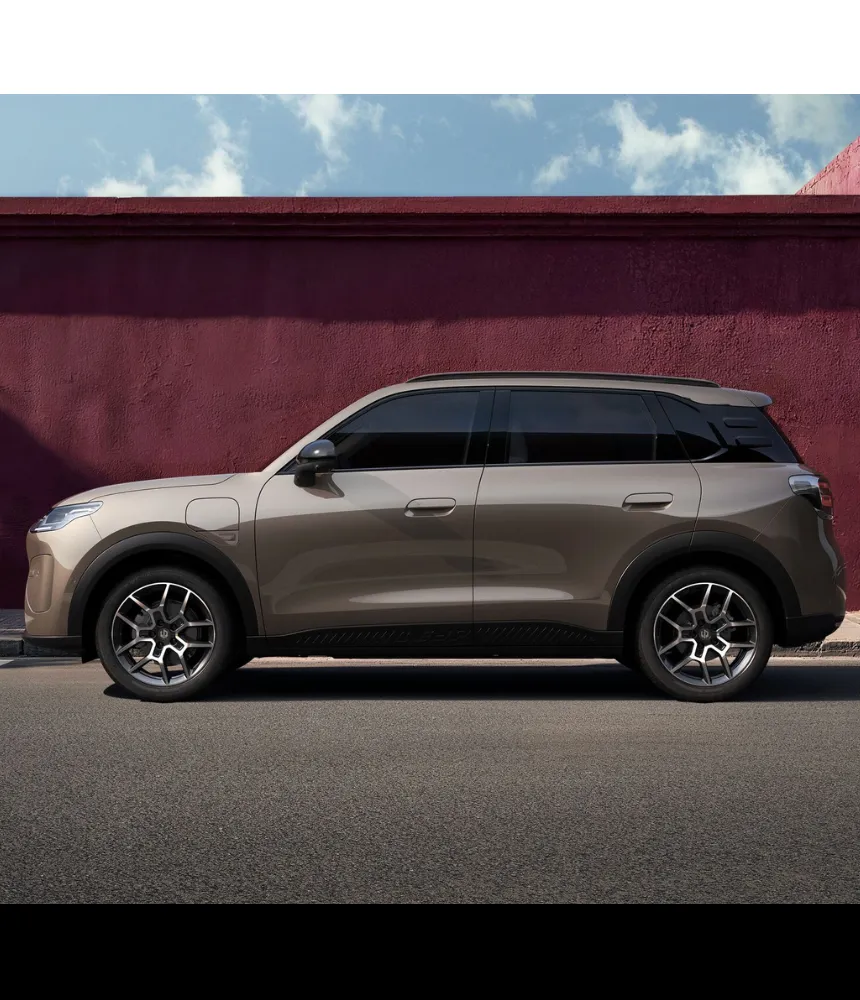
At first glance, the e Vitara doesn’t try too hard to look like a futuristic experiment, and that’s actually a good thing. Suzuki seems to understand that EV buyers in Nepal still appreciate a sense of familiarity, especially when transitioning from internal combustion engines.
The standout design element here is the distinctive tri-slash LED DRL signature, which appears both at the front and rear. It gives the SUV a recognizable identity without being overly aggressive. The charging port positioned at the front is also a practical touch, especially in tight urban parking scenarios.
Dimension-wise, the e Vitara sits comfortably in the compact SUV category. With a length of 4275 mm, width of 1800 mm, and height of 1635 mm, it offers proportions that should feel just right for Nepali roads, large enough for presence, but not intimidating in narrow city streets. The 2700 mm wheelbase suggests a strong focus on cabin space, something Suzuki buyers have always valued.
Performance and Battery
Suzuki’s approach to performance with the e Vitara appears grounded in real-world usability rather than headline-grabbing figures.
The SUV will be offered with two battery options: 49 kWh and 61 kWh. While official range figures haven’t been disclosed yet, these battery sizes suggest that Suzuki is targeting a balance between affordability and usable range, likely aiming for practical daily commuting and occasional intercity travel.
On the motor side, the e Vitara comes with two output options: 106 kW and 128 kW. These figures translate into a driving experience that should feel responsive enough for city driving while still being capable on highways. It’s not trying to be a performance EV, and that’s perfectly fine. In fact, this restraint could work in its favor by improving efficiency and reliability, two factors that matter more to Nepali buyers than outright speed.
From an expert perspective, Suzuki’s decision to avoid overcomplicating the powertrain is strategic. In a market where charging infrastructure is still evolving, a dependable and efficient setup will likely resonate more than aggressive specs.
Interior and Features
If there’s one area where Suzuki has often been criticized in the past, it’s interior technology. But with the e Vitara, that narrative seems to be changing.
Step inside, and you’re greeted by a floating dual-screen setup, which immediately elevates the cabin’s modern appeal. The inclusion of automatic climate control, a 360-degree camera, and a flat-bottom two-spoke steering wheel gives the interior a distinctly premium feel.
But the real highlight is the inclusion of ADAS (Advanced Driver Assistance Systems), a feature set that is still relatively rare in this price range in Nepal. Add to that a panoramic sunroof, electronic parking brake with auto hold, hill descent control, and heated ORVMs, and it becomes clear that Suzuki is aiming to match, if not exceed, the feature offerings of its rivals.
Wireless phone charging further adds to everyday convenience, making the e Vitara feel like a well-rounded package rather than a compromise.
Specifications at a Glance
The e Vitara’s specifications reflect a careful balance between size, practicality, and efficiency. Built on a 2700 mm wheelbase, it promises good interior space and stability.
The dual battery options, 49 kWh and 61 kWh, combined with motor outputs of 106 kW and 128 kW, indicate that Suzuki is targeting a wide range of users, from budget-conscious buyers to those seeking slightly more performance and range.
While the company has not yet disclosed the number of variants or detailed range figures, the foundation looks promising enough to compete strongly in its segment.
Pricing Strategy: The Real Game Changer
Let’s be clear, the most disruptive aspect of the e Vitara is its pricing.
By setting the starting price at NPR 49.99 lakh, Suzuki has effectively brought a globally recognized brand into a price bracket that was previously dominated by Chinese EV manufacturers. This could significantly shift buyer perception.
For many consumers who were hesitant to switch to EVs due to concerns about brand reliability, resale value, or long-term support, the e Vitara offers a compelling alternative. Suzuki’s established service network and reputation in Nepal could become a decisive advantage.
From an industry standpoint, this move may force competitors to rethink their pricing and value propositions. It’s not just about launching a new car, it’s about resetting expectations.
Market Impact: A New Phase of Competition
The arrival of the e Vitara signals the beginning of a new phase in Nepal’s EV market, one where legacy brands start taking electrification seriously.
Until now, the EV space has largely been driven by aggressive pricing and feature-loaded offerings from newer entrants. With Suzuki stepping in, the competition is no longer just about specs; it’s about trust, after-sales support, and long-term ownership experience.
If Suzuki delivers on range, reliability, and service, the e Vitara could quickly become a benchmark in the segment.
Conclusion
The e Vitara isn’t trying to reinvent the wheel, and that might be its biggest strength.
It brings together familiar design, practical performance, modern features, and aggressive pricing under a trusted badge. For a market like Nepal, where EV adoption is growing but still cautious, this combination could be exactly what buyers have been waiting for.
Bookings have already begun, but the real test will come once the vehicle hits the roads. If Suzuki manages to deliver a well-rounded ownership experience, the e Vitara might not just be a successful product, it could become a turning point for electric mobility in Nepal.
-original.webp)

-original.webp)
-original.webp)