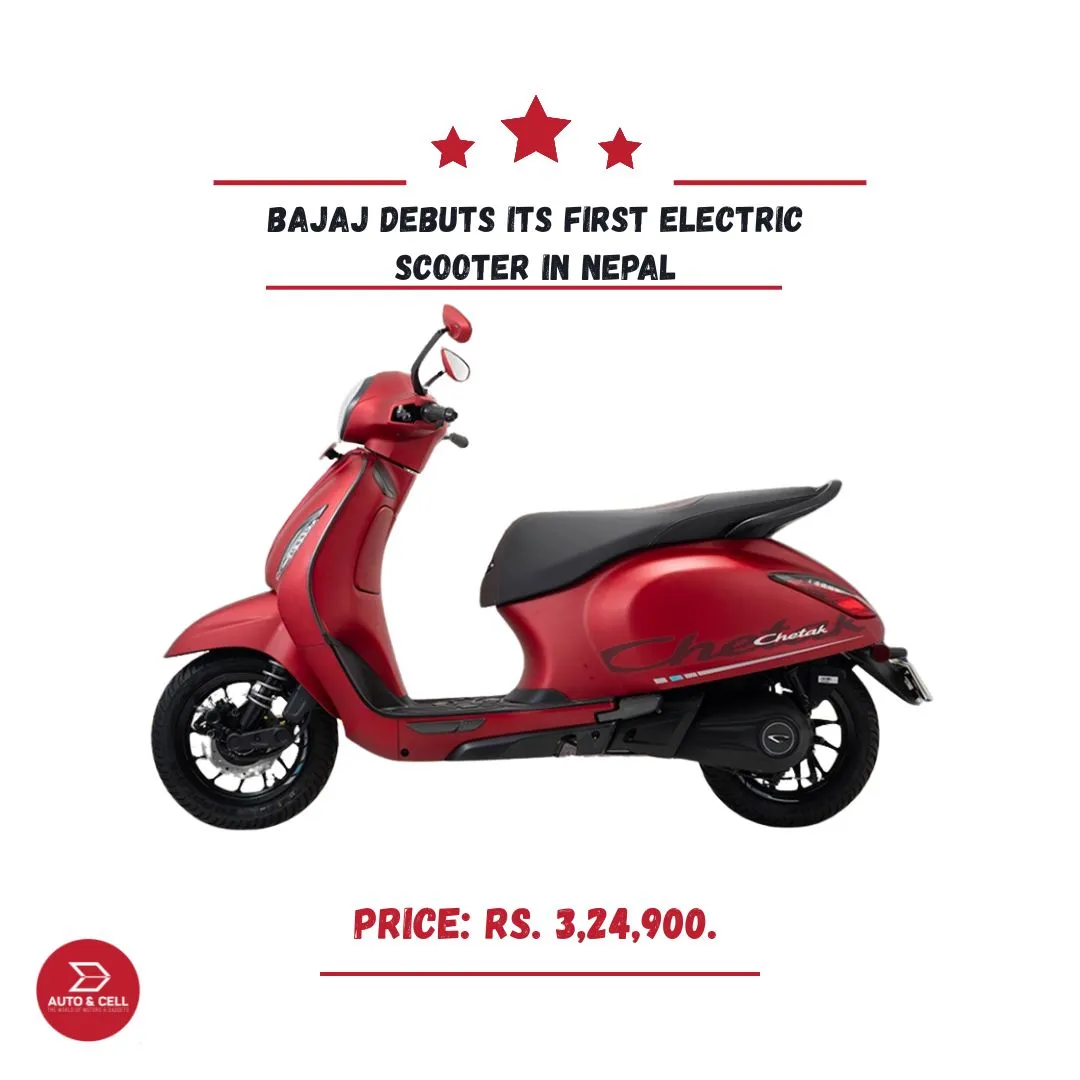
It’s not every day that a two-wheeler legend from the 1970s gets reborn into the age of electric mobility. But Bajaj Auto, one of the subcontinent’s most revered names in motorcycling, has done exactly that, by bringing back the beloved “Chetak” in a fully electric form. After seeing widespread success in India, Bajaj’s modern electric avatar of the Chetak has officially landed in Nepal under the banner of a “New Era of E-Mobility.”
Backed by HH Bajaj, the long-standing distributor in Nepal, this move isn’t just about selling another scooter, it’s a shift in strategy. For a brand known for its motorcycles, entering the electric scooter space is a statement of confidence in Nepal’s fast-evolving EV landscape. But is the Chetak 3501, the top-end model launched here, ready to meet that expectation?
Let’s dive deep into what this electric scooter offers, and whether it lives up to the legacy it carries.
To see our Full Video on Bajaj Chetak Electric Scooter
Price and Availability in Nepal
The Bajaj Chetak 3501 is now officially available in Nepal at a price of Rs. 3,24,900. For now, only the top-spec 3501 variant is on sale, with the mid-tier 3502 and entry-level 3503 models potentially arriving later based on market response. Interested buyers can visit the Chetak Customer Experience Center at Naxal, Kathmandu, where bookings and test rides have already begun. The scooter will also be showcased at the upcoming NAIMA Mobility Expo 2025, giving potential buyers another chance to see it up close.
Bajaj Chetak 3501 Price in Nepal (2025)
|
Variant |
Price (NPR) |
|
Chetak 3501 |
Rs. 3,24,900 |
Design
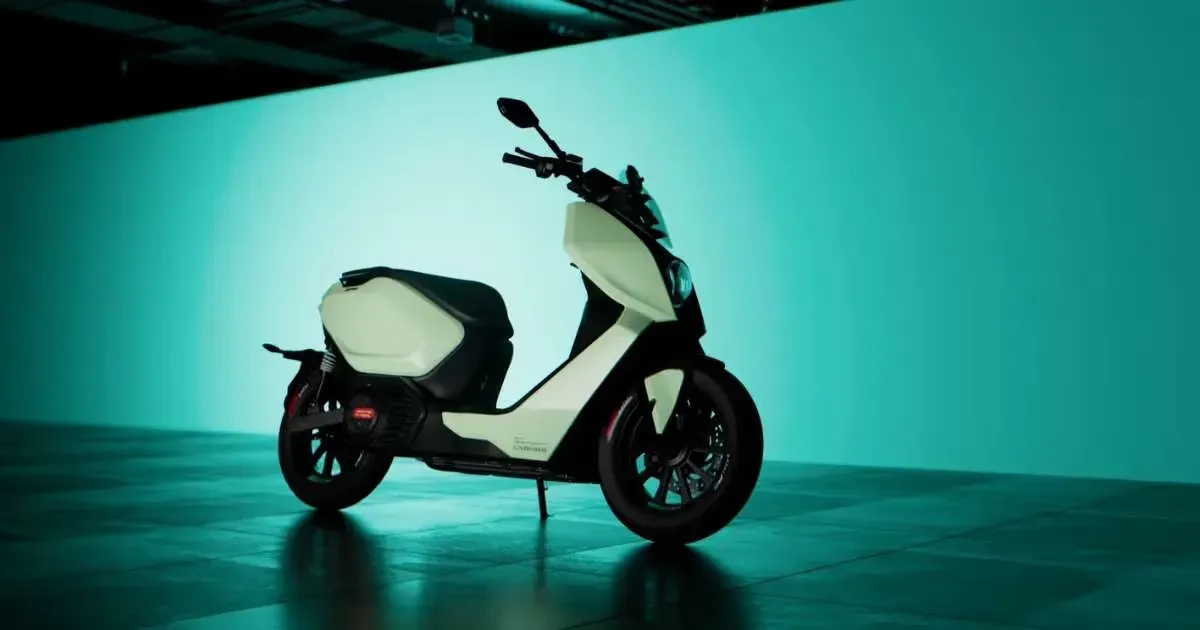
The Chetak 3501 doesn’t scream for attention, but it commands it, through thoughtful design that blends retro aesthetics with contemporary functionality.
Its silhouette evokes memories of the old Chetak that once dominated South Asian streets, but look closer and you’ll see how much it has evolved. The horseshoe-shaped LED headlamp, with a softly glowing "C" at its center, is unmistakably modern. It’s framed by a circular LED DRL that turns on and off at your command via handlebar-mounted switches, little details that make a big difference.
The 12-inch alloy wheels and elongated frame are more than just cosmetic. Bajaj has shifted the battery to the floorboard, allowing for a raised center platform but a significantly larger under-seat storage, 35 liters, to be exact. This design tweak doesn’t just increase practicality; it also helps lower the scooter’s center of gravity, improving ride stability and balance. The rear maintains the elegant flow with a unified design. While the omission of a pillion backrest might disappoint some, the broad and well-padded seat offers comfort and confidence, even on longer commutes.
Performance
Powering the Chetak 3501 is a 4 kW Permanent Magnet Synchronous Motor, paired with a 3.58 kWh lithium-ion battery. Together, they deliver a peak output of 5.4 PS and a claimed range of 153 km under the IDC cycle.
Now, on paper, those numbers place the Chetak in a very competitive spot. The top speed of 73 km/h isn’t going to break any records, but it's plenty for urban use, especially considering the scooter’s real-world focus. Charging is another strong point. With the standard 950W charger, the Chetak reaches 80% charge in just 3 hours and a full charge in a little over 4 hours. That’s faster than many rivals in its class, including the TVS iQube’s base variant.
From a usability perspective, the smooth torque delivery, stable chassis layout, and responsive throttle make this scooter ideal for weaving through Kathmandu’s traffic or cruising suburban stretches. The motor’s silent operation only adds to the refined experience.
Technology and Features
Bajaj has equipped the Chetak 3501 with a 5-inch TFT touchscreen display, branded as ‘TechPac.’ This unit allows for full smartphone connectivity and supports turn-by-turn navigation, call management, music control, and notification alerts.
What makes this system interesting is its button-based control layout. Everything from mode switching to lighting, screen functions, and even opening the storage compartments can be handled through buttons on the handlebar. While this keeps the design clean, it may require a learning curve for traditional riders.
There’s no lack of premium additions either. LED lighting all around, regenerative braking, a frunk with a phone charger, reverse mode, anti-theft alerts, and hill-hold assist all make this scooter not just modern, but future-ready.
Specifications at a Glance
While the Chetak isn’t all about numbers, they do tell an important part of the story. Here’s a closer look:
-
Motor: 4 kW PMSM Hub Motor
-
Battery: 3.58 kWh Lithium-ion
-
Top Speed: 73 km/h
-
Claimed Range: 153 km (IDC)
-
Charging Time:
-
0 to 80% in 3 hours
-
0 to 100% in 4 hours 25 mins
-
Seat Height: 775 mm
-
Under-Seat Storage: 35 liters
-
Frunk Capacity: 5 liters with charging port
-
Ground Clearance: 168 mm
-
Weight: 129 kg
-
Colors Available: Brooklyn Black, Hazelnut, Indigo Metallic, Matte Scarlett Red, Pista Green
Ride Quality
This is where the Chetak stumbles slightly.
While the scooter’s low center of gravity and solid weight distribution make it easy to maneuver, the front suspension, a single side leading link, is dated. It may look quirky and retro, but it doesn't offer the same plush feedback or control as a modern telescopic fork. This limits the ride comfort over uneven roads, which are all too common in Nepal.
On the bright side, the monoshock at the rear does a commendable job of absorbing bumps. And with the disc-drum braking setup aided by regenerative braking, stopping power is more than adequate.
Still, for a scooter that’s otherwise so forward-looking, this outdated suspension setup feels like a missed opportunity.
Comparison with Rivals: TVS iQube in the Crosshairs
Inevitably, the Bajaj Chetak’s biggest competition in Nepal comes from the TVS iQube.
In terms of raw power, the iQube takes the lead with a 4.6 kW motor and a higher top speed of 78 km/h. But the Chetak strikes back with better range, a faster charging setup, and more under-seat storage.
Where the iQube shines is in its superior front suspension and slightly more polished user interface. But when it comes to value for money, the Chetak punches above its weight. Its mid-range price (Rs. 3,24,900) is more affordable than iQube’s top trims, yet it offers comparable, if not better, practicality and performance for daily use.
Rival at a Glance: TVS iQube S vs Bajaj Chetak 3501
|
Feature |
Bajaj Chetak 3501 |
TVS iQube S |
|
Motor Power |
4.0 kW |
4.6 kW |
|
Top Speed |
73 km/h |
78 km/h |
|
Range (Claimed) |
153 km |
100 km (approx.) |
|
Under-Seat Storage |
35 liters |
32 liters |
|
Price in Nepal |
Rs. 3.25 Lakhs |
Starts from Rs. 3.0 Lakhs |
|
Charging Time |
3 hrs to 80% |
4.5 hrs to 80% |
|
Suspension Quality |
Average |
Better |
If you're considering a stylish, dependable electric scooter that offers real-world practicality and the credibility of a trusted brand, the Bajaj Chetak 3501 definitely deserves a test ride.
Conclusion
The Bajaj Chetak 3501 is not just another electric scooter; it’s a product shaped by heritage and fine-tuned for the future. It has its imperfections, especially in the suspension department, but those are largely outweighed by its thoughtful design, strong real-world performance, practical features, and competitive pricing.
This is more than just Bajaj's EV debut in Nepal; it’s a statement of how legacy brands can reinvent themselves without losing their soul. And in a market hungry for reliable, stylish, and efficient electric options, the Chetak arrives at just the right time.
Will it lead the EV revolution in Nepal? The next few months will tell. But one thing’s for sure, it has already started on the right foot.
For more tech related news and article visit our site Autoncell