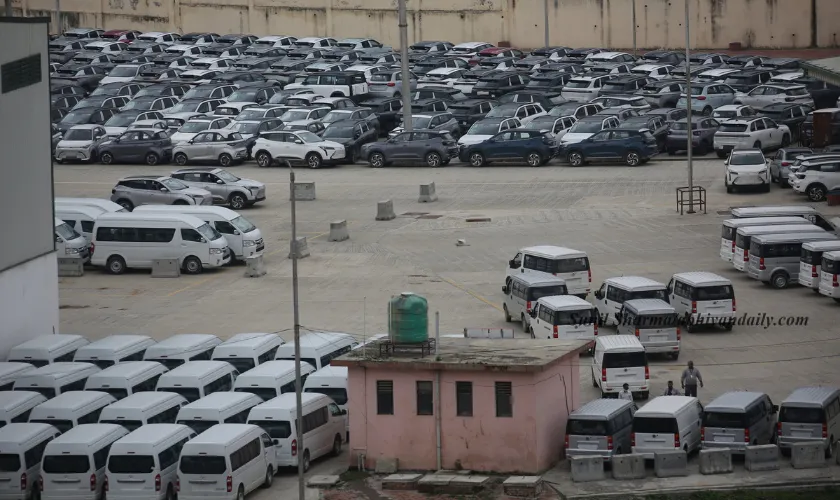
At the close of 2025, Nepal’s automobile market is facing an unusual, but telling, shift. Dealers across the Kathmandu Valley and beyond have begun rolling out a wave of aggressive offers on older vehicle stock. What once were routine year‑end deals have now turned into a kind of “cut‑throat” price war, with exchange incentives, deep cash discounts, extended financing and buy‑back guarantees becoming commonplace. This isn’t just seasonal promotional activity, it’s a strategic response to inventory pressures.
For anyone tracking Nepal’s import and retail sectors, the story is more than automotive: it is a window into broader supply cycles, consumer behavior and the real costs of inventory misalignment in an interconnected economy.
In this article, we unpack not just what is happening, but why, and what it reveals about demand, planning and market psychology as we head into 2026.
Why Old Stock Is Suddenly Urgent
The heart of the current wave of offers lies with stock that has simply remained too long in dealerships or customs yards. Dealers report that vehicle imports, especially electric vehicle (EV) passenger cars, have outpaced sales through much of 2025, leaving thousands of units, many of which were manufactured in 2024, unsold.
This creates a distinct problem: in the automotive world, “old stock” is not an abstract concept , it translates into real losses. A vehicle manufactured in one year is, by definition, less attractive to buyers once the next model year rolls in. Dealers know consumers prefer the latest model year for reasons ranging from resale value to technology and aesthetics. Thus, as the New Year approaches, 2024‑manufactured vehicles effectively become second‑class inventory.
One unnamed senior executive in the market frames it bluntly: “A vehicle loses both psychological and market value once the calendar flips. Buyers instinctively wait for the newer batch; we cannot afford to wait.” This has put pressure on dealers to deploy offers that range from exchange bonuses to long‑term zero‑cost financing to stimulate movement.
The Nature of Today’s Offers
-
Cash Discounts: Significant price reductions are being offered by dealers to quickly clear unsold inventory.
-
Exchange Benefits: Buyers trading in their old vehicles are receiving extra bonuses beyond typical market value.
-
Zero Cost Financing: Financing options with up to five years of repayment, zero interest, and no processing fees, a rare move in Nepal’s auto credit market.
-
Insurance, Accessories & Tax Benefits: Many offers include free insurance, accessory packages, road tax discounts, or spare part subsidies, adding extra value beyond price cuts.
-
Brand-Wide Participation: Brands like Tata, MG, BYD, and Omoda are actively involved, often offering multiple combinations of incentives even within the same showroom to test what works best with customers.
Voices From the Market: Dealers Speak Up
ParaMount Motors, the authorized dealership for MG in Nepal, has acknowledged that these offers are not arbitrary promotions but strategic tools to shift older stock before the end‑of‑year and buyer expectations shift again. “Customers now expect an offer, they are holding off decisions in its absence,” says their Managing Director.
Another executive from SPG Automobile, a representative for Omoda & Jeko vehicles, emphasizes logistical constraints: production and delivery delays, exacerbated by external factors such as border disruptions, have contributed to stock buildup. These pressures, he notes, make aggressive offers less a “discount sale” and more a necessary market adjustment.
Supply Dynamics and Consumer Behavior
Several deeper economic and logistical forces underpin the current dynamics:
Import Timing and Stock Accumulation: Nepal’s auto imports, particularly of EVs, have surged over the past year. While this reflects growing consumer interest, it also exposes a mismatch between supply timing and demand rhythm. Vehicles arriving late or clustered toward year‑end meant dealers carried more units into a period when demand typically slows.
The “Year Effect” in Buyer Psychology: Auto buyers globally , and increasingly in Nepal , exhibit a strong preference for new model years. As one industry analyst explains, “Even if two vehicles are identical in performance and features, a 2025 model simply feels more modern than a 2024 one.” Dealers recognize this psychological premium, and the offers aim to neutralize it. This is not just sales psychology , it’s inventory economics playing out in real time.
Implications for 2026 and Beyond
What does this episode signal for the broader market?
Pricing Pressure: Dealers clearing stock with steep concessions sets benchmark price expectations, which could temper pricing power in early 2026.
Strategic Import Planning: Business leaders may need to align imports more closely with market cycles to avoid similar build‑ups.
Consumer Agency: Buyers can exercise leverage, but may also develop “offer fatigue,” where they defer purchases in the hope of bigger deals. Both trends reshape retail strategies.
This moment, where dealers are essentially price‑testing the market on a large scale, offers valuable insight into how Nepal’s automotive retail sector balances supply, consumer anticipation, and calendar effects.
Conclusion: A Market Learning Curve
The current surge of offers across dealerships is more than a promotional phase; it is a symptom of accumulated stock pressures, evolving buyer expectations, and the strategic calculus of retail survival. Dealers are not merely discounting, they are recalibrating their models to align with the realities of import cycles and consumer psychology.
For analysts, this presents a case study in how emerging markets adapt retail tactics under inventory strain. For buyers, it offers an unusual window of opportunity. And for the industry as a whole, it underscores the importance of synchronized planning across production, import logistics and market timing. As the calendar turns toward 2026, lessons from this period will ripple through pricing strategies and demand forecasting across the sector.

-original.webp)
-original.webp)

-original.webp)