Nepal’s electric mobility space has been expanding at an impressive pace, and just when it seemed like the competition was settling into familiar territory, a new contender has quietly stepped in with serious intent. Ampere, an Indian electric scooter brand backed by Greaves Electric Mobility, has officially made its debut in Nepal, and it is not testing the waters lightly.
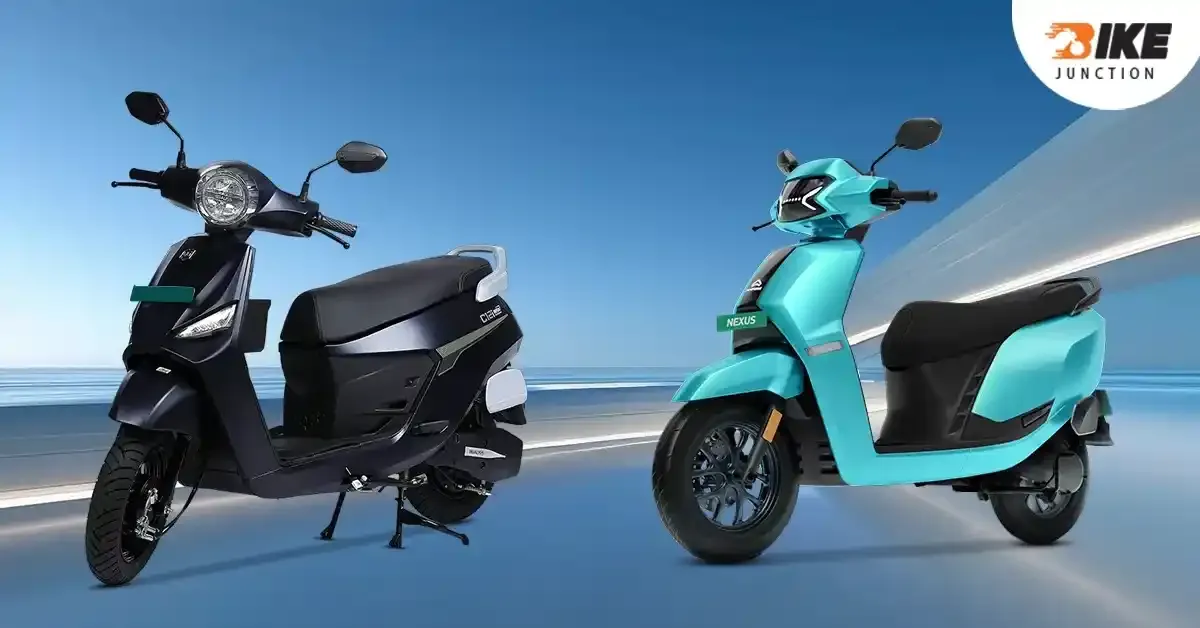
Instead, Ampere arrives with two well-positioned products: the Nexus and the Magnus Neo. These are not entry-level experiments. They are carefully engineered machines aimed at everyday Nepali riders who want practicality, durability, and a bit of modern tech without stretching into premium pricing territory.
The entry of Ampere also signals something bigger. With over 17 years of experience in electric mobility manufacturing in India, the brand is not new to the EV conversation. It has already established itself among the top players in its home market. Now, by partnering with STC Auto Solution Pvt. Ltd. as its official distributor, Ampere is setting its sights on Nepal’s increasingly EV-friendly ecosystem.
The timing feels right, and the strategy looks calculated.
Design and Build
At first glance, both the Nexus and Magnus Neo follow a design philosophy that prioritizes usability over unnecessary flair. This is important in a market like Nepal, where scooters are not lifestyle accessories alone, they are daily workhorses.
The Magnus Neo leans more toward a classic, commuter-friendly silhouette. It offers a wide and comfortable seating setup, which will immediately appeal to families and daily riders. With a loading capacity of 150 kg and a ground clearance of 165 mm, it is clearly built with Nepal’s mixed road conditions in mind.
The Nexus, on the other hand, takes a slightly more modern and feature-forward approach. With alloy wheels, a sharper stance, and a more refined finish, it positions itself as the more premium option of the two. It is the kind of scooter that tries to balance practicality with a subtle sense of style.
Both scooters feature robust chassis construction and twin suspension systems, which is a crucial inclusion. Nepali roads can vary dramatically, from smooth city stretches to rough patches, and suspension setup often makes or breaks the ownership experience. Ampere seems to have acknowledged this reality.
Performance
Ampere has taken a very practical approach when it comes to performance. Rather than chasing headline-grabbing top speeds, both scooters are tuned for consistent, usable power.
The Magnus Neo is powered by a 2.5 kW motor paired with a 2.3 kWh battery pack. On paper, it delivers a claimed range of up to 100 kilometers. In real-world usage, this positions it as an ideal city commuter, capable of handling daily office runs, errands, and short intercity rides without range anxiety.
The Nexus steps things up with a 3.9 kW motor and a larger 3 kWh battery. The claimed range of 107 kilometers may not sound dramatically higher, but the difference lies in how the power is delivered. The Nexus is likely to feel stronger during acceleration and more confident on inclines, which matters in Nepal’s terrain.
What stands out is that both scooters include multiple riding modes. The Magnus Neo offers low, high, and reverse modes, while the Nexus expands this further with five riding modes, including reverse. This flexibility is not just a feature, it is a necessity. Riders can optimize performance based on traffic, road conditions, or battery conservation needs.
Battery Technology
Perhaps the most impressive aspect of Ampere’s offering is not immediately visible, the battery technology.
Both scooters use Lithium Iron Phosphate (LFP) batteries, which are increasingly becoming the preferred choice for electric vehicles in challenging climates. Unlike conventional lithium-ion batteries, LFP units are known for better thermal stability and longer life cycles.
Ampere claims these batteries can operate in extreme temperatures ranging from -40°C to 60°C. While Nepal may not see such extremes regularly, this specification hints at a high level of reliability in both cold hill regions and warmer Terai conditions.
The lifecycle of up to 2,000 charge cycles is another significant advantage. For the average user, this translates into several years of consistent performance without major battery degradation concerns. The added warranty of up to five years or 75,000 kilometers further strengthens confidence.
This is where Ampere’s experience shows. Instead of focusing only on features, the brand has invested in long-term usability, something many first-time EV buyers worry about.
Features and Technology
Ampere has avoided overloading its scooters with gimmicks, but it has ensured that the essential modern features are in place.
The Nexus, being the more premium offering, comes equipped with disc brakes, full LED lighting, USB charging, and connectivity features. These are the kind of additions that enhance daily usability without complicating the riding experience.
The inclusion of a mid-mounted motor in the Nexus is also noteworthy. This setup typically improves weight distribution and ride stability, making the scooter feel more balanced, especially at higher speeds or during cornering.
Meanwhile, the Magnus Neo keeps things simpler but still functional. Its riding modes, comfortable ergonomics, and solid build make it an appealing option for users who prioritize reliability over tech-heavy features.
Charging and Usability
Charging infrastructure remains a key concern in Nepal’s EV landscape, and Ampere seems to have taken a realistic approach here.
The Nexus can be fully charged at home in approximately three and a half hours, which is fairly competitive. This makes overnight charging or even mid-day top-ups practical for most users.
Although detailed charging time for the Magnus Neo is not highlighted, its smaller battery suggests a similarly manageable charging window.
For urban users especially, this level of convenience removes one of the biggest barriers to EV adoption.
Pricing and Market Positioning
Ampere’s pricing strategy is worth paying attention to.
The Magnus Neo is priced at Rs 3,00,000, positioning it as an accessible option for buyers entering the EV space. It competes directly with budget-friendly electric scooters while offering a strong mix of durability and performance.
The Nexus, priced at Rs 3,35,000, sits slightly higher but justifies the premium with added power, features, and refinement.
This pricing structure feels deliberate. Instead of trying to dominate the high-end segment, Ampere is targeting the core of Nepal’s scooter market, the everyday rider who wants value, reliability, and reasonable performance.
Conclusion
Ampere’s arrival in Nepal is not just another brand launch, it is a well-timed, thoughtfully executed move.
What stands out is the brand’s clarity of purpose. These scooters are not designed to impress on spec sheets alone; they are built for real-world usage in a country where road conditions, climate, and daily commuting needs vary widely.
The use of LFP batteries, practical performance figures, and balanced pricing suggests that Ampere understands the Nepali market better than many new entrants. It is not chasing trends, it is addressing real concerns.
Of course, long-term success will depend on after-sales service, spare parts availability, and dealer network expansion. But as a starting point, Ampere has laid a strong foundation.
In a market already buzzing with electric options, Ampere has managed to carve out a space that feels both sensible and promising. And if it can back this up with consistent support and reliability, it may very well become a familiar name on Nepali roads in the near future.
-original.webp)
-original.webp)

-original.webp)