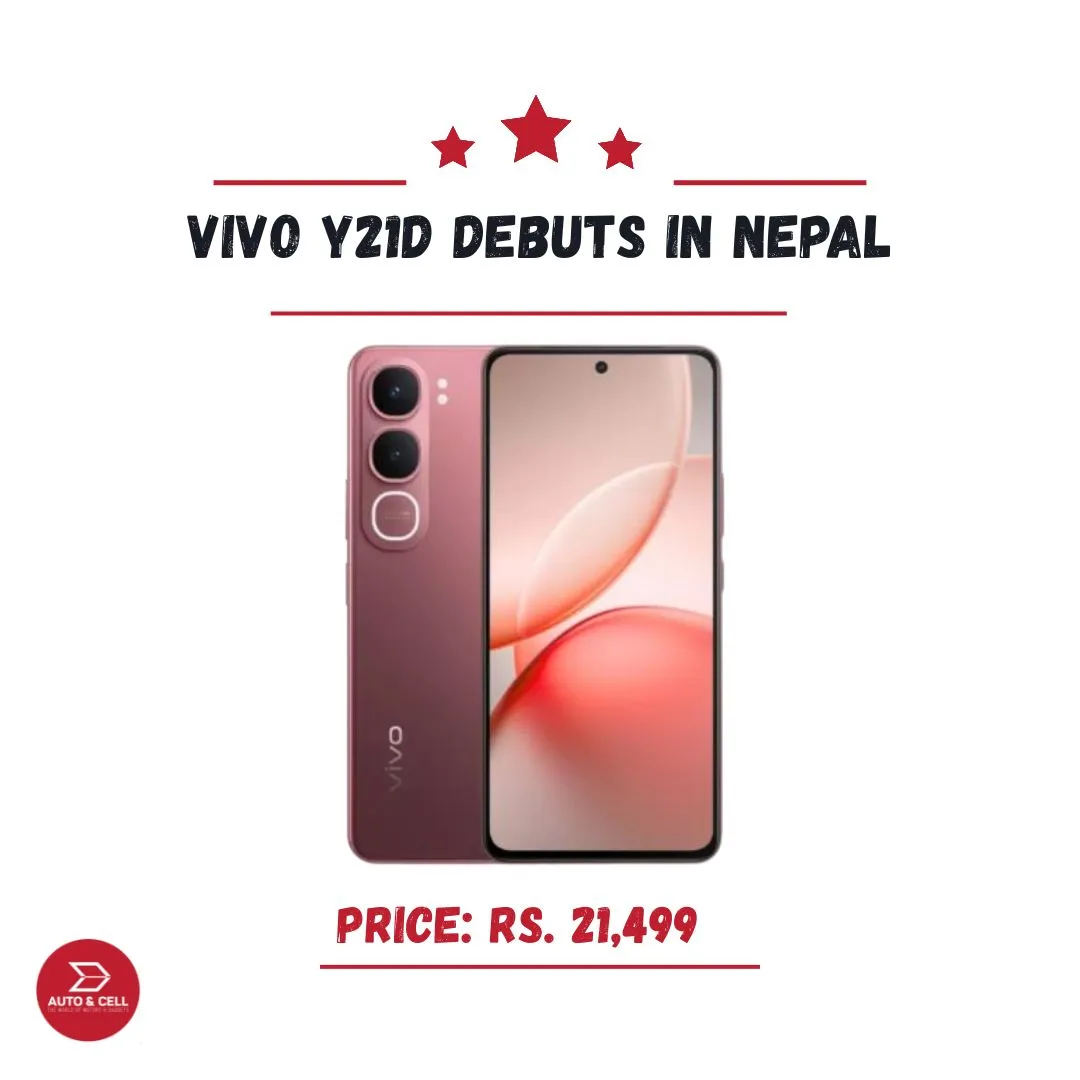
At first glance, the Vivo Y21d might seem like just another budget smartphone thrown into an already crowded market segment. Priced at Rs. 21,499 in Nepal, it enters a fiercely competitive space where specs are often sacrificed in the name of affordability. But Vivo seems to be playing a more tactical game this time. Instead of introducing a radically new device, the brand has blended two of its existing phones, the Y31 and the Y19s, into what it hopes will be a more balanced offering.
The result is a phone that looks good, performs decently, and prioritizes what actually matters to a budget-conscious user: battery life, durability, and everyday reliability. But is that enough to stand out in 2025’s hyper-competitive mid-range market? Let’s unpack the details.
Design
The Vivo Y21d borrows most of its design elements from the Y31, and you’ll notice that immediately. With its flat plastic frame, curved rear panel, and a flashy dual-camera module, it doesn't break new ground in terms of aesthetics. That said, the look is clean and modern, enough to please those who like a premium feel without the premium price tag.
What truly sets the Y21d apart in this category, however, is its durability. Vivo has slapped on an impressive IP68/IP69/IP69+ rating. While IP68 is now common in flagship phones, IP69 and “IP69+” are rare even in premium segments. Vivo claims the phone has undergone three rounds of water-resistance tests, making it a rugged choice for those who don’t want to baby their devices. It’s a significant win for people in Nepal dealing with dusty environments, monsoon rains, or just the unpredictability of everyday use.
Display
The Y21d features a 6.68-inch LCD panel with a 90Hz refresh rate and a 720 × 1608 HD+ resolution. While the resolution might not wow pixel purists, the refresh rate and 1000 nits of peak brightness do offer a smooth and clear visual experience indoors. Under direct sunlight, the screen does struggle a bit, but that’s expected at this price point.
This is not a display that’ll compete with AMOLEDs or high-end LCDs, but it handles media consumption and social media scrolling just fine for daily users.
Performance
Under the hood, the Vivo Y21d is powered by the UNISOC T7225 chipset. It’s essentially a rebranded version of the T612, which previously appeared in the Y19s. This 12nm chip runs an octa-core CPU (2× Cortex-A75 and 6× Cortex-A55) with a Mali-G57 MP1 GPU.
In real-world usage, the performance is acceptable for basic tasks, browsing, video playback, messaging, and even light gaming. However, it’s worth pointing out that some competitors in the same price range are now offering MediaTek Helio G88 or Snapdragon 680 chips, which deliver stronger GPU and multitasking capabilities.
Memory-wise, you’re looking at 6GB LPDDR4X RAM and 128GB of eMMC 5.1 storage. It’s decent, but eMMC storage is notably slower than UFS 2.1 or 2.2, which are becoming common even in the budget segment. Thankfully, Vivo does offer a hybrid SIM slot with microSD expansion up to 1TB, an underrated but valuable feature.
Camera
The rear setup includes a 50MP primary camera (ƒ/1.8) and a 0.08MP auxiliary lens for depth or decorative purposes. It’s clear that the second lens doesn’t add much in practical terms, but the main sensor performs reasonably well in daylight. Photos are vibrant and clear, though the dynamic range and low-light capabilities leave room for improvement.
The 5MP front camera, embedded inside a punch-hole cutout, does a modest job with selfies and video calls. Both front and rear cameras support 1080p@30fps video, which is standard for this category.
If photography is a key priority, you’ll find better image processing on phones like the Redmi 13C or Realme Narzo series in a similar price range. But for casual users who just want reliable social media-ready shots, the Y21d won’t disappoint.
Battery
Here’s where Vivo Y21d truly shines: a massive 6,500mAh battery backed by 44W fast charging. In an age where most budget phones cap fast charging at 18W, or maybe 33W if you’re lucky, this is a massive advantage.
You can expect the battery to comfortably last more than a day and a half with moderate usage. And the fast charging ensures that even when you run low, you’ll be back to 100% in a little over an hour. In Nepal’s current power backup landscape, this feature adds practical value far beyond marketing numbers.
Software
Out of the box, the Vivo Y21d runs Android 15 with Funtouch OS 15 layered on top. The software experience is largely clean and free of heavy bloatware, although some pre-installed apps may still be present.
One thing Vivo hasn’t clarified yet is the number of software updates the phone will receive. This lack of transparency is common among brands in this tier, but still something buyers should be mindful of, especially if long-term usage is the goal.
Specifications at a Glance
-
Display: 6.68" LCD, 90Hz, 720 × 1608 resolution
-
Chipset: UNISOC T7225 (Octa-core, 12nm)
-
RAM & Storage: 6GB + 128GB (expandable up to 1TB)
-
Rear Camera: 50MP + 0.08MP auxiliary
-
Front Camera: 5MP
-
Battery: 6,500mAh, 44W fast charging
-
OS: Android 15, Funtouch OS 15
-
Build: IP68/IP69/IP69+ rating, dual SIM
-
Ports: USB-C, no headphone jack
-
Colors: Coral Red, Jade Green
-
Price in Nepal: Rs. 21,499
Price and Availability in Nepal
The Vivo Y21d is officially priced at Rs. 21,499 for the 6GB RAM and 128GB storage variant in Nepal. It is available at authorized Vivo showrooms and major online retailers across the country.
This pricing places it squarely in the lower mid-range segment, where competition is intense but demand is high. For users in Nepal looking for a reliable smartphone under Rs. 25,000, the Y21d certainly earns a spot on the shortlist.
Conclusion
The Vivo Y21d might not bring jaw-dropping specs to the table, but it does something more important, it listens to what budget users actually need. Instead of trying to impress with gimmicks, it focuses on battery, durability, and essential functionality.
It’s not the fastest phone in its class, nor does it have the best display or camera. But if you’re after a daily driver that won’t let you down in terms of power backup and ruggedness, especially in the context of Nepal’s mobile usage patterns, the Vivo Y21d offers serious value.
If performance is your top priority, there are other options worth considering. But if what you want is a phone that feels dependable, sturdy, and long-lasting, the Y21d quietly delivers.
-original.webp)
-original.webp)
-original.webp)
-original.webp)