Introduction
Most cars we see on the streets run on either the traditional combustion engine using petroleum fuel or use electric motors in the case of an electronic vehicle. However, they are not sustainable.
Petroleum fuel is largely non-renewable in nature, and it also releases harmful smoke. EVs are green energy on the surface, but they take substantial time to recharge. In addition, evidence suggests that batteries used by EVs are detrimental to the environment.
Hydrogen is the prime fuel for rockets, trains, lifts at Amazon warehouse, and some superyachts. A hydrogen car relates to a project to create a vehicle that runs on hydrogen fuel. It is the same hydrogen gas that is abundant in the atmosphere.
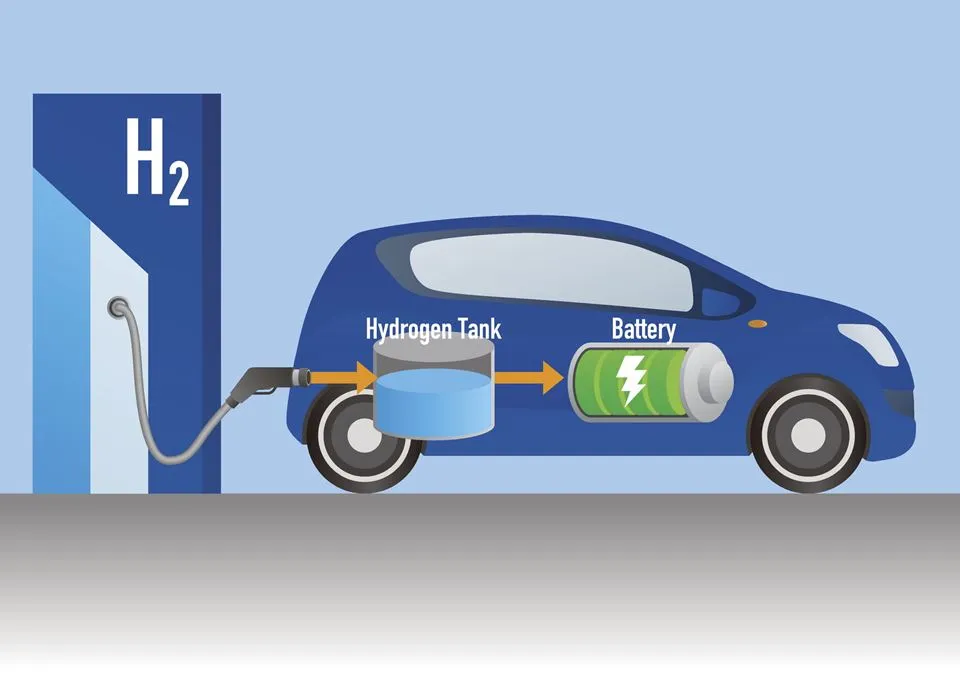
Hydrogen-powered cars solve all these issues. First, they are filled at gas stations from a high-pressure hydrogen tank. So, filling the tanks should take less time than even the petrol/diesel alternatives. Moreover, these cars release pure water from their exhaust pipes instead of harmful fumes.
How does it work?
Hydrogen is a fuel source for the hydrogen car. But the motors run on electricity, so hydrogen has to be converted. A special unit performs the hydrogen conversion called a fuel cell stack.
Hydrogen is a gas, so we need it in a liquid form to store and use inside the car. It can only become liquid at a temperature of minus 252 degrees Celsius. Unfortunately, the price of hydrogen fuel is already too high, so getting it to temperatures that low is unrealistic. Fortunately, compressed hydrogen also turns into liquid.
The compressed hydrogen is filled inside the car tank. The stored hydrogen then moves towards the fuel cell. Inside the cell is a two-chamber block separated by a thin membrane. The hydrogen first reaches a positive terminal inside the fuel cell. Then, oxygen fills up in the adjacent chamber inside a negatively charged terminal.
The positive terminal is made from platinum. Speaking of the chemical reaction that will occur, platinum will speed up the process. Thus, it is a catalyst of sorts. The first chemical reaction occurs between the hydrogen atoms and the platinum. First, it splits the hydrogen atoms into hydrogen ions. Then, two elements- protons (positively charged) and electrons (negatively charged) are formed.
The hydrogen ion is the hydrogen atom without the electron in it. Now, two things happen. First, the hydrogen ion moves towards the negative terminal. Here, the ions pass through a special-polymer electrolyte. Additionally, this membrane blocks the electrons from passing through it. So, the electrons flow through a circuit to reach the motor.
The negative electrons finally continue their journey along the circuit and reach the negative terminal. Here, the chamber is filled with oxygen, and the positive ions from the first chemical reaction are also here. Thus, oxygen and hydrogen combine to form pure water- H2O. The water is then stored and can later be pumped out through the exhaust pipe.
Pros and Cons of Hydrogen Car Vs. Fuel Car
Hydrogen cars have both their pros and cons when compared to traditional vehicles. Hydrogen cars easily beat the competition in terms of cleaner energy and efficiency. However, much research and investments have gone into the current mainstream cars. Thus, they are more affordable for an average consumer.
Image Credit: Dreamstime
-
Fuel type
Hydrogen cars use hydrogen as a fuel, and only pure water is released from the chemical reaction that occurs to generate energy. This hydrogen is obtained from the process of electrolysis, whereby large amounts of electricity are passed through the water (H20) to separate oxygen and hydrogen. The energy vector transition suggests that fuel cells are only 35-40 percent energy-efficient.
-
Storage
Hydrogen is stored in a compressed form. Therefore, the transfer from gas-station tanks to the hydrogen tank inside the car works similarly to the petroleum re-fueling process. However, its storage is difficult as we cannot store it in plastic gallons or any other plastic vessels.
In contrast, compressed hydrogen is very safe. Hydrogen gas is very light compared to all other gases in the atmosphere. So, if the tank is breached somehow or explodes from fire, the hydrogen gas reaches a high altitude in a very short time. This mitigates any chance of fire or explosion due to hydrogen gas.
-
Production and Maintenance costs
Hydrogen cars are not mass-produced, nor are they widely available for purchase. In addition, being a new technology, substantial amounts of money is required for development, research, and marketing to make hydrogen cars successful. These costs make hydrogen cars much more expensive than other cars currently available on the market.
On the bright side, the hydrogen car has much fewer moving parts. As a result, the maintenance and repair costs are substantially lower.
-
Range and Power
A car should have a good range and provide excellent mileage. Short-range and long re-fueling time has been a major drawback of electric vehicles. The petroleum options offer a good range. However, they lack behind in terms of power. In a drag race, hydrogen cars perform similarly to an electric alternative as their drivetrain is connected to an electric motor.
-
Infrastructure
Infrastructure is very important when it comes to cars. For hydrogen cars, it refers to the refueling stations where the hydrogen cars get their hydrogen fuel. These are only available in a very few areas in the United States. The cost of each station comes to around 2 million dollars. Comparatively, an EV charge station costs 50,000 to make, and petroleum stations cost about 200-300,000. Thus, vehicle manufacturers are less likely to invest such a big sum anytime soon.
Conclusion
Hydrogen cars are better than other cars in almost every aspect. They are good for the environment. They also provide excellent mileage and power.
However, hydrogen cars suffer from a major issue, which is competition. The development of electric vehicles outshined the benefits of a hydrogen car. Therefore, even though consumers are willing to purchase hydrogen cars without even the basic refueling stations, nobody can realistically expect to use one daily.